Independence Palace - a destination for Reunification Day
Independence Palace is not only a beautiful architectural landmark but also a symbol of peace and unity, making it one of the most popular tourist attractions in Ho Chi Minh City every April 30th.
Báo Hải Dương•18/04/2025
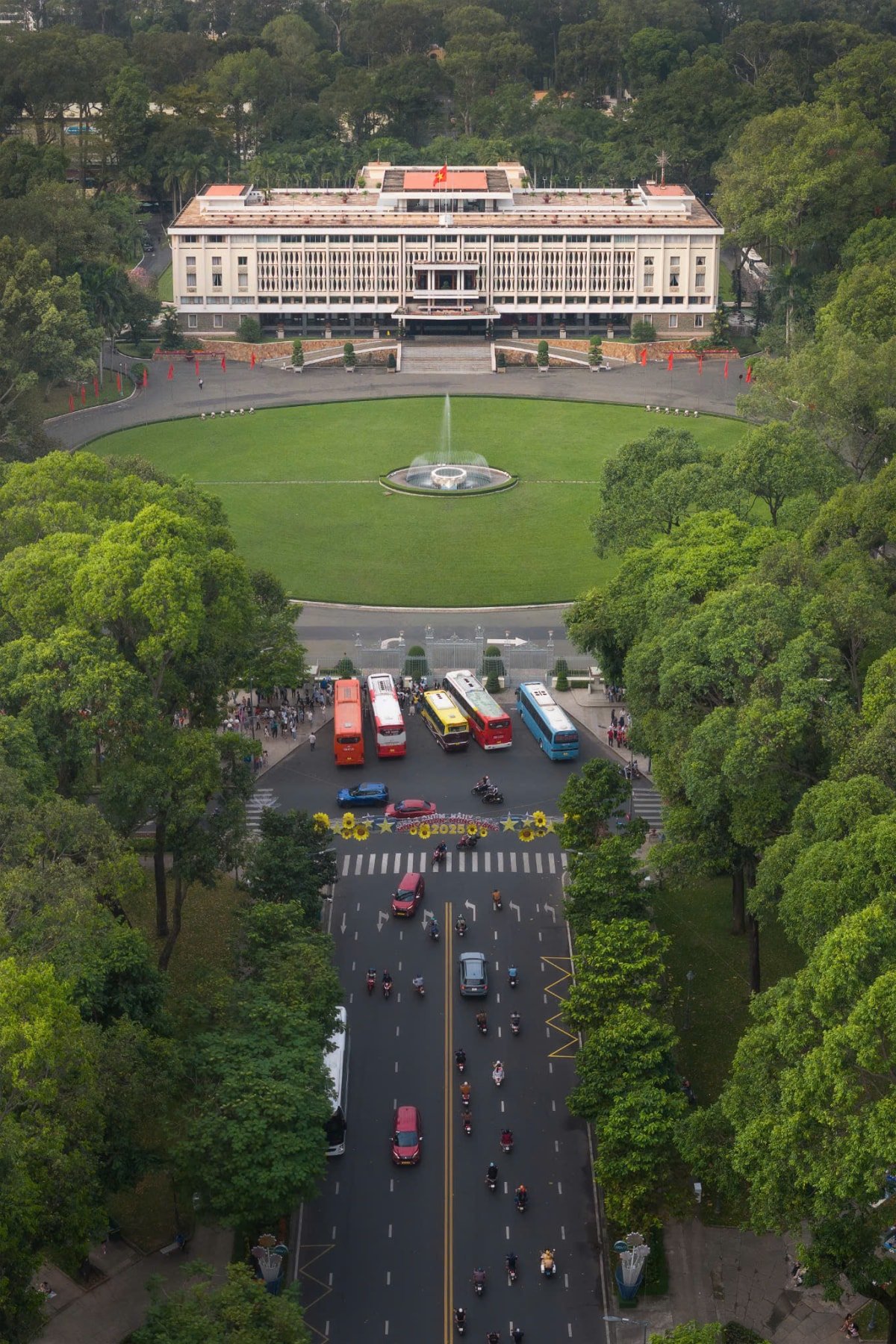
The Independence Palace, also known as the Reunification Hall, is located on Nam Ky Khoi Nghia Street, with its main facade facing Le Duan Boulevard. In 1976, the Palace was classified as a special national historical monument. Construction began on July 1, 1962, based on the design of architect Ngo Viet Thu, the first Vietnamese to win the Rome Prize. The overall shape of the palace resembles the Chinese character "Cat," symbolizing good fortune and luck. The architecture is highlighted by a stone curtain resembling graceful bamboo stalks surrounding the second floor. Inside, the design lines are mainly straight and sharp, reflecting a spirit of discipline and solemnity. The Palace has a floor area of 20,000 m2, built on a 4,500 m2 plot, and stands 26 m high, comprising a ground floor, two mezzanines, two basements, and a helipad on the roof. Over 100 function rooms, each designed in a unique style, include a reception hall, a cabinet meeting room, the president's and vice president's offices, a room for presenting credentials, and a grand banquet hall.
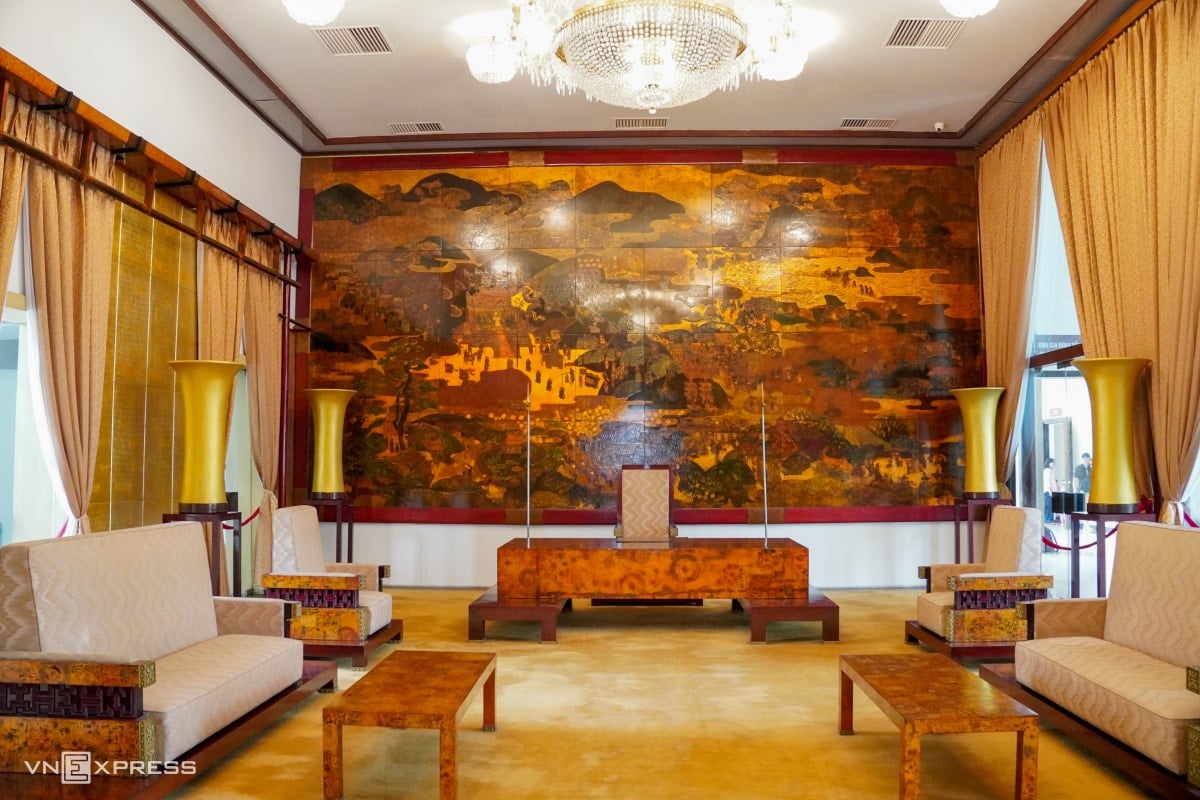
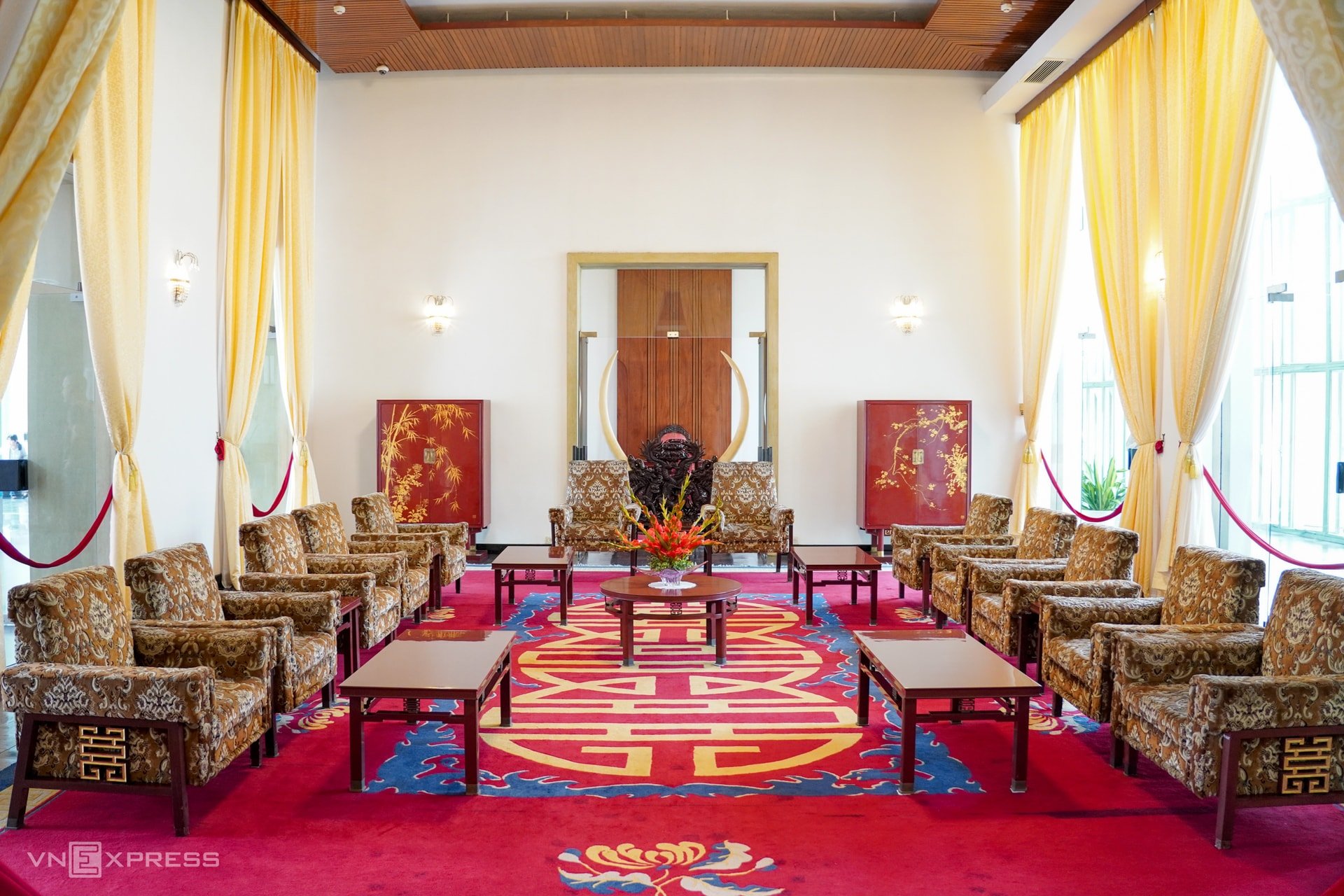
The room for presenting credentials was where ambassadors from various countries presented their credentials to the President of the Republic of Vietnam before 1975. The interior, designed by artist Nguyen Van Minh, primarily uses lacquer painting techniques in a Japanese style. The highlight is the "Binh Ngo Dai Cao" painting, composed of 40 pieces, depicting a peaceful scene of Vietnamese life in the 15th century, with King Le Loi declaring victory over the Ming army at the center. On either side of the walls are eight symbolic torches, lit during important diplomatic ceremonies. On April 18, 1975, the final presentation of credentials took place here when President Nguyen Van Thieu of the Republic of Vietnam received the Ambassador Extraordinary and Plenipotentiary of Japan, Hiroshi Hitomi. Located on the second floor of the palace, the presidential reception area consists of two interconnected rooms. In the first room, the president's chair is elevated above the others, behind which is a large wooden panel symbolizing the flag of the Republic of Vietnam. The adjacent room has a simpler layout, highlighted by two lacquered cabinets with "plum blossom, orchid, chrysanthemum, and bamboo" motifs placed on either side. The vice president's reception room features a predominantly yellow color scheme, evident in the curtains and furniture. Two lacquer paintings hang in the room: one depicting the Khue Van Cac Pavilion (Temple of Literature, Hanoi ), and the other recreating a scene of King Tran Nhan Tong strolling (13th century).
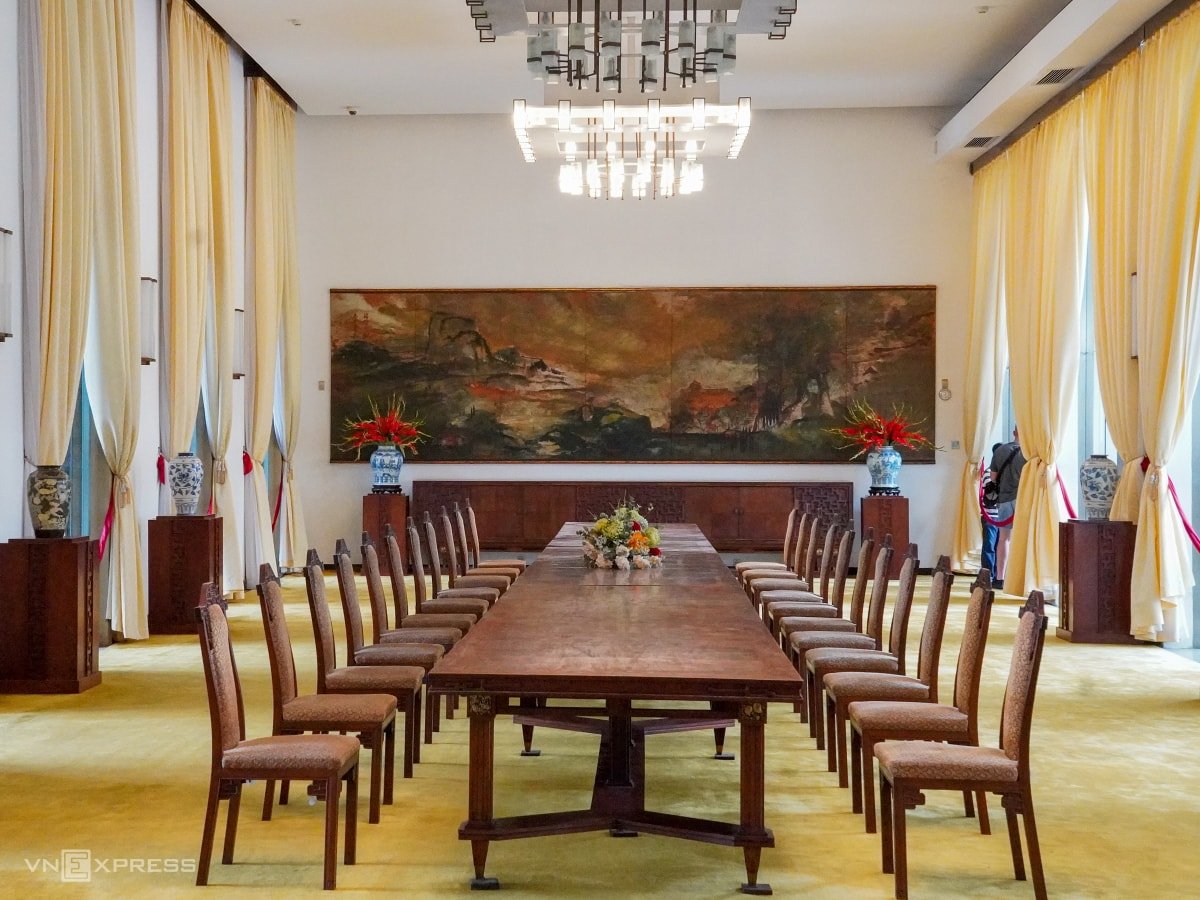
The grand banquet hall is where receptions are held, accommodating over 100 guests. The space primarily uses warm yellow tones, creating a sense of formality and intimacy. In the center hangs the painting "Beautiful Landscape, Peaceful Plants," created and gifted by architect Ngo Viet Thu. On the evening of March 1, 1975, this was the venue for President Nguyen Van Thieu's final reception for the American delegation.
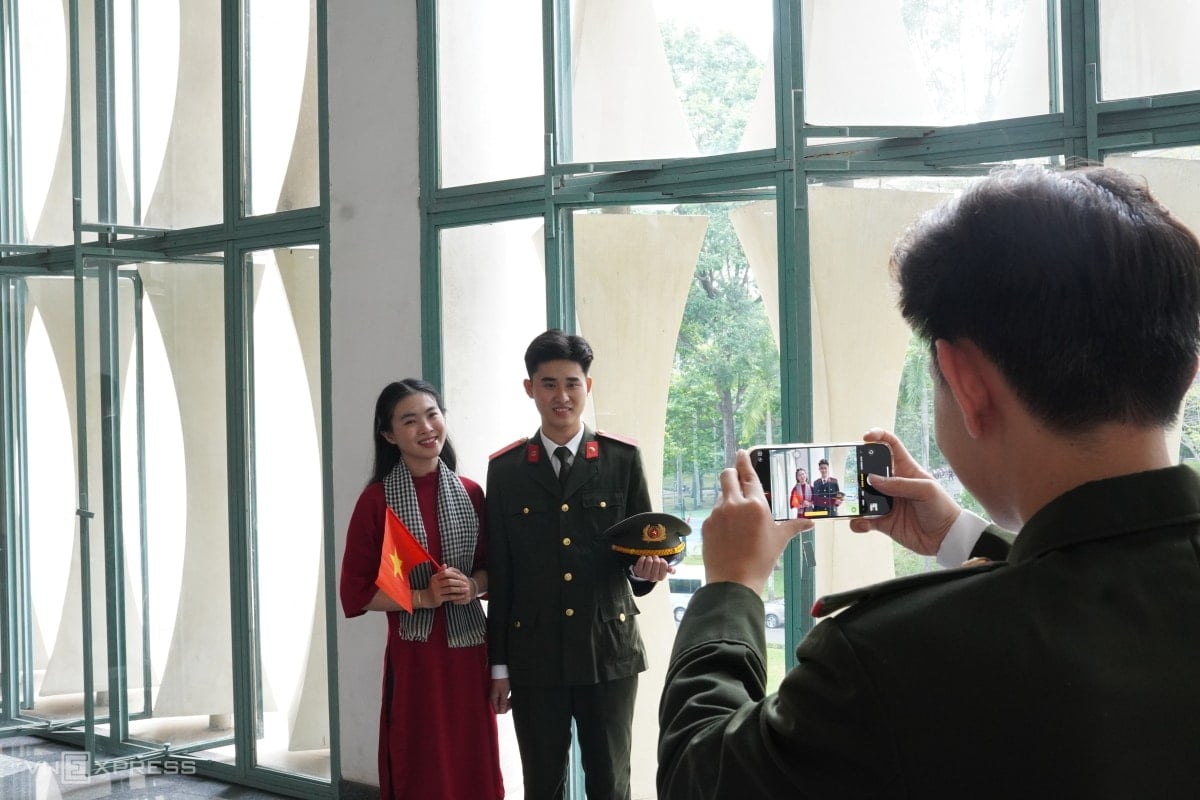
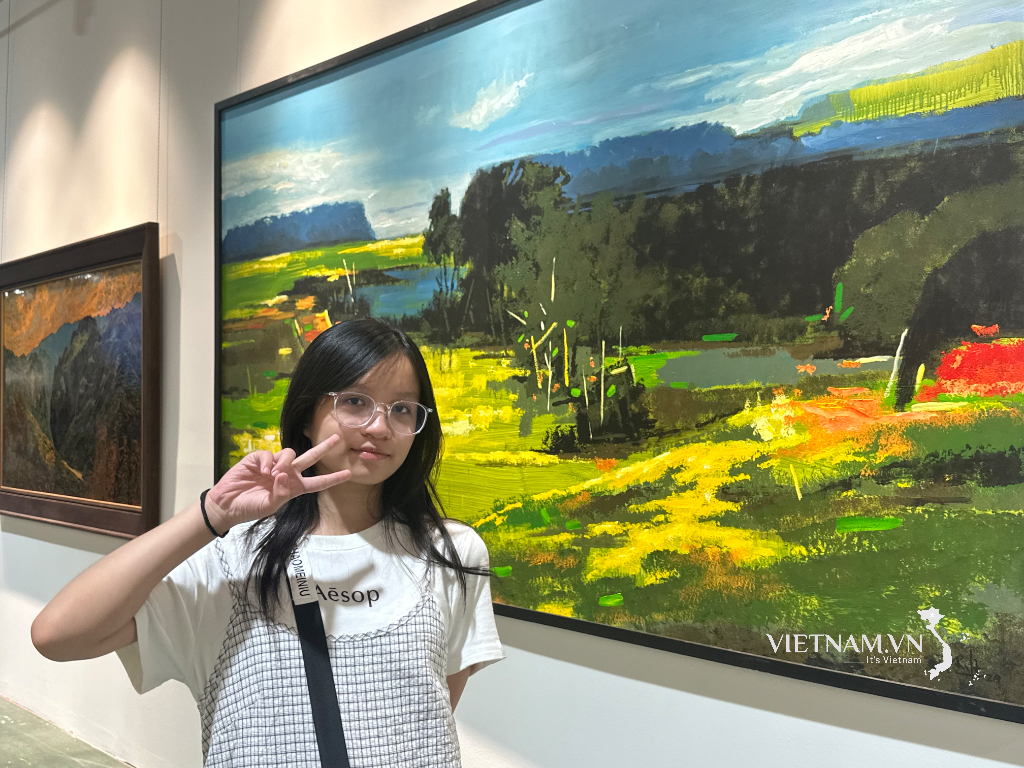
Large glass windows located between the corridors allow ample natural light to illuminate the entire building. This is also a popular spot for young people to take photos when visiting the palace. Duong Thi Dao, 22, a student at the People's Security University, arrived early with her friend to queue for tickets to visit the Independence Palace on the morning of April 17th. According to Dao, despite the large number of visitors, everyone was excited to visit this historical landmark during the 50th anniversary of national reunification. "The Independence Palace marks many important events of the nation. I came here to take pictures to preserve memories and share them with my family," Dao said.
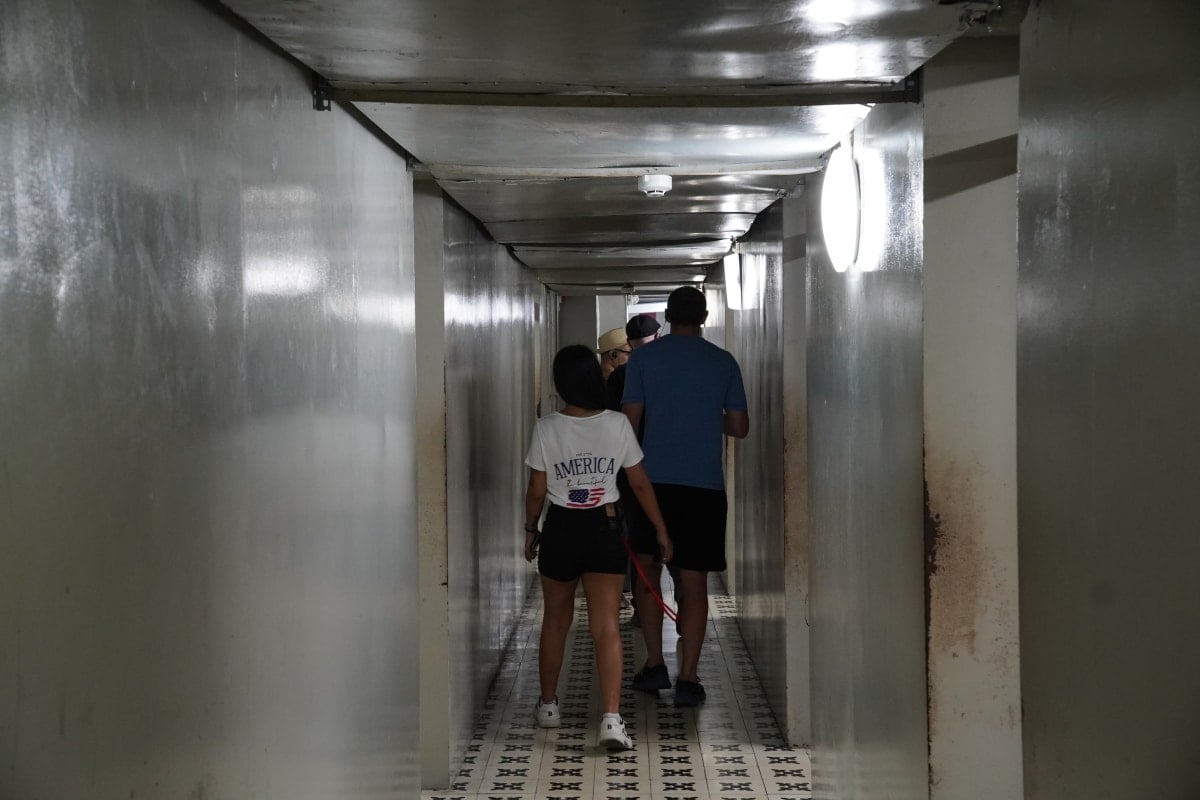
The basement is one of the areas that attracts the curiosity of many tourists when visiting the Independence Palace. Designed by engineer Phan Van Dien, the structure is solidly built, measuring 72.5 meters in length, 0.8 to 22.5 meters in width, and 0.6 to 2.5 meters in depth. The rooms in the basement are connected by narrow concrete passageways, with 5 mm thick steel-reinforced walls and a separate ventilation system. Area 1 is the control center, including the staff offices, radio station, telephone switchboard, decoding and communication room. All equipment was provided by the US government in the 1960s. Area 2 is located at a depth of 2.5 meters, with 1.6-meter-thick concrete walls capable of withstanding the impact of bombs weighing up to 2,000 kg. In an emergency, the president can descend here via a staircase directly connected from the office on the second floor. This area is currently not open to visitors.
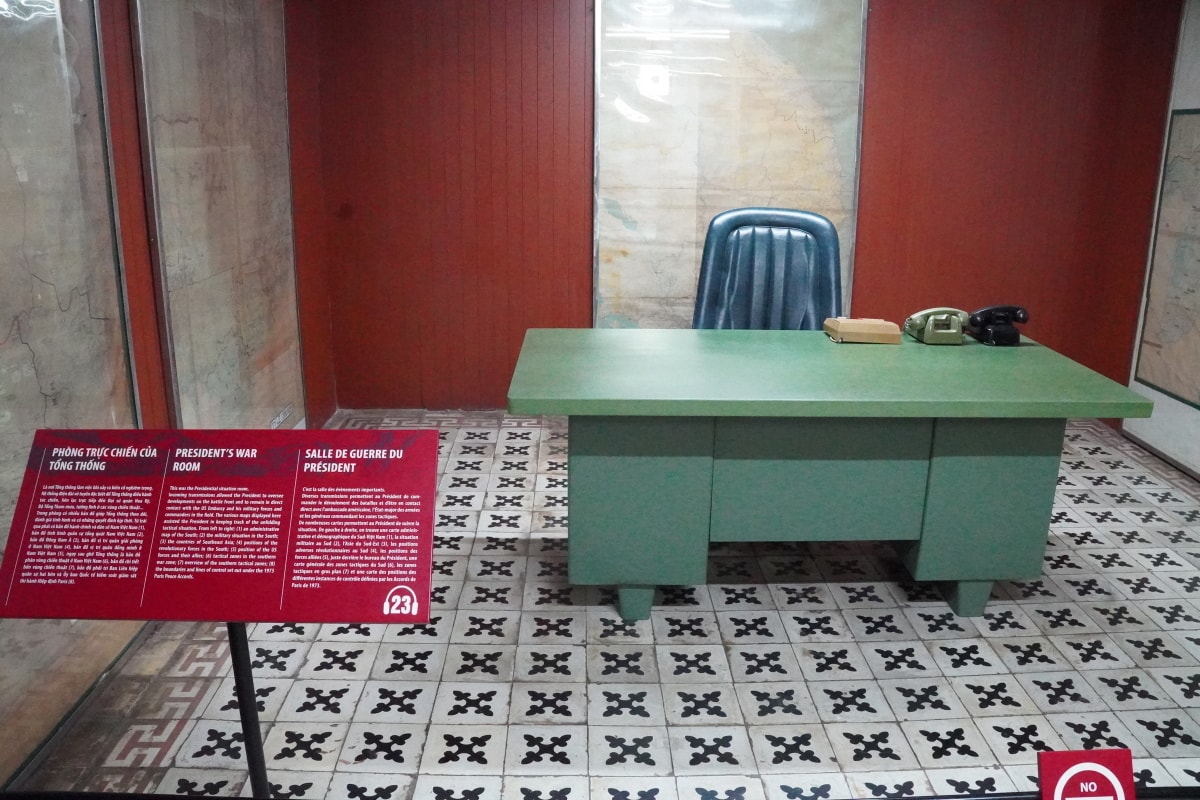
The presidential control room, located in the first basement, was where the war situation was monitored and orders were issued during the most tense moments. The room was small but sturdy, with thick walls, and equipped with the most modern communication system of the time, provided by the United States. Inside were a desk, military maps, an encrypted telephone, and communication equipment, allowing the president to remotely control operations when the situation on the ground became unsafe. This was considered the "backup brain" of the presidential palace during the final days of the Saigon regime.
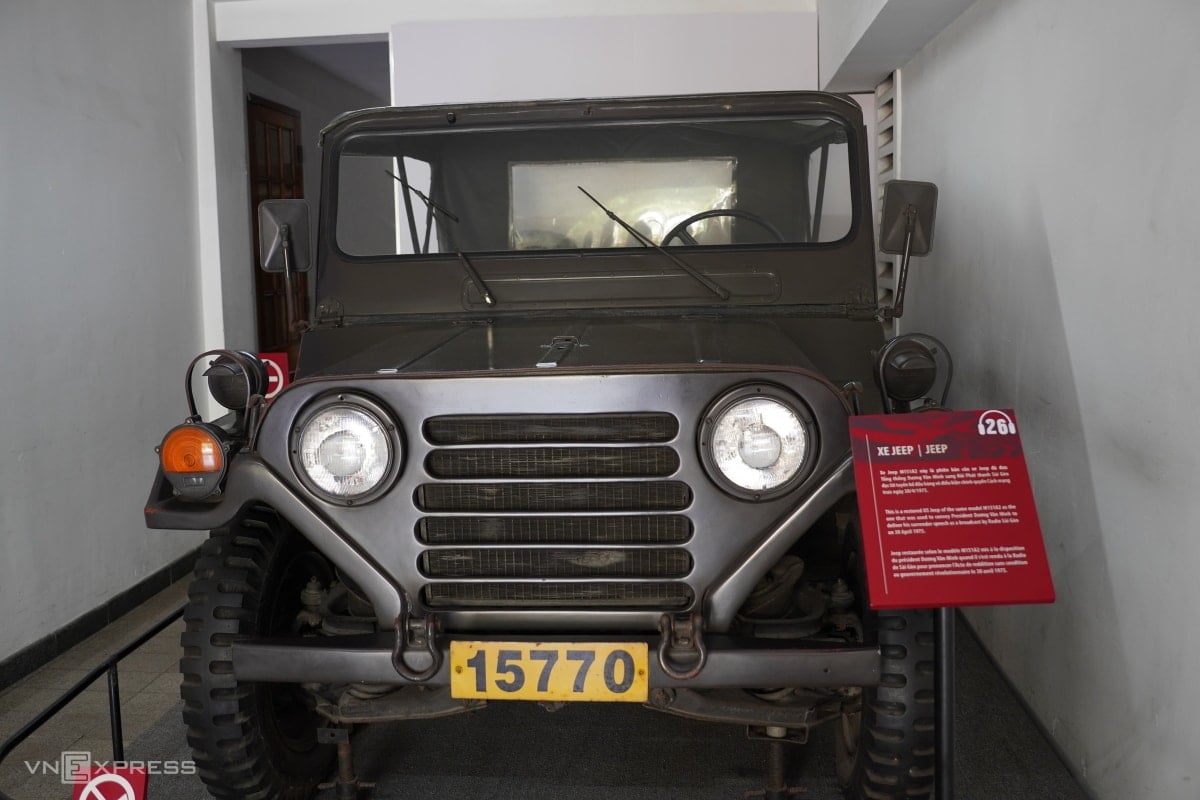
Upon exiting the basement, visitors will find the M151A2 Jeep – the vehicle that transported President Dương Văn Minh to Saigon Radio Station on the afternoon of April 30, 1975. There, he read the declaration of unconditional surrender, officially ending the Saigon regime and ushering in the moment of national reunification.
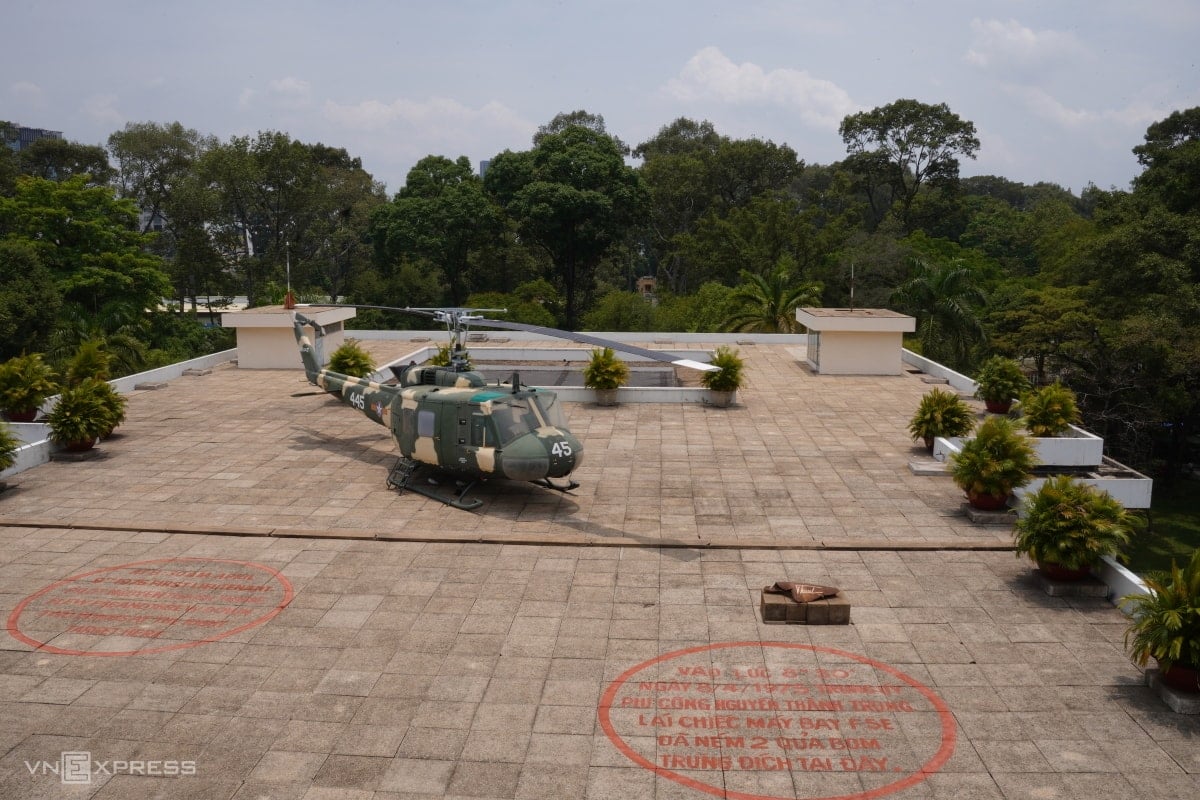
After touring the entire palace, visitors can go to the rooftop to admire the F-5E aircraft – an artifact associated with an event that contributed to the victory in the final days of the war. On April 8, 1975, pilot Nguyen Thanh Trung, flying an F-5E, took off from Bien Hoa and bombed the Independence Palace. The attack caused only minor damage; one bomb hit its target on the roof but only the nose exploded, causing a partial collapse of the roof. The traces of the bombing are preserved and marked by the monument management so that visitors can better visualize the event.
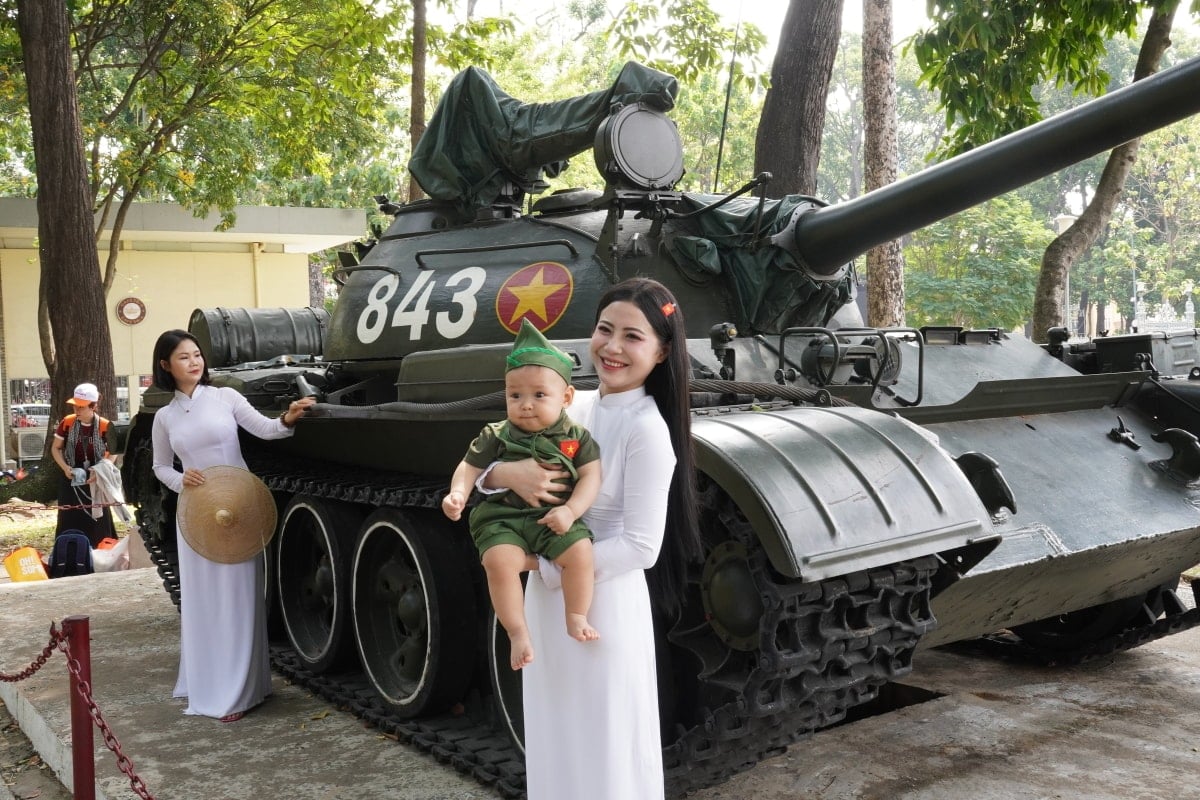
A must-see attraction when visiting the palace, located on the left side of the exit, are two tanks bearing the numbers 843 and 390. The image of these two tanks crashing through the main and side gates of the Independence Palace on the afternoon of April 30, 1975, has become a historical symbol of the nation, concluding the victorious Ho Chi Minh Campaign and ushering in the period of national reunification.
Today, the Independence Palace is a must-see attraction in Ho Chi Minh City, especially during major holidays. The palace is open every day of the week, including holidays and Tet (Lunar New Year), except for special events. Ticket sales are from 8:00 AM to 3:30 PM, and visiting hours are from 8:00 AM to 4:30 PM. There are two types of tickets: 40,000 VND for viewing only the palace (excluding the "From Norodom Palace to Independence Palace 1868-1966" exhibition) and 65,000 VND for viewing both the palace and the exhibition. First-time visitors should experience visiting the exhibition to learn more about its history.TB (according to VnExpress)


 Báo Hải Dương•18/04/2025


Comment (0)