

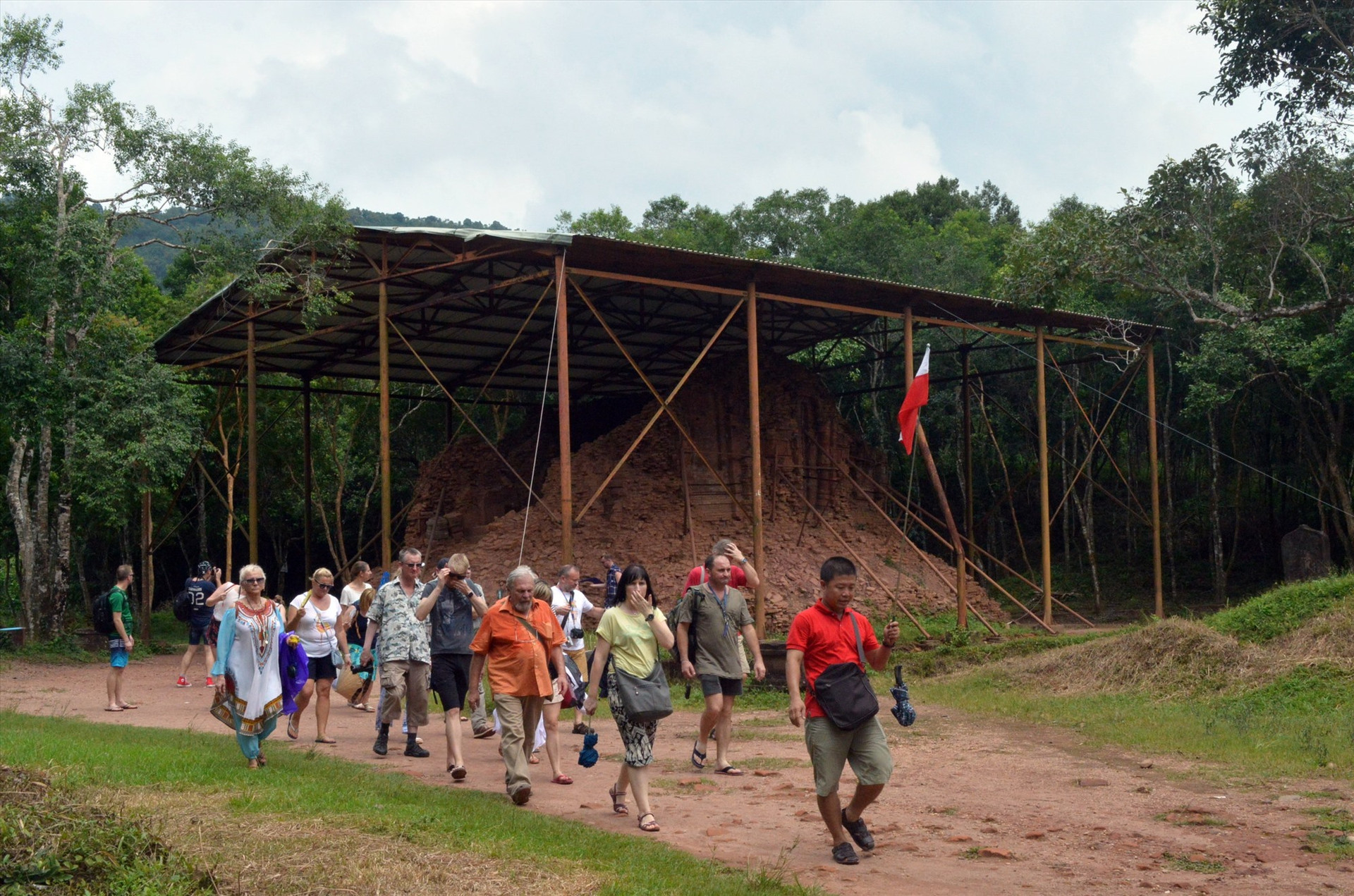
 The F1 tower will be restored in the near future. Photo: VL
Opportunities for the F1 tower
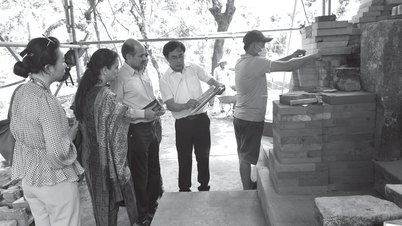
It is expected that at the end of April, an independent working group from the Indian government will visit My Son to survey and assess the current state of the F tower group, especially tower F1, in order to evaluate the urgency and technical condition, and report to the Government for approval of funding before Indian specialized agencies develop a restoration project.
The F tower group consists of two architectural structures, F1 and F2, with tower F1 being the most severely damaged. To date, most of the bricks on the tower walls have faded and their joints have broken, due to the separation between archaeological excavation and restoration that occurred previously.
To prevent the tower from collapsing, many years ago, the My Son Cultural Heritage Management Board coordinated with relevant units to weld iron frames around the tower walls to prevent them from falling, and also erected a corrugated iron roof to protect it from rain and sun.
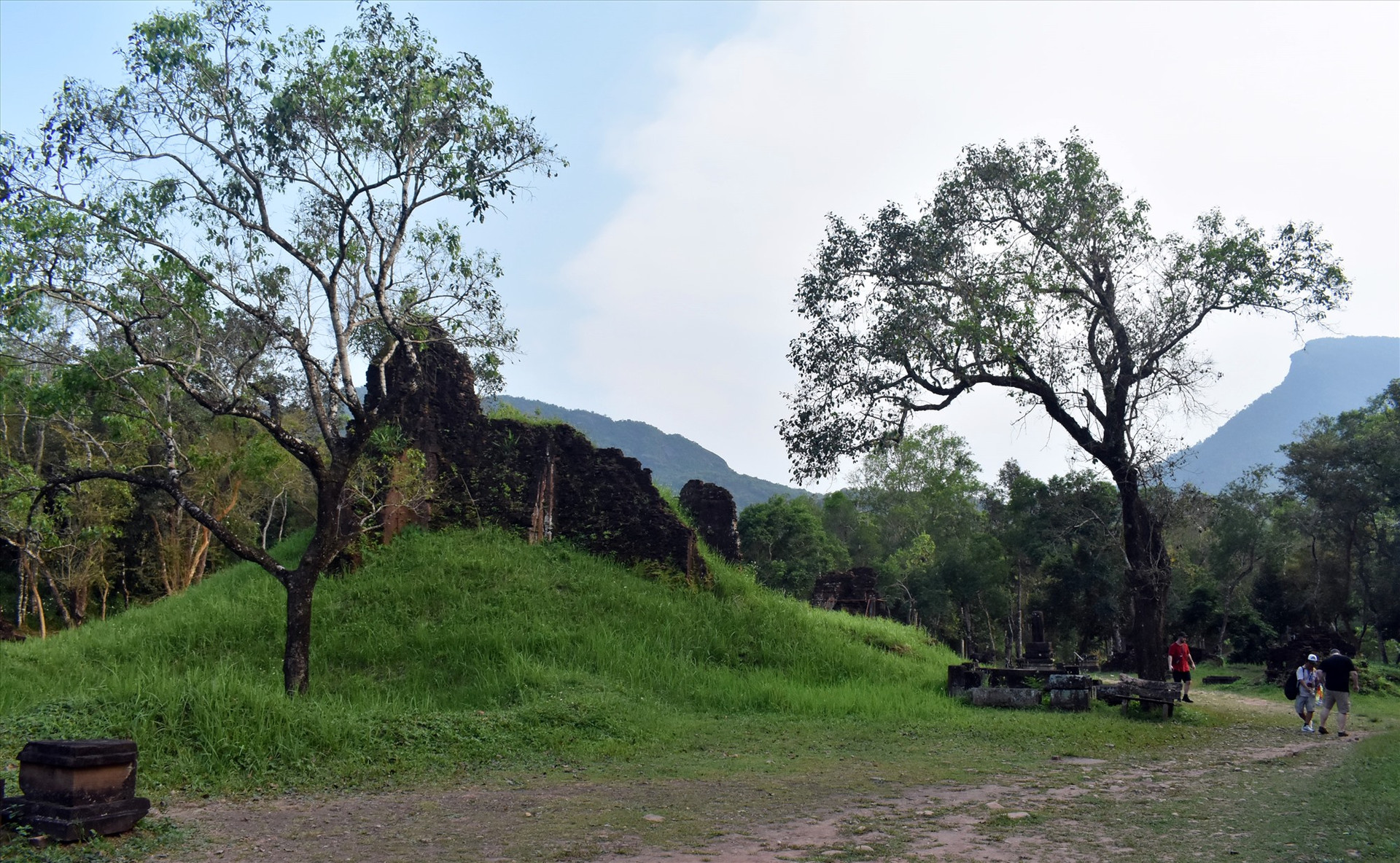 Inside the My Son temple complex. Photo: VL
At the handover ceremony for the project to preserve and restore the A, H, and K tower groups of the My Son temple complex in late December 2022, Mr. Subhash Prasad Gupta, Deputy Ambassador of India to Vietnam, pledged that the Indian government would continue the conservation, restoration, and beautification of the F temple complex and the Dong Duong Buddhist monastery, as well as the Nhan Tower ( Phu Yen ). This is considered positive news that will help ensure the swift protection of Cham architectural works in Central Vietnam, especially the F tower group of My Son.
Architect Dang Khanh Ngoc, Director of the Institute of Conservation of Monuments (Ministry of Culture, Sports and Tourism), acknowledges that among the currently dilapidated architectural structures at My Son, Tower F1 urgently needs restoration. More than 10 years ago, the Institute of Conservation of Monuments also proposed the urgent preservation of this structure, but due to several reasons, it has not yet been implemented.
“I think the issue here isn't technical. We already have experience restoring the tower groups at My Son, most recently group A. However, with F1 being a large project, the workload is substantial, requiring significant resources. Therefore, the Indian government's financial support for the restoration will be a good opportunity to effectively preserve F1 as well as this tower group,” shared architect Dang Khanh Ngoc.
My Son is being revived.
Twenty years have passed since the G Tower Group Conservation Project was launched (in 2003), and many architectural structures in My Son have been successfully protected, such as Tower E7 and the K, H, and A tower groups, giving a new look to the Champa temples in My Son.
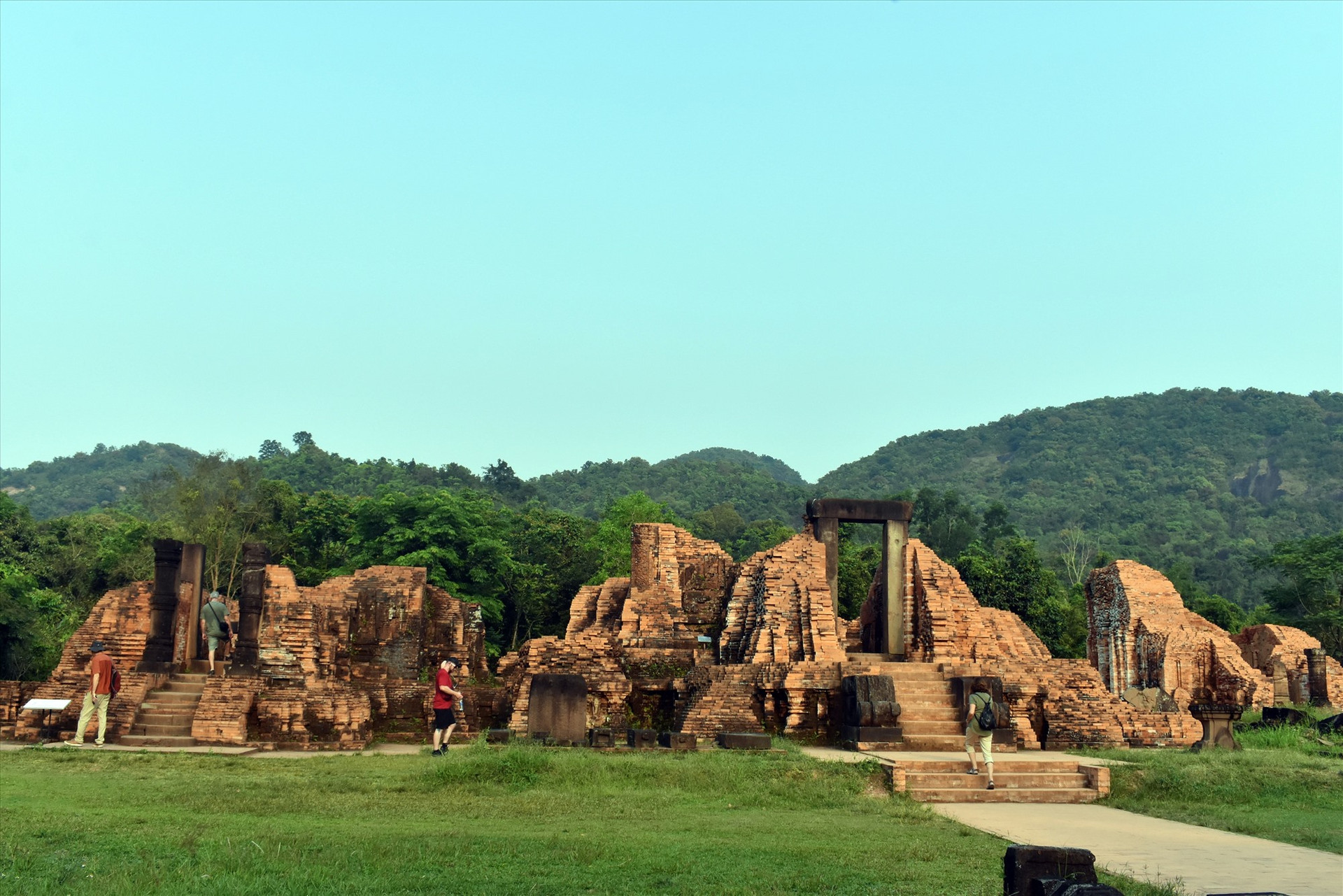 Many tower complexes at My Son have been successfully preserved. Photo: VL
Mr. Nguyen Cong Khiet, Deputy Director of the My Son Cultural Heritage Management Board, affirmed that the clear effectiveness of the projects is the solidity of the temple and tower structures here. In addition, the tourism space has been expanded, offering more experiences for visitors on their journey to explore My Son.
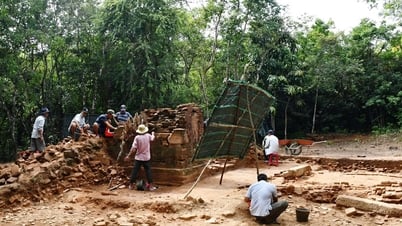
"Now, visitors to My Son, in addition to admiring the spiritual architectural works of the Cham people, can also learn about the methods of restoring Champa temples and towers, especially how the ancient Cham people built the towers - something that has long been a secret," said Mr. Nguyen Cong Khiet.
According to statistics, My Son still has about 8 temples and towers of various sizes that are damaged or in need of restoration. Each year, the My Son Cultural Heritage Management Board invests about 2 billion VND to reinforce, repair, protect, clear vegetation to prevent erosion, and clean the tower structures.
In fact, the restored tower groups such as G and A have attracted a large number of visitors since their reopening. Therefore, the My Son Cultural Heritage Management Board and relevant provincial authorities are stepping up efforts to connect with and seek resources for heritage preservation.
According to Mr. Nguyen Cong Khiet, in addition to the conservation project for group F towers, specialized agencies of the Indian government are also developing a plan to restore groups E and A' towers in the period 2025-2030. After the completion of the conservation of these structures, the My Son Cham temple system will basically enter a stable phase.
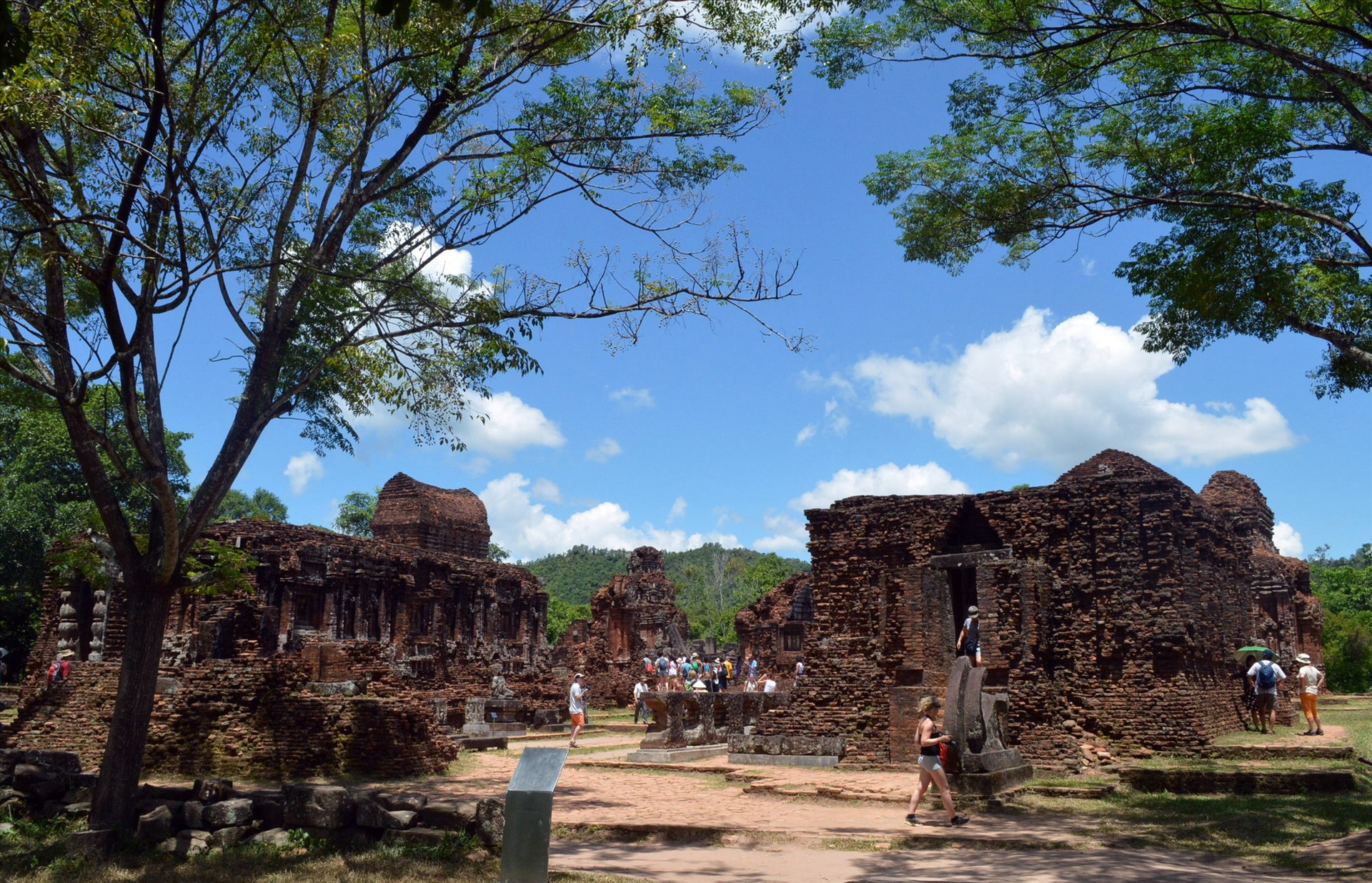 The two towers, D1 and D2, will be reinforced and renovated in 2023-2024. Photo: VL
Over the two years of 2023-2024, the Institute of Conservation of Monuments will implement a project to restore towers D1 and D2. These two structures, which were repaired and reinforced by Polish experts in the 1990s, have now deteriorated. The total estimated cost for the restoration is approximately 6 billion VND, sourced from the 15 billion VND allocated annually by the central government for heritage conservation.
Specifically, experts from the Institute of Conservation of Monuments will organize the rearrangement, upgrading, and repositioning of the artifacts currently on display inside the two towers. At the same time, they will reinforce, repair, replace roofs, and waterproof these two structures. The goal is to begin construction of tower D1 in June 2023, followed by D2 in 2024.
Source: https://baoquangnam.vn/day-manh-trung-tu-cac-den-thap-my-son-3052573.html
![[Photo] Prime Minister Pham Minh Chinh receives the Chinese Ambassador to Vietnam](https://vphoto.vietnam.vn/thumb/1200x675/vietnam/resource/IMAGE/2026/04/05/1775397481797_ndo_br_dsc-5512-jpg.webp)
































![[INFOGRAPHICS] Exploiting children's personal images for profit can result in fines of up to 50 million VND.](https://vphoto.vietnam.vn/thumb/402x226/vietnam/resource/IMAGE/2026/04/06/1775442200854_1775442148.webp)













Comment (0)