

 To promote decentralization and delegation of authority in state management, the province has issued many documents decentralizing and delegating authority in state management to local governments, departments, and agencies, meeting practical requirements and encouraging the dynamism and creativity of units and localities.

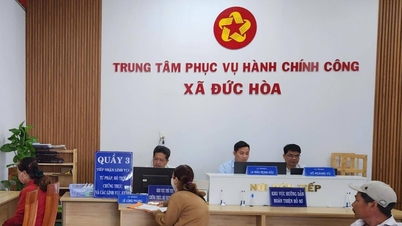
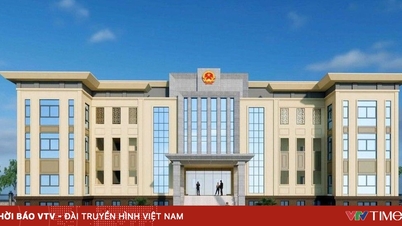
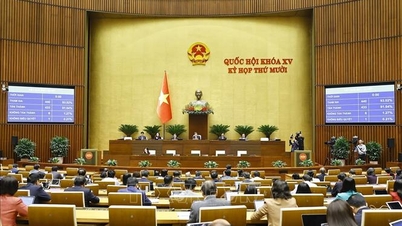
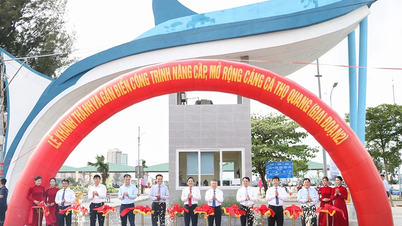
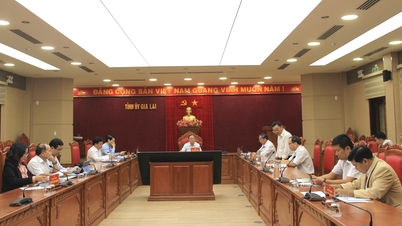
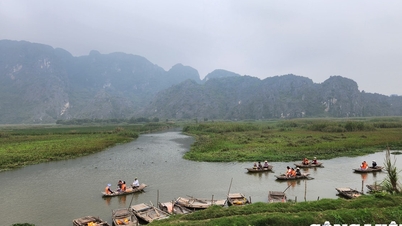
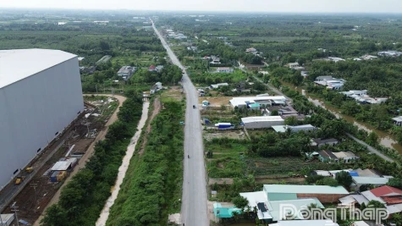
Decentralization and delegation of power in state management helps localities be more proactive in directing and managing the implementation of socio-economic development goals, contributing to building livable localities and cities. Photo: Chu Kieu
To concretize the Party and State's policies on promoting decentralization and implementing tasks assigned by the Government , while successfully implementing the Resolution of the 17th Provincial Party Congress for the 2020-2025 term, the province has recently intensified the decentralization and delegation of authority in state management to local governments, sectors, and fields.
During the period 2016-2022, the Provincial People's Committee issued 21 documents decentralizing authority to district-level People's Committees, commune-level People's Committees, and specialized agencies under the Provincial People's Committee for 8 sectors and fields including: Internal Affairs; Planning and Investment; Agriculture and Rural Development; Construction; Transport; Science and Technology; Labor - War Invalids and Social Affairs; and Finance.
Of the 21 decentralization documents issued by the Provincial People's Committee, 10 have expired and 11 remain in effect, conforming to legal regulations for 7 sectors and fields.
The decentralization of power and authority is clearly demonstrated in the fight against the Covid-19 pandemic. Many districts and cities in the area have proactively implemented strong disease prevention measures, appropriate to the actual conditions in their localities.
Recently, the Provincial People's Committee authorized the People's Committees of districts and cities to determine specific land prices for calculating compensation when the State reclaims land; collecting land use fees when allocating land for resettlement; and calculating land use fees and land lease fees when the State allocates land, leases land, or changes land use purposes for households and individuals. This has helped districts and cities be more proactive in compensation and land clearance work, ensuring that price determination is consistent with local conditions, shortening the time for price approval, and not affecting the progress of land compensation and reclamation for projects.
The decentralization of state management in the province is gradually being adjusted in accordance with the requirements of administrative reform, ensuring centralized and unified management by the Provincial People's Committee over the decentralized areas, promoting autonomy, accountability, and exploiting potential, advantages, and resources to improve the effectiveness and efficiency of state management.
Simplifying and optimizing administrative procedures; reducing administrative procedures; shortening processing times, reducing travel time and social costs; creating the most favorable conditions for quick and timely resolution of administrative procedures to meet the requirements of individuals, organizations, and businesses; and enhancing the responsibility of leaders, fostering proactiveness, creativity, and flexibility in management and operation.
The overlapping functions and responsibilities among specialized agencies under the Provincial People's Committee have been largely resolved, and the authority and responsibilities of district and commune-level People's Committees and specialized agencies in implementation have been more clearly defined.
Contributing to improved management and utilization of the budget, saving public spending, and promoting innovation and streamlining of the administrative apparatus and public service units to ensure efficient and effective operation.
In some areas, the decentralization process has created initiative and flexibility for agencies, units, and localities; effectively promoting state management, such as in the field of construction order management and job position management (100% of agencies and units have had their job positions, job descriptions, and competency frameworks approved and are implementing them according to the new regulations of the Government and guidelines of the Central Ministries and sectors)...
Implementing the decentralization of state management by sector and field to district-level People's Committees, commune-level People's Committees, and specialized agencies is an important solution contributing to promoting administrative reform and accelerating the completion of state management tasks in socio-economic affairs in the province.
The aim is to rationally decentralize state management by sector and field from the Provincial People's Committee to the District People's Committees, Commune People's Committees, and specialized agencies under the Provincial People's Committee.
Based on a clear delineation of functions, tasks, powers, and responsibilities of each level and agency within the state administrative system, ensuring centralized and unified management while promoting the autonomy and accountability of agencies, units, and localities.
Maximizing potential, advantages, and resources to enhance the effectiveness and efficiency of state management in the sector, meeting the requirements of state administrative reform, building e-government, and international integration.
Recently, the Provincial People's Council issued Resolution No. 39 approving the plan to promote decentralization for the People's Committees of districts and cities; communes, wards, towns and specialized agencies under the Provincial People's Committee.
Accordingly, building on the results of decentralization implemented during the 2016-2022 period, and implementing the decentralization contents that have been assessed as effective, suitable to the local conditions and current legal regulations, the decentralization of state management will continue to be promoted for the 7 sectors and fields currently undergoing decentralization: Interior; Planning and Investment; Agriculture and Rural Development; Construction; Transport; Science and Technology; and Labor - Invalids and Social Affairs.
For the seven sectors and fields of Finance; Education and Training; Culture, Sports and Tourism; Natural Resources and Environment; Industry and Trade; Information and Communications; and Health, research will continue to be conducted to amend, supplement, or replace, and issue new documents to promote decentralization by sector and field, ensuring compliance with specialized laws and the actual state management situation of the locality.
Continue to focus on effectively implementing Government Resolution No. 04 on promoting decentralization and delegation of power in state management. At the same time, regularly update legal regulations on promoting decentralization; promptly amend, supplement, replace, repeal, and issue new regulations on decentralization to ensure compliance with the law and meet the practical requirements of state management in the locality's sector and field.
Tran Tinh
Source

![[Image] Central Party Office summarizes work in 2025](/_next/image?url=https%3A%2F%2Fvphoto.vietnam.vn%2Fthumb%2F1200x675%2Fvietnam%2Fresource%2FIMAGE%2F2025%2F12%2F18%2F1766065572073_vptw-hoi-nghi-tong-ket-89-1204-jpg.webp&w=3840&q=75)









































































Comment (0)