

During the 1960s and 70s, when social upheavals disrupted American culture and literature, there were writers who preserved fundamental values, maintaining classic storylines and a clear, concise writing style.
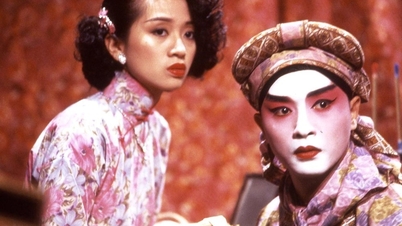
![Dạo chơi vườn văn Mỹ [Kỳ 3]](https://vstatic.vietnam.vn/vietnam/resource/IMAGE/2025/1/21/2d24188512994bfaa3b66b8e369e588d "Strolling through the American Cultural Garden [Part 3]") |
From the 1960s onwards, the lines between journalism and fiction blurred. Stories and novels—reportage labeled "non-fiction"—told real events using fictional writing techniques such as dialogue, descriptions, drama, and slang. Truman Capote (1924-1984), a Southern Neo-Romantic writer, recounted the brutal murder of a peasant family in *In Cold Blood* (1966), and Norman Kingsley Mailer (1923-2007) wrote about the path that led a socially maladaptive individual to crime and execution in *The Executioner 's Song* (1979).
In the post-World War II theatrical landscape, Arthur Miller was associated with the progressive theater of the 1930s. In *Death of Salesman * (1949), he depicted the tragic failure of an ordinary American filled with illusions; he wrote about morbid psychology, about America's brutality, lust, and frenzy in *A Streetcar Named Desire * (1947). Edward Albee (1928-2016) exemplified a dramatic trend that highlighted the "absurdity" of life; he portrayed a fiery marital relationship in *Who's Afraid of Virginia Woolf* (1962).
The women's movement of the 1960s and 1970s spurred many female writers to create. The poetry of Sylvia Plath (1932-1963) and Anne Sexton (1928-1974) expressed the sadness of women. The novels of Joan Didion (1934-2021) and Erica Jong (born 1942) criticized society from a woman's perspective.
As women's roles became more assertive, women wrote less about protest and more about self-affirmation. Susan Lee Sontag (1933–2004) wrote philosophical essays, novels, and made films. She visited Vietnam and condemned the American war of aggression. Mary Therese McCarthy (1912–1989) was a journalist, novelist, and satirist of American intellectuals; she also visited Vietnam and condemned the American war ( Report from Vietnam, 1967).
Black literature began to take shape in the late 19th century with Paul Laurence Dunbar (1872-1906), who wrote lyrical poetry using Black folklore and dialects. William Edward Burghardt Du Bois (1868-1963), who later became a Ghanaian citizen, tirelessly fought for the equal rights of Black people; he wrote *The Soul of Black Folk * (1903), *The World and Africa * (1947), and began working on an encyclopedia of Africa.
In the 1920s and 1930s, poets Countee Cullen (1903-1946) and Langston Hughes (1901-1967) opposed racial segregation. Novelist Richard Wright (1908-1960) initially sided with progressive forces, particularly in his short story * Uncle Tom's Children* (1938). Ralph Ellison (1913-1994) became famous for * Invisible Man* (1952), which depicted the alienation of Black people in a white society. James Baldwin (1924-1987) wrote existentialist novels, gaining fame with his first work *Go Tell It on the Mountain* (1953), which told the story of Black people stripped of their individuality. Gwendolyn Brooks (1917-2000) wrote poetry about the suffocating life in Chicago's Black neighborhoods.
Black literature became politicized in the 1960s, when the struggle for equality transformed into a movement demanding “black power.” This outrage was evident in the poetry and plays of Amiri Baraka (1934–2014). Black political leaders also wrote books: The Autobiography of Malcolm X (1965), co-authored with Alex Haley (1921–1992). Haley also authored a monumental work on the African origins of Black people: Roots (1976). The female writer Toni Morrison (1931–2019) deeply analyzed the psychology of Black women; she won the Pulitzer Prize in 1988 and the Nobel Prize in 1993.
Jewish Americans began writing. Saul Bellow (1915-2005), winner of the Nobel Prize in Literature in 1976; Bernard Malamud (1914-1986) and Philip Roth (1933-2018) addressed social figures and issues while incorporating a kind of humor into their novels. Isaac Bashevis Singer (1902-1991), a Polish-Jewish author, won the Nobel Prize in Literature in 1978.
Latin American poets with Spanish cultural backgrounds also participated in literary activities, such as Tino Villanueva (born 1941), Carlos Cortéz (1923-2005), and Victor Hernandez Cruz (born 1949). Navarre Scott Momaday (born 1934), an American of Native American descent, wrote about his ancestors in *The Names* (1976). Maxime Hong Kingston (born 1940), an American of Chinese descent, also wrote about his ancestors in * China Men*.
During the 1960s and 70s, when social upheavals disrupted American culture and literature, some writers preserved fundamental values, maintaining classic plots and clear writing styles. John Updike (1932-2009), a journalist, poet, and novelist, often depicted middle-class people; his writing style was refined and poetic. His iconic novel, The Centaur (1963), portrays the monotonous life of a provincial schoolteacher. Evan Shelby Connell (1924-2013) painted a picture of a middle-class family in a pair of novels: Mrs. Bridge (1959) and Mr. Bridge (1969). William Kennedy (born 1928) wrote a trilogy of novels about Albany in the 1920s and 1930s with a perspective that was both affectionate and sharp. John Irving (born 1942) and Paul Theroux (born 1941) paint portraits of quirky American families with humorous and surreal scenes. Anne Tyler (born 1941) depicts with a witty pen the outcasts on the fringes of the middle class. Bobbie Ann Mason (born 1940) portrays life in rural Southern Kentucky.
Source
![[Photo] Secretary of the National Assembly Party Committee, Chairman of the National Assembly presides over the meeting of the Standing Committee and Executive Committee of the National Assembly Party Committee.](https://vphoto.vietnam.vn/thumb/1200x675/vietnam/resource/IMAGE/2026/06/03/1780480353201_ndo_br_bnd-2585-jpg.webp)
![[Photo] General Secretary and President To Lam presides over a meeting with the Central Organizing Committee.](https://vphoto.vietnam.vn/thumb/1200x675/vietnam/resource/IMAGE/2026/06/03/1780482764658_a1-bnd-4741-3342-jpg.webp)

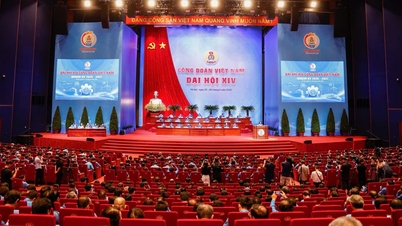
![[Photo] First session of the 14th Congress of the Vietnam Trade Union](https://vphoto.vietnam.vn/thumb/1200x675/vietnam/resource/IMAGE/2026/06/03/1780465947883_ndo_br_img-3852-jpg.webp)
















































![[Video] Sunset at Lap An Lagoon – Where the sun sets over the fishing nets](https://vphoto.vietnam.vn/thumb/1200x675/vietnam/resource/IMAGE/2026/05/31/1780192137701_beach-landscape-sea-water-nature-grass-745871-pxhere-com.jpeg)




































Comment (0)