

CIA agent Aldrich Ames worked for the Soviet Union from 1985, selling the identities of every spy he knew working for the US in exchange for huge sums of money.
Born on May 26, 1941, Aldrich Hazen "Rick" Ames grew up with the Central Intelligence Agency (CIA). His father was a CIA analyst, and many of Ames's classmates also had parents who worked for the CIA. Shortly after graduating from high school, he did a summer internship at the CIA.
Ames continued working for the CIA while completing his bachelor's degree at George Washington University. In 1962, he began working full-time for the CIA, and by 1969, he was assigned to covert operations in Ankara, Türkiye.
Throughout that time, he consistently received poor performance reviews from his superiors. Ames's record was riddled with blemishes, including clashes with law enforcement, alcoholism, lack of focus, and procrastination. Ames even once left documents behind on the New York subway.
Ames' personal life was also fraught with problems. His wife divorced him due to emotional abuse, and he subsequently accumulated thousands of dollars in debt. Living with his girlfriend, Maria del Rosario Casas Dupuy, whom he met while on duty in Mexico, further burdened his financial situation.
"I felt I was under immense financial pressure," he said. "I was in debt from furnishing the apartment. The divorce left me essentially penniless. Rosario was living with me at the time, and I had to think about the future. I didn't have a home, and we were planning to build a family together. So, I needed to think long-term."
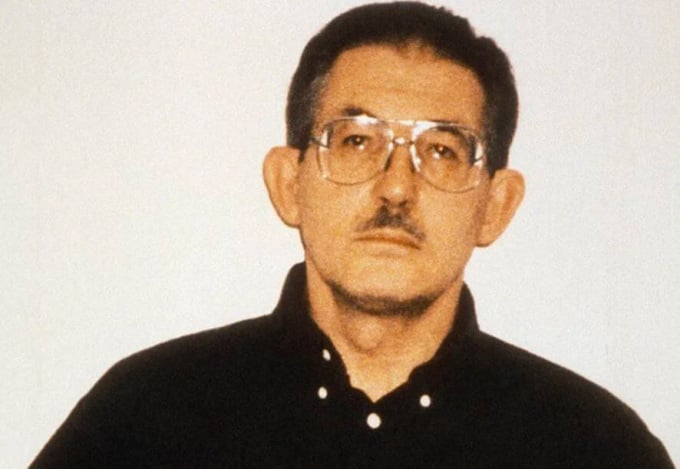
CIA agent Aldrich Ames. Photo: FBI
Aldrich Ames found a solution to his financial difficulties. In 1985, he began selling CIA secrets to the Soviet Union.
According to an investigation by the US Senate Intelligence Committee, Ames approached Soviet officials in April 1985 offering to exchange classified information for money. The Soviet Union agreed and paid Ames $50,000.
"I still don't understand what motivated me to do what I did afterward," Ames admitted. "After receiving the $50,000, I realized the seriousness of what I had done. I had crossed a point of no return."
After crossing that line, Ames delved deeper into the life of a double agent. He was willing to provide the names of any Soviet intelligence officials and military officers spying for the US, as well as any information he had about the CIA's anti-Soviet operations.
The Senate Intelligence Committee found that Ames had provided "a large quantity of sensitive documents and critical information," as if he were carrying bags of documents out of the CIA and handing them over to the Soviet Committee for State Security (KGB).
Wherever he went, Ames maintained connections with Soviets. From Bogota, Colombia, to Rome, Italy, Ames continued to pass on U.S. national secrets to the Soviet Union. The Federal Bureau of Investigation reported that by 1989, Ames had received $1.88 million.
However, Ames's double-agent activities came under scrutiny. CIA officials began to notice a worrying problem when several of their agents were discovered. They immediately suspected someone within the CIA was leaking information to the Soviet Union.
At CIA headquarters in Langley, Virginia, the investigative team led by Sandra Grimes and Jeanne Vertefeuille spent years identifying the traitor.
Grimes and Vertefeuille initially didn't consider Ames a suspect. They compared him to a "absent-minded professor," always sloppy and late.
But they discovered that after returning to Washington from Rome in 1989, Ames seemed to have transformed into a completely different person. "I saw a very different Rick Ames," Grimes said.
Ames had his teeth fixed, bought a Jaguar, and started wearing $600 Italian shoes. Ames and his wife also spent $540,000 in cash on their new home in Arlington. When these things drew attention, Ames hinted that he had received the money from his wife's wealthy family.
Suspicious of Ames's unusual behavior, Grimes and Vertefeuille compiled a list of 198 people who had access to the leaked information. After narrowing it down, the list was reduced to three. In 1992, Grimes finally found a clue leading to Aldrich Ames.
After studying the fluctuations in Ames's bank account balance, she discovered that after each lunch with a Soviet official, he would deposit a large sum of cash into the account. In total, Ames had $1.3 million deposited from dubious sources.
"You don't need a scientist to analyze what's going on. Rick is a Russian spy," she said.
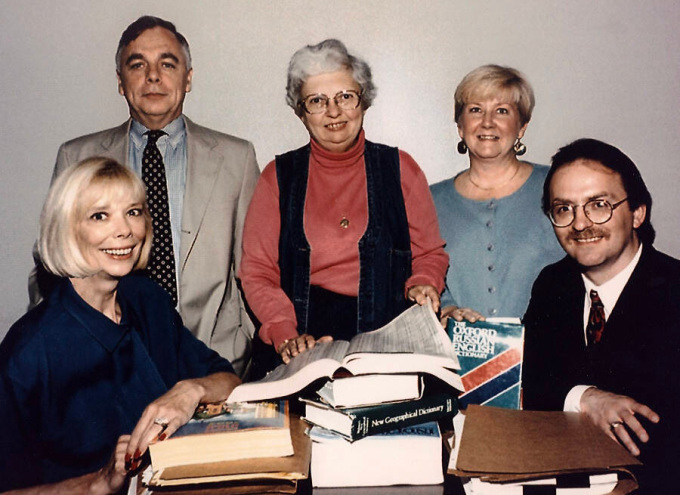
The CIA team investigating Ames included Sandra Grimes, Paul Redmond, Jeanne Vertefeuille, Diana Worthen, and Dan Payne (in order from left to right). Photo: CIA
The CIA and FBI tracked Ames by placing devices in his car, wiretapping his phone, and examining discarded items. Before long, they had enough evidence to arrest Ames and his wife on February 21, 1994. Ames initially denied being a double agent, insisting the CIA and FBI were "making a huge mistake" and "arresting the wrong person."
But Ames quickly changed his tone. He eventually admitted to all his espionage activities. It's unclear how much Rosario Ames knew about her husband's double work, but she had signed their tax returns and had a suspicious phone call with Ames.
Aldrich Ames later pleaded guilty to espionage and was sentenced to life imprisonment without parole. He has been incarcerated in a federal prison in Herre Haute, Indiana, ever since. His wife, Rosario, also pleaded guilty to tax evasion and conspiracy to commit espionage. She served five years in prison and returned to Colombia after her release.
Ames said his motive was purely financial. "Many people need money. Historically, some CIA agents have stolen money from the agency and done terrible things for it. But very few people sold secrets to the KGB because they saw so many obstacles. As for me, in 1985, some of those obstacles were gone. I don't believe I compromised the security of the country and the safety of its people," he said.
Ames stated that in the early stages of his espionage for the Soviet Union, he only provided "trivial, worthless" information. However, Viktor Cherkashin, a retired KGB agent who had contact with Ames, said in 1997 that Ames had passed on crucial information from the very beginning.
Washington said that Ames had severely damaged American property and caused the deaths of at least 10 people. "There were people who died simply because the traitor wanted a bigger house and a Jaguar," said R. James Woolsey, then-CIA director.
Thanh Tam (According to ATI )
Source link


















































































Comment (0)