

According to statistics from the Ministry of Education and Training (MOET), as of August 2024, 32.76% of universities were self-sufficient in covering both recurrent and investment expenditures; 13.79% of universities were self-sufficient in covering recurrent expenditures. Approximately 16.38% of universities had not yet achieved self-sufficiency in recurrent expenditures but planned to do so in the near future. The percentage of universities currently receiving state budget funding for recurrent expenditures was very low (only 3.45%).
In the context of low budget allocations for higher education , public universities are heavily reliant on tuition fees for revenue. Reports from many universities indicate that tuition fees currently account for over 90% of their total revenue. For example, according to the publicly available report of Ho Chi Minh City University of Technology, in the 2022-2023 academic year, tuition fees accounted for over 90% of revenue, with revenue from science and technology accounting for the remainder.
According to experts, the three main sources of revenue for universities in both Vietnam and the world include the state budget, tuition fees, and other sources (revenue from technology transfer, service activities, donations, public-private partnerships, etc.). Because the majority of revenue comes from tuition fees, for three consecutive years due to the pandemic, the government requested that universities not increase tuition fees to share the burden with students, causing many schools to complain about financial difficulties. Subsequently, tuition fees were allowed to increase, with some educational institutions raising fees by up to 37%, causing many families and prospective students to hesitate when considering admission.
Dr. Le Truong Tung - Chairman of the University Council (FPT University) believes that diversifying revenue sources in financial autonomy needs to be viewed within the overall education system, not just from the perspective of individual universities. Specifically, at FPT University, there are two main sources of revenue: student tuition fees (accounting for 70%) and investment capital from the FPT Group (accounting for 30%). Although the university also conducts many scientific research activities, revenue from scientific research remains low because the cost of scientific research is very high.
Professor Ho Dac Loc, Rector of Ho Chi Minh City University of Technology, stated that the university's main source of revenue is tuition fees. However, the high total revenue doesn't come from high tuition fees but from the increased scale of training. Over the past five years, the university has continuously expanded its training programs and scale while ensuring training quality. Currently, the university has a large training scale with approximately 60 programs, ranging from bachelor's/engineering/pharmacy/architecture degrees to master's and doctoral degrees.
However, the university has not been able to diversify its revenue sources because the search for and exploitation of revenue sources such as scientific research and technology transfer, international funding projects, international training cooperation, training cooperation based on business needs, and contributions from alumni or donations are not yet widespread. In addition, the mechanisms and policies regarding financial autonomy in higher education are still quite complex, leading to certain limitations.
Associate Professor Dr. Dinh Van Chau - Rector of the University of Electrical Engineering, believes that another reason stems from the fact that the universities have not fully utilized their resources such as human resources, material resources, and time; they have not maximized the efficiency of their assets because the universities have not yet developed a plan for leasing public assets that has been approved by higher authorities.
To increase these revenue sources, the school has intensified research into mechanisms and policies to lead and direct its activities. It has built and developed relationships with businesses to mobilize funding and donations for school activities (the school established a Center for Employment and Entrepreneurship Support); and at the same time, helped businesses see the benefits of investing in education at the school. It has also strengthened incentives and recognition for organizations or individuals that generate revenue for the school.
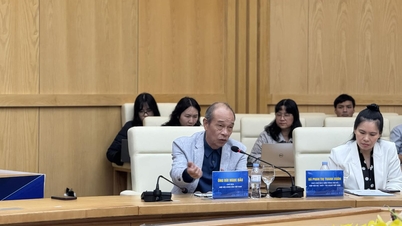
Professor Nguyen Mau Banh, Chairman of the Vietnam Association of Retired Teachers, believes that all universities need to identify and diversify revenue sources beyond tuition fees, reducing pressure on students as an important task, and strive to find solutions to achieve this. At the same time, policies and mechanisms also need to be improved to create favorable conditions for universities to fulfill this task.
In addition, Professor Pham Mau Banh also emphasized that the source of revenue is not as important as how the investment is spent to bring the best results and quality for students.
Source: https://daidoanket.vn/da-dang-hoa-cac-nguon-thu-ngoai-hoc-phi-10290284.html































































Comment (0)