

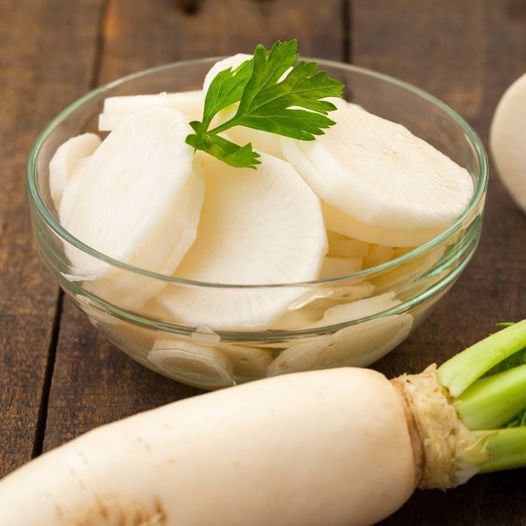
The radish is likened to ginseng because it contains many valuable nutrients - Illustration image
Many valuable nutrients help prevent and treat diseases.
Dr. Dinh Minh Tri, from the University of Medicine and Pharmacy of Ho Chi Minh City, shared that eating radishes, especially white radishes, daily is very good for health. White radishes have an extremely rich nutritional composition.
According to statistics, while each food type contains 80 nutrients, white radish contains as many as 69, including plenty of fiber, rich in trace elements with properties that protect muscles and nerves, fight inflammation, allergies, and infections, relieve constipation, contain antioxidants, and sulfur compounds that can prevent cancer, aging, and cataracts in the elderly.
Analysis results show that 100g of radish contains 1.4g of protein, 3.7g of carbohydrates, 1.5g of cellulose, 40mg of calcium, 41mg of phosphorus, 1.1mg of iron, 0.06mg of vitamin B1, 0.06mg of vitamin B2, 0.5mg of vitamin PP, and 30mg of vitamin C. The leaves and shoots of the radish contain essential oils and significant amounts of vitamins A and C; if properly processed and used, they can have beneficial effects.
- Cell protection : White radish is a rich source of antioxidants such as catechin, pyrogallol, vanillic acid, and other phenolic compounds. In addition, it contains a large amount of vitamin C, which acts as an antioxidant to protect cells from damage.
- Regulating blood pressure : White radish is a good source of potassium, offering numerous health benefits. Potassium helps lower blood pressure by dilating blood vessels and increasing blood flow.
- Boosts the immune system: White radish is a rich source of vitamin C, which helps rejuvenate the immune system by promoting the regeneration of white blood cells. This is essential for fighting diseases such as cancer and the common cold.
- Prevents aging: White radish contains a lot of vitamin C and antioxidants, so eating it can also prevent the harmful effects of free radicals that cause cell aging. You can mash fresh white radish and apply it to the skin; its cleansing properties will help make the skin cleaner and brighter.
- Reduces cancer risk: White radish contains phytochemical compounds and anthocyanins with anti-cancer properties. In addition, its high vitamin C content has a strong antioxidant effect, helping to prevent damage caused by free radicals, thereby preventing and reducing the risk of cancer.
- Good for the digestive system: White radish is rich in fiber, which enhances the secretion of digestive juices and bile, making the digestive system work more efficiently. This helps stimulate bowel movements and supports the digestive process. It also helps increase bile production, which is considered an important part of digestion and helps protect the gallbladder and liver.
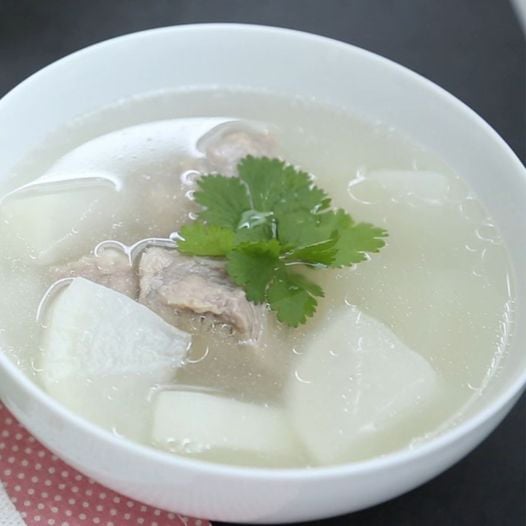
Turning radishes into delicious dishes and medicinal remedies is very good for the body - Illustration.
Radishes can treat constipation, stroke, and other conditions...
According to Master of Science Hoang Khanh Toan, former head of the Traditional Medicine Department at the Central Military Hospital 108, radishes are used in traditional medicine to treat many diseases. They have a sweet, slightly spicy, and bitter taste, are neutral in nature, non-toxic, and affect the spleen, stomach, and lung meridians.
In traditional Chinese medicine, radishes are used to treat poor appetite, rickets, mineral deficiencies, intestinal fermentation, chronic liver pain, jaundice, gallstones, arthritis, rheumatism, respiratory diseases (cough, asthma), stroke, diabetes, and more.
Traditional Chinese medicine also uses radishes to treat dysentery, detoxify the body, and as a poultice for burns. The seeds are used to treat phlegm, asthma, dysentery, boils, constipation, and to clear stagnant qi. The leaves are used to treat hoarseness, intestinal bleeding, hemoptysis, and asthma in the elderly. The method of use is as follows:
- For measles: Wash 500g of radish, crush it and extract the juice, add a little rock sugar, then steam it in a double boiler. Let it cool, and divide it into several doses to drink throughout the day. This is used to treat measles during the rash stage accompanied by coughing and excessive phlegm.
- Constipation: 100g white radish, a sufficient amount of honey. Wash the radish, crush it, extract the juice, and mix it with honey to drink throughout the day (using a juicer is even better).
Uses: Clears heat and promotes bowel movements; suitable for people with constipation, general feeling of heat in the body, irritability, flushed face, abdominal distension and pain, scanty and reddish urine, dry lips and mouth, preference for cool drinks, red tongue, dry yellow tongue coating...
- For stroke : 30g each of Job's tears, white kidney beans, and Chinese yam; 60g of white radish; and 60g of rice. Wash the radish, cut it into pieces, and cook it with Job's tears, white kidney beans, Chinese yam, and rice to make porridge. Add seasonings to taste and divide into several servings throughout the day. A course of treatment lasts 7 days.
Uses: Strengthens the spleen, eliminates dampness, suitable for people with hemiplegia due to stroke, fatigue, poor appetite, slow digestion, difficulty speaking, etc.
- For picky eaters : 250g white radish, 250g wheat flour, 100g lean pork, vegetable oil and seasonings to taste. Wash the radish and pork, slice them thinly, and marinate with fresh ginger juice, chopped onions, and seasonings to taste.
Heat vegetable oil in a pan until very hot, then add radishes and pork and stir-fry until cooked; knead flour with water and shape into small patties, fill with radish and pork, fry until cooked, and let children eat as desired.
Uses: Regulates qi and promotes digestion; suitable for children with poor appetite, bloating, slow digestion, frequent belching, restless sleep, bad breath, excessive thirst, irregular bowel movements (constipation or diarrhea), frequent flatulence, thick and sticky tongue coating, etc.
- For pregnant women experiencing excessive vomiting: Mash a radish, boil it with honey, and give the woman the mixture to drink slowly, in small amounts.
- Cough remedy: 1 kg of radish, 100 g of honey, a sufficient amount of diluted salt water. Wash the radish and cut it into finger-sized pieces. Soak the radish in honey for one day, then take it out and stir-fry it over very low heat for 30 minutes. After that, add more honey and stir-fry it several times until the honey thickens. Store in an airtight jar for later use.
Uses: Dispels stagnation and blood stasis, nourishes the body and replenishes vital energy. Eat twice a day, 2-3 pieces each time, with diluted salt water.
- White radish should not be eaten with ginseng because they have incompatible properties that can be detrimental to the body.
- Avoid eating white radish with oranges as it increases the risk of goiter.
- White radish is incompatible with crab because its cooling properties can cause bloating and diarrhea...
- Do not cook and eat radishes and carrots together, as this neutralizes vitamin C and reduces their nutritional value.
Source: https://tuoitre.vn/cu-cai-duoc-vi-nhu-nhan-sam-vi-sao-20241021080229725.htm

![[Photo] General Secretary To Lam presides over a thematic session on strategic technology.](https://vphoto.vietnam.vn/thumb/1200x675/vietnam/resource/IMAGE/2026/03/18/1773838586650_anh-1-bnd-1822-7089-jpg.webp)


![[Photo] Prime Minister Pham Minh Chinh holds a phone call with Algerian Prime Minister Sifi Ghrieb](https://vphoto.vietnam.vn/thumb/1200x675/vietnam/resource/IMAGE/2026/03/18/1773849689752_ndo_br_dsc-9609-jpg.webp)

































































































Comment (0)