

The spice starch granules found in An Giang have revealed the "spice route" through the Oc Eo trading port (An Giang).
Starch grains that are thousands of years old
Artifacts that Vietnamese archaeologists still tentatively call "grinding tables" were recently discovered during the 2017-2020 Oc Eo archaeological excavation conducted by the Vietnam Academy of Social Sciences (VASS). Many similar artifacts had been unearthed decades earlier and subsequently displayed at the An Giang Museum.
By July 2023, research on deposits on the surfaces of grinding tables had revealed traces of "spice routes" from insular Southeast Asia and South Asia spreading to many parts of the world via the Oc Eo trading port during the Funan kingdom period in the early centuries AD.
"Previously, there was much debate in Vietnamese archaeology about grinding stones. Some said they were used to grind spices, others said to grind herbs for medicine. Then there were the spices that were ground to prepare special foods for religious ceremonies or in daily life. Many questions and hypotheses were put forward, but until now there has been no convincing scientific evidence. Without concrete evidence, everything is just speculation…," recalled Dr. Nguyen Khanh Trung Kien, the lead archaeology excavation project implemented by the Southern Institute of Social Sciences.
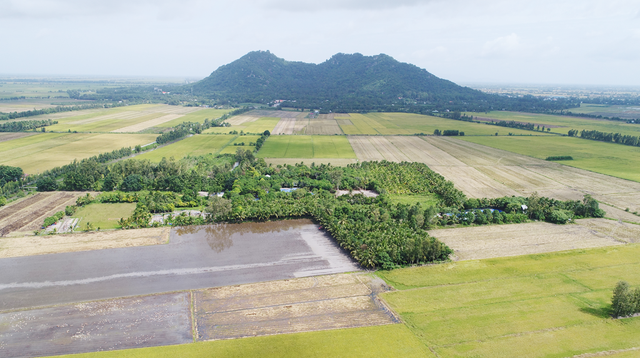
Dr. Nguyen Khanh Trung Kien, along with a research team at the Australian National University, recently published the results of their study on these grinding stones in the journal Science Advances. The research team, led by Dr. Kien and including Professor Hsiao-chun Hung and two Australian National University PhD students, Weiwei Wang and Chunguang Zhao, has been conducting research since 2018. They searched for starch residues on the surfaces of the grinding stones found in Oc Eo, thereby determining the function of these tools and the types of spices that were once ground on them. Based on these findings, the team has speculated about the spice usage habits of the ancient inhabitants of Oc Eo .
"Analyzing phytochemicals obtained from the surfaces of Oc Eo stone tools, the team identified spices believed to originate from South Asia and island Southeast Asia, including turmeric, ginger, cloves, nutmeg, cinnamon… These spices are indispensable ingredients used in curry recipes in South Asia today. The discovery of these spices suggests the possibility that South Asian traders or travelers brought this culinary tradition to Southeast Asia during the early period of maritime trade contacts across the Indian Ocean, beginning around 2,000 years ago," the research team published in the journal Science Advances.
According to the report, a total of 717 starch granules were recovered from the surfaces of the studied tools, of which 604 could be identified by species. Researchers identified eight different spices, along with the presence of rice. Many of the starch granules showed signs of deformation, including broken edges, flat surfaces, and loss of the thin outer layer due to being crushed on grinding tables.
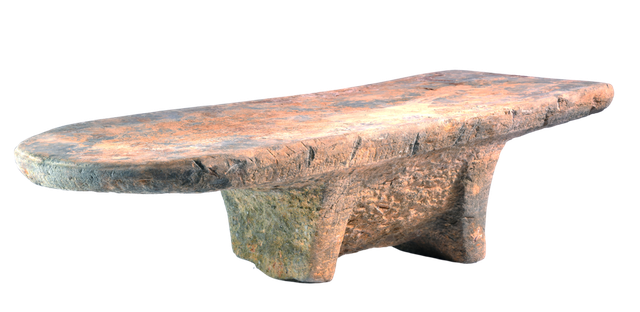
Grinding stones were found at the bottom of the ancient Lung Lon canal, in the Oc Eo - Ba The archaeological site.
The story of curry, the story of the "spice road".
A newly published study by Dr. Kien and colleagues reveals that traces on stone grinding tools and mortars also show that ancient people in Oc Eo used native ingredients from South Asia and Southeast Asia such as turmeric, ginger, galangal, ginger root, cloves, nutmeg, and cinnamon. These spices could all have been used as ingredients in curry dishes. Among them, cinnamon, nutmeg, and cloves may have been imported to Oc Eo from distant locations in South Asia and eastern Indonesia. A nutmeg seed analyzed for age showed it to be around the 2nd-3rd century, and a large grinding stone found in the soil layer also dates back to a similar period.
The group said that curry may have been known for over 4,000 years in Harappan (Pakistan) and India, where starch granules of turmeric, ginger, eggplant, and mango were found sticking to people's teeth and in cooking pots. "Today, curry remains popular in Southeast Asia. The ingredients found at Oc Eo are more suited to modern Southeast Asian curry than South Asian curry, when mixed with endemic spices, incorporating coconut milk…," the group stated.
However, demonstrating the spread of curry from India to Southeast Asia is not the most valuable aspect of this study. Most importantly, these findings confirm the exchange of spices between the Southeast Asian islands and Oc Eo during the Funan kingdom period.




















![[Video] The craft of making Dong Ho folk paintings has been inscribed by UNESCO on the List of Crafts in Need of Urgent Safeguarding.](https://vphoto.vietnam.vn/thumb/402x226/vietnam/resource/IMAGE/2025/12/10/1765350246533_tranh-dong-ho-734-jpg.webp)

























































Comment (0)