


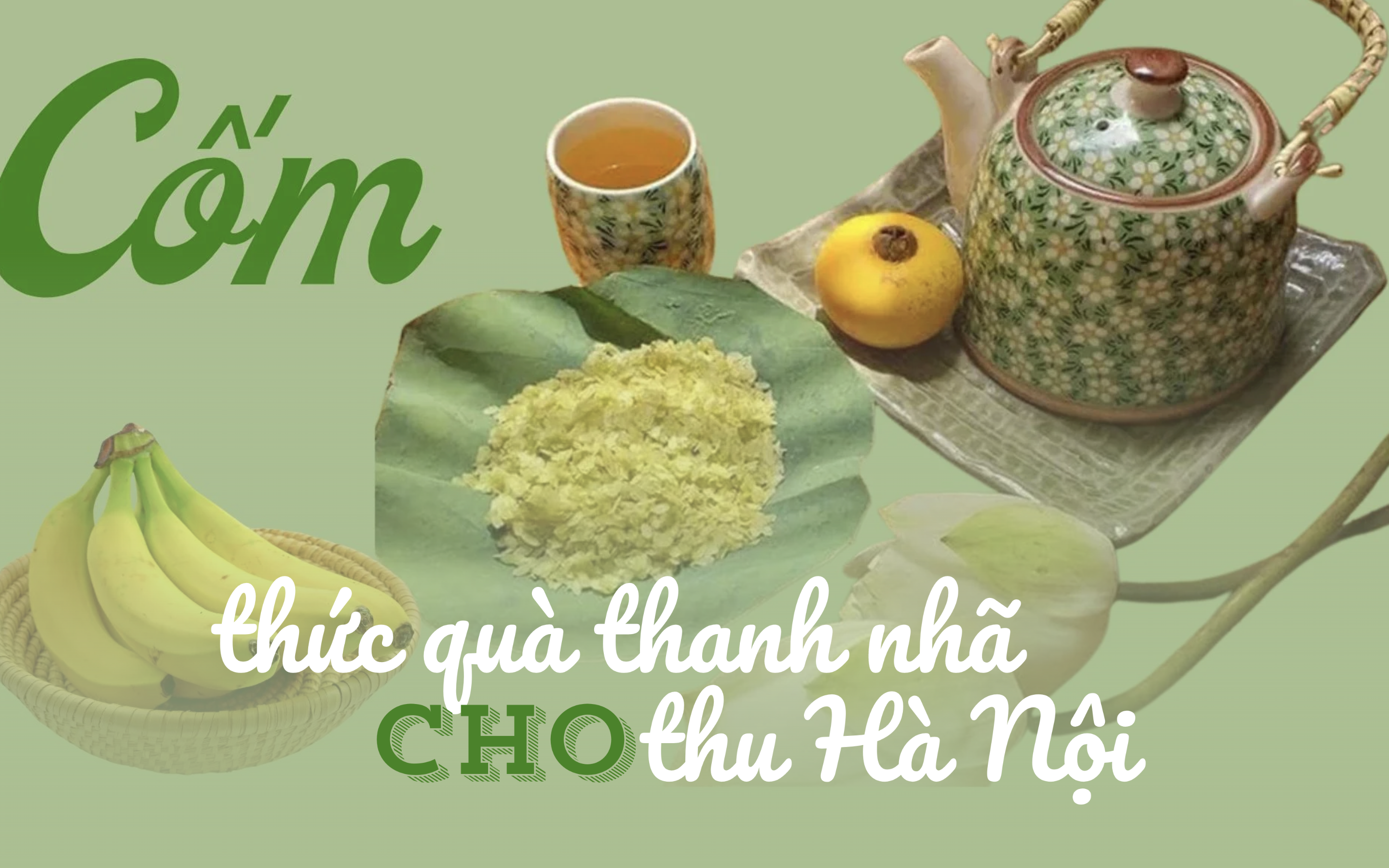
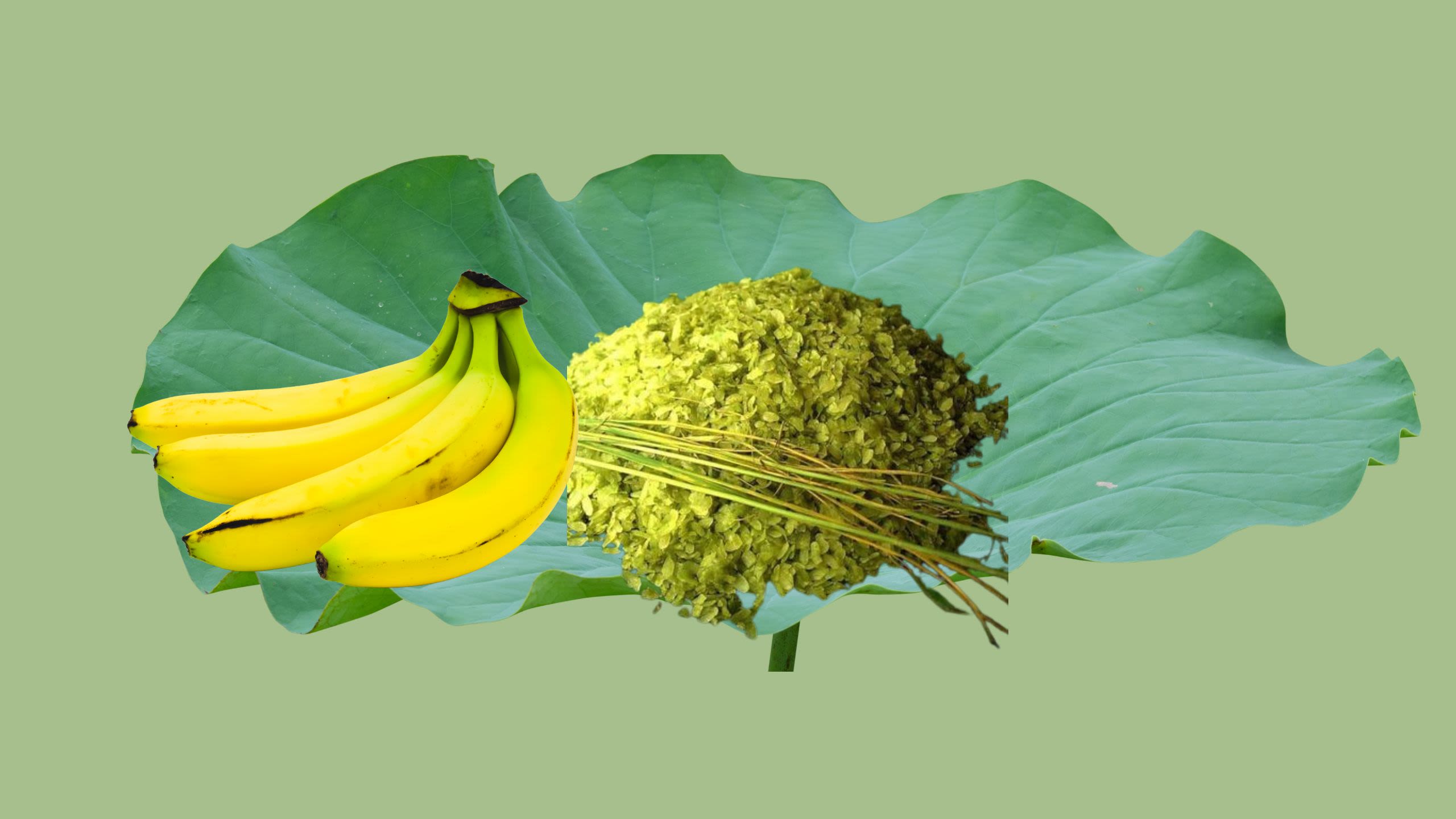
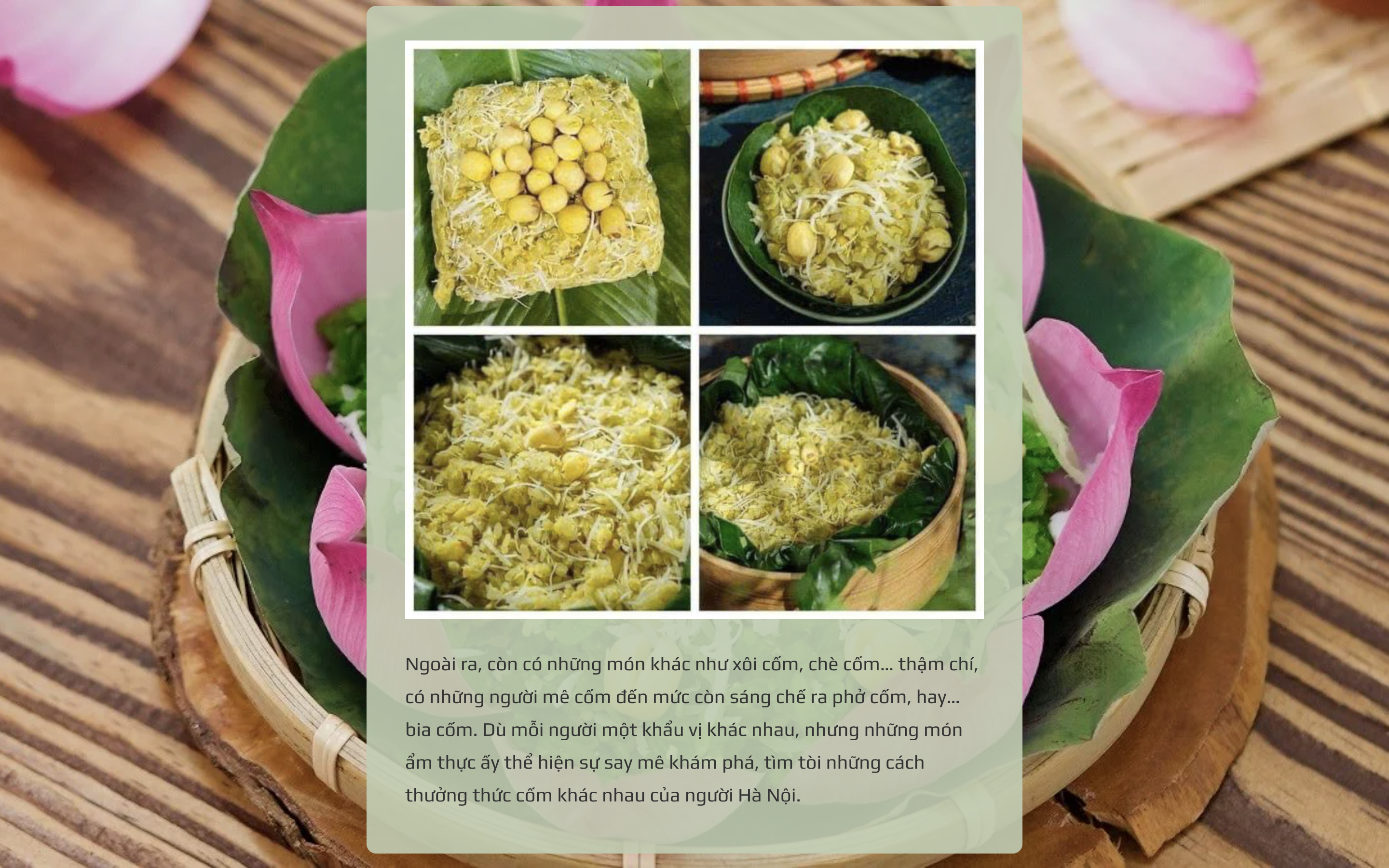
But perhaps, the deliciousness of autumn green rice flakes is also due to the combination with other treats, also during this autumn season. Hanoians have a habit of enjoying Cavendish bananas with green rice flakes. Cavendish bananas bear fruit year-round, but they are at their most fragrant and delicious in autumn. And at this time, the bananas are fully ripe, with a yellow color speckled with black spots – these are the "egg bananas." Eating the banana with the fresh green rice flakes, when chewed, the banana and rice flakes blend together, melting in the mouth. Also in autumn, various types of persimmons appear, adding new flavors to the combination with the rice flakes.
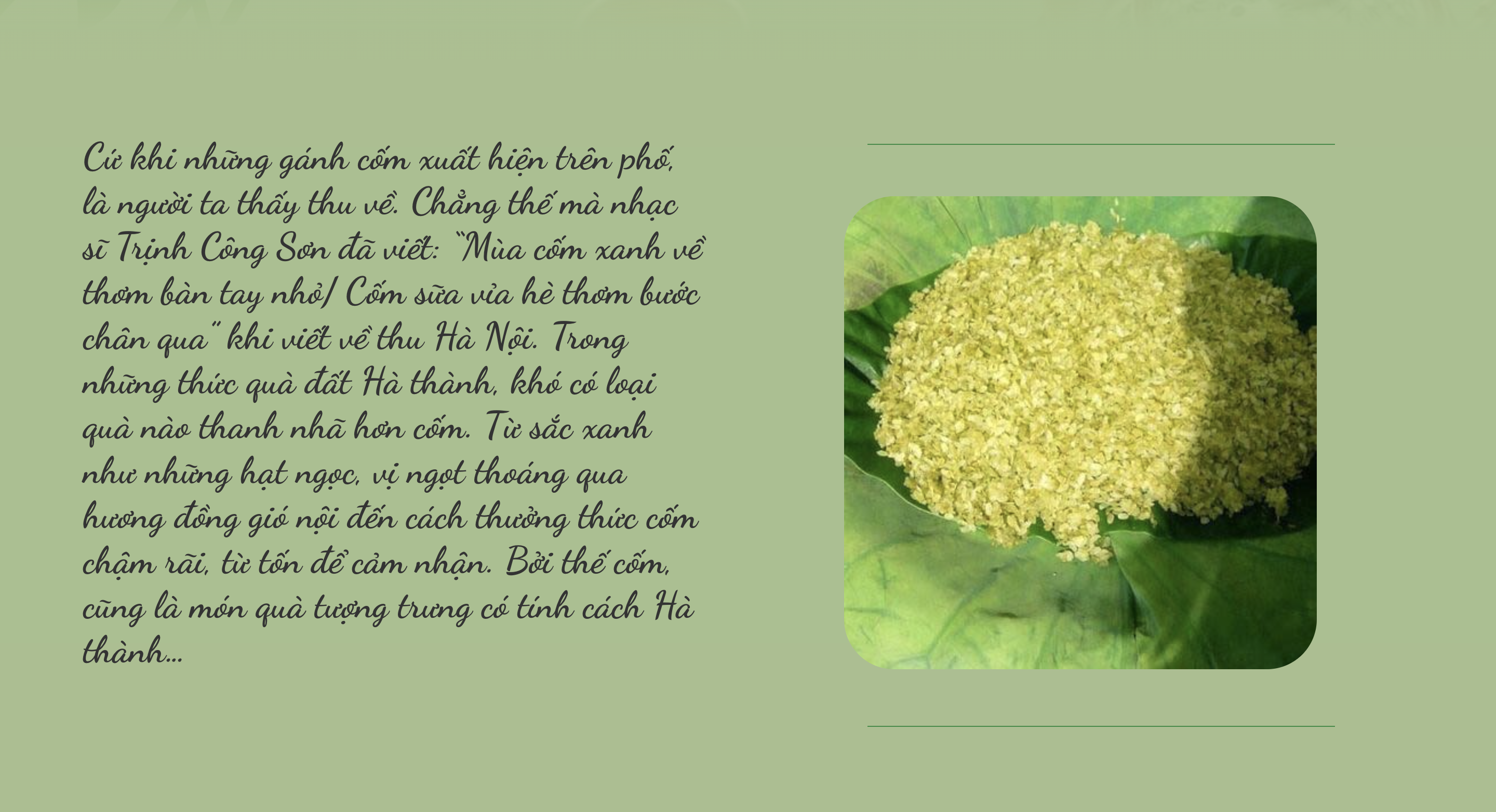
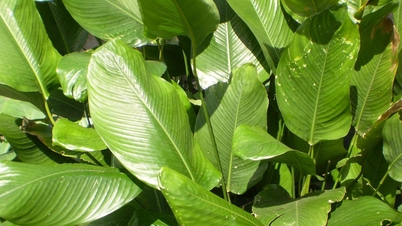
Although there are many different ways to enjoy it, many people still prefer "plain" cốm, meaning enjoying it without any other fruits. Cốm is usually wrapped in a lotus leaf, sometimes in a taro leaf tied with a piece of sticky rice straw. Holding the package in your hand, you can smell the sticky rice straw and the subtle fragrance of the lotus leaf. Opening the package, the green cốm grains release a gentle aroma that blends with other fragrances, making one not only enjoy it with their taste buds but also feel as if the gift contains the essence of the countryside.
Green rice flakes are a snack meant to be enjoyed casually. Gently use three fingertips to pick up a small amount and put it in your mouth. The aroma and taste of green rice flakes are all delicate and mild. You have to chew slowly and deliberately to fully appreciate the sweet fragrance of the young rice grains, the result of so much effort.
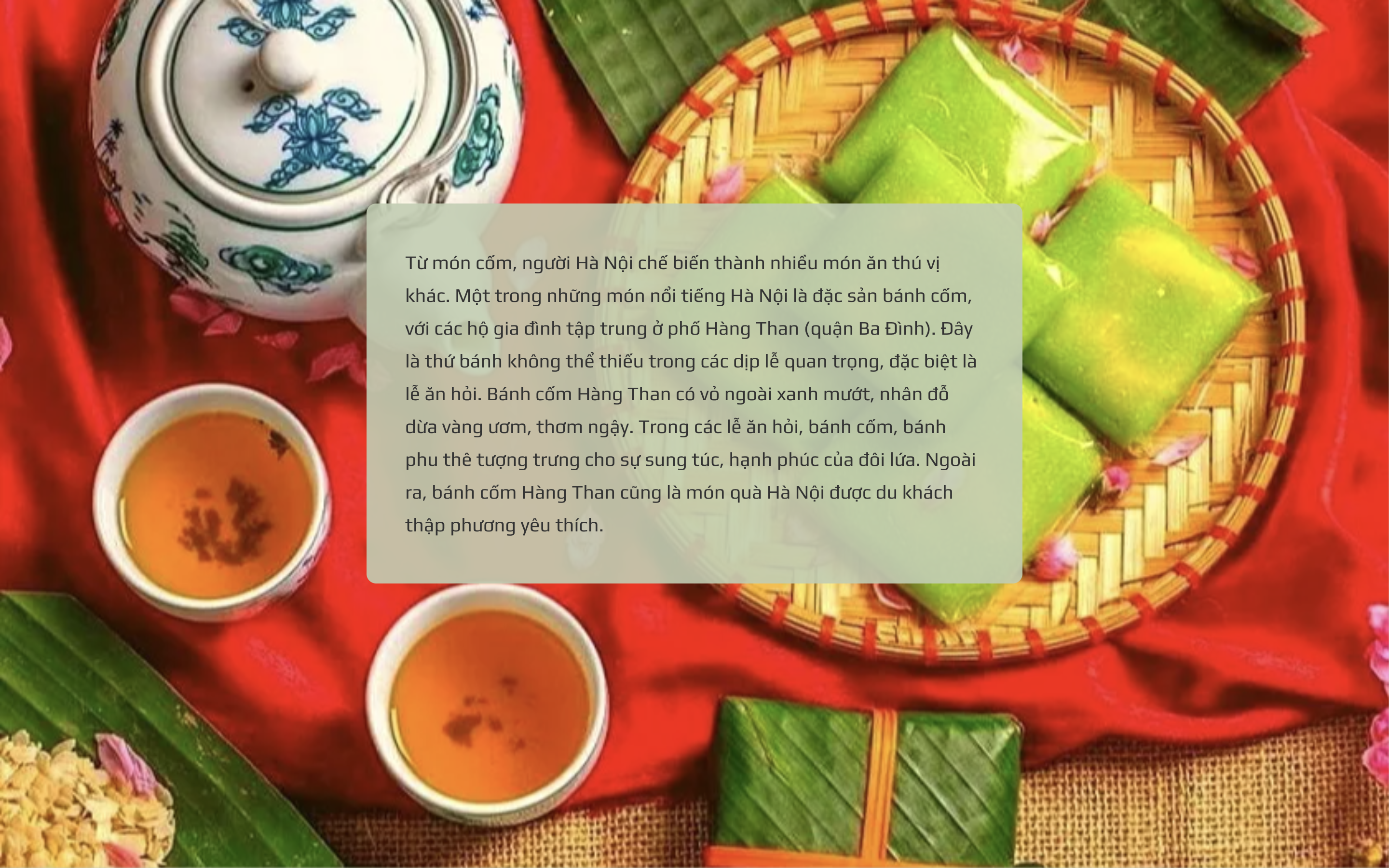
Hanoi people are known for their refined culinary traditions , from preparation to enjoyment. Green rice flakes (cốm) symbolize autumn, and are a miniature representation of Hanoi's cultural sophistication. The presentation of green rice flakes wrapped in lotus leaves, alongside pink and banana blossoms, creates an appealing experience for both taste and sight.

The way to enjoy cốm (young rice flakes) is elaborate, and the process of making them is also very meticulous. Hanoi has two famous cốm villages: Vòng village (now part of Dịch Vọng Hậu ward, Cầu Giấy district) and Mễ Trì village (now part of Mễ Trì ward, Nam Từ Liêm district). Both villages have a long-standing tradition. Although the experience of each household may differ, the first common point is that the raw material must be high-quality rice. The most preferred is glutinous rice, which produces plump grains with a fragrant aroma.

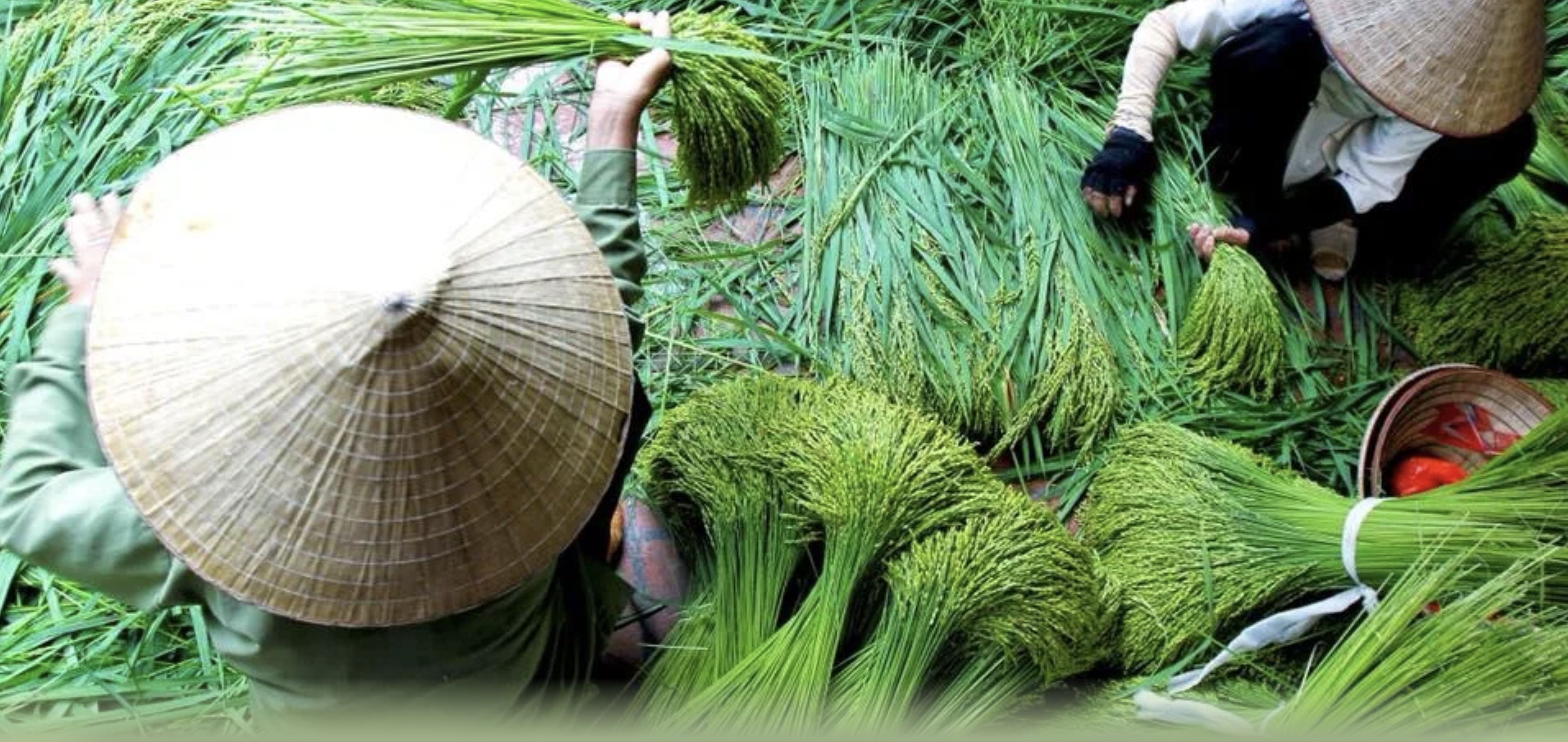
Harvesting young rice for making cốm (a type of Vietnamese rice snack) requires precise timing to ensure the highest quality. From the moment the rice plants begin to flower, cốm makers closely monitor their growth. When the grains are still green but starting to swell, and a white sap oozes out when pressed, it's called "milky rice." This is the most suitable time to harvest the rice. Young glutinous rice contains a significant amount of water, making it pliable and preventing it from breaking during pounding, while also preserving its best flavor. Young glutinous rice also contains a lot of chlorophyll, giving cốm its jade green color, the natural green of young rice. Harvesting usually begins at dawn, and the rice is quickly transported to households for cốm processing. The shorter the time between cutting the rice stalks and starting the processing, the better the quality of the cốm.
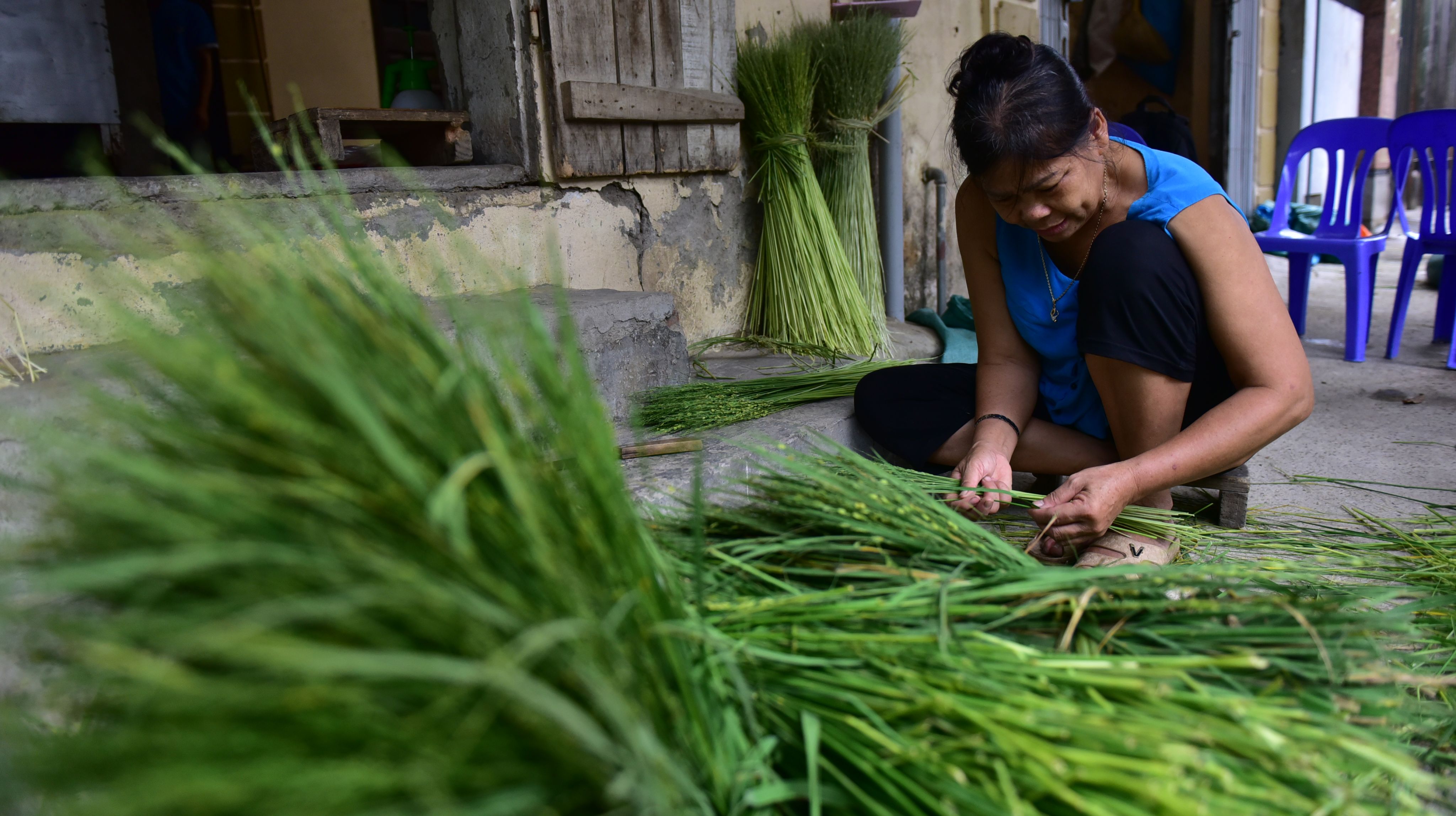
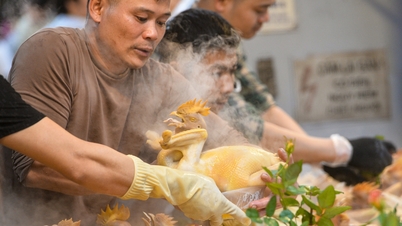
First, the rice is threshed and the unripe grains are removed. Then, the young rice grains are roasted while still fresh. Making a batch of puffed rice involves many steps, but perhaps the roasting process is considered the common secret of the traditional villages. This is considered the most important step, determining the quality of the puffed rice. With their experience, the puffed rice makers know when to roast it to the perfect doneness, preserving its natural aroma and flavor. Another common point among these villages is that they use firewood for roasting, not charcoal or gas stoves. Using firewood allows for easier heat control, and the aroma of the wood smoke is also different from using industrial fuels.
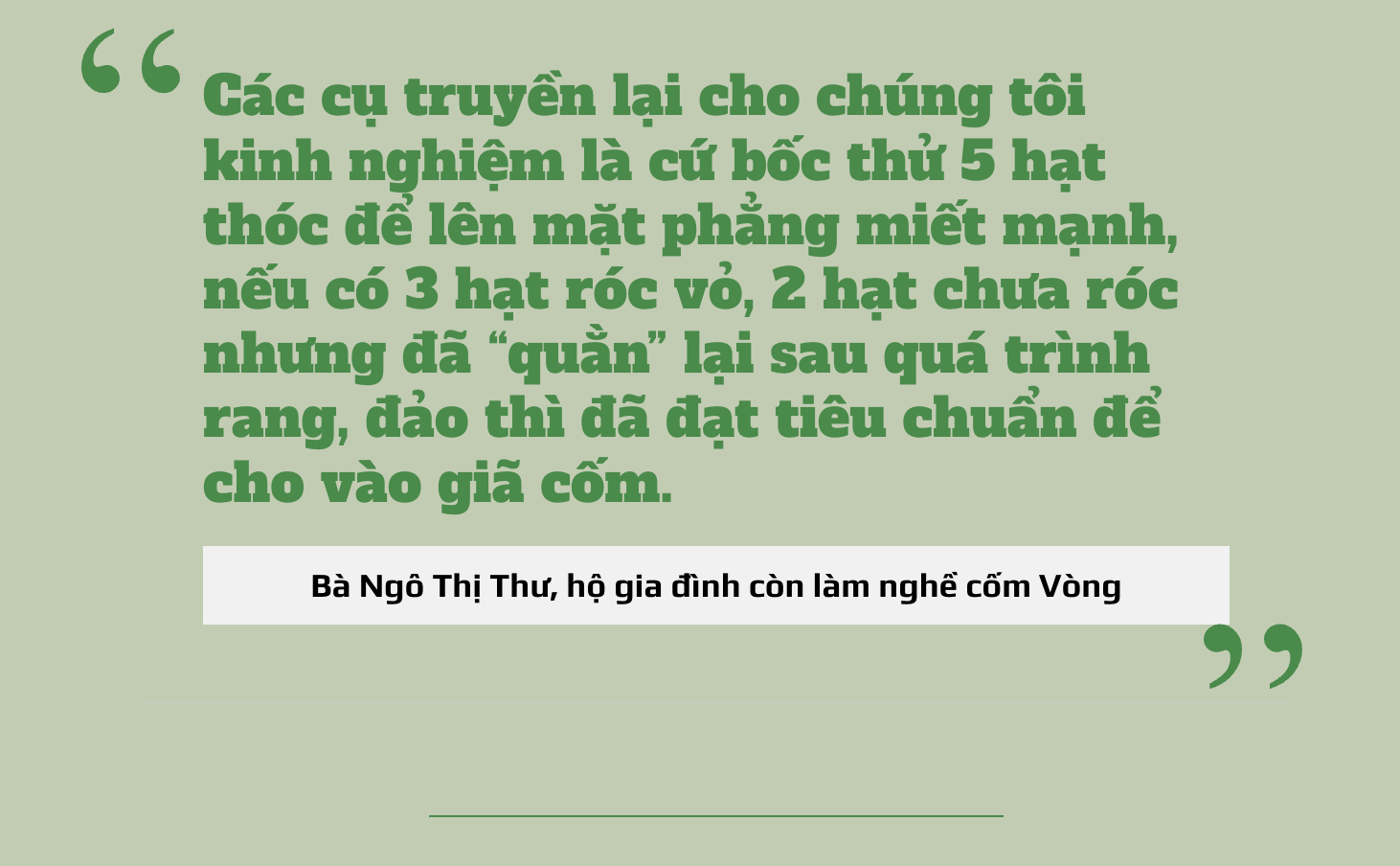
Ms. Ngo Thi Thu, whose family still makes Vong rice flakes, shared: "Our elders passed down to us the experience that we should take 5 grains of rice and rub them firmly on a flat surface. If 3 grains have their husks removed, and 2 grains haven't but have 'bent' after roasting and stirring, then they meet the standard for pounding into rice flakes."
The process of pounding, sifting, and winnowing the rice depends on the experience of the maker, as well as the ripeness of the rice grains. After pounding, the rice is sifted and winnowed to remove husks and impurities. Some batches are done three or four times, but sometimes it takes six or seven times to complete. Pounding the rice must be done with a stone mortar to ensure the rice flakes are smooth and chewy.
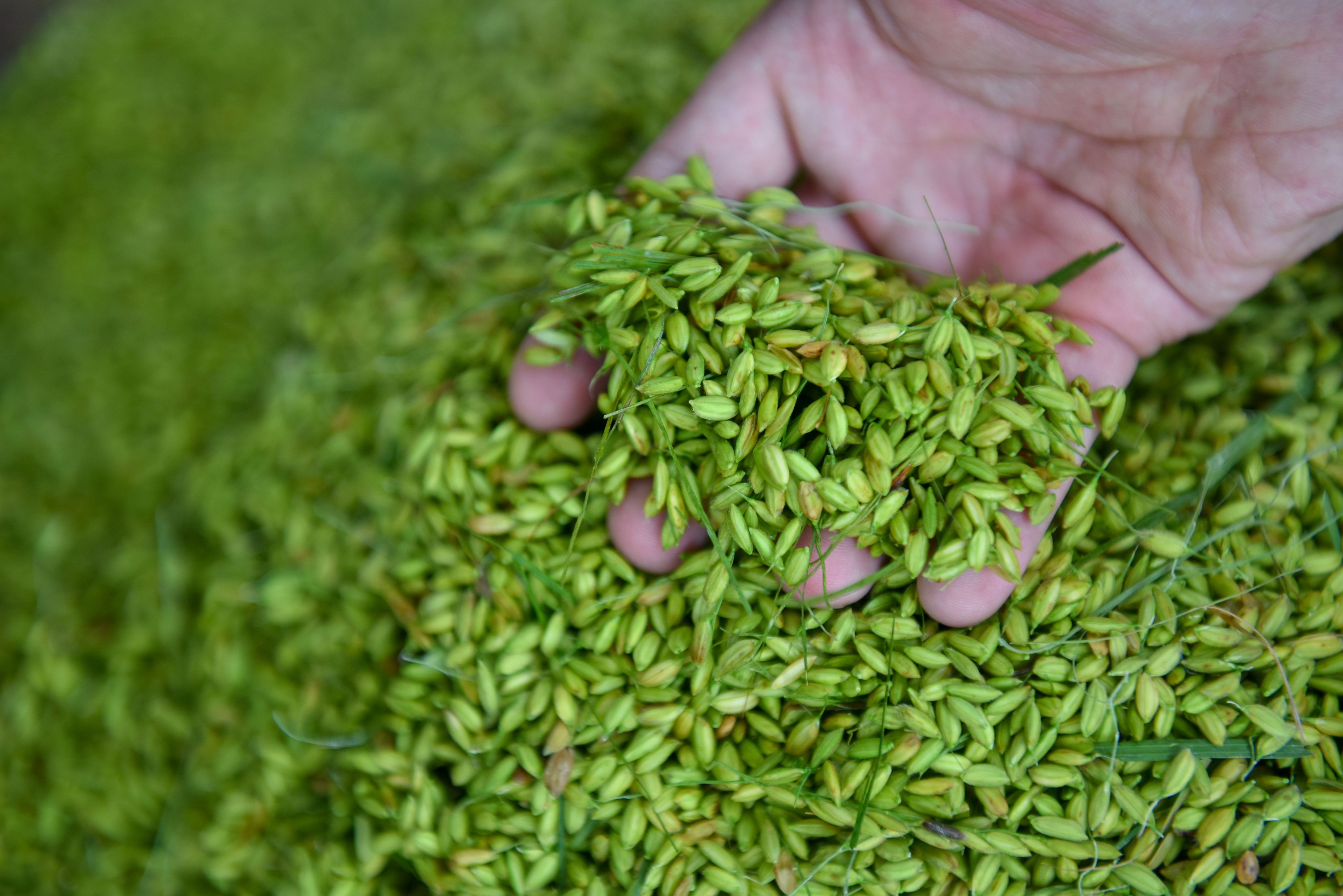
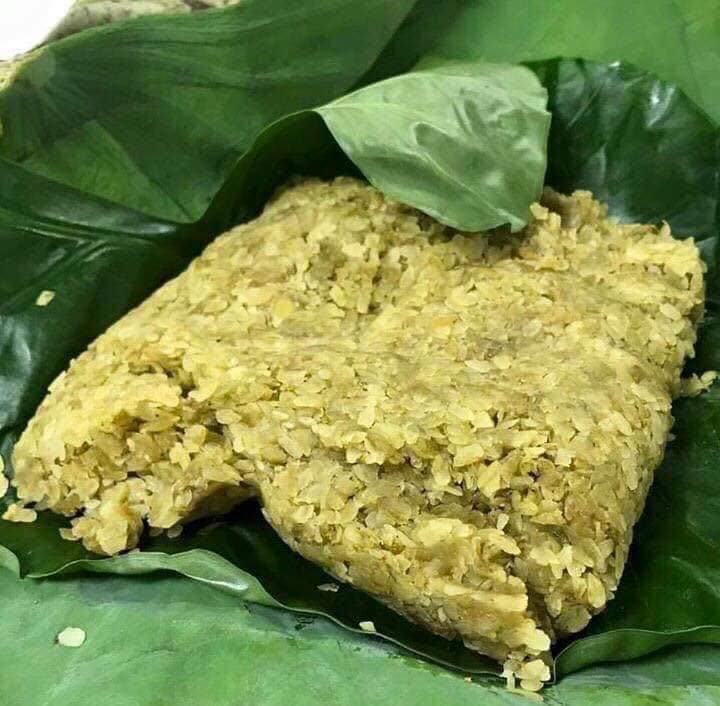
The people of Vòng village divide sticky rice flakes into four types: sticky rice flakes with tamarind leaves, sticky rice flakes with young grains, and sticky rice flakes with mature grains. The best type is sticky rice flakes with tamarind leaves. They are called sticky rice flakes with tamarind leaves because these are the grains that fly out during the winnowing process. Sticky rice flakes with tamarind leaves are very rare and hardly ever sold in the market. Sticky rice flakes with young grains, or "first-hand rice flakes," are very young grains. During processing, the smallest, youngest rice grains clump together. Each batch of sticky rice flakes yields only about 2/10 of the total weight of sticky rice flakes. Even less is possible, especially towards the end of the season when the rice grains are older. Young rice flakes are the main component of each batch. Finally, sticky rice flakes with mature grains are considered the least delicious of the four types, meaning the grains formed from older rice grains. Some people also call this "raw rice flakes." This type is often used to make sticky rice patties.
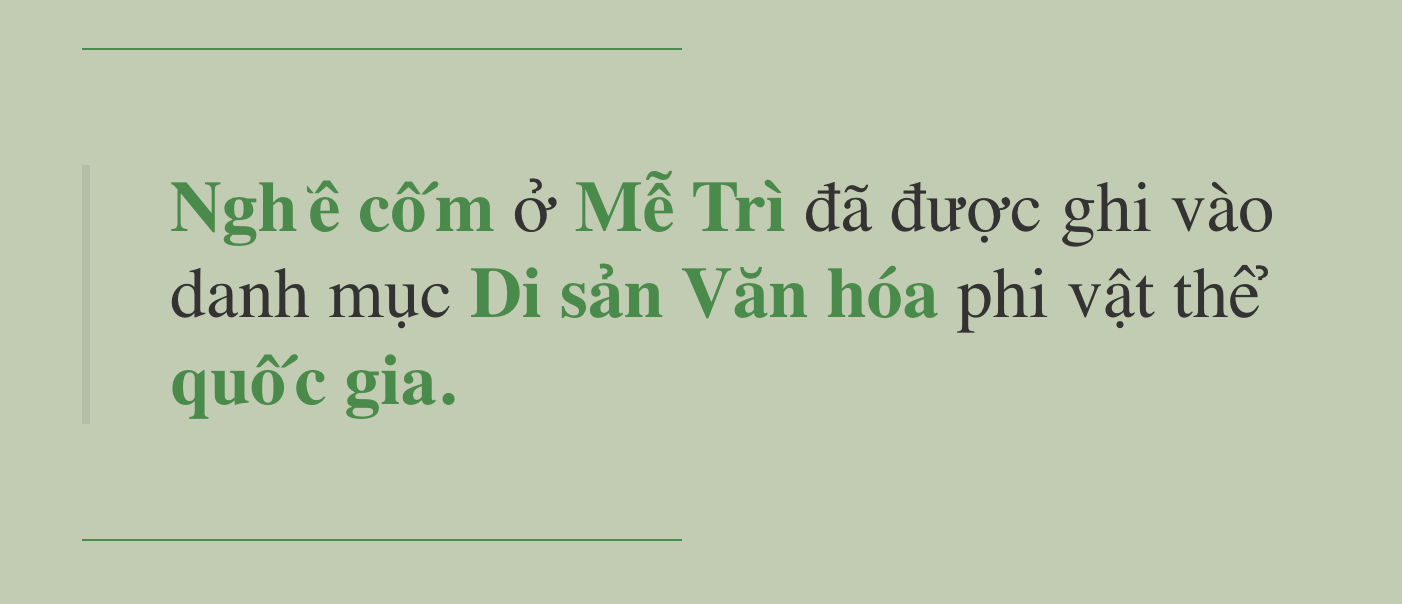
Due to urbanization, fewer and fewer people in Vong village now make puffed rice (cốm) than before. Meanwhile, Me Tri's puffed rice making tradition has developed steadily, and the craft has been listed as a National Intangible Cultural Heritage. From dawn, the village is bustling with the sounds of machines roasting the rice, pestles pounding the rice, and the fragrant smoke from the cooking fires.

Nhandan.vn
Source: https://special.nhandan.vn/Com-thuc-qua-thanh-nha-cho-thu-Ha-Noi/index.html

















![[Video] President Luong Cuong extends New Year greetings for the Year of the Horse 2026](https://vphoto.vietnam.vn/thumb/402x226/vietnam/resource/IMAGE/2026/02/17/1771263303825_thumb-ctn-jpg.webp)
![[Video] Preserving the spirit of Vietnamese Tet with Thanh Tien paper flower branches](https://vphoto.vietnam.vn/thumb/402x226/vietnam/resource/IMAGE/2026/02/17/1771262409269_720-jpg.webp)

![[Video] Spring of the Year of the Horse: Talking about horsemanship in Vietnamese traditional martial arts](https://vphoto.vietnam.vn/thumb/402x226/vietnam/resource/IMAGE/2026/02/17/1771261510974_capturethumb-jpg.webp)






































Comment (0)