


In summary, after 40 years of reform, Vietnam's lesson is to "unleash" economic thinking, shifting from a centrally planned, bureaucratic, and subsidized economy to a multi-sector market economy. From there, it gradually shaped and progressed towards a socialist-oriented market economy.
A major success is the transformation of the country from a severe food shortage crisis to becoming a world leader in rice exports, while the value of exports of other goods continues to increase, reaching a total import and export turnover of nearly 800 billion USD in 2024.
From the "eve of reform," Quang Nam province had already made strategic decisions to overcome its own limitations. Particularly in defining the path of economic restructuring after the province's re-establishment, Quang Nam took steps to "unleash" (even steps that were once considered "breaking the rules") to promote industrial and service sector development.
Lessons from the "night before the implementation of Contract 10"
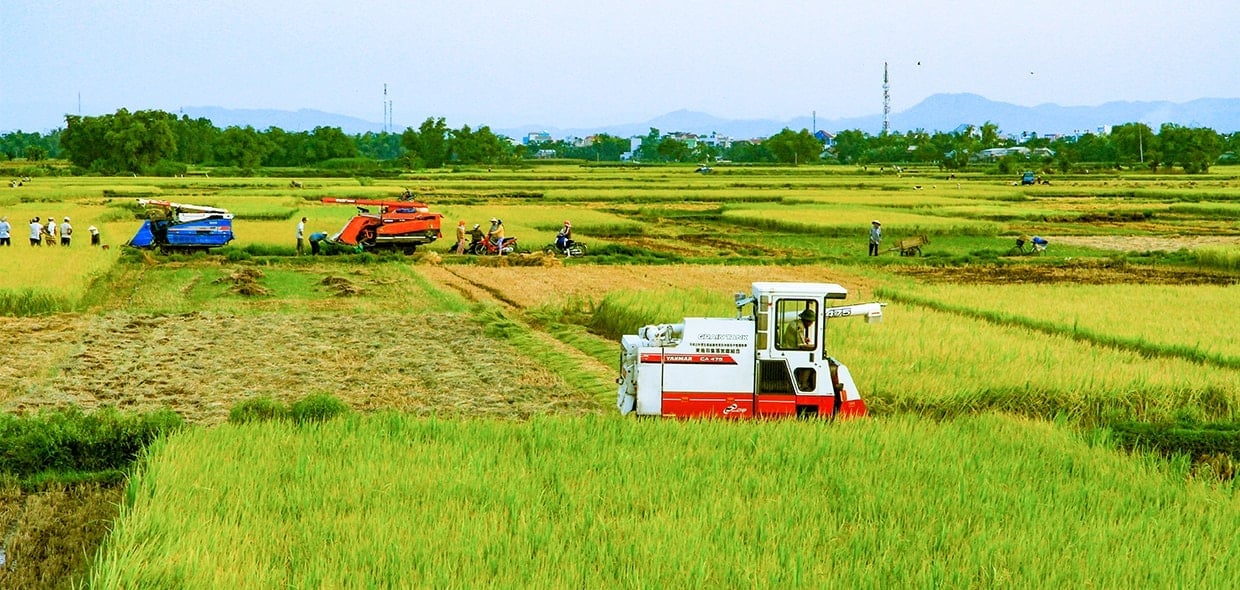
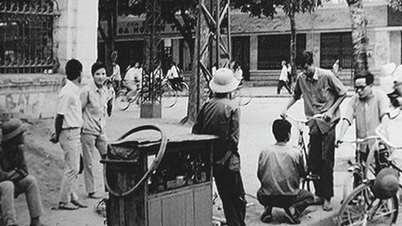
After the reunification of the country, with the triumphant spirit of victory, campaigns to reclaim farmland, clear landmines, intensify cultivation, and increase crop yields... created a completely different face for agriculture in Quang Nam province.
Particularly thanks to the immense contributions of the people, a widespread irrigation network was built, among which the Phu Ninh large-scale irrigation project is a monumental undertaking, commenced on March 29, 1977. This project remains a beautiful symbol of half a century of peacebuilding, and its positive effects will continue into the future.
With land, water, and diligent labor, greenery has returned to the barren fields. The movement towards collective economic development through cooperative models has initially brought about many changes to the homeland. However, for many reasons, including policies that have "tied the hands" of farmers in the fields, the situation of "no one takes responsibility" persists, and poverty remains a persistent problem.
Gradually, from plowing the fields, farmers began to question who they were working for, why they weren't given the land, and why the State had to cover everything from input to output of production and products... The crux of their grievances became the pretext for "breaking the rules": demanding land, demanding land allocation, or abandoning their land to reclaim in the mountains...
In response to practical demands, in 1981 the Central Party Secretariat issued Directive 100, aiming to contract out the final product to groups and individual workers. However, after six years, this contracting mechanism revealed shortcomings, resulting in many areas still having barren farmland.
In the summer of 1987, the Quang Nam - Da Nang Provincial Party Committee held a conference on "Consolidating and Strengthening Production Relations in Agriculture." The conference was tense as it highlighted the weaknesses of the collective economy under the cooperative model. Unable to resist, the old mechanisms were broken down, leading to the issuance of Resolution 03 of the Provincial Party Committee on June 29, 1987, on "Continuing to consolidate and strengthen production relations and perfecting the contract system in agriculture." The mechanism under this resolution (Contract 03), which can be considered the "Quang Nam's Contract 10," was introduced nearly a year before the Central Government's Contract 10, revolutionizing agricultural management thinking, boosting farmers' morale, and enabling fields to overcome the initial labor pains and yield bountiful harvests.
Localities must ponder and reflect "on their own land," fostering a proactive and creative spirit for development... They must liberate labor and productive forces, mobilize material and spiritual capital from the people, and make the people feel that they are the beneficiaries of those achievements, then everyone will work together in unity to implement them.
Remarks by General Secretary To Lam at the National Conference on the implementation and review of Resolution No. 18-NQ/TW
Untangling the knots of an open economy.
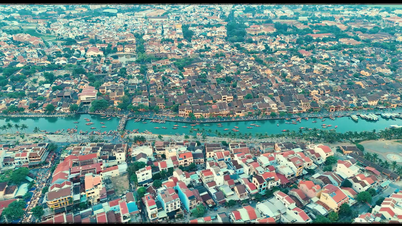
Before and after the re-establishment of the province in 1997, Quang Nam's economy was primarily agricultural. Recognizing the need for a new direction in economic restructuring, the question was where to begin? It had to start from its cultural traditions. In 1999, Hoi An and My Son were recognized as World Heritage Sites, opening up opportunities for tourism development.
However, for rapid transformation, industry must take the lead. History chose Nui Thanh, with Chu Lai as the nucleus of the "first victory against the Americans," where an open economic mindset was outlined on the desolate white sand dunes.
Driven by the dream of an open economy reminiscent of the prosperous Hoi An trading port era, numerous workshops were held to develop proposals for submission to the Government. On June 5, 2003, the Prime Minister issued Decision 108, designating Quang Nam as a "pilot" site for the construction of the Chu Lai Open Economic Zone. Thaco spearheaded this investment attraction effort, pioneering the automotive industry.
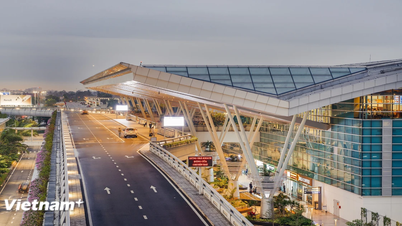
But opening up wasn't easy, because once opened, it was quickly closed again. The mechanism for Chu Lai missed the opportunity when a series of economic zones and industrial parks nationwide were successively established, with similar preferential policies. Therefore, Chu Lai has not been able to fulfill its dream of building a duty-free zone, developing Chu Lai airport into an international transit hub, or developing a regional financial center...
However, the effectiveness of removing initial investment bottlenecks has gradually transformed the Chu Lai Open Economic Zone into a driving force for Quang Nam's development. Thaco has risen to become a multi-sector, multi-field corporation, encompassing: automobiles; agriculture; mechanical engineering and supporting industries; investment and construction; trade, services, and logistics, contributing over 50% of the province's industrial production value and budget revenue. Revenue has increased hundreds of times compared to the time of the province's re-establishment, thanks to the open economic zone, which continues to expand from Nui Thanh to the eastern areas of Tam Ky and Thang Binh, attracting numerous domestic and foreign investors.
Half a century of building our homeland has yielded many more significant achievements, but I'm only mentioning the two lessons above to show that what's important is the policy mechanism, the bold decision-making that dares to think and act, "unleashing" institutional bottlenecks to achieve self-reliance and self-strength.
Now, with the accelerated progress towards the five-year plan (2020-2025) and the goal of becoming a relatively prosperous province by 2030, Quang Nam needs to find effective policies to realize its development aspirations. Correct policies that align with the people's wishes will unleash productive forces, attract strong investment, and spark innovation to effectively exploit human and natural resources.
Source: https://baoquangnam.vn/coi-troi-vuot-len-chinh-minh-3148260.html
![[Photo] Prime Minister Pham Minh Chinh working with the Vietnam Academy of Science and Technology](https://vphoto.vietnam.vn/thumb/1200x675/vietnam/resource/IMAGE/2026/02/23/1771832245861_image-2-6431-jpg.webp)

![[Photo] Nhan Dan Newspaper's New Year's gathering in the year of the Horse 2026](https://vphoto.vietnam.vn/thumb/1200x675/vietnam/resource/IMAGE/2026/02/23/1771825639110_gap-mat-dau-xuan1-8272-jpg.webp)
![[Photo] General Secretary To Lam meets with and extends New Year greetings to the Central Party Office.](https://vphoto.vietnam.vn/thumb/1200x675/vietnam/resource/IMAGE/2026/02/23/1771822040571_a1-bnd-6844-9653-jpg.webp)















































Comment (0)