

2025 is a year with many important anniversaries, such as the 95th anniversary of the founding of the Communist Party of Vietnam , the 80th anniversary of the founding of the Democratic Republic of Vietnam (now the Socialist Republic of Vietnam), and the 50th anniversary of the liberation of the South and national reunification. Towards this goal, under the leadership of General Secretary To Lam, the Party is mobilizing the combined strength of the entire political system and all strata of the people to participate in summarizing the theory and practice of the country's socialist-oriented renewal over the past 40 years; urgently organizing Party congresses at all levels, leading up to the 14th National Congress of the Party, with the goal of ushering the country into a new era – an era of national growth, development, and prosperity.
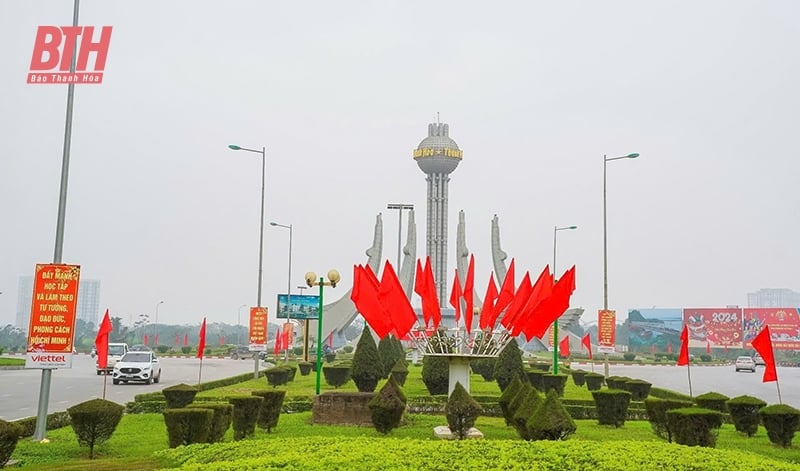
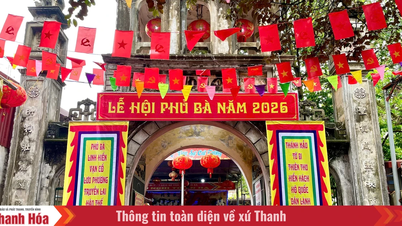
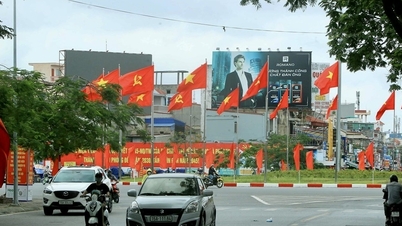
Thanh Hoa City is adorned with flags and flowers to celebrate the Party, the Lunar New Year, and the country's renewal. (Photo: Archival material)
According to General Secretary To Lam, the new era, the era of Vietnam's rise, is an era of development and prosperity under the leadership and rule of the Communist Party, successfully building a socialist Vietnam that is wealthy, strong, democratic, just, and civilized, standing shoulder to shoulder with the world's leading powers. All citizens will enjoy a comfortable and happy life, receive support for development and wealth creation; and contribute increasingly to world peace, stability, development, human happiness, and global civilization.
The late General Secretary Nguyen Phu Trong stated: The source of success lies in the tradition of maintaining independence and self-reliance in policy; firmly grasping, applying, and creatively developing Marxism-Leninism; drawing on international experience to formulate correct policies and effectively organize the implementation of revolutionary tasks. It is the tradition of close ties between the Party and the people, always taking serving the people as the purpose and goal of striving. It is the tradition of unity, organization, and strict discipline based on the principles of democratic centralism, self-criticism, criticism, and comradely love. It is the tradition of loyal and pure international solidarity based on lofty principles and goals.
Entering a new era, a time when the Party's will blends with the people's aspirations to build a prosperous and happy country, to successfully build socialism and stand shoulder to shoulder with the world's leading powers, more than ever, the issue of unity within the Party must be identified as the foundation and support for the unity of the entire nation.
As the ruling party, leading the revolution, and serving as the central component and soul of the national unity, the Party's purpose is to unite the people, serve the Fatherland, and the Party's strength lies in unity. Therefore, internal Party unity is of paramount importance; only with unity within the Party can there be national unity. Unity within the Party is the foundation and the banner that unites the people and the entire nation. For the Party to be strong and truly united, the entire Party must have ideological and practical unity, and be united in solidarity; only then can the Party fulfill its mission.
To continue to uphold and enhance the Party's leading role in the Vietnamese revolution and to usher our country into a new era, attention should be paid to doing well the following:
Firstly, we must uphold the tradition of unity and solidarity within the Party, spreading it throughout the entire political system and serving as the core in building national unity.
Building upon the fine traditions of our Party and nation, with the ideological foundation of Marxism-Leninism and Ho Chi Minh Thought, and based on the specific historical conditions of the country, our Party has not only maintained its leadership role but has also been the decisive factor in the success of the country's renovation process. The more we strengthen the building and rectification of the Party and the political system; and implement the revolution to streamline the organizational structure for effective and efficient operation, the more we need to uphold the tradition of unity and solidarity within the Party, steadfastly adhere to the Party's ideological foundation, and creatively apply those ideas to the country's reality in order to build correct and appropriate policies and guidelines that are consistent with the realities of the Vietnamese revolution.
Secondly, focus on doing a good job in ideological work in Party building.
Ideology is the foundation for building guidelines and policies, and these guidelines and policies are the basis of unity and solidarity within the Party. Wrong guidelines are the source of internal divisions and discord within the Party. Based on the correct political line, the Party always strengthens ideological leadership – building correct stances and viewpoints for all cadres and Party members, consolidating ideological unity, preventing all opportunistic tendencies, and combining patriotic education with socialism. Through this, it mobilizes all the talents, intelligence, and creativity of all cadres, Party members, and the people to advance the revolutionary cause.
Thirdly, in implementing the principle of democratic centralism and in personnel work.
In its organization and actions, the Communist Party of Vietnam considers the principle of democratic centralism as the fundamental principle guiding the Party's organization, activities, and operations. It ensures unity of will and action, creating the invincible strength of a genuine revolutionary party, and is the principle that distinguishes the party of the working class from other political parties.
Maximizing the intellectual democracy and creativity of all Party members is one of the crucial guarantees for the Party's vitality. Authoritarian and autocratic leadership, patriarchal style, ideological imposition, and one-sided, complacent unity on matters of principle are completely alien to the proletarian Party.
However, democracy must be under centralized leadership; the fullest democracy must be combined with the highest level of centralization. These two aspects serve as prerequisites for each other, forming the essence of a democratic centralist regime, whose principles are: the minority submits to the majority, subordinates submit to superiors, individuals submit to the organization, and the entire Party submits to the National Congress of the Party and the Central Committee – the highest leadership body between congresses – elected by the congress. Violating these principles means undermining Party discipline and destroying the Party's unity and solidarity.
The principle of democratic centralism, when properly implemented, will contribute to building a capable cadre to lead the country into a new era, an era of national progress. It will help the Party establish unity and concentration in thought, will, and action, using the strength of the organization to solve all problems, ensuring smooth leadership and management from top to bottom, and close coordination among Party organizations and cadres and members based on the correct guidelines and resolutions that have been adopted.
Fourth, strictly adhere to the principles of self-criticism and criticism; maintain close ties with the people.
In the process of building socialism, there is always a struggle between the new and the old, between the progressive and the backward. Faced with changing situations and tasks, some comrades are quick to adapt, while others are slow, failing to keep pace with the new situation and tasks. Self-criticism and criticism, coupled with raising the level of awareness among cadres and Party members, is the fundamental method to resolve these contradictions, create high consensus within the Party, and educate cadres and Party members to develop strengths, overcome weaknesses, and make continuous progress...
Entering a new era, with many new, difficult, and complex challenges emerging, self-criticism and criticism within the Party must be recognized as closely related to the Party-People relationship. The Party demands that every cadre and Party member bravely confront the truth. Within the Party, there is no tolerance for concealing shortcomings, exaggerating achievements, deceiving superiors, or showing deference to or retaliating against those who criticize. The Party also criticizes the attitude of viewing self-criticism and criticism as an opportunity to attack each other, but rather as an internal Party activity to offer constructive feedback, help each other progress, and strengthen unity. The core of self-criticism and criticism lies in having pure motives, using correct methods, and transcending ordinary personal relationships to ensure the strength of the organization and the growth of the entire team, conducting criticism and self-criticism regularly and effectively. Communist self-criticism and criticism are not about finding winners and losers, but about understanding each other better, learning more, building a stronger party organization, and gaining more trust and confidence from the people among party members and the party organization.
Assoc. Prof. Dr. Le Van Cuong
Institute for Party Building, Ho Chi Minh National Political Academy
Source: https://baothanhhoa.vn/coi-nguon-suc-manh-cua-dang-237956.htm
























































Comment (0)