

With its diverse product range and competitive labor costs, Vietnam's shipbuilding industry will have many advantages in entering the international market.
The shipbuilding market is experiencing strong growth.
According to the latest report from Acumen Research and Consulting (ARC), a reputable international market research and consulting firm, the global shipbuilding market is poised for strong growth in the near future.
While the global shipbuilding market was valued at $147.2 billion in 2022, this figure reached $152.58 billion in 2024. It is projected to reach $226.9 billion by 2032, a decade later.
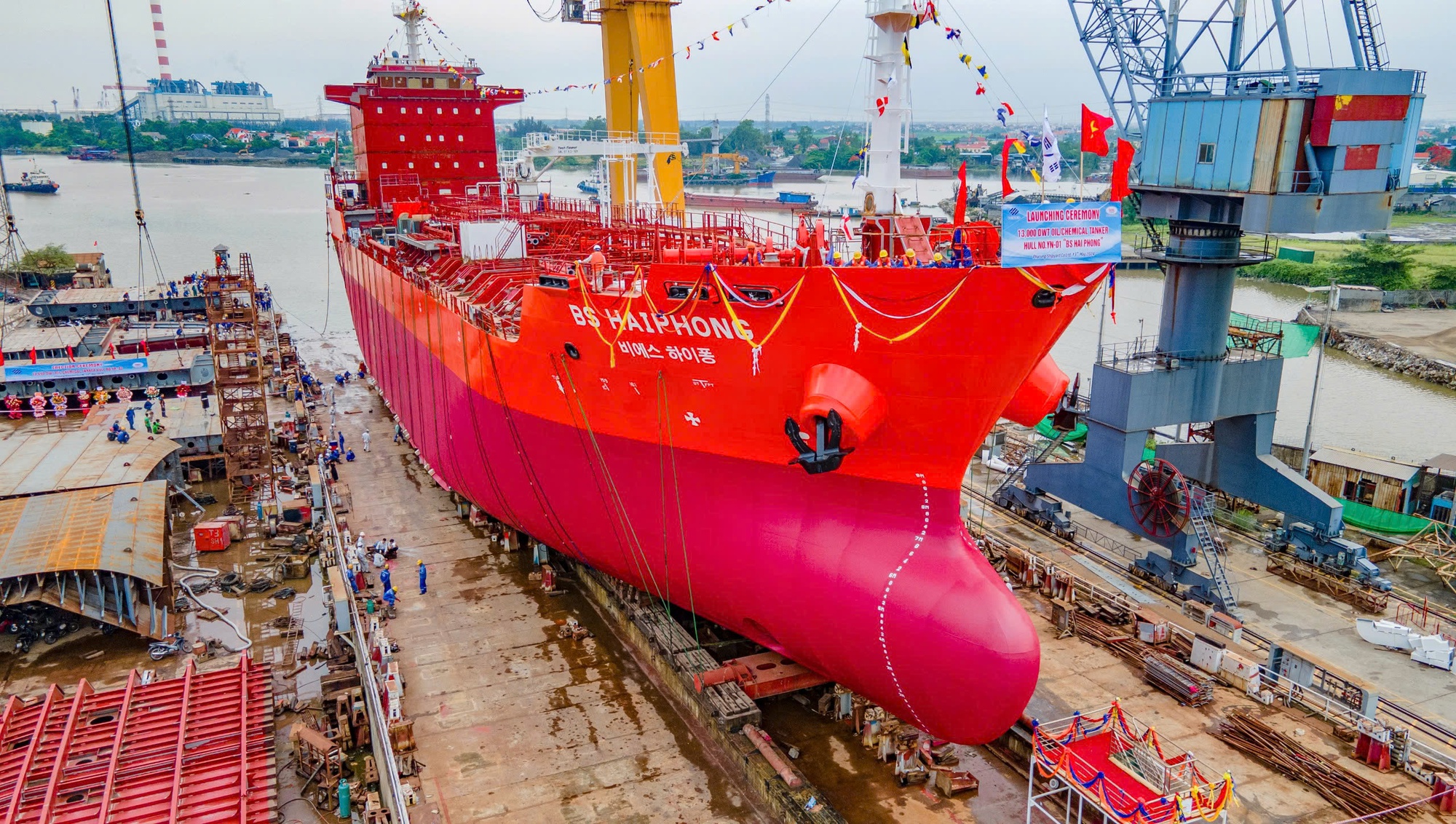
Pha Rung Shipyard is constructing a 13,000 DWT chemical tanker for a South Korean shipowner. Photo: Ta Hai
Affirming the potential of the global shipbuilding market, Mr. Pham Hoai Chung, Chairman of the Board of Directors of the Vietnam Shipbuilding Industry Corporation, said that as of 2023, the world's maritime fleet involved in cargo transport consisted of approximately 105,500 vessels with a tonnage of 100 GT or more, with an average age of 22.2 years, of which oil tankers, dry bulk carriers, and container ships accounted for 85%.
Total tonnage reached 2.27 billion tons. The average growth in tonnage of the global fleet was 4.9% per year during the period 2011-2021.
The global shipbuilding market has grown significantly in recent years, as evidenced by the increase in new shipbuilding orders.
Global orders for new ships account for 10% of the total existing fleet, with the value of these orders increasing by nearly 20% year-on-year. This reflects a trend toward a more modern, larger-tonnage fleet and a growing demand for ships adopting green technologies and clean fuels.
"The number of new shipbuilding orders in 2023 is 4,029 vessels, equivalent to 237.3 million DWT," Mr. Chung informed.
Trends and opportunities for Vietnam's shipbuilding industry.
According to Mr. Chung, the shipbuilding market is projected to grow to approximately $22.1 billion by 2024-2028, with an average annual growth rate of 3.95%, and is expected to reach around $195 billion by 2030.
The main product categories in the global shipbuilding market continue to include bulk carriers, oil tankers, container ships, cruise ships, ferries, and other specialized vessels. Specifically, the oil tanker fleet increased by 3.4% year-on-year in 2021; bulk carriers increased by 2.8%; and liquefied natural gas (LNG) carriers increased by 5.0%.
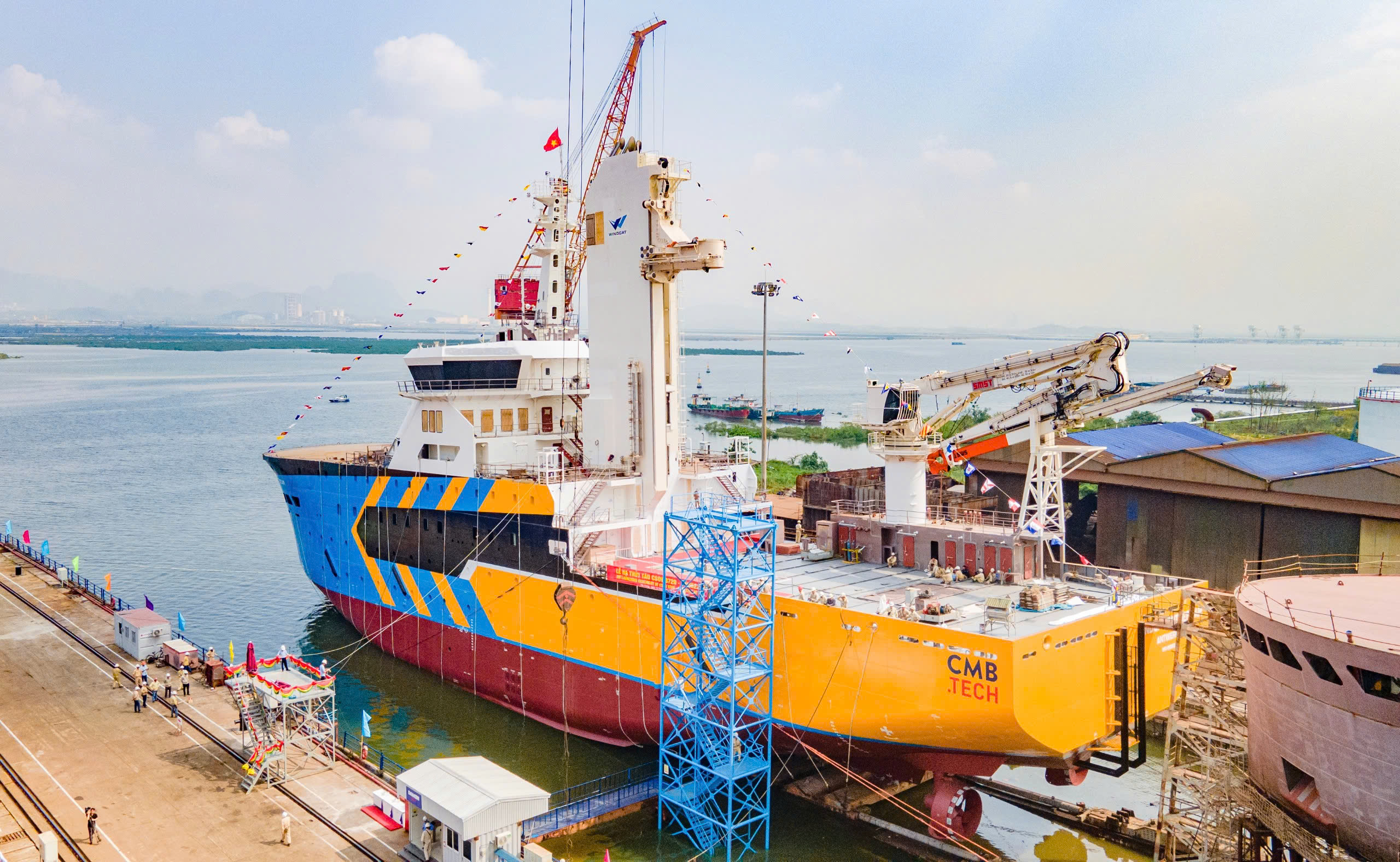
With its ability to construct a diverse range of products, Vietnam's shipbuilding industry has many opportunities to participate in the growing international shipbuilding market (In the photo: Ha Long Shipyard constructing a wind power service vessel for a Dutch shipowner. Photo: Ta Hai).
While the global shipbuilding industry is trending towards Asia, shipbuilding in Europe has declined, accounting for only 7% of total global orders in 2023, with factories primarily focusing on the cruise ship, luxury yacht, and military vessel segments.
Key markets such as container ships and bulk carriers are dominated by China and South Korea. This opens up opportunities for Vietnamese shipbuilding to participate in market segments and produce products that match its capabilities.
According to Hoang Hong Giang, Deputy Director of the Vietnam Maritime and Inland Waterways Administration, Vietnam's current shipbuilding capacity is approximately 3.5 million tons per year. The Vietnamese shipbuilding industry ranks 7th in the world, accounting for 0.61% of the global shipbuilding market share.
With its current capacity, Vietnam could participate in the construction of new foreign-owned ships with a capacity of 2.7 to 2.8 million tons per year, accounting for 0.88% to 0.9% of the global shipbuilding market share by 2030.
Affirming that Vietnam's shipbuilding industry has full potential and advantages to participate in the international market, Mr. Pham Hoai Chung said that Vietnam's shipbuilding industry has built most types of general cargo ships, bulk carriers, oil tankers, and car carriers; built a number of supporting industrial facilities to support the shipbuilding industry; and designed technology for some types of bulk carriers.
On the other hand, FDI shipbuilding enterprises in Vietnam have strengths in technology, are developing well, and still have room for investment and expansion of production capacity. They have a young, skilled workforce that is easy to train, and labor costs that are competitive compared to other countries with strong shipbuilding industries in the Asian region such as South Korea and China.
Source: https://www.baogiaothong.vn/co-hoi-de-dong-tau-viet-chiem-linh-thi-truong-200-ty-usd-192250317171800771.htm




























![[Image] Close-up of the newly discovered "sacred road" at My Son Sanctuary](/_next/image?url=https%3A%2F%2Fvphoto.vietnam.vn%2Fthumb%2F1200x675%2Fvietnam%2Fresource%2FIMAGE%2F2025%2F12%2F13%2F1765587881240_ndo_br_ms5-jpg.webp&w=3840&q=75)




















































Comment (0)