

While most universities currently allocate the majority of their enrollment quotas to early admissions methods, the Ministry of Education and Training (MOET) plans to reduce the number of early admissions slots. This regulation is causing much disagreement.
Concerns about increased pressure on students.
In 2025, the first cohort of students under the 2018 General Education Program will graduate from high school, therefore university admission regulations also need to be reformed to meet the requirements of the new program.
The Ministry of Education and Training has just announced a draft Circular amending and supplementing a number of articles of the Regulations on university-level admissions and college-level admissions in early childhood education, issued together with Circular No. 08/2022/BGDĐT dated June 6, 2022, by the Minister of Education and Training.
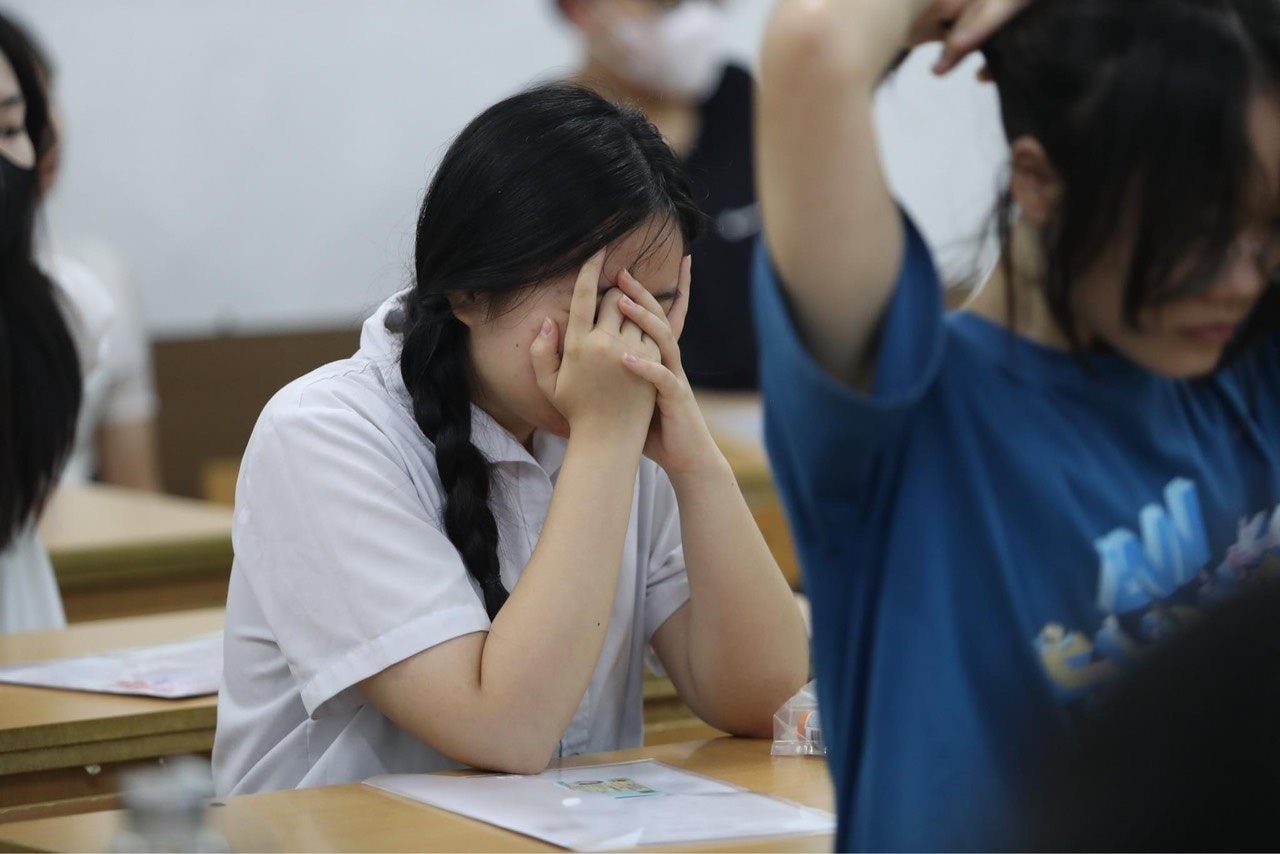
A notable new feature is the regulation aimed at strictly managing early admissions.
The Ministry allows schools to determine their own quotas, but imposes restrictions on the percentage to prevent schools from allocating a large portion of their quotas to this method, which would push the admission cutoff scores for the method using high school graduation exam results too high, reducing the opportunities for candidates.
Accordingly, universities are only allowed to allocate a maximum of 20% of their total enrollment quota for early admissions for each major or group of majors. Furthermore, universities must ensure that the cutoff score for early admissions is not lower than the cutoff score for the regular admissions round.
While most universities currently allocate the majority of their enrollment quotas to early admissions methods, this regulation is causing much controversy, with some arguing that its implementation would create a barrier to university admissions, and for candidates, it would reduce their chances of early admission.
On several social media forums about education, many parents have expressed their disagreement with the above regulation in the draft.
Ms. Nguyen Thu Huong (Ba Dinh district, Hanoi ) believes that early admission methods mainly involve reviewing academic transcripts, considering results from individual exams, and combining criteria such as scores from international foreign language certificates. Early admission has been applied by universities for many years and accounts for a large portion of their enrollment quotas.
To increase their chances of getting into university, Ms. Huong's daughter, like many other students, spends a lot of time studying and reviewing during her three years of high school to "secure a ticket" to university early. Ms. Huong expressed her wish: "Changes to the university admissions method need a roadmap so that the students' efforts in studying and taking exams, as well as the parents' money, are not wasted."
A representative from a university stated that the Ministry of Education and Training's regulation limiting early admissions to no more than 20% will create difficulties for universities. This could lead to a decrease in the cutoff scores for admissions based on the high school graduation exam, while the cutoff scores for early admissions may increase.
Creating fairness in admissions
Regarding concerns from students, parents, and universities about the proposed reduction in early admission quotas in the draft circular amending and supplementing the university admission regulations, Associate Professor Dr. Nguyen Thu Thuy - Director of the Department of Higher Education, Ministry of Education and Training, stated that the draft regulation requiring the equivalent conversion of admission scores and acceptance scores for different admission methods, along with the requirement that the acceptance score for early admission must not be lower than the acceptance score in the general admission round, has automatically limited the scale of early admission.
The 20% limit is based on the practical experience of admissions in recent years, aiming to focus early admissions on candidates with outstanding abilities and academic achievements, minimizing the impact on students' studies in the final semester of 12th grade and their preparation for the high school graduation exam.
The most important thing is to create fairness among candidates during the application process, because not all students are able to participate in early admissions before completing the 12th grade.
Ms. Thuy emphasized that reducing the scale of early admissions not only does not create difficulties, but also facilitates the admissions process for schools and candidates.
"Whether there's early admissions or only general admissions, the total number of applicants remains unchanged. Why do schools have to rush into early admissions? Why do students who haven't completed 12th grade have to submit applications to multiple places, and then not be able to focus on their studies?"
While the Ministry of Education and Training already has a comprehensive admissions support system with a complete database and a fully convenient online process for both candidates and schools," Associate Professor Dr. Nguyen Thu Thuy stated, adding that it is time to objectively re-examine the trend of early admissions in order to find fundamental solutions and definitively address the shortcomings arising from it.
With the method of university admission based on high school transcripts, the draft circular amending and supplementing the regulations on university admissions stipulates that universities must use the academic results of the entire 12th grade year instead of using the academic results of 5 semesters (i.e., the academic results of 10th grade, 11th grade and the first semester of 12th grade) as currently.
This regulation aims to improve the quality of student intake and prevent students from becoming complacent or overconfident after meeting the early admission requirements for university.
Source: https://daidoanket.vn/giam-chi-tieu-xet-tuyen-som-co-giam-co-hoi-do-dai-hoc-cua-thi-sinh-10295388.html
![[Image] Leaked images ahead of the 2025 Community Action Awards gala.](/_next/image?url=https%3A%2F%2Fvphoto.vietnam.vn%2Fthumb%2F1200x675%2Fvietnam%2Fresource%2FIMAGE%2F2025%2F12%2F16%2F1765882828720_ndo_br_thiet-ke-chua-co-ten-45-png.webp&w=3840&q=75)
![[Photo] Prime Minister Pham Minh Chinh receives Lao Minister of Education and Sports Thongsalith Mangnormek](/_next/image?url=https%3A%2F%2Fvphoto.vietnam.vn%2Fthumb%2F1200x675%2Fvietnam%2Fresource%2FIMAGE%2F2025%2F12%2F16%2F1765876834721_dsc-7519-jpg.webp&w=3840&q=75)
![[Live] 2025 Community Action Awards Gala](/_next/image?url=https%3A%2F%2Fvphoto.vietnam.vn%2Fthumb%2F1200x675%2Fvietnam%2Fresource%2FIMAGE%2F2025%2F12%2F16%2F1765899631650_ndo_tr_z7334013144784-9f9fe10a6d63584c85aff40f2957c250-jpg.webp&w=3840&q=75)


![[Photo] Prime Minister Pham Minh Chinh receives the Governor of Tochigi Province (Japan)](/_next/image?url=https%3A%2F%2Fvphoto.vietnam.vn%2Fthumb%2F1200x675%2Fvietnam%2Fresource%2FIMAGE%2F2025%2F12%2F16%2F1765892133176_dsc-8082-6425-jpg.webp&w=3840&q=75)























































![[Live] Closing Ceremony and Award Presentation for the "Impressive Vietnam Tourism" Video/Clip Creation Contest 2025](https://vphoto.vietnam.vn/thumb/402x226/vietnam/resource/IMAGE/2025/12/17/1765974650260_z7273498850699-00d2fd6b0972cb39494cfa2559bf85ac-1765959338756946072104-627-0-1338-1138-crop-1765959347256801551121.jpeg)






















Comment (0)