

Pursuing a master's degree is no longer uncommon for recent graduates; however, deciding whether to pursue a degree outside of one's field depends on many factors. So, is it permissible to pursue a master's degree outside of one's field in Vietnam? This article will help answer that question.

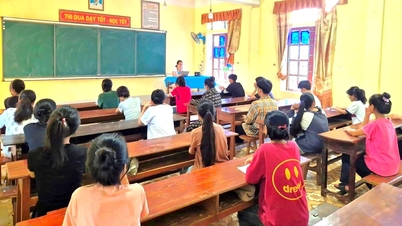
Is it permissible to pursue a master's degree in a field unrelated to your studies? (Illustrative image)
Is it permissible to pursue a master's degree in a field different from your own?
Circular No. 15 issued by the Ministry of Education and Training in 2014 allows university graduates to pursue master's degrees in unrelated fields. The regulations also clearly categorize master's degree admissions into three groups: other fields, related fields, and closely related fields.
For example, when applying for a Master of Business Administration program, you need to have a bachelor's degree in one of the following fields:
- Other fields: Other majors within the Humanities, Social and Behavioral Sciences , Journalism, Law, Natural Sciences, Technology, Engineering, Architecture, Agriculture, Forestry and Fisheries.
- The right major, the right fit: Business Administration.
- Related fields: Other majors within the Business and Management sector.
Requirements for pursuing a master's degree in a different field.
In addition to meeting the university degree requirement, you must also meet other conditions regarding supplementary education, work experience, background, and health. These are factors considered in determining whether or not you will be allowed to pursue a different field of study.
To enroll in a master's program outside of your field of study, applicants must meet the following requirements:
- Applicants must possess a university degree awarded by a Vietnamese university. For applicants with a university degree awarded by a foreign university, a certified translation into Vietnamese is required, along with a certificate of qualification from the Department of Quality Management of the Ministry of Education and Training.
- Study and take supplementary exams for relevant subjects and modules.
- Applicants must have at least two years of experience in a professional field relevant to their chosen specialization.
- Passing the master's entrance exam, which includes three blocks of knowledge: foundational knowledge in the field, specialized knowledge, and English.
- Candidates who meet the language requirements may be exempt from the English exam (minimum IELTS score of 6.0 or equivalent).
- Prepare all necessary documents and submit them on time; ensure you are in good health to study.
The above information is for those planning to pursue a master's degree in a different field. You can refer to it to better prepare for your journey.
Source










![[Infographic] 10 steps in the process of organizing school lunch programs in Hanoi schools](https://vphoto.vietnam.vn/thumb/402x226/vietnam/resource/IMAGE/2026/03/15/1773564208377_bantru-jpg.webp)






























































Comment (0)