

SGGPO
"In the real world, respect for national sovereignty is a fundamental principle enshrined in the international legal system. However, due to the transnational nature of cyberspace, ensuring national sovereignty in cyberspace is a new and complex issue," remarked Representative Luu Ba Mac (Vietnam).
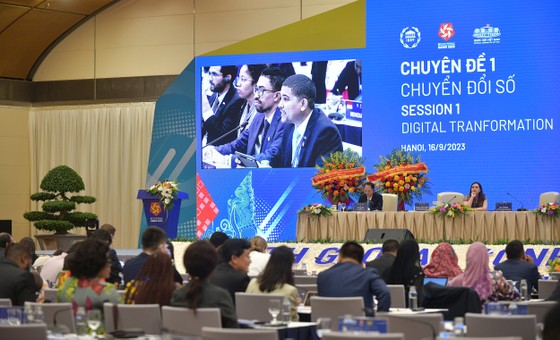 |
| A view of the thematic discussion session. Photo: QUANG PHÚC |
On the afternoon of September 15th, within the framework of the 9th Global Young Parliamentarians Conference, delegate Luu Ba Mac (Vietnam) stated that the digital transformation process, taking place in various countries at different levels, shows that the most important foundational element for digital transformation is the need to perfect institutions and policies, putting the people at the center, linking digital transformation with sustainable development, and ensuring that no one is left behind. In addition, the digital transformation process raises discussions about national sovereignty in cyberspace.
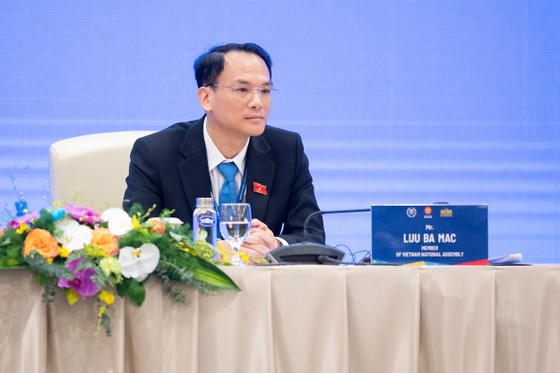 |
Delegate Luu Ba Mac (Vietnam) |
“In the real world , respect for national sovereignty is a fundamental principle enshrined in the international legal system. However, due to the transnational nature of cyberspace, ensuring national sovereignty in cyberspace is a new and complex issue. Ensuring sovereignty in cyberspace requires cooperation and coordination among countries in the region and the international community,” the delegate emphasized.
Commenting on this issue, Yetunde Bakare, Director of YIAGA Africa based in Nigeria, stated that according to 2023 statistics, there are currently 5.4 billion people worldwide, equivalent to 67% of the global population, using the internet, an increase of over 50% compared to 2018.
"It is noteworthy that there are differences in internet access among different social classes and age groups. The question is how we can bridge the digital development and digital literacy gap in the context of digital transformation. Policies are needed to promote investment in digital skills for both younger and older generations to ensure inclusiveness," the female delegate stated.
In addition, Ms. Yetunde Bakare suggested promoting public-private partnerships and relationships with civil society organizations to ensure inclusive development, connect different sectors, share strategies, and support inclusive digital policies.
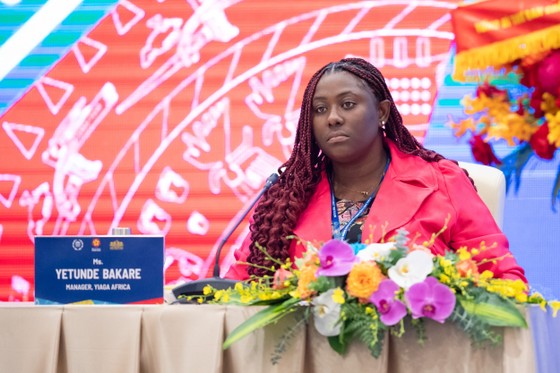 |
Mrs. Yetunde Bakare |
Mexican Congresswoman Cynthia Lopez Castro proposed designing policies that would impose strict penalties for violations in cyberspace.
Cynthia Lopez Castro stated that Mexico's Olympia Act originated from the dissemination of sexually explicit videos without permission – an act of cyberbullying that was not previously regulated by law. “We successfully incorporated this into the Constitution as a criminal offense, a violation of personal privacy. This law has also been replicated in many Mexican states and several other countries.”
Currently, Mexico has a 50% female representation in parliament, a female Chief Justice of the Supreme People's Court, and a female Speaker of the National Assembly, Cynthia Lopez Castro stated, and expressed hope that parliaments would work together to design similar laws to prevent online violence against women.
Source











































































Comment (0)