

(PLVN) - The State Bank of Vietnam (SBV) continues to assign credit growth targets to credit institutions annually to minimize risks to the financial system. This management method will continue to be implemented by the SBV in the current context, despite many opinions suggesting that it should be abandoned to allow banks more autonomy.
 |
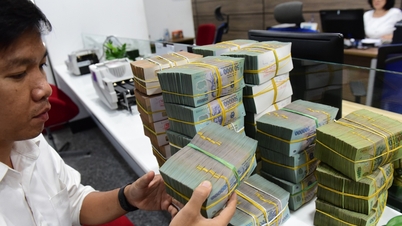
| The allocation of credit growth targets will continue in the coming period. (Photo: Ministry of Information and Communications) |
(PLVN) - The State Bank of Vietnam (SBV) continues to assign credit growth targets to credit institutions annually to minimize risks to the financial system. This management method will continue to be implemented by the SBV in the current context, despite many opinions suggesting that it should be abandoned to allow banks more autonomy.
The credit growth target was increased twice.
Based on the 15% credit growth target for 2024, the State Bank of Vietnam (SBV) specifically allocated credit limits to credit institutions at the beginning of the year. Based on this target, credit institutions were to proactively provide loans in all sectors of the economy . However, by the latter half of August, credit growth among credit institutions was uneven, with some experiencing low or even negative growth, while others were close to meeting the SBV's announced target.
Therefore, in order to implement the Government's and Prime Minister's directives on managing credit growth flexibly, effectively, and promptly to meet the credit needs of the economy and control inflation, and stabilize the macroeconomy, the State Bank of Vietnam (SBV) proactively adjusted the credit growth targets for credit institutions. Accordingly, the SBV sent a document to credit institutions notifying them of the additional credit growth targets based on specific principles, ensuring transparency and openness.
Specifically, from August 28, 2024, credit institutions with a credit growth rate of 80% or more of the target announced by the State Bank of Vietnam (SBV) at the beginning of 2024 will be able to proactively adjust their credit outstanding balances upwards based on their credit rating. This increase in credit limits is a proactive measure by the SBV and does not require any request from the credit institutions. For the same reason, on November 28, 2024, the SBV further increased credit targets for eligible credit institutions. Thus, in 2024, the SBV increased credit targets for credit institutions twice, both times proactively, without waiting for the credit institutions' requests.
Governor of the State Bank of Vietnam, Nguyen Thi Hong, stated that Vietnam's credit growth is characterized by its heavy reliance on the banking system, leading to periods of average system growth exceeding 30%; in some years, it even reached over 50%, resulting in negative consequences and risks for the banking system, especially for weak banks that mobilize short-term capital but provide medium and long-term loans.
Meanwhile, the State Bank of Vietnam's operational objectives must simultaneously contribute to controlling inflation and stabilizing the macroeconomy, while also ensuring the safety of the banking system's operations. The safety of the banking system must be the top priority. Because if the credit institutions' systems harbor risks, it can have very serious consequences for the economy due to its ripple effects.
Therefore, based on actual developments and over many years, the State Bank of Vietnam (SBV) has applied credit limits to manage credit. When allocating and announcing credit limits to credit institutions, the SBV always assesses the credit institutions based on their ratings and their ability to expand lending. In addition, the SBV regularly monitors and warns credit institutions with high growth and potential risks.
Credit limits cannot be removed yet.
Regarding the issue of assigning credit growth targets to credit institutions, many opinions suggest that this target should be abolished. Recently, in the National Assembly, many delegates also questioned this issue. Governor Nguyen Thi Hong stated that the State Bank of Vietnam (SBV) has organized many seminars to analyze, evaluate, and thoroughly review the current state of the Vietnamese economy as well as the situation of credit institutions. Considering the current context, the SBV cannot yet abandon the credit limit-based management method.
Economist Dinh Trong Thinh also agreed that credit limits cannot be abolished yet. Essentially, credit limits are the State Bank of Vietnam's (SBV) management of the rate of lending increase by commercial banks. Vietnam's current capital market is not yet as developed as desired, and businesses are heavily dependent on bank capital. Meanwhile, many commercial banks are willing to lend regardless of risk; therefore, credit limits are the threshold set by the SBV to keep commercial banks within permissible limits to minimize risk. "Abolishing credit limits means allowing commercial banks to decide their own lending… this could have a significant impact on the financial and monetary system," Mr. Thinh said.
Furthermore, removing credit limits would lead to a loss of control over the amount of money injected into the economy, especially into sectors that are not prioritized for development, or injecting too much without aligning with the actual needs of businesses and individuals, easily causing inflation and wasting capital. Not to mention, removing credit limits could lead to bad debts, particularly when credit is extended to risky sectors like real estate. In addition, commercial banks would compete fiercely to attract borrowers through various means, significantly impacting market stability.
Source: https://baophapluat.vn/chua-the-bo-room-tin-dung-post533867.html









































































































Comment (0)