

"Increasing the impact of goodness, humanity, and love is the best therapy to help children overcome the consequences of natural disasters and floods."
 |
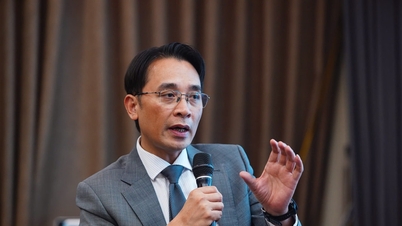
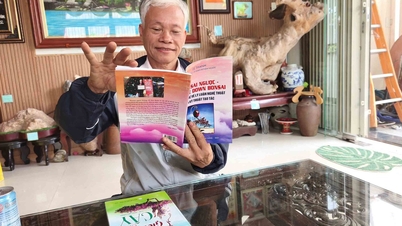
| Dr. Ho Lam Giang believes that providing psychological support to children after natural disasters is very important. (Photo: Provided by the interviewee) |
That is the view of Dr. Ho Lam Giang, a research expert on culture and education ; author of the monograph "Discourse on Gender in the Media After the Renovation with the World and Vietnam Newspaper" on how to provide psychological support to children after the impacts of natural disasters, storms, and floods.
What is your perspective on the common psychological impacts on children after disasters such as storms and floods?
Having worked in the field of education for many years, directly teaching at both the secondary and university levels, and having extensive experience in supporting the mental health and psychology of students, I have the following personal opinions.
Facing natural disasters, not only children but also adults find it difficult to avoid psychological trauma and mental breakdown. The image that haunts me is that of a man, devastated by the immense losses caused by Typhoon Yagi . He numbly held a piece of relief bread, still in its plastic bag, and began to eat it. The losses and damage suffered by the victims of natural disasters are truly immense; outsiders can only truly understand a fraction of it.
Children, being one of the most vulnerable groups in society, are prioritized for protection. This stems from several reasons, one of the most important being their vulnerability due to their inability to protect themselves from dangers or harm in their surroundings. Therefore, children need care and protection, both physically and mentally, from adults to develop safely and healthily.
The early years of life are a critical developmental period that impacts a child's future. Without adequate protection and care, a child's development can be severely affected, leading to long-term physical and psychological consequences.
Children's psychology is very vulnerable, so events that seem to have little impact on adults can have a serious effect on them. Witnessing losses from natural disasters can easily lead to fear, anxiety, and a feeling of insecurity. Children may live with the fear that natural disasters could strike at any time, feeling helpless and hurt when they cannot protect the things they cherish and are attached to, which have been swept away by the flood.
The ruins, desolation, and losses can also haunt children. Many children experience fear even in their sleep, exhibit behavioral changes, becoming aggressive or withdrawn, and some even panic and cling to their parents out of fear.
Many psychological studies show that the first events in a person's life have a strong influence on their mental well-being later on. Therefore, we also need to take action to support children in their psychological recovery after these traumatic experiences.
In recent days, we have witnessed scenes of immense loss and suffering caused by storms and floods, but amidst this natural disaster, the spirit of the Vietnamese people shines brightly. Support in terms of manpower and resources from all over the country has been poured in to assist the flood-stricken areas.
I think it's not just about providing material support to compensate for the losses that natural disasters have taken from the people, but more importantly, it's about nurturing the spirit, fostering humanity, compassion, and brotherhood—loving others as oneself. Only in times of hardship can we truly appreciate the love and care that people have for one another. And this spiritual potential will create the strength for people in disaster-stricken areas to resiliently recover after the storms and floods, and to fully appreciate the beauty of human kindness and compassion.
Against this backdrop, alongside the painful reality of the floods, I believe this is also an opportunity to educate children and help them appreciate the traditional values of solidarity and compassion of our nation. The love and support, not only from parents, family, relatives, and neighbors, but from millions of people across Vietnam, will be an incredibly effective and beneficial "healing" remedy for their spirits if they understand it.
Children will feel the love in every handful of rice, every piece of bread, every pen, every notebook. They can see the selflessness and sacrifice of the soldiers in flood-stricken areas, bringing aid; they will see the support movements throughout schools and organizations; or even the retirement savings of a retired teacher, or the entire sum of money in the pocket of a long-distance truck driver… all containing so much compassion and kindness.
Experiencing the positivity in life, the love, the unity, and the compassion of the Vietnamese people will help children strengthen their national pride. From there, they will increase their inner strength, stabilize their psychology, and live with even greater pride.
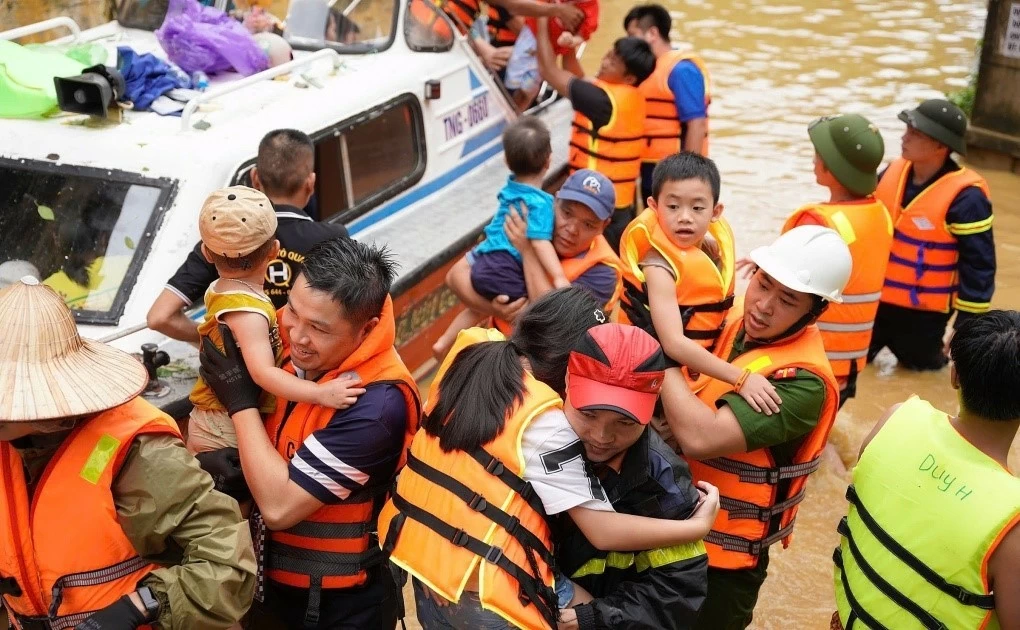 |
| Young children were taken away from the flooded area by boat. (Source: VNE) |
What are the most effective methods to help children recover psychologically from these traumatic experiences? What role does the family play in providing psychological support to children?
I have some suggestions based on three principles: positive focus, creating the right environment, and overall impact.
Firstly, focusing positively here, in my opinion, aligns with the saying, "Where you focus, that area expands." In the face of natural disasters, it's undeniable that loss and damage are inevitable. However, there's another aspect: through these storms and floods, we gain a deeper appreciation for humanity, a greater respect for family and peaceful life, and a greater understanding of the plight of those in difficult circumstances, affected by natural disasters and epidemics, and facing hardship.
Secondly , whether a child's mental state stabilizes quickly depends greatly on the parents' mental environment. If parents can quickly regain their spirits, maintain a positive attitude, believe in the future, cultivate perseverance, and with willpower and determination overcome the consequences of natural disasters, and quickly stabilize their lives, that will be the best environment for the child to stabilize and recover mentally.
| "Psychological trauma, especially the horrific trauma, is difficult to completely erase. However, viewing it from a different perspective, and increasing the emphasis on goodness, humanity, and love, is the best therapy to help children overcome the consequences of natural disasters and floods." |
Besides family, I think schools and society are also important environments at this time, to help children receive love and emotional support, and achieve psychological stability. Timely encouragement, both material and spiritual, will create a positive environment for children to recover quickly and return to normal life after the floods.
On the media front, information about the government, organizations, agencies, authorities, and especially the people nationwide reaching out to those affected by floods and storms, is a huge source of motivation and support for people in disaster-stricken areas.
Thirdly , a holistic approach is needed, focusing on the recovery of the child's "body, mind, and spirit." A healthy mind requires a strong physical foundation, enabling children to think positively and gain a deeper understanding of life's many aspects.
A healthy body comes from proper nutrition, exercise, and rest. In addition, care, love, and mental security—parents paying attention to meals and sleep, allowing children to engage in physical activity, play with friends, and connect with nature—are among the most fundamental and practical forms of mental well-being.
A lack of parental attention, insufficient sharing and communication with children, coupled with inadequate care, poor sleep quality, and inadequate reintegration into the community are also among the reasons why children's psychological problems are slow to improve.
In many cases, children are partially harmed by natural disasters, but the trauma has also devastated adults, causing parents, overwhelmed by worries about making ends meet, to become unable to care for their children, or to become irritable, angry, or even indifferent to them.
Or, when children are too young, they have to listen to, think about, and worry about things that adults unintentionally express or that they are forced to share the responsibility with. All information and influences need to be controlled, because children's psychology is very sensitive and fragile. What parents say, and what adults convey to children, must have a specific educational purpose and meaning.
I believe that psychological trauma, especially horrific trauma, is difficult to completely erase, but viewing it from a different perspective, as well as increasing the emphasis on goodness, humanity, and love, is the best therapy to help children overcome the consequences of natural disasters and floods.
What are your thoughts on the role of technology and media in providing psychological support to children after storms and floods?
Based on the recent media coverage of the storms and floods, I've observed significant success in reporting, with widespread information dissemination across various mass media platforms. The information was timely and up-to-date, while also featuring moving and insightful accounts of the situation in the flood-affected areas. These images touched the hearts of thousands across the country. Particularly noteworthy is the enduring spirit of humanity demonstrated through acts of compassion and solidarity, reflecting the nationwide tradition of support for those affected by the storms and floods.
Witnessing the footage, images, and actions of the Vietnamese people in supporting their compatriots affected by floods and storms, I believe that everyone who participated and witnessed it felt a sense of emotion and pride.
Images of children facing hardship in flood-stricken areas, children who lost their families in the recent natural disaster, have received special attention and sympathy from millions of people. On the media front, alongside the ferocity of the floods and the loss of lives and circumstances, we, not only the people in the flooded areas, felt the warmth of human kindness, the emotion and joy that arose whenever we heard news that relief teams had reached the flooded areas, and that trillions of dong had been transferred to the Vietnam Fatherland Front to support the people.
Police and military personnel waded through floodwaters to assist the people; locals along the roads cooked meals to serve the relief convoys. The media truly did an excellent job, reflecting the situation promptly, effectively, and with great humanity.
Thank you, Doctor!
Source: https://baoquocte.vn/ts-ho-lam-giang-chua-lanh-tinh-than-cho-tre-sau-thien-tai-287567.html
![[Image] Close-up view of the interchange connecting the two expressways and Long Thanh Airport.](https://vphoto.vietnam.vn/thumb/1200x675/vietnam/resource/IMAGE/2026/05/25/1779703378210_ndo_br_z7863716673926-224453a31600126cce10622af6290afd-4549-jpg.webp)


![[Image] Hanoi's urban life under the challenge of a "scorching hot" environment](https://vphoto.vietnam.vn/thumb/1200x675/vietnam/resource/IMAGE/2026/05/25/1779706979265_nang-nong-t5-2026-minh-duy-7-4636-jpg.webp)














































































Comment (0)