

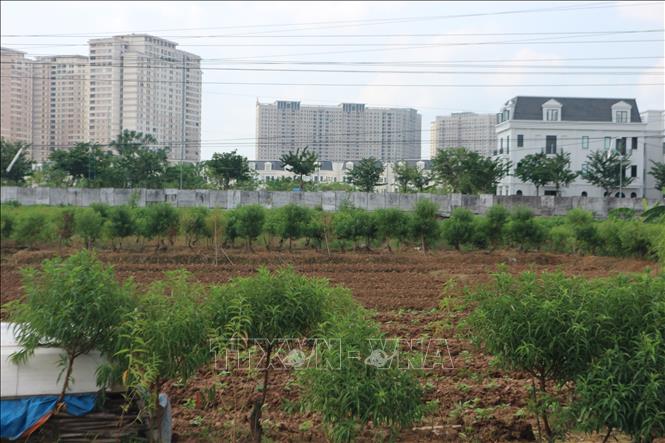
In many localities in Hanoi, the management and use of public agricultural land reveals shortcomings such as public land being leased beyond the prescribed period; encroachment and misuse; failure to auction land lease rights; land no longer suitable for cultivation, etc., leading to delays in putting the land into use, causing waste, and resulting in budget losses.
General Secretary To Lam has repeatedly directed and emphasized several forms of waste, including waste of natural resources; waste of public assets due to inefficient management and use; and waste of projects that use large amounts of land and water resources. Furthermore, the General Secretary believes that waste erodes public trust in the Party and the State, creates invisible barriers to socio-economic development, and leads to missed opportunities for national development.
From this perspective, the VNA news agency's team of reporters delved into and produced three articles on the situation of public agricultural land being left fallow or misused. This included the government's hesitation, the slow pace of putting the land into cultivation and production, the fear of making mistakes among officials, and proposed solutions to restore the value of public agricultural land as it originally was.
Lesson 1: Fertile fields left abandoned
In previous years, public agricultural land was managed by the commune-level government, allocated or leased to households for agricultural production and aquaculture on a yearly or multi-year basis. This land provided many households with arable land to develop their household economies, and the local government had a stable source of budget revenue. However, in Hanoi , due to changing agricultural production conditions, many areas of "prime" public agricultural land are now lying fallow, or even if intended for proper use, considerable difficulties exist.
"Beautiful" land for grass to grow
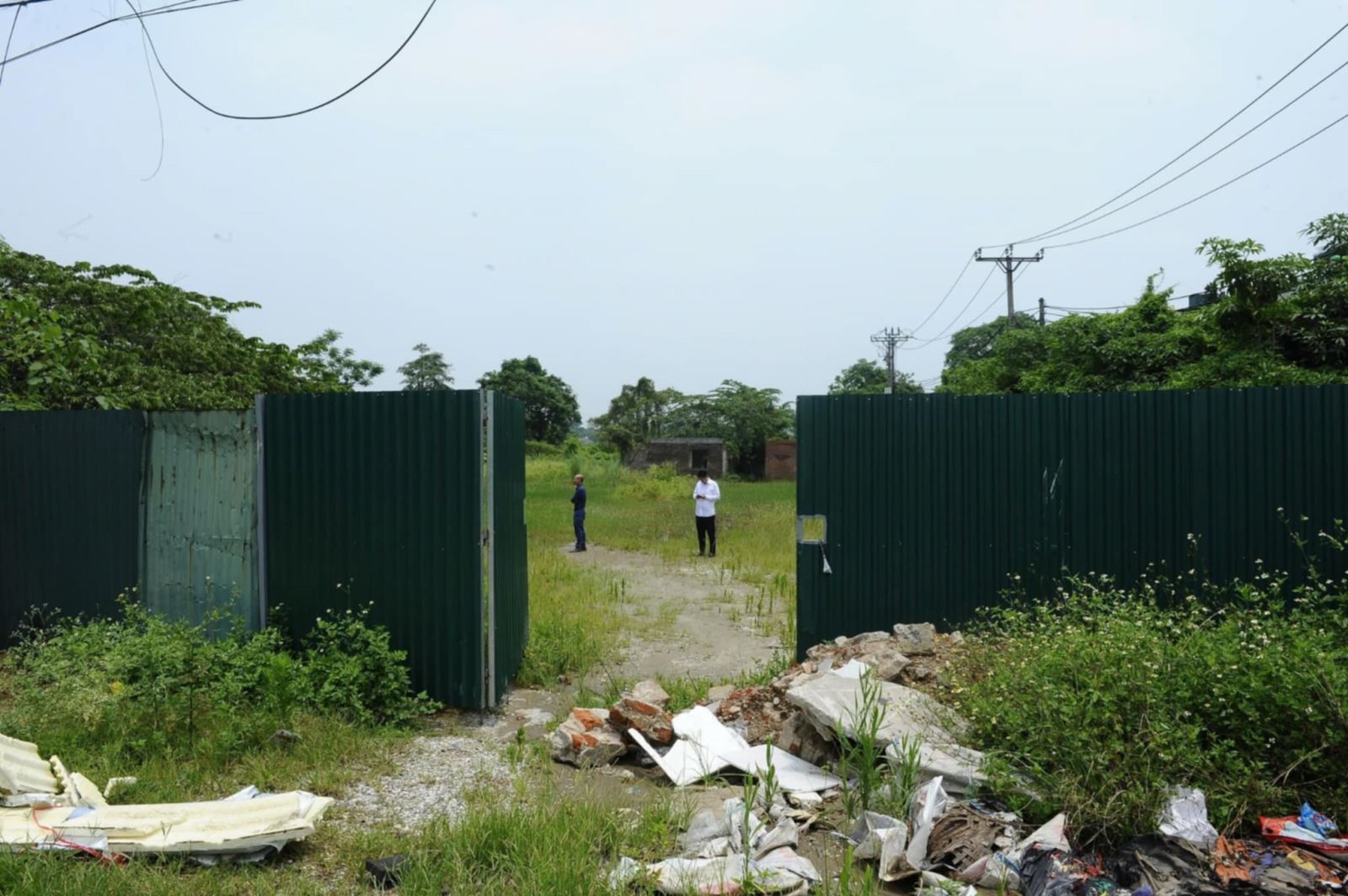
Along the fertile Red River, the lush green guava and vegetable fields of Hanoi's suburban residents once flourished. However, due to inefficient agricultural production, some households have abandoned their fields and switched to more profitable occupations such as service businesses, fishing ponds, restaurants, and outdoor recreational areas. This approach significantly increases the economic value of the land for the people. But according to regulations, using public agricultural land and riverside alluvial land for purposes other than agriculture is a violation of land regulations. Many localities have launched campaigns to clear these violations, but subsequently, they haven't figured out how to effectively utilize this public agricultural land, leaving it fallow.
Leading us on a site visit, Mr. Vu Phuong Dong, Chairman of the People's Committee of Giang Bien Ward, Long Bien District, pointed to a square plot of land, approximately 1,000 square meters, located next to the smooth, paved Red River dike road. Due to its prime location, the previous tenant had converted the land into a restaurant, but Giang Bien Ward authorities cleared it at the end of 2022. Currently, the plot is abandoned and overgrown with weeds. To manage it, Giang Bien Ward has erected a corrugated iron fence around the side bordering the dike road. Anyone passing by feels a pang of sadness at seeing such fertile, beautiful land left idle.
In another instance, Hop Tien commune, My Duc district (Hanoi), has 89 plots of public agricultural land totaling 544,966.1 m2, scattered across 7 villages. Previously, these land areas were allocated to households for agricultural production or fish farming. According to regulations, those allocated public agricultural land must pay 60-120 kg of rice per sao (a unit of land measurement) annually. However, since January 1, 2023, many land areas, despite having expired lease contracts, have not been re-leased by residents.
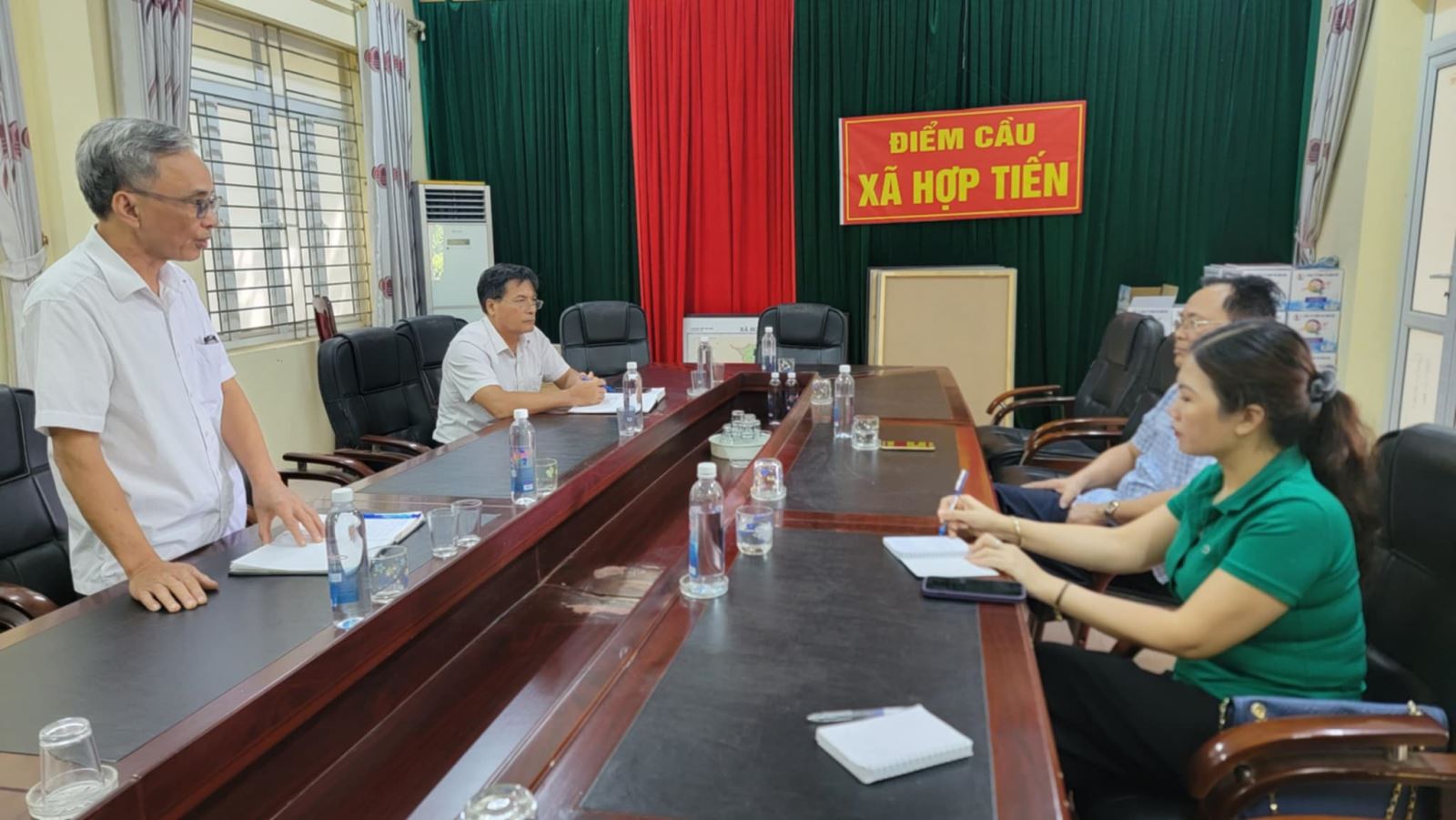
This situation was explained by Mr. Nguyen Dinh Chat, Vice Chairman of the People's Committee of Hop Tien commune. Due to the COVID-19 pandemic, livestock and agricultural production households were affected and suffered losses, leading them to switch to other occupations. Many households are no longer interested in agricultural production and have returned the leased land to the People's Committee of the commune. To prevent public agricultural land from being left idle, the commune organized a bidding process, but lacked applicants. Because a new bidding process could not be organized, the households currently using the public land in Hop Tien commune are only being temporarily charged the previously low rates.
Due to the inability to lease land for public purposes, local revenue collection has also been affected. Data from the People's Committee of Hop Tien commune shows that while the commune collected 365 million VND from leasing public agricultural land in 2020, this figure dropped to only 126 million VND in 2024.
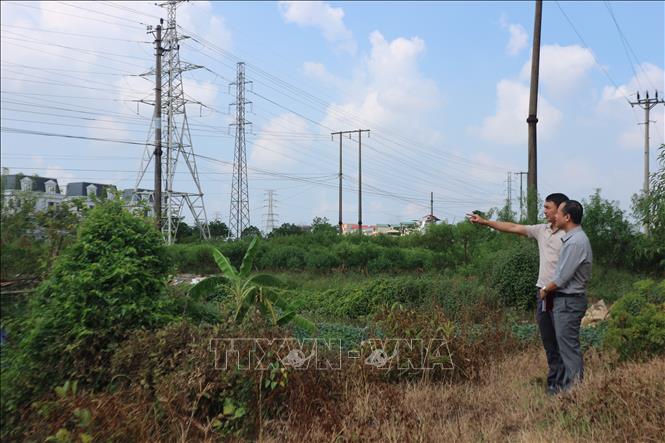
Meanwhile, in Thuan My commune, Ba Vi district, difficulties arise as 10 plots of public agricultural land, each with an area of 3,000 m2 or more, are scheduled for auction but are hampered by costs related to paperwork, procedures, consulting, and surveying. According to Nguyen Van Dien, Chairman of the Thuan My Commune People's Committee, auctioning requires a cleared site, while many plots are difficult to liquidate assets on. While auctioning large plots may be easier, auctioning small, scattered, and difficult-to-cultivate plots is challenging. Mr. Dien pointed out that revenue from auctioning public agricultural land is insufficient to cover costs, as the process cannot skip any step, similar to the auction process for residential land, making it very expensive.
Using public agricultural land for "zero cost"
My Duc District is considered to have the largest public agricultural land fund in the city, approximately 2,000 hectares. According to Mr. Tran Quoc Sinh, Vice Chairman of the People's Committee of My Duc District, from January 2023 to September 2024, the progress of auctioning public agricultural land in the district did not meet the set requirements. Out of 38 land plots eligible for auction, 14 plots failed to be auctioned due to a lack of participants.
In Ba Vi district, at the end of 2023, there were 773,311 hectares of public agricultural land; of which, approximately 100 hectares were awaiting "ownership". This means that the land plots were small, scattered, and not yet leased to individuals for agricultural purposes; the People's Committees of the communes were still managing them pending auction.
If in mountainous districts like Ba Vi and My Duc, the fact that public agricultural land remains unoccupied and has not yet found owners is a great waste, then the situation is even more regrettable when prime land like Long Bien and Ha Dong is left idle. Specifically, Duong Noi ward in Ha Dong district (Hanoi) has 1,157 hectares of public agricultural land that has not been leased since 2015.
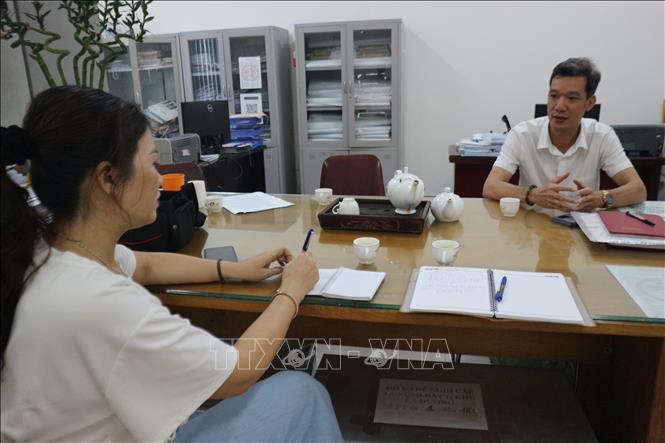
According to Mr. Bui Huy Quang, Chairman of the People's Committee of Duong Noi Ward, since the village was upgraded to a town, a series of housing and construction projects have been invested in the area. During implementation, many projects did not fully reclaim the public agricultural land. This resulted in small remaining plots of land, ranging from 100 to 150 square meters, scattered across various fields. Furthermore, these plots have poor soil quality, disrupted irrigation systems, and are unsuitable for production. There is also the reality that determining the exact location of these plots on-site is very difficult due to changing circumstances. Currently, in Duong Noi, some households renting land to grow peaches have broken the field boundaries and illegally used adjacent public agricultural land managed by the ward without incurring any additional costs.
The practice of using public agricultural land for "zero cost" is also a reality in Phu Lam ward (Ha Dong district). According to our investigation, from 1999 to 2004, the brick kiln area in Residential Group No. 6 (Phu Lam), covering over 2,000 m2, was leased by the commune People's Committee to one household for agricultural land improvement, yielding a total of 363 kg of rice per year. However, from 2007 to the present, the user of this land has not paid any fees to the local government. Meanwhile, as of October 18th, according to our observations, the land is being used for food and beverage businesses. There is a single-story house with a tiled roof and a prefabricated building used for commercial purposes.
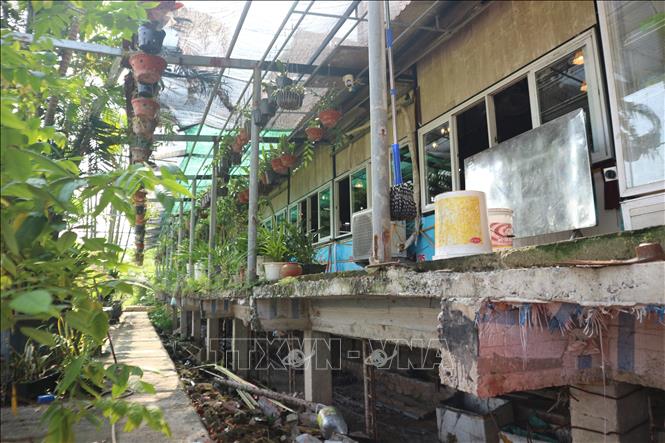
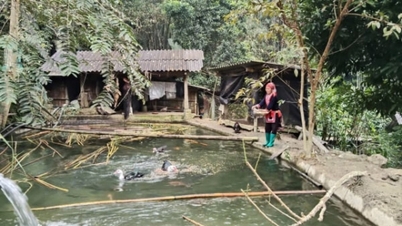
Similarly, in 2007, Ms. Nguyen Thi Phuong was one of many households leasing public pond land from Vien Son commune (Son Tay town). Over time, agricultural production became unsuitable; since the leased pond area was adjacent to her residential land, in 2010 Ms. Phuong erected a temporary structure for a food and beverage business on the leased pond land of Vien Son commune. According to Ms. Phuong, since 2021, her family has not had to pay land use fees, waiting to renew the contract from an indefinite term to a fixed-term contract. However, no contract has been signed since then.
The town of Sơn Tây issued a document requiring Ms. Phượng to dismantle the structures built on public agricultural land. However, according to observations by reporters on October 30th, Ms. Phượng had only dismantled the canopy area, a small portion of the violation, while the rest was still being used for food and beverage business. It is evident that Hanoi's public agricultural land is a tangled mess, existing in countless different forms. The fact that this land is "shared property" and slow to be put into use means that public agricultural land may be left fallow, wasting resources; it may even be encroached upon, misused, or exploited for purposes other than intended, with local leaders colluding in the wrongdoing.
Lesson 2: Major Consequences of Budget Revenue Losses
According to VNA
Source: https://doanhnghiepvn.vn/kinh-te/chong-lang-phi-dat-dai-bai-1-bo-xoi-ruong-mat-bi-bo-hoang/20250110102751805





























































Comment (0)