


Almost everyone knows the names of a few popular dishes in Hanoi, and generally speaking, Hanoian cuisine is considered undeniably delicious by many food enthusiasts. This is something that would likely be heavily criticized for in other areas. But Hanoi holds a "powerful" position in terms of cuisine , thanks to its location in the center of a delta region diverse in customs, and its status as the capital of many dynasties, attracting talent and resources from the highlands to the coastal regions.
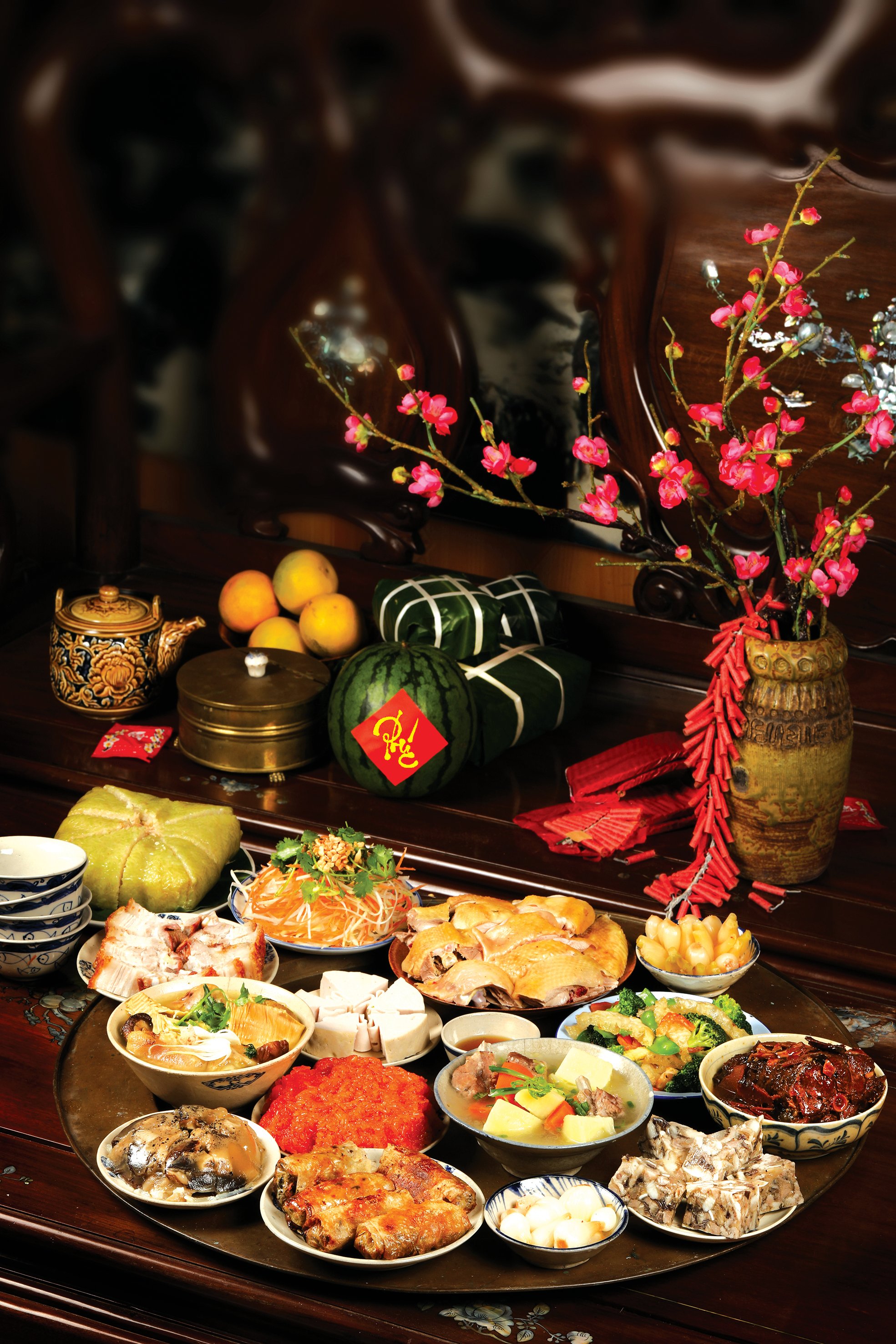
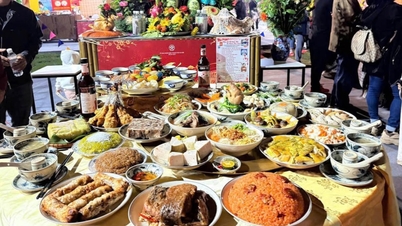
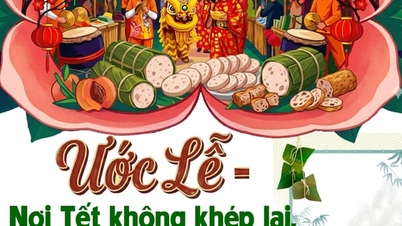
The Tet feast not only serves as an offering to ancestors but also recreates the culinary atmosphere.
Hanoi is like a feast where products from all corners of the country converge. Furthermore, the changing seasons ensure a cyclical supply of culinary ingredients, unlike the cold temperate regions or the year-round hot South. Hanoi's cuisine is especially vibrant during Tet (Lunar New Year), appearing on the spring feast table, comparable to a beauty adorned with even more splendor. To put it a bit exaggeratedly, it could be called the "beauty queen of the feast," or at least one of the top three or top performers… However, it must be said that this "beauty queen" feast is not much different from an everyday meal – meaning, once a dish is served, it must be delicious. For the inherently picky palates of Hanoians, their dictionary doesn't have "unappetizing" dishes, only "edible" and "dishes that should be discarded immediately." Hanoi's delicious dishes are, of course, always "truly delicious," meaning edible – and in the early 20th century, this was associated with the "slurp-slurp" sound of the two bamboo sticks used by Chinese street vendors carrying pho on their shoulders, a signal that served as a substitute for a street vendor's call.
A Hanoi Tet feast is a harmonious blend of everyday meals and street food. For Hanoians, the balance between savory and vegetable dishes, between the flavors of the countryside and seafood, is crucial, with a touch of the colors of the forest and mountains. For example, a boiled meat dish is always cooked with vegetables using the broth, dipped in fish sauce made from anchovies from the sea or shrimp paste from the fields; sometimes the soup is sourdough with sour fruits like sấu, dọc, or tai chua from the forest… A sea fish dish is braised with pork belly, sometimes with the savory taste of mountain olives, or bamboo shoots harvested from the mountains are cooked with frogs or river fish, balanced by herbs and spices grown in the fertile fields on the outskirts of the city. Looking at a meal, whether simple or elaborate, one senses the presence of a diverse ecosystem of produce in the urban setting.
In the past, snacks that were originally only eaten by city dwellers for breakfast or afternoon tea have now infiltrated the menus of ancestral worship ceremonies and Tet (Lunar New Year), bringing a more relaxed and cheerful feel to the traditional feast that strictly adheres to the standard of four plates and four bowls or six plates and six bowls. "Hard" dishes like boiled chicken, sticky rice with gac fruit, and meatball soup have been replaced with "soft" and modernized options such as smoked pork leg and salami. Dishes like dried beef salad or steamed dumplings can be added for a sweet and sour flavor, as well as for diners to enjoy with spicy food. Even a signature Hanoi restaurant dish, bun thang, emerged as a solution for excess Tet feasts, subtly combining chicken and pork sausage from the "hard" dishes with shiitake mushrooms, omelets, and pickled radishes (ca la thau) in a broth served with rice noodles, garnished with a touch of shrimp paste as a bridge connecting all these diverse elements.
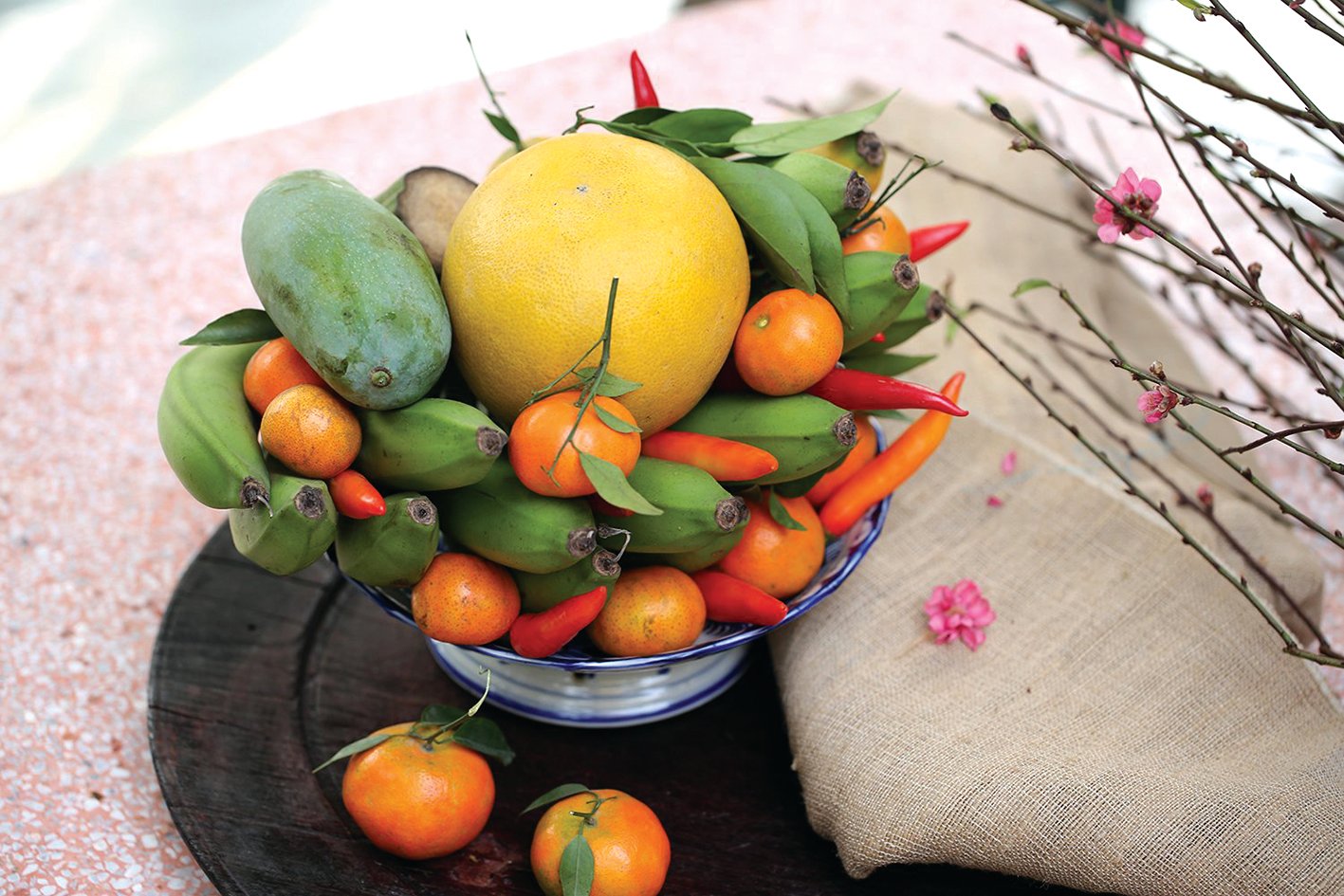
Offering tray for Tet (Vietnamese New Year)
Of course, the Tet feast not only fulfills the need to offer sacrifices to deities and ancestors according to the Vietnamese belief in ancestor worship, but also recreates the standard culinary atmosphere of street food. Sitting at a family's feast table, one can imagine the sophistication and discerning palate of the host in everyday life. A lavish feast can easily fail when a few dishes don't pass the test of the discerning palates of diners. Of course, no one visiting for Tet would criticize the host's feast, but surely only close friends and fellow foodies understand the intentions of the cook who prepared the dishes. People are also gradually abandoning the custom of insisting on inviting guests to a meal, and Hanoians, with their unique lifestyle, often reserve a couple of meals specifically for guests who have extended an invitation beforehand. Inviting guests to a feast in Hanoi means facing the strict criticism and judgment of seasoned diners, so it would be surprising if the food wasn't delicious.
A delicious Hanoi Tet meal also requires a special atmosphere of the festival, of spring, of reunion, or simply a bit of cold weather, a light drizzle, to make the dishes even more delicious and appealing, as city dwellers say. For example, the famous pork head terrine or jellied meat is best enjoyed in cold weather. The stability of the lifestyle also contributes to the authenticity of delicious dishes in the sense of inheriting tradition. The feeling of tasting delicious food with a long history of cultural practice is what people today still seek, and often sparks debate. People yearn to recreate the pristine appearance of delicious dishes made from "organic" ingredients, without any adulteration, as guaranteed by the vendors of ready-made food in Hang Be and Hom markets. A smooth, fragrant slice of pork sausage with the aroma of hand-ground meat and a hint of good fish sauce is always a fundamental concern for city dwellers, especially now that many sausage vendors have switched to using machines and adding additives to make the sausage crispy and last longer. What gives tradition its enduring vitality can be seen in the appeal of its cuisine, in the way people think about delicious food in a land where food has become ingrained with a unique character.
Hanoi's cuisine today seems to mirror the city's landscape—sometimes quite cluttered, even messy. But in preparation for Tet (Lunar New Year), there seems to be a rearrangement, with everyone striving to create a spacious atmosphere for enjoyment, allowing people to relax and slow down. The Tet feast is like a sublimation of everyday life, possessing the surreal beauty of a paradise that Hanoians have always sought.
Source




















































Comment (0)