

After nearly five years of implementing the "Enclosure and promotion of natural forest regeneration" model, the Hong Linh Protective Forest Management Board ( Ha Tinh province ) has transformed more than 504 hectares of barren land into lush, sustainable natural forests.
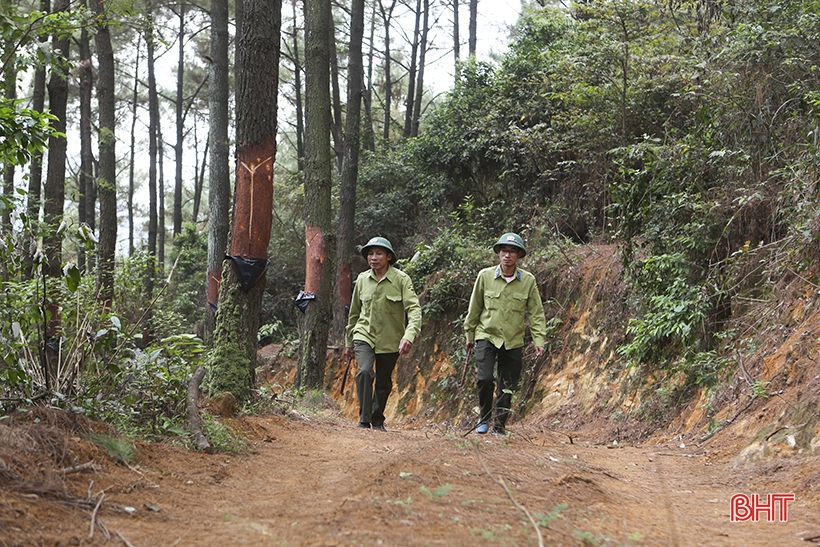
To reach the naturally regenerated forest in Khe Bac (Dau Lieu ward, Hong Linh town), officials from the Hong Linh Protective Forest Management Board have to trek through the forest for about 3km.
After traveling approximately 3 km from the Cong Khanh Forest Management and Protection Station on National Highway 8B, the bypass route through Hong Linh town, it took me and two forest protection officers nearly an hour by motorbike and on foot along a firebreak to reach the forest area belonging to plot 6, sub-area 121, located in the Khe Bac area of Hong Linh mountain (within the territory of Dau Lieu commune).
The regenerated forest, covering 65 hectares, comprises many native tree species such as chestnut, fig, cypress, teak, oak, etc., appearing before us in a lush green expanse. This is one area within the 504.25 hectares of forest recently regenerated by the Hong Linh Protective Forest Management Board through the "Enclosure and Promotion of Natural Forest Regeneration" model, part of the sustainable forestry development program.
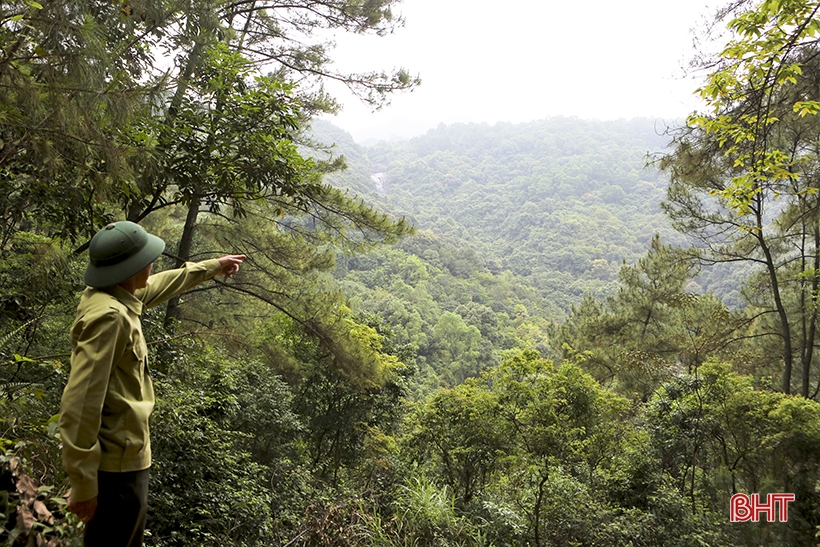
The lush green of the forest is being preserved and its natural regeneration is being promoted.
Witnessing the lush green forest today, few would know that just 5 years ago, or even decades ago, this place was a barren wasteland covered only with reeds, undergrowth, or shrubs…
Mr. Tran Quoc Son, in charge of the Cong Khanh Forest Management and Protection Station, under the Hong Linh Protective Forest Management Board, said: “The consequences of indiscriminate burning and destruction of forests in the 1980s and 1990s caused many forests on Hong Linh mountain to disappear, replaced by empty spaces, barren hills, or bushes and vines. After the implementation of projects 327 and 661, the Hong Linh Protective Forest Management Board, then called Hong Linh Forestry, together with the people, carried out reforestation to green the barren hills and mountains with an area of thousands of hectares. However, due to the rugged geographical location and difficult conditions, many areas remain uncultivated.”
For a long time, with no forests left, the vast hills and mountains became barren, prone to erosion and landslides during the rainy season; in the summer, the dry reeds and ferns created conditions that easily ignited and spread, causing forest fires.
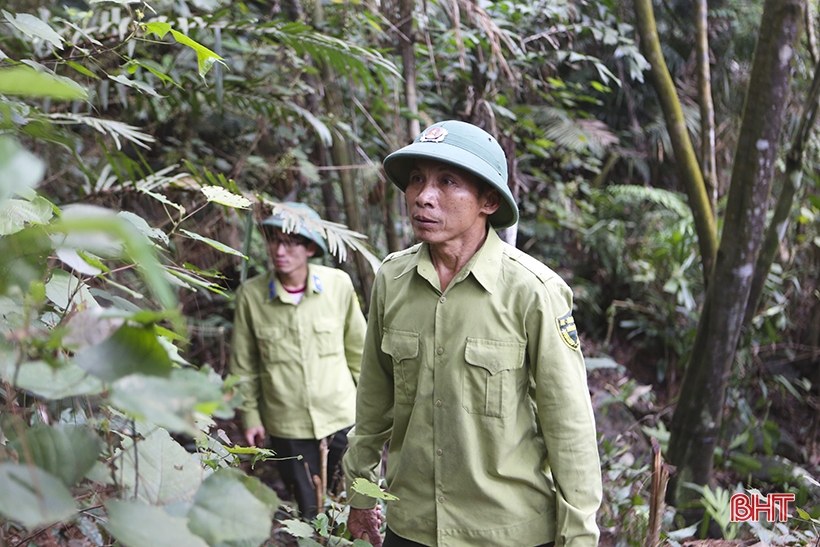
Mr. Tran Quoc Son (standing in front) has been involved in planting and protecting forests in Hong Linh for over 30 years.
According to statistics from the Hong Linh Protective Forest Management Board, as of 2019, the total area of forest land under the unit's management was 9,684.5 hectares. Of this, 6,694.7 hectares were forested land and 2,989.8 hectares were barren land.
Previously, from around 2001 to the present, in addition to caring for and protecting nearly 7,000 hectares of forest, the Hong Linh Protective Forest Management Board also tightened management and protection of nearly 3,000 hectares of barren land, including shrubs and vegetation; minimizing exploitation by local people. This created favorable conditions for many native woody plant species to gradually regenerate and grow.
In 2019, after surveying and recognizing that among the vacant land areas, the density of naturally regenerating and growing woody plants showed promise for developing into natural forests, the Hong Linh Protective Forest Management Board proceeded to build a model of "Enclosing and promoting the regeneration of natural forests".
The model involves selecting 504.25 hectares out of a total of 2,989.8 hectares of barren land with trees for natural regeneration, incorporating it into the protective forest plan over a 6-year period (2019-2025). The model is implemented in 102 plots, belonging to 43 sections and 15 sub-areas, located in the administrative areas of the following communes: Co Dam, Xuan Vien, Xuan Linh, Xuan Hong, Xuan Lam (Nghi Xuan); Thien Loc, Thuan Thien (Can Loc); Hong Loc (Loc Ha); and the wards of Trung Luong, Duc Thuan, Dau Lieu (Hong Linh town).
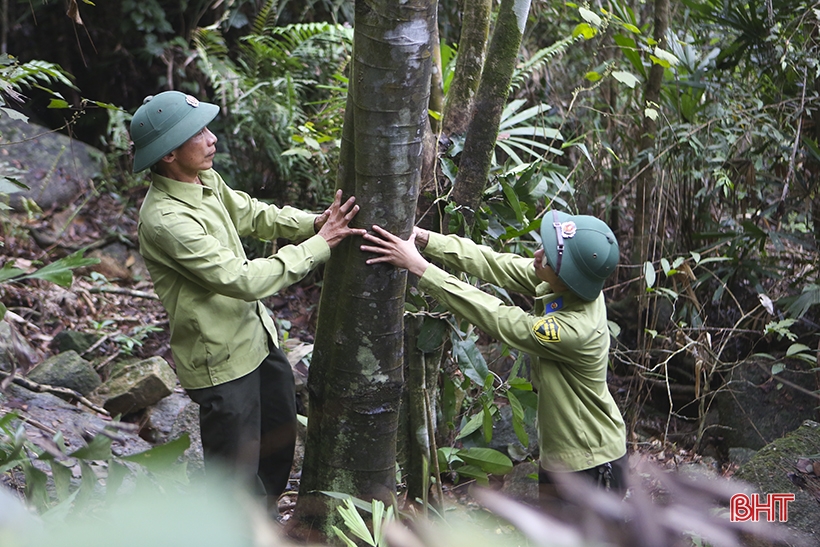
A chestnut tree, over 10 meters tall and with a circumference of approximately 80 cm, stands in a naturally regenerating forest.
The Hong Linh Protective Forest Management Board has implemented various solutions and techniques for the model's cultivation. Regarding protection, preventing the illegal logging of existing trees, and forest fire prevention and control, the Management Board has organized a force of contracted households and forest protection personnel to conduct regular patrols; disseminated information and raised awareness among the people about forest protection; and closely coordinated with local authorities and relevant agencies to prevent and handle acts that harm the forest.
Develop plans for forest protection, fire prevention, and firefighting; sign commitments with relevant organizations and individuals operating near protected forests regarding fire prevention and control; strengthen fire prevention and control efforts during the hot season, with fire prevention teams on duty 24/7. Regarding intervention measures, in areas designated for natural regeneration, unit staff and workers regularly inspect and carry out localized clearing of vines and shrubs, creating conditions for the growth of woody trees…
With the determination of the staff and workers of the Hong Linh Protective Forest Management Board, after nearly 5 years of implementation, the "Enclosure and Promotion of Natural Forest Regeneration" model has achieved many positive results. 100% of the area where the model was implemented has gradually developed into sustainable natural forest. In particular, many forest plots in the sub-areas, native woody species such as chestnut, teak, thorny fig, and *Chân chim* are thriving, with many trees reaching 10-15m in height and 15-25cm in diameter; the density of woody trees averages 510 trees/ha…
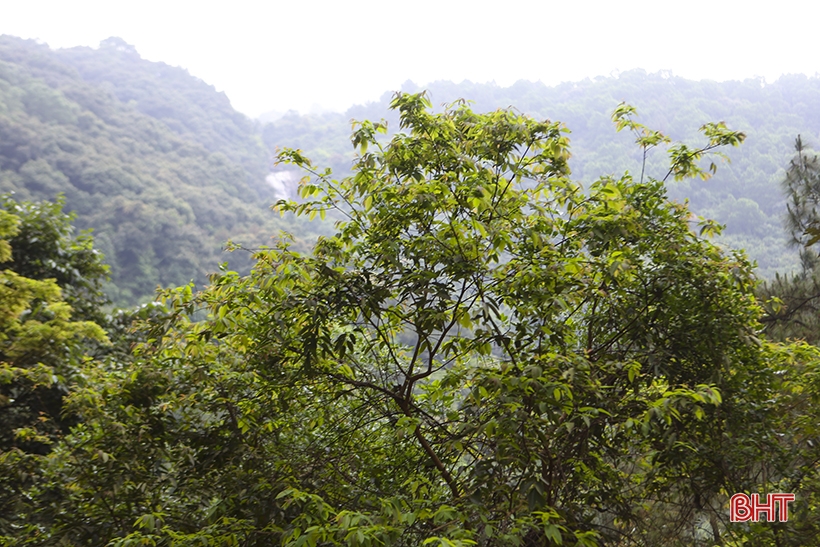
With proper care and maintenance, naturally regenerated forests with many native tree species are considered to have great value in environmental protection.
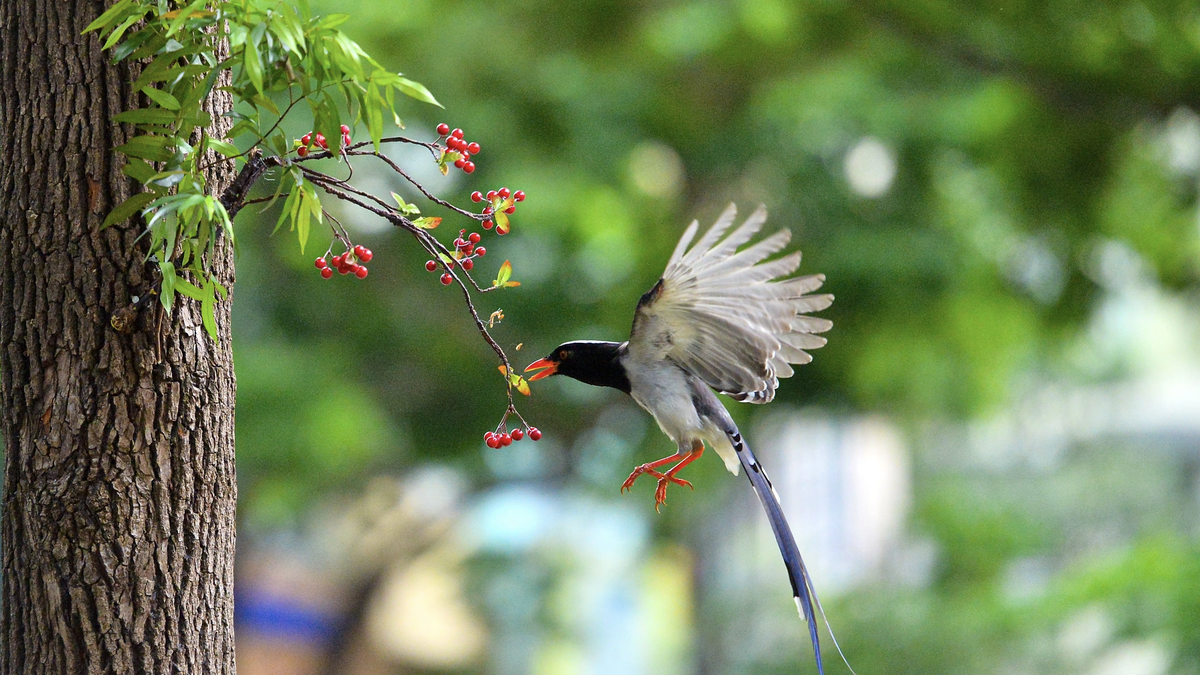
The implementation of the model has resulted in the formation of a natural forest with high biodiversity. With many native tree species, it serves to protect the environment, conserve genetic resources, protect water sources, create landscapes, and promote sustainable development. At the same time, it is able to withstand harsh natural conditions in Hong Linh such as forest fires, pests, and storms. Furthermore, thanks to the restoration of the natural ecological environment, many native animal and wildlife species have gradually recovered.
As one of the households contracted to protect the regenerated forest, Ms. Phung Thi Thuy (residential group 8, Dau Lieu ward) expressed: “Looking at the forest gradually maturing and becoming greener, I feel even more joyful and happy. Because, thanks to the model of the Hong Linh Protective Forest Management Board, we have the opportunity to contribute to creating a natural forest with great value in protection and the environment.”
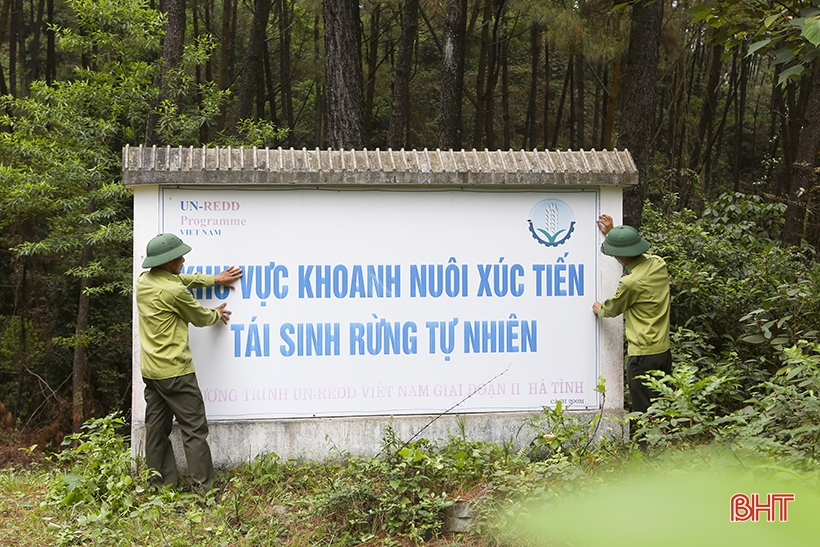
The area designated for the cultivation and regeneration of natural forests is located in plot 6, sub-area 121 of the Khe Bac area.
Mr. Nguyen Hai Van, Deputy Head of the Hong Linh Protective Forest Management Board, said: "From the initial results after implementing the 'Enclosure and promotion of natural forest regeneration' model, we are even more certain of the correct direction in sustainable forest regeneration."
In the coming period, we will continue to protect and survey the remaining vacant areas to further demarcate and promote regeneration in potential areas. This will continuously increase the number of valuable native forests that are crucial for protection and have significant implications for biodiversity and ecological balance, something that planted forests are limited in.”
Thien Vy
Source







![[QUIZ] When did Vietnam's National Book and Reading Culture Day originate?](https://vphoto.vietnam.vn/thumb/402x226/vietnam/resource/IMAGE/2026/04/20/1776647849937_fb_anh-dai-dien-infographic-khanh-phuong-jpg.webp)























































Comment (0)