

4 methods for land valuation
Decree 12/2024/ND-CP amends Articles 4 and 5 of Decree No. 44/2014/ND-CP on land valuation methods and the conditions for applying each method.
Specifically, the comparative method is implemented by adjusting the prices of land parcels with the same land use purpose, certain similarities in factors affecting land prices that have been transferred on the market, and which have been auctioned for land use rights where the winning bidder has fulfilled their financial obligations according to the auction decision. This is done through analyzing and comparing factors affecting land prices after excluding the value of assets attached to the land (if any) to determine the price of the land parcel to be appraised.
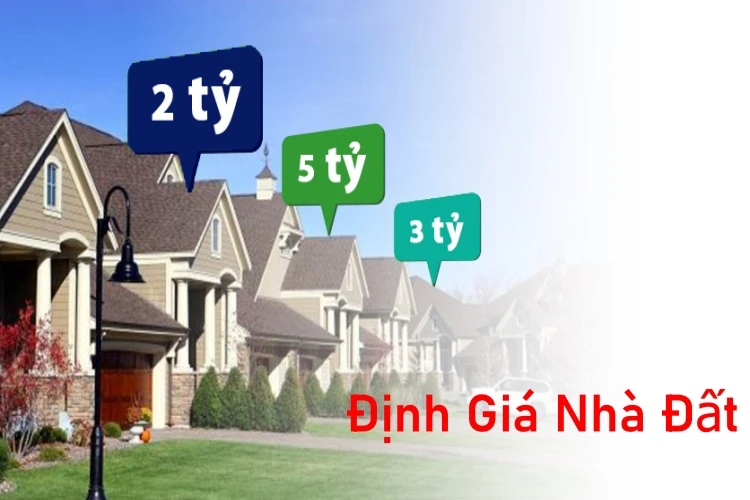
The comparative method is applied to valuation in cases where there are at least three comparable land parcels with the same land use purpose, certain similarities in factors affecting land prices, and land use rights that have been transferred on the market and won through auction, with the winning bidder having fulfilled their financial obligations according to the winning bid decision (hereinafter referred to as comparable land parcels), except for the cases specified in points a, b, c, and d below.
The income method is implemented by dividing the average annual net income per land area by the average interest rate on 12-month Vietnamese Dong savings deposits at commercial banks where the State holds more than 50% of the charter capital or total voting shares in the province for the three consecutive years up to the end of the most recent quarter for which data is available before the valuation date.
The income method is applied to valuation of agricultural land plots and non-agricultural land plots (excluding residential land) where the land plot or area to be valued does not qualify for the comparative method but the income and expenses from land use according to the legal land use purpose at the time of valuation can be determined, except for the cases specified in points a, b, c, and d below.
The surplus method is implemented by subtracting the total estimated development costs of the land plot or area from the total estimated development revenue, based on the most efficient land use (land use coefficient, building density, maximum number of floors of the building) according to the land use plan and detailed construction plan approved by the competent authority.
The surplus method is applied to valuation in cases where the land parcel or area for investment projects does not qualify for the comparative method or the income method, but the total development revenue and total development costs of the project can be estimated, except for the cases specified in points a, b, c, and d below.
The land price adjustment coefficient method is implemented by multiplying the land price in the land price table by the land price adjustment coefficient. The land price adjustment coefficient is issued by the People's Committee of the province or centrally-governed city (hereinafter referred to as the Provincial People's Committee) by comparing the land price in the land price table with the prevailing market land price.
The land price adjustment coefficient method is applied to determine the land price for land parcels and areas that are already specified in the land price table issued by the Provincial People's Committee and fall under one of the following cases:
a) Cases stipulated in point a, clause 4, Article 114 and clause 3, Article 189 of the Land Law;
b) Calculating annual land rent payments when the State leases land without auctioning the land use rights;
c) Calculating the starting price for auctioning land use rights when the State allocates or leases land in cases where the land parcel or area has already had technical infrastructure invested according to the detailed construction plan;
d) Determining the land price of the land parcel or area to be valued where the total value calculated according to the land price table for the area subject to land use fees and land lease fees is less than 30 billion VND for centrally-administered cities, less than 10 billion VND for mountainous and highland provinces, and less than 20 billion VND for other provinces in the following cases:
The cases stipulated in points b and d of clause 4, Article 114, and clause 2, Article 172 of the Land Law;
The land lease fee is calculated as a one-time payment for the entire lease period when the State leases land without auctioning the land use rights.
d) Calculating compensation when the State reclaims land in cases where multiple adjacent land parcels with the same intended use are reclaimed but do not meet the conditions for applying the comparative method.
The decree states that comparable land parcels used for land valuation must meet the conditions for exercising land use rights as stipulated in the Land Law.
Information for applying land valuation methods.
Decree 12/2024/ND-CP also adds Article 5b regarding information for applying land valuation methods. Accordingly, information on land prices, land lease prices, and premises lease prices for applying the comparative method, the surplus method, and constructing land price adjustment coefficients includes:
1) The winning bid price for land use rights in cases where the winning bidder has fulfilled their financial obligations as per the winning bid decision.
2) Land prices after tax procedures have been completed at the tax authority or registered at the land registration office in cases of land use right transfer;
3) Land lease prices, premises lease prices;
4) Market price of land transfers.
The decree states that the information used to apply the land valuation method must be information within a period of no more than 24 months prior to the land valuation date, prioritizing information closest to the valuation date, and collected from the following sources:
- National land database, national price database;
- Land registration offices, units organizing land use rights auctions, and units organizing asset auctions;
- Tax authorities, agriculture and rural development agencies;
- Real estate exchanges, real estate businesses;
- Organizations with the function of advising on land valuation, and appraisal companies;
- Credit institutions, real estate associations, research institutes/centers;
- Conduct direct interviews with the transferor or transferee in cases where the transfer has already taken place on the market.
According to Decree 12/2024/ND-CP, information on income and expenses from the use of non-agricultural land for the purpose of applying the income method is collected from the following sources: Income from production and business activities recorded in financial statements or income from land leases and premises leases collected during a continuous period of 3 years (calculated from January 1st to December 31st) immediately preceding the valuation date.
If the income from the land plot or area to be valued is incomplete for each year and does not accurately reflect the actual income from land use, information on land lease prices and premises rental prices for at least three land plots should be collected for comparison.
The cost of generating income from the land use as stipulated above is determined based on norms and unit prices issued by competent state agencies or construction investment rates published by the Ministry of Construction ; in cases where there are no norms, unit prices, or construction investment rates issued by competent state agencies, the average actual cost data from the market of at least three land parcels closest to the land parcel or area to be valued as stipulated in point b, clause 5 of this Article shall be used as a basis.
When applying comparative methods, the surplus method must select comparable land parcels in the following order of priority: a) Similarity in location, infrastructure conditions, area, size, shape, land use coefficient, building density, building height, and other factors affecting land prices compared to the land parcel to be valued; b) Closest distance to the land parcel or area to be valued and not limited by administrative boundaries of commune, district, or provincial-level administrative units.
The provincial People's Committee decides the specific land prices.
Regarding the determination of specific land prices, Decree 12/2024/ND-CP stipulates that based on the principles of land valuation specified in Clause 1, Article 112 of the Land Law, the conditions for applying land valuation methods, and the results of the land price appraisal by the Land Valuation Council, the provincial People's Committee shall decide on specific land prices, or the district People's Committee shall decide on specific land prices in cases where the provincial People's Committee delegates authority as prescribed by the Law on Organization of Local Government.
Specific land prices are used as a basis for cases stipulated in Clause 4, Article 114, Clause 2, Article 172, and Clause 3, Article 189 of the Land Law; the starting price for auctioning land use rights when the State allocates land with land use fees, or leases land with a one-time payment for the entire lease period.
The Department of Natural Resources and Environment is responsible for assisting the People's Committee at the same level in organizing the determination of specific land prices.
Source



![[Image] Pleasant weather helps students enter the 10th grade entrance exam with confidence.](https://vphoto.vietnam.vn/thumb/1200x675/vietnam/resource/IMAGE/2026/05/29/1780034401612_ngay-1-thi-lop-10-minh-duy-8-5009-jpg.webp)
![[Photo] Ba Lang An Lighthouse - the "eye of the sea" amidst the "rock museum" of Quang Ngai province.](https://vphoto.vietnam.vn/thumb/1200x675/vietnam/resource/IMAGE/2026/05/29/1780038698840_anh-man-hinh-2026-05-29-luc-14-10-42.png)































































































Comment (0)