

"Red alert" regarding pollution levels.
According to a report by IQAir, a reputable Swiss air quality monitoring organization, out of 134 countries and territories surveyed, only 7 met the WHO guidelines for PM2.5 fine particulate matter in the air. These were Australia, Estonia, Finland, Grenada, Iceland, Mauritius, and New Zealand.
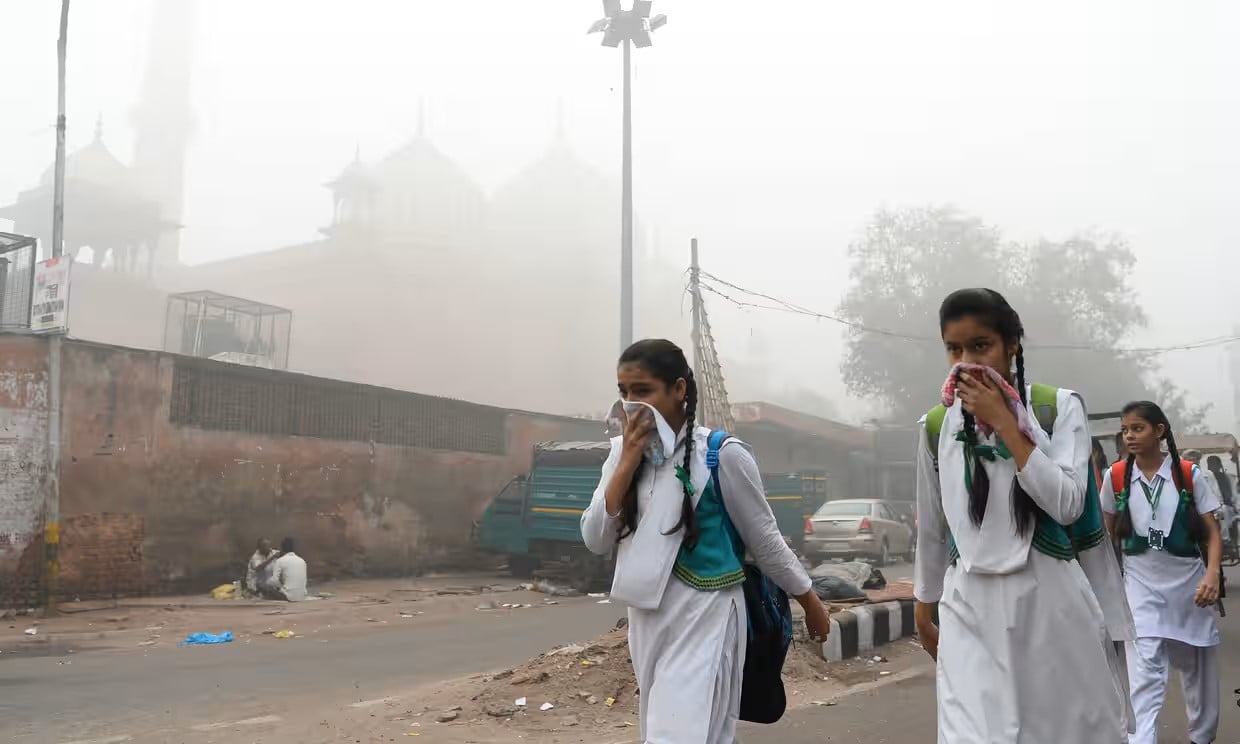
Schoolgirls cover their noses with handkerchiefs as they walk to school through the dusty streets of New Delhi, India - Photo: AFP
The vast majority of other countries and territories do not meet WHO standards for PM2.5, a type of fine particulate matter smaller than a human hair that, when inhaled, can cause a multitude of serious health problems for humans.
" Science has clearly demonstrated the impact of air pollution, but we've become so accustomed to background pollution levels that it's not healthy," said Glory Dolphin Hammes, CEO of IQAir North America.
An IQAir report reveals that the most polluted country is Pakistan, with PM2.5 concentrations 14 times higher than the WHO standard. This South Asian nation, along with its neighbors India, Tajikistan, and Burkina Faso, are among the most polluted countries in IQAir's ranking.
But even in wealthy and developed countries, progress in reducing air pollution is under threat. Canada, for example, a country long considered to have the cleanest air in the Western world , became the worst place for PM2.5 last year due to record wildfires that ravaged the country, spreading toxins throughout Canada and into the United States.
Meanwhile, in China, improving air quality has become more complicated and difficult over the past year due to the economic recovery following the COVID-19 pandemic, with IQAir reporting that PM2.5 levels in the mainland have increased by 6.5%.
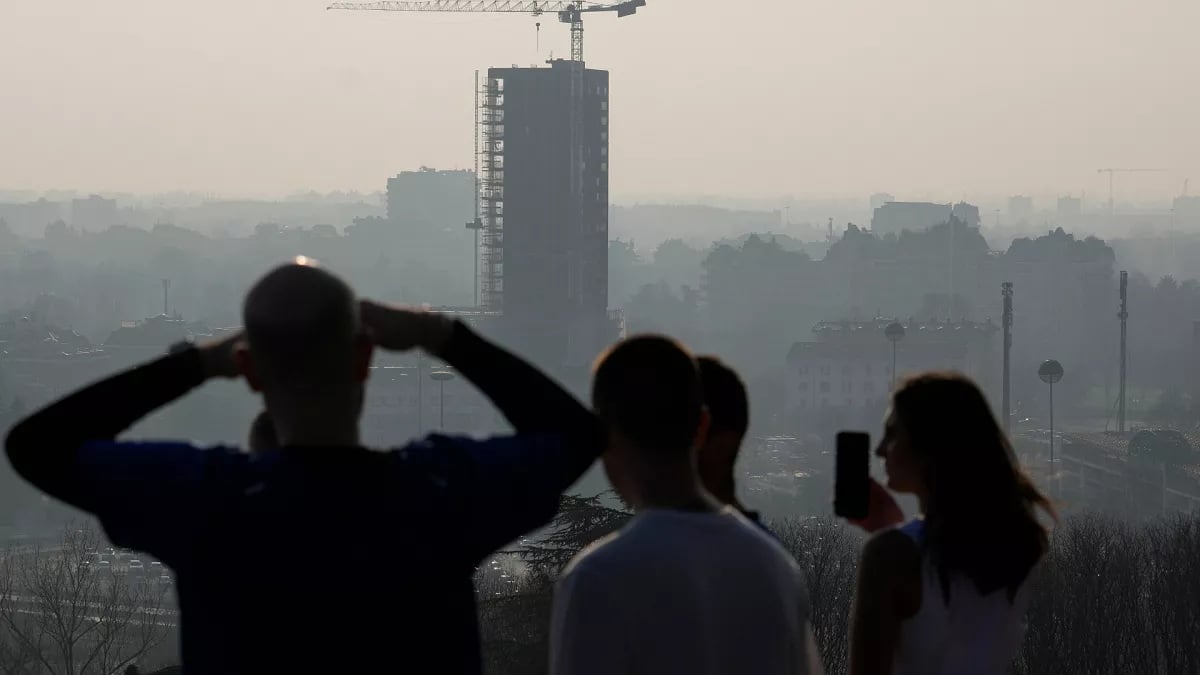
Even modern European cities like Milan have been ranked as having poor air quality by IQAir - Photo: Euronews
IQAir's sixth annual report revealed that the world's most polluted urban area last year was Begusarai in India, and the South Asian nation is also home to four of the world's most polluted cities.
However, most developing countries, especially those in Africa, lack reliable air quality measurements, so there may still be other, more polluted cities that have not been ranked.
No place is safe from fine dust.
The WHO lowered its 2021 guideline for "safe" PM2.5 levels to 5 micrograms per cubic meter of air, and with this new standard, many countries, such as those in Europe that had significantly improved their air quality over the past 20 years, have failed to meet safe levels for fine particulate matter.
More importantly, even the stricter guidelines mentioned above from the WHO may not fully capture the risks of air pollution. A study published last month by the Boston University School of Public Health (USA) showed that the WHO's recommended levels are not safe enough.
Accordingly, there was still a significant increase in hospital visits for cardiovascular and respiratory problems when exposed to PM2.5 for short periods and below WHO limits.
Additionally, based on an analysis of over 60 million Americans aged 65 and older from 2000 to 2016, the study showed that the risk of hospitalization for seven major cardiovascular diseases increased with exposure to average PM2.5 levels in the US.
Therefore, scientists at the Boston University School of Public Health argue that there is no safe level of PM2.5, and even small amounts of this fine dust increase the risk of serious health problems.
Another report, by the Energy Policy Institute at the University of Chicago (Epic), indicates that air pollution kills approximately 7 million people worldwide each year – more than AIDS and malaria combined – and this burden is felt most acutely in developing countries that rely on dirty fuels for heating, lighting, and cooking.
Glory Dolphin Hammes, CEO of IQAir North America, urged: "Countries need to take more decisive action to make cities more walkable and less reliant on cars, closely monitor forestry practices to minimize the impact of wildfire smoke, and rapidly adopt clean energy instead of fossil fuels."
Dr. Aidan Farrow, a senior air scientist at the environmental organization Greenpeace International, also shared the view that humanity must strengthen its monitoring and improve air quality. Dr. Farrow stated: “In 2023, air pollution remains a global health catastrophe. Therefore, IQAir’s global dataset provides an important reminder of the need for more solutions to this problem.”
Nguyen Khanh
Source





















![[Photo] Prime Minister Pham Minh Chinh holds a phone call with the CEO of Russia's Rosatom Corporation.](/_next/image?url=https%3A%2F%2Fvphoto.vietnam.vn%2Fthumb%2F1200x675%2Fvietnam%2Fresource%2FIMAGE%2F2025%2F12%2F11%2F1765464552365_dsc-5295-jpg.webp&w=3840&q=75)











































Comment (0)