

Strengthening the provision of accurate, timely, and objective information.
It can be said that the information and communication sector plays a crucial role in providing accurate and timely information from local authorities to the press. Through official information channels, the Departments of Information and Communication help the press access reliable information, connecting local departments and agencies with journalists to accurately reflect the actual situation in their respective areas of management. This is especially important in the current context, where fake and inaccurate information easily spreads on social media, forcing the press to "race" for information. Therefore, local authorities must also have "breaking news" to provide to journalists.
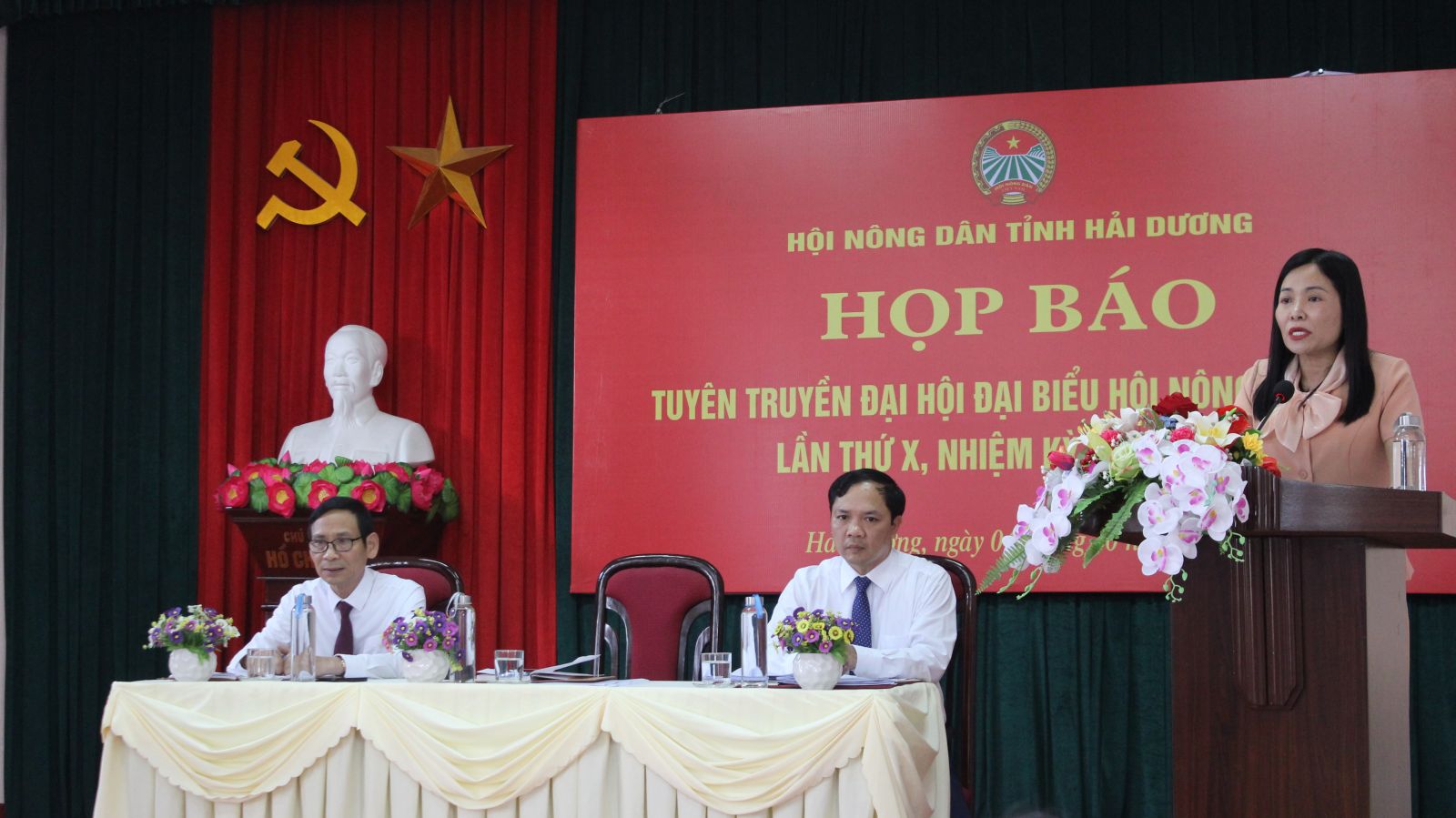
The Hai Duong Provincial Farmers' Association held a press conference to publicize the 10th Provincial Farmers' Association Congress, term 2023-2028. (Illustrative image)
A prime example from practice of the connection between local authorities and the press, with the Department of Information and Communications acting as a "bridge," can be seen in the story of "Covid-19 in Vinh Phuc ." During the Covid-19 outbreak in Son Loi commune, Binh Xuyen district, Vinh Phuc province - the first epicenter of the pandemic in Vietnam - the coordination of information between the Vinh Phuc provincial government and resident reporters in the area was very timely and accurate.
The Department of Information and Communications was then assigned as the central point for providing information to reporters. From the number of people infected with Covid-19, to the work of containing and suppressing the epidemic, to ensuring the livelihoods of people in quarantined areas… all information was regularly and publicly provided through various forms, from press conferences and quick meetings to written documents or through “4.0 era channels” such as Zalo and the Department of Information and Communications’ social media. It was this information, coupled with the tireless efforts of reporters in disseminating information and promptly guiding public opinion, that contributed to Vinh Phuc's success in the fight against Covid-19 during that period.
Another example given is the Quang Ninh Provincial Department of Information and Communications, which regularly publishes socio -economic news bulletins, providing the press with a comprehensive and accurate overview of the local situation. In addition, many Departments of Information and Communications also publish periodic reports on local programs, plans, and development projects. These documents not only provide useful information for the press but also help guide public opinion, ensuring that information is conveyed objectively and truthfully.
Accuracy is paramount when reporting information. Authorities must provide reporters with official and consistent news on the issues they need to disseminate. Reporters then use this information to reach their readers. In other words, the quality of a reporter's work is closely linked to the information provided by local government agencies. In many provinces and cities, the Department of Information and Communications has effectively played this "connecting" role, helping to increase the credibility and authenticity of journalistic products.
Furthermore, objectivity is a key concern for many journalists when receiving information from local government agencies. The press in general, and the central press in particular, when writing articles, aim to adhere to the Party's policies and guidelines, the laws of the State, and the aspirations of the people, earning the trust and respect of readers.
To achieve this, objectivity and truthfulness are essential. Local authorities providing information to reporters, in addition to fulfilling their political duties, also need to be objective, not just focusing on their strengths and weaknesses, but also daring to confront existing shortcomings and limitations in order to make improvements.
From this perspective, to facilitate the press in fulfilling its nhiệm vụ and gathering information objectively and transparently, the Departments of Information and Communications have proactively and actively advised and coordinated with local departments and agencies to provide official, objective, and truthful information, enabling the press to offer critiques and suggestions to local agencies and units, helping them operate more effectively, reflecting real life, and fulfilling their tasks in the new situation.
Addressing the lack of proactiveness and professionalism in providing information to the press.
Discussing the role of the information and communication sector as a "bridge" in localities, National Assembly representative Nguyen Thi Suu (Thua Thien Hue delegation) stated: "The Departments of Information and Communication in provinces and cities play a very important role in connecting departments, agencies, and localities with press agencies, contributing to improving the effectiveness of information and propaganda, meeting the needs of the people, and serving the socio-economic development of the localities. By organizing regular press conferences, providing press passes, supporting administrative procedures, and organizing training courses... in the past, the information and communication sector in localities has helped reporters from press agencies access official sources more easily."
In particular, at quarterly press briefings, local departments, agencies, and media outlets can exchange information and opinions on providing information to the press and on journalistic activities in the province. This not only helps ensure the safety of reporters but also helps them better understand local regulations and policies, thereby performing their duties more effectively and professionally, improving the quality of articles and reports.”
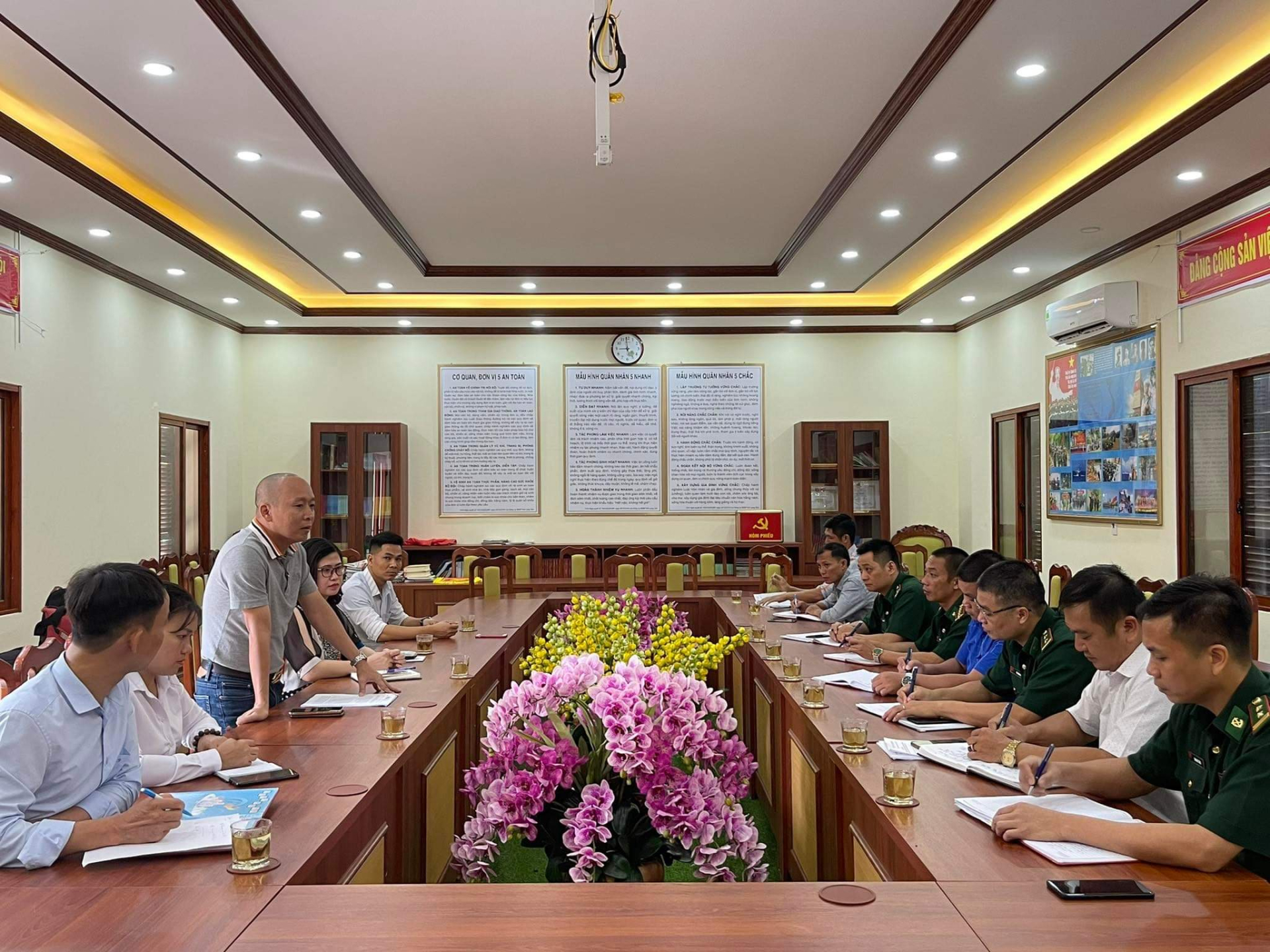
During a reporting trip to Lang Son, a team of reporters from the Newspaper & Public Opinion received active cooperation from the provincial government and the information and communication sector.
In fact, over the past period, many provincial and city Departments of Information and Communications have implemented measures to overcome the lack of planning, proactiveness, and professionalism in providing information to the press in their respective departments, agencies, and localities. This includes coordinating press conferences; organizing thematic seminars; holding press conferences and award ceremonies; providing training on public speaking skills, providing information to the press, and handling media crises; publicly posting lists of spokespersons and information providers on the provincial electronic information portal; establishing a Press Hotline; maintaining a daily national press bulletin on their locality and sending it to provincial leaders; promoting the application of information technology and digital technology; establishing Zalo groups and communication channels for quick and effective communication between the Department of Information and Communications and other departments, agencies, localities, and press agencies, ensuring the provision of official information to press agencies quickly, fully, promptly, and effectively.
At the same time, the information and communication sector has proactively and actively advised the People's Committees of provinces and cities to issue and organize the implementation of legal documents, directives, and management documents, creating a legal framework and favorable conditions for press agencies to operate, such as: Regulations on speaking and providing information to the press; Regulations on managing the activities of representative offices and resident reporters; Plan for implementing the Press Development and Management Plan; Plan for digital transformation of the press… In particular, when complex cases are identified, it is necessary to proactively provide information to the press to guide public opinion.
Expressing his views on strengthening the role of "bridging the gap between the press and the grassroots," National Assembly representative Hoang Van Cuong (Hanoi delegation) emphasized: "It is necessary to regularly evaluate the effectiveness of coordination in disseminating information about local activities and policies. This evaluation will help draw lessons and improve the quality of communication in the future."
Nguyen Huong
Source: https://www.congluan.vn/cau-noi-bao-chi-voi-co-so-post299729.html


![OCOP during Tet season: [Part 3] Ultra-thin rice paper takes off.](/_next/image?url=https%3A%2F%2Fvphoto.vietnam.vn%2Fthumb%2F402x226%2Fvietnam%2Fresource%2FIMAGE%2F2026%2F01%2F28%2F1769562783429_004-194121_651-081010.jpeg&w=3840&q=75)



Comment (0)