

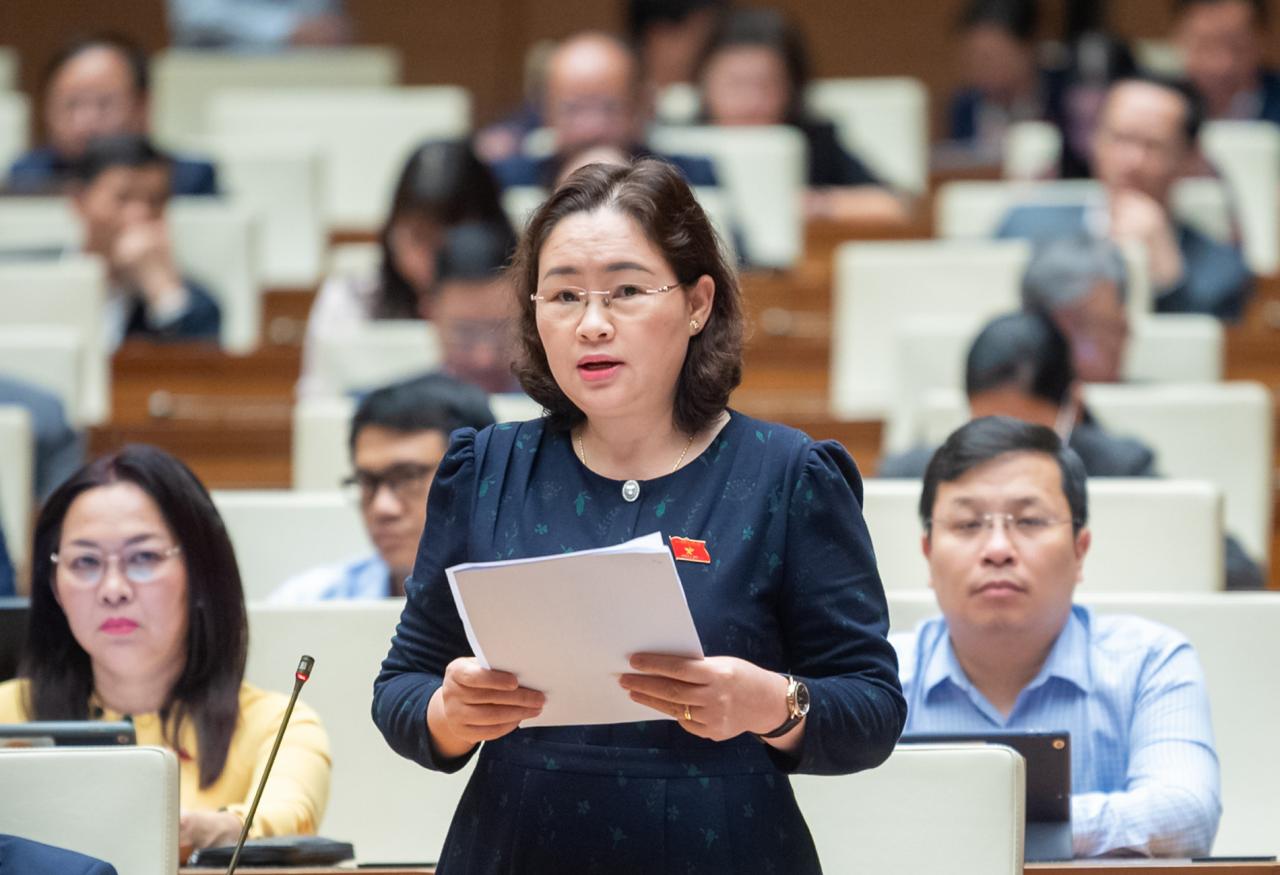
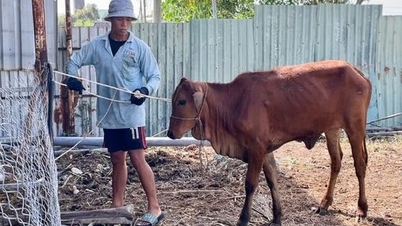
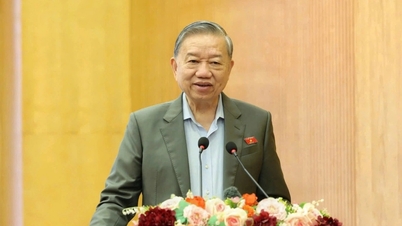
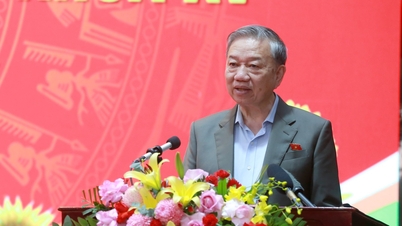
Speaking to a VietNamNet reporter on the sidelines of the National Assembly, regarding the unusual quality and price of breeding cattle provided to poor households that have been reported in the press in recent days, Representative Lo Thi Luyen - Deputy Head of the Dien Bien Provincial National Assembly Delegation - acknowledged that there was a situation where the cattle were thin, sickly, and priced higher than those in the local area.
According to Ms. Luyen, in recent times, Dien Bien has been implementing the procurement of plant and animal breeds under the project to diversify livelihoods, develop poverty reduction models, and support production development and nutrition improvement projects of the national target program for sustainable poverty reduction.
Cattle had to be imported from other provinces to supply the people.
According to her, what are the reasons behind the media reports of people providing thin, sickly, and expensive cattle to poor households?
In my opinion, one of the reasons for this situation is the long transportation distance; some suppliers of breeding stock come from the lowlands, with the nearest being from Lao Cai .
Transporting cows hundreds of kilometers inevitably affects their health. If people get motion sickness in cars, cows can too. Furthermore, when transported to different locations, the climate and living environment change, so some cows may develop runny noses or other illnesses.
In some cases where the cattle are thin, it is also necessary to review the breeding records of the supplier to see if they meet the required conditions and standards.
The fact that the price of locally sourced cattle is higher than that of local breeds is not surprising because the cattle are raised locally, grazed naturally, and do not require transportation.
Breeding stock supplied from other locations must meet certain conditions and procedures, such as: certification of parentage, certification as an advanced breed, and being raised according to standard housing and feed regulations. In addition, transportation costs drive up the price of breeding stock.
Currently, Dien Bien district (Dien Bien province) is reviewing and has recalled 180 breeding cows. Recalling breeding cows that do not meet quality standards within the warranty period to replace them with new, high-quality cows for the people is a normal procedure.
Besides the objective factors you mentioned, were there any other subjective issues during the implementation process?
From what I understand, Dien Bien district has been very careful in establishing an appraisal council to assess whether the suppliers are qualified and assigning the commune-level investors to visit the suppliers' sites to inspect the cattle. Only when the commune approves do the suppliers transport the cattle to Dien Bien to distribute to the people.
Regarding the price of cattle, it is also assessed by a valuation council comprising specialized agencies of the district. The conditions and standards of the breeding stock are directly assessed by the investor at the commune level.
Furthermore, according to regulations, these livestock should be guaranteed for 21 days after being supplied to the people, but Dien Bien district requested a 1-month warranty.
Therefore, I believe the district has been very proactive in implementing this policy. The issue is whether the suppliers of breeding stock fulfill their commitments to the communes during the implementation process. Whether there are any problems or not can only be concluded after the relevant authorities review and inspect the situation.
Even after seeking the ministry's opinion, the issue remains unresolved.
Why don't provinces and districts consider the issue of supplying breeding stock locally to ensure reasonable prices and avoid the risks of thin and sickly offspring, as has happened recently?
Currently, the supply of livestock to the people must comply with the conditions and standards stipulated in the Livestock Law, as I mentioned above, which include certification of parentage, certification as an advanced breed, and raising according to standard housing and feed regulations, etc.
If these standard conditions were strictly followed, there would currently be no supplier in Dien Bien that meets them. Therefore, Dien Bien has to find suppliers in neighboring provinces, and these suppliers are all certified according to regulations.
However, it must also be acknowledged that among the livestock suppliers in Dien Bien province today, there are some that supply very high-quality livestock, with beautiful cows that the people are very satisfied with. In fact, in many cases, people have received cows that have given birth within just a few months.
Therefore, I also hope that when the press reports on this issue, they will maintain an objective and comprehensive perspective, avoiding conflicting opinions, negative public sentiment, and concerns among management agencies, which could affect the implementation of a sound and humane policy.
So, according to you, the locality is currently facing obstacles regarding policies and mechanisms in providing livestock to poor households?
That's correct. Currently, Decree 38/2023 stipulates "priority should be given to using plant and animal breeds directly produced by people in the project implementation area..." but localities have not been able to implement this regulation due to obstacles related to animal breed standards and determining market prices.
Regarding specific standards for breeding stock, Dien Bien province issued a document requesting the opinion of the Ministry of Agriculture and Rural Development , and the Department of Animal Husbandry responded in writing that: Local authorities are requested to purchase breeding stock that meets the standards of the Law on Animal Husbandry and related documents.
Therefore, implementation is difficult because the people in these disadvantaged communes mainly engage in small-scale, local livestock farming, which cannot meet the conditions stipulated in the Livestock Law as I mentioned above.
We propose lowering the standards to alleviate difficulties for local authorities.
The National Assembly is currently discussing a draft resolution on some specific mechanisms and policies for implementing national target programs. Do you have any suggestions to address the difficulties faced by localities?
The people requested to purchase native breeds, selected based on local knowledge, intuition, and breeding experience regarding height, weight, waist circumference, neck circumference, skin color, fur color, etc., and ensuring that the breeds are suitable for the local climate conditions to grow and develop well.
Therefore, I propose adding to the draft resolution: In the case of purchasing plant and animal breeds directly produced by people in the project implementation area, those plant and animal breeds only need to meet the standards according to the economic and technical norms issued by the provincial level and confirmed by the People's Committee of the commune.
Furthermore, there are also difficulties in pricing plant and animal breeds when purchasing directly from farmers. Clause 2, Article 3 of Circular 55/2023 of the Ministry of Finance stipulates that "The unit price for purchasing goods and services shall be calculated according to market prices in the locality at the same time, and confirmed by the People's Committee of the commune in the sales receipt with the people." However, in reality, many localities are hesitant to apply this regulation due to legal risks.
The draft resolution stipulates that "The financial agency at the same level, or the People's Committee at the commune level, is responsible for determining the market price of goods in cases where payment is made according to market price."
I propose that regulations be established at the district level to assign the authority to form appraisal and valuation teams for livestock breeds in their areas, as a basis for implementation.
Specific regulations regarding breeding standards and pricing are necessary for localities to effectively prioritize the use of local breeds.
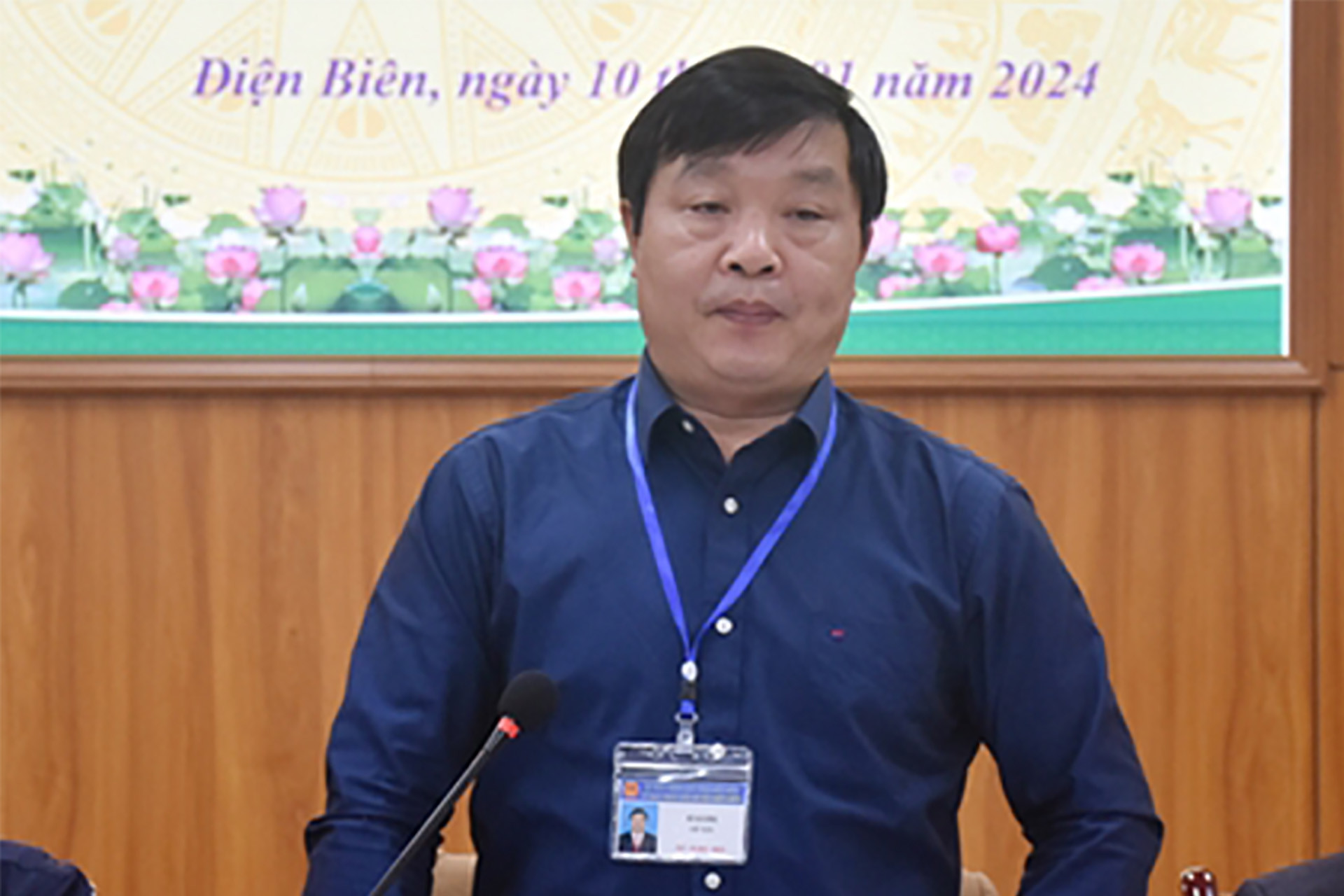
The Chairman of Dien Bien District speaks out about the irregularities in distributing cattle to poor households.
Source


![[Photo] Two flights successfully landed and took off at Long Thanh Airport.](/_next/image?url=https%3A%2F%2Fvphoto.vietnam.vn%2Fthumb%2F1200x675%2Fvietnam%2Fresource%2FIMAGE%2F2025%2F12%2F15%2F1765808718882_ndo_br_img-8897-resize-5807-jpg.webp&w=3840&q=75)










































































Comment (0)