

After 50 years of construction and development, the Sydney Opera House is not just a venue for performing arts, but has also risen to become an international symbol and cultural heritage of Australia.
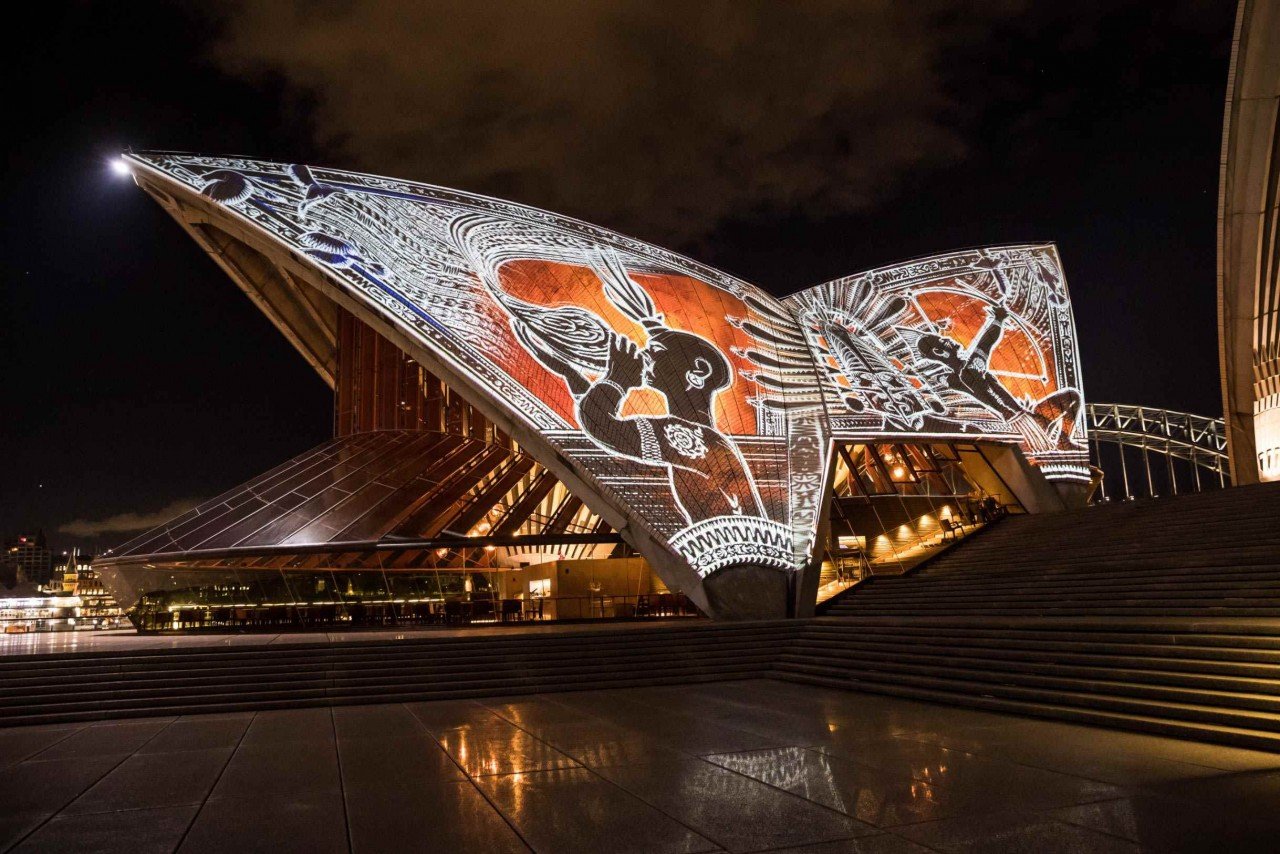 |
| Located on Bennelong Point peninsula, the Sydney Opera House is one of the most iconic architectural works of the 20th century. (Source: CNN) |
In the 50 years since its official opening on October 20, 1973, the Sydney Opera House has hosted thousands of world- renowned performances, creating many memorable moments that remain etched in the minds of audiences to this day.
The sail-shaped opera house has welcomed many famous figures such as Oprah Winfrey, Bob Dylan, and the band One Direction. Notably, the Sydney Opera House is also considered a political symbol of Australia, after Pope John Paul II, the first black president of South Africa Nelson Mandela, and several US presidents all visited this special venue.
The fact is, this building has weathered many historical ups and downs and bravely overcome difficulties before achieving its current international influence. Let's join World & Vietnam Newspaper in looking back at the memorable 50 years of the Sydney Opera House.
The road is full of thorns.
In 1954, New South Wales Premier Joseph Cahill convened a conference to build an opera house for Sydney to meet the local demand for performing arts.
He launched an international design competition on September 13, 1955, and received 233 entries from 32 countries. The design criteria included a large hall with 3,000 seats and a smaller auditorium with a capacity of 1,200. The theater could be used for opera, symphony, and choral performances, as well as large-scale meetings and ballet performances. The competition lasted two years, and the final victory went to Danish architect Jørn Utzon with his design for the shell-shaped theater as it stands today.
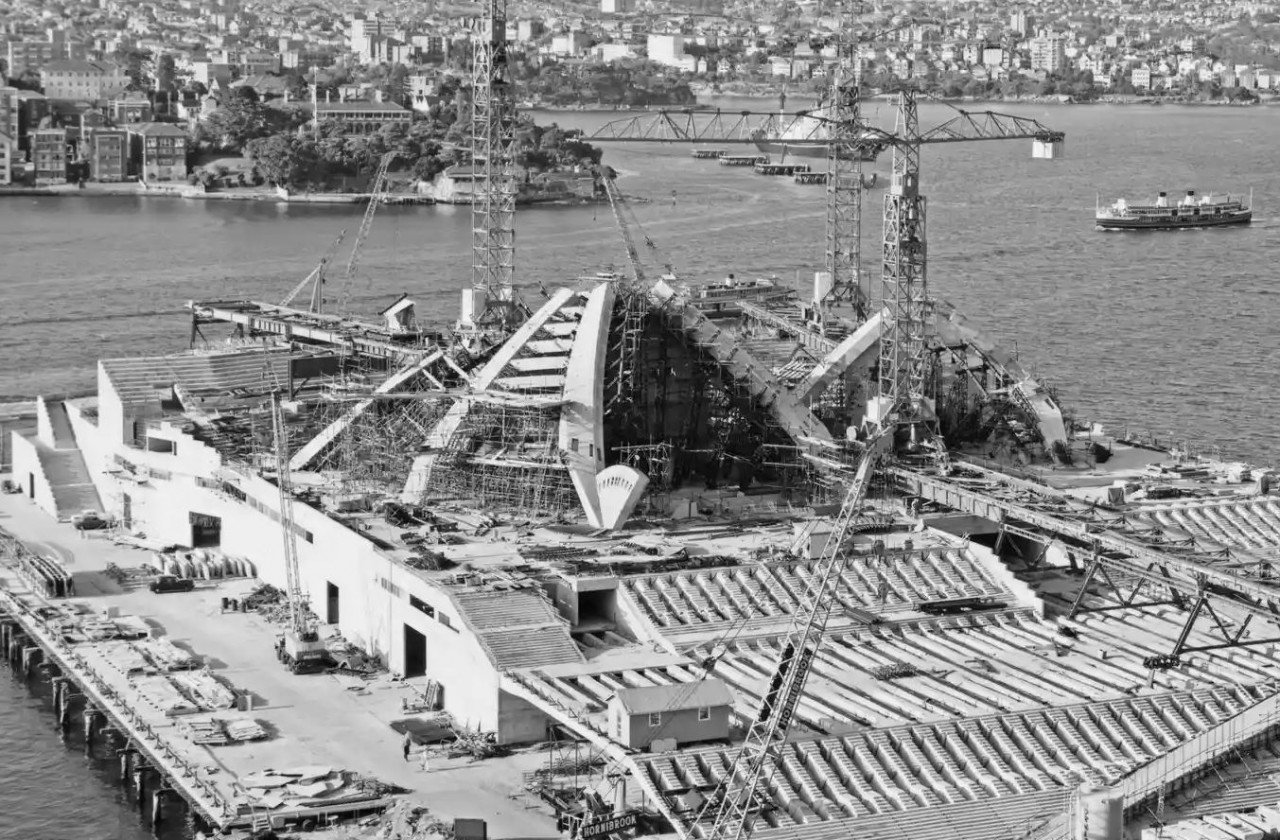 |
The theater has a total construction area of 1.8 hectares, with a width of 120 meters and a height of 183 meters. The structure is built on a solid foundation with 500 tons of concrete located 25 meters below sea level. (Source: Getty Images) |
The Sydney Opera House project began in 1959, involving over 10,000 workers and an estimated cost of AUD 7 million. The theater was scheduled to open on Australia Day (January 26th) in 1963. However, problems such as cost overruns and technical issues caused delays in completion. These problems even led to disputes between chief architect Jørn Utzon and local officials, resulting in Utzon's departure from the project in 1966.
After 14 long years of overcoming many challenges, the theatre was officially inaugurated on October 20, 1973. The ceremony was attended by Queen Elizabeth II, Prince Philip, and the Premier of New South Wales, Robert Askin, along with millions of Australians.
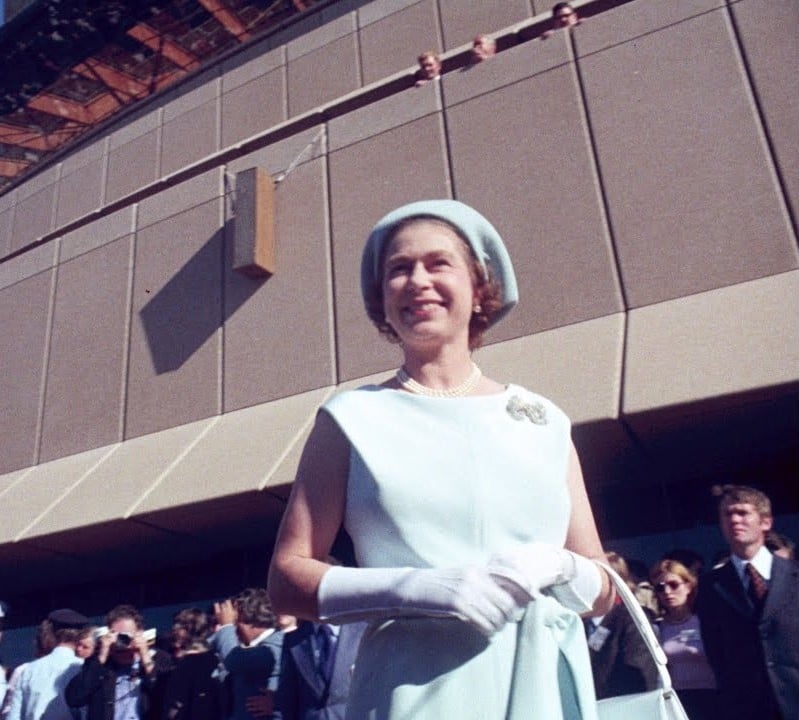 |
| Queen Elizabeth II was present at the inauguration of the Sydney Opera House, greeted by a large crowd of locals. (Source: NFSA Film) |
It was a special day for the people of Australia, who enjoyed a spectacular fireworks display and performances by local dancers from Mornington Island's Lardil. Everyone joined in the joyous atmosphere of this momentous event, marking the birth of an architectural masterpiece – the Sydney Opera House.
Witnesses of history
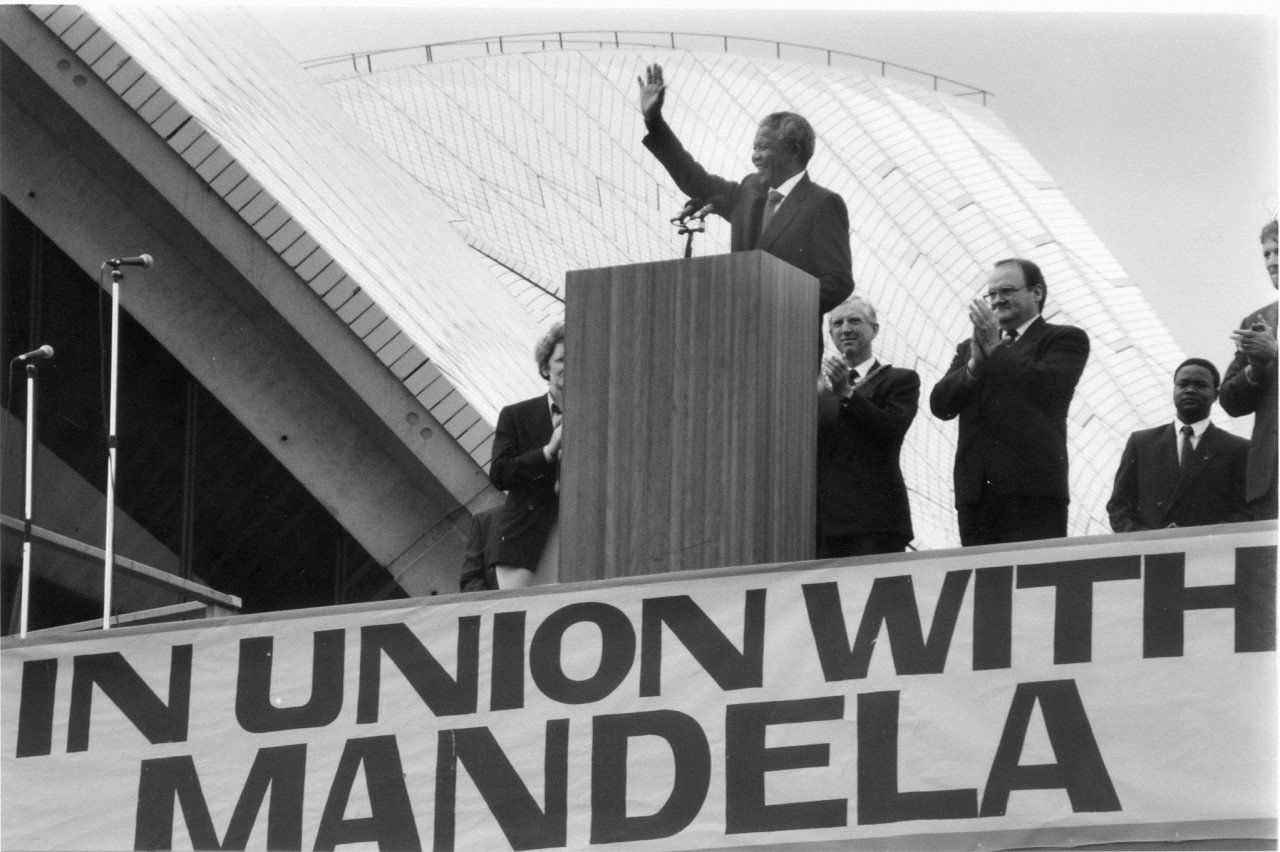 |
| For his immense contributions to the people of South Africa, Nelson Mandela was awarded the Nobel Peace Prize in December 1993. (Source: Sydney Opera House) |
In October 1990, the great South African leader Nelson Mandela arrived at the Sydney Opera House to deliver his first speech in 27 years on Robben Island. Standing before 40,000 Australians, he thanked Sydney for speaking out against apartheid.
Mandela was visibly moved when the song "Nkosi Sikelel 'iAfrika " (Lord Bless Africa), which liberated all of Africa, was sung. That very song later became part of the South African national anthem when the country gained independence.
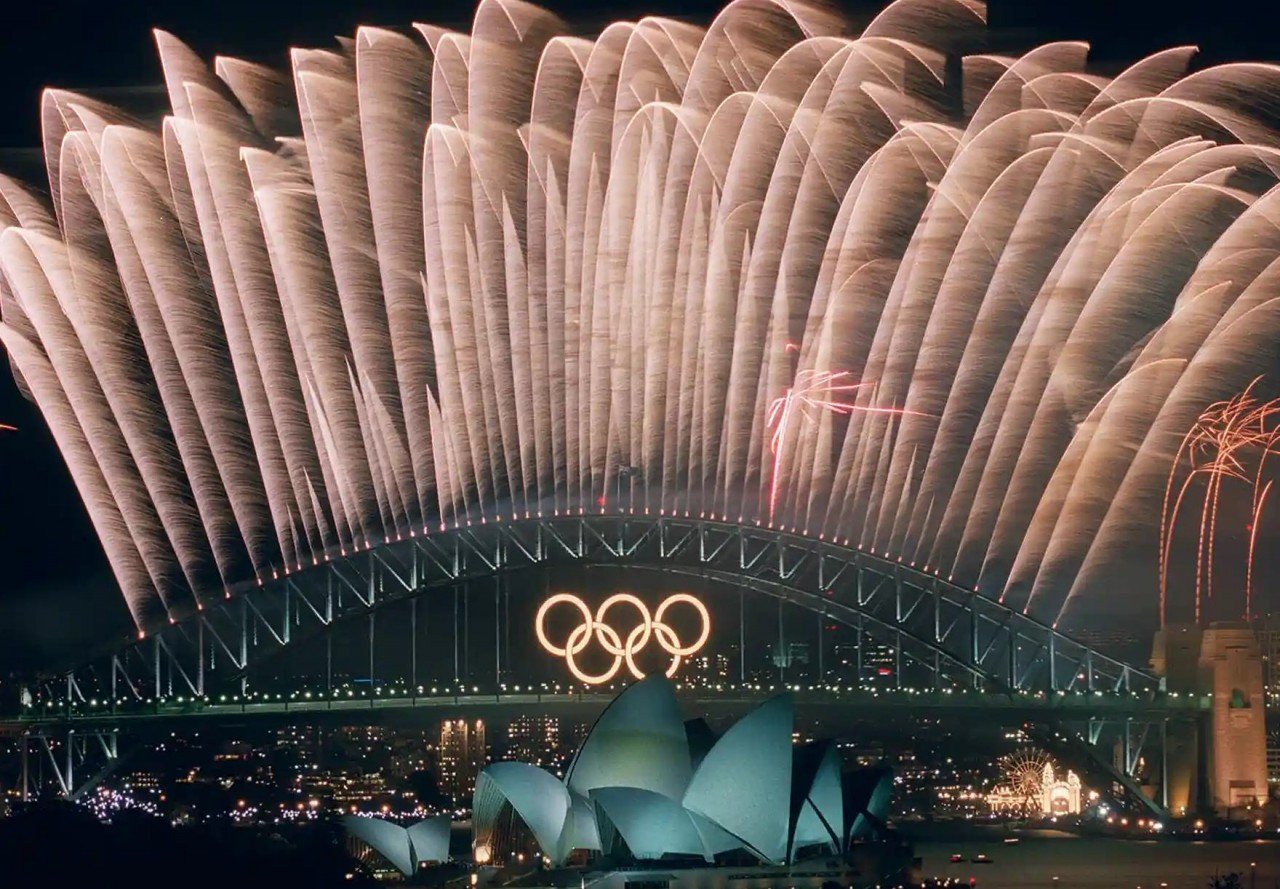 |
| The Sydney 2000 Olympics is considered one of the most spectacular sporting events in world history. (Source: AP) |
In the context of Australia hosting the 2000 Olympic Games, the Sydney authorities chose the Sydney Opera House as the venue for the opening of the Olympic Arts Festival. Locals and international audiences had the opportunity to enjoy performances rich in Australian culture, featuring the distinctive sounds of traditional instruments such as didgeridoos and clapsticks.
The event also welcomed the presence of Italian actor Andrea Bocelli, whose name is associated with famous musical works such as Besame Mucho, Time To Say Goodbye, and Vivo Per Lay . In addition, ballet dancer Sylvie Guillem, stars from Opera Australia and The Australian Ballet also participated, providing an unforgettable experience for the audience.
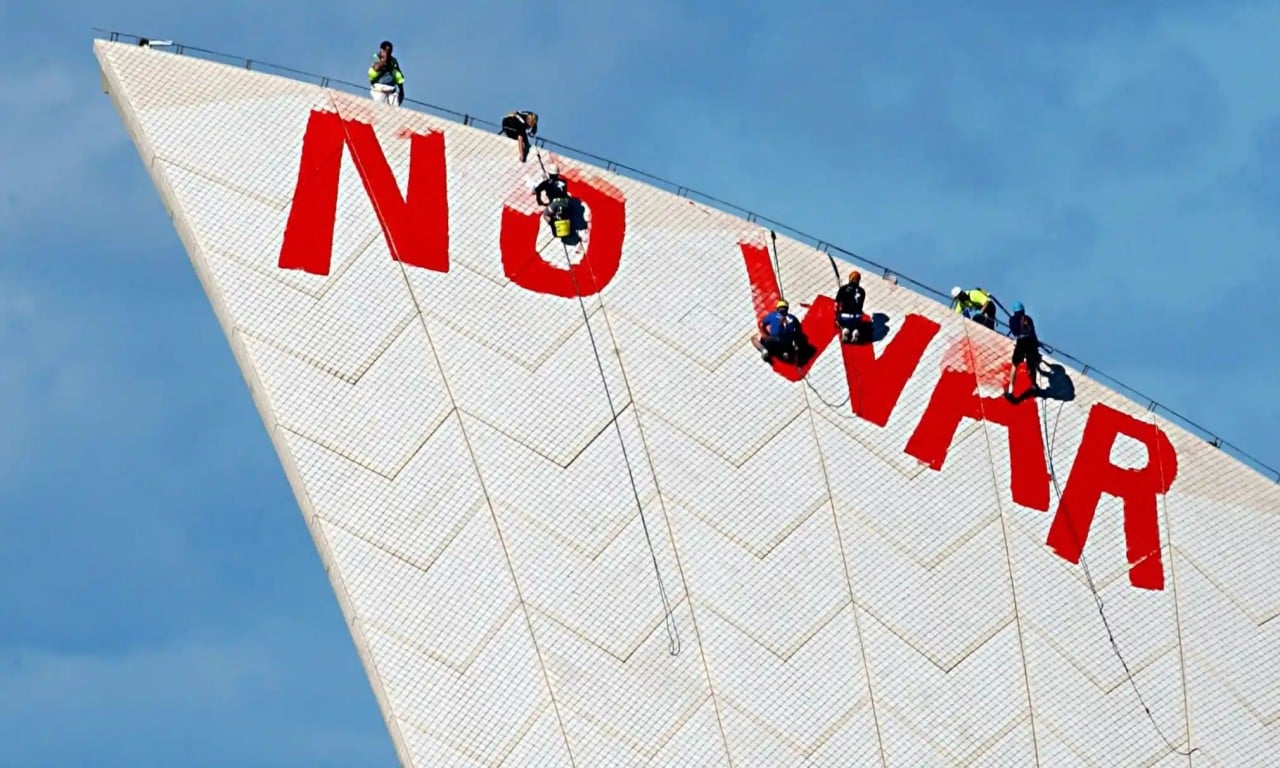 |
| The red lettering on the roof of the Sydney Opera House in 2003 became a political message that attracted international attention. (Source: Reuters) |
In March 2003, Australia witnessed an unexpected event when two peace activists, Dave Burgess and Will Saunders, climbed onto the roof of the Sydney Opera House to protest the Iraq War. They used red paint to write the words "No War" on the roof.
The two were subsequently convicted of intentional damage, sentenced to nine months in jail, and ordered to pay the theatre's A$151,000 cleaning bill. Later, their belongings, including a pair of Dunlop Volley running shoes and a paint roller, were displayed at the Australian War Museum as part of an Iraq War exhibition.
On June 28, 2007, the Sydney Opera House was recognized as a World Heritage Site by the United Nations Educational, Scientific and Cultural Organization (UNESCO). UNESCO considered the Sydney Opera House a “bold work, a visionary experiment and an influential force in late 20th-century architecture.”
This is the youngest structure on the list of World Heritage sites, and for many, the Sydney Opera House is always a symbol of Australian culture, similar to the Taj Mahal in India, the Eiffel Tower in France, or the pyramids in Egypt.
Thus, thanks to the vision of the Premier of New South Wales and the skillful hands of the Danish architect, the Sydney Opera House persevered through adversity and was officially inaugurated by Queen Elizabeth II exactly half a century ago. Since that momentous occasion, the sail-shaped theater has witnessed many remarkable historical events and has gradually become one of the leading international cultural and artistic centers.
Source





















































Comment (0)