

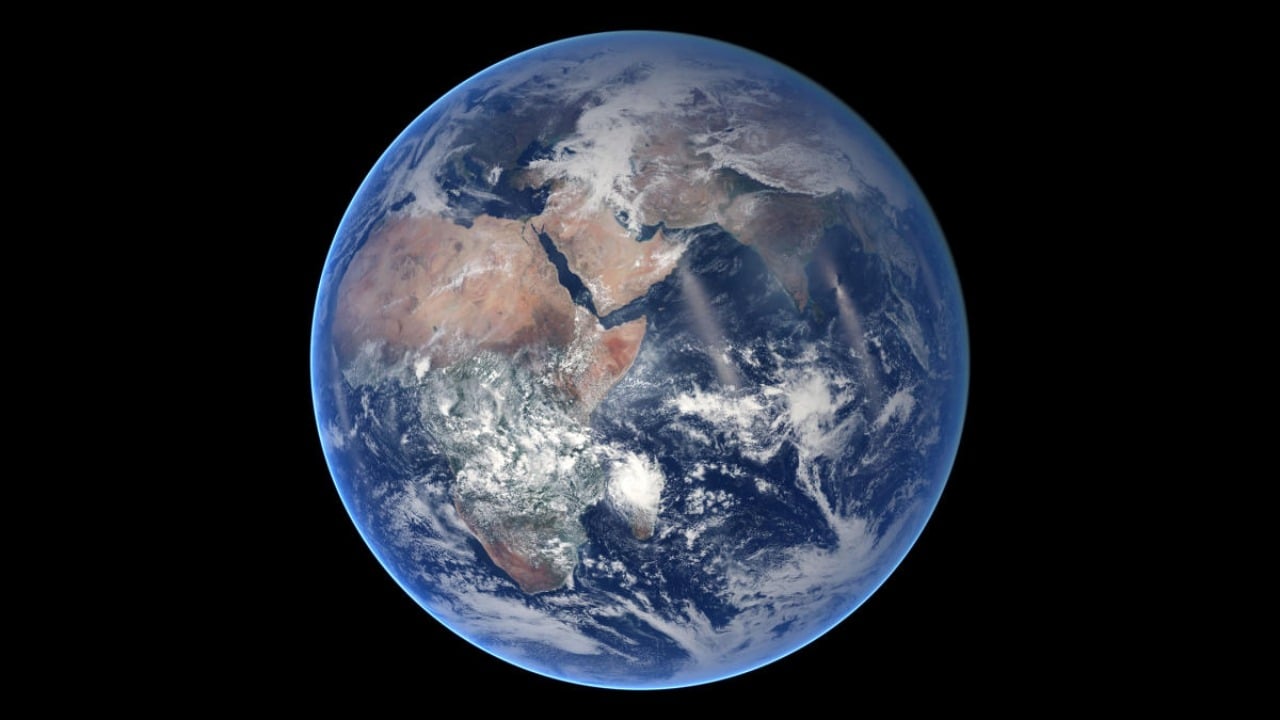
Scientists fear that the Earth is "sick."
The Associated Press reported on June 1st, citing newly published research, that the Earth has exceeded 7 out of 8 safety limits established by scientists and is in a "danger zone," not only because rising temperatures are causing the loss of many natural areas but also affecting the health of its inhabitants.
A study by the global network of scientists Earth Commission, published in the journal Nature on May 31, examines climatic factors, air pollution, phosphorus and nitrogen pollution in water from fertilizer overuse, groundwater, surface water, natural environments, and man-made environments.
Only air pollution is not yet at a critical level globally, although it remains dangerous at the local and regional levels.
The study identified "hot spots" related to multiple issues across Eastern Europe, South Asia, the Middle East, Southeast Asia, parts of Africa, and much of Brazil, Mexico, China, and the western United States. Approximately two-thirds of the Earth does not meet the criteria for safe freshwater, the scientists cited as an example.
According to expert Kristie Ebi, a professor of climate and public health at the University of Washington (USA) and co-author of the study, humanity is in danger of breaching most of the Earth's limits.
Professor Joyeeta Gupta of the University of Amsterdam (Netherlands) and co-chair of the Earth Commission likened the situation to the Earth undergoing an annual health checkup like humans do: "Doctors would say that the Earth is truly sick in many organs, and this illness is affecting the people living on the planet."
Scientists say the Earth could recover if there were changes in the use of coal, oil, and natural gas, as well as how land and water are managed. However, humans are going wrong in most of those areas, according to expert Johan Rockstrom, director of the Potsdam Institute for Climate Impact Research (Germany) and lead researcher of the study.
Professor Lynn Goldman of George Washington University (USA), who was not involved in the study, commented that the research was "somewhat audacious," but she was not optimistic that the study would lead to many actions aimed at "curing" the Earth.
Source link

![[Photo] Two flights successfully landed and took off at Long Thanh Airport.](/_next/image?url=https%3A%2F%2Fvphoto.vietnam.vn%2Fthumb%2F1200x675%2Fvietnam%2Fresource%2FIMAGE%2F2025%2F12%2F15%2F1765808718882_ndo_br_img-8897-resize-5807-jpg.webp&w=3840&q=75)

































































































Comment (0)