

The fact that voters, through their National Assembly delegations, have repeatedly petitioned for changes to the calculation of personal income tax, specifically increasing the family allowance deduction, shows that this tax reform is of great public interest.
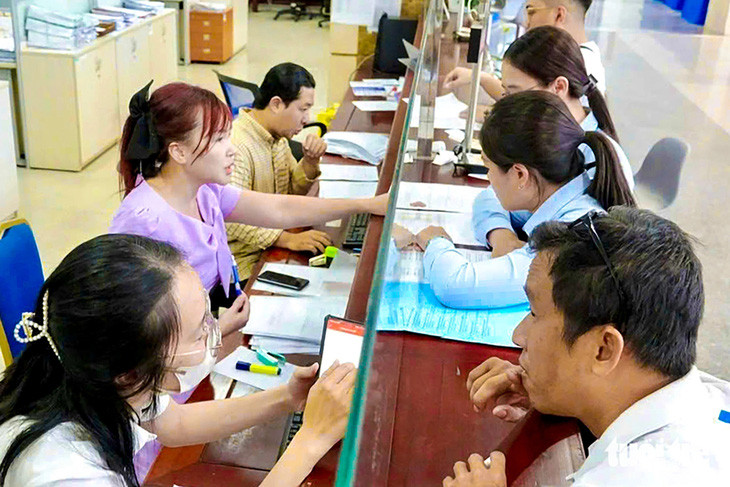
There are even strong opinions and frustrations regarding the slow pace of change in matters directly affecting the lives and incomes of workers, especially in large cities.
Over the years, during National Assembly sessions, we have seen many opinions suggesting that the National Assembly and the Government should fundamentally change the application of the personal income tax exemption.
The deduction amount is too low compared to actual expenses.
Public opinion on this matter has also been equally heated in the media. It's impossible to maintain the monthly allowance at 11 million VND indefinitely. taxpayer And 4.4 million VND/month for dependents is too low compared to the taxpayer's spending needs.
However, in response to voter and public opinion's recommendations, the Ministry of Finance still maintains that there is no basis to adjust the personal income tax threshold, as the total increase in the CPI has not yet reached 20% since the last adjustment (in 2020)! Thus, the bottleneck here is determining the personal income tax threshold and when to adjust it.
At the time the Personal Income Tax Law came into effect in 2009 (replacing the 2001 income tax ordinance for high-income earners), when the GDP per capita was $1,200 (according to data from the General Statistics Office), the applicable personal income tax exemption threshold was VND 4 million/month for taxpayers and VND 1.6 million/month for dependents.
By 2024, GDP per capita is estimated to be around $4,500, a 3.75-fold increase compared to 2009, while the current personal income tax rate is only expected to increase 2.75 times.
This shows a huge disparity between the increase in GDP per capita and the increase in total income, and the prices of many goods have increased very sharply, especially real estate and housing (which are the biggest and most important needs of workers).
Furthermore, the current base salary is 2,340,000 VND/month, 4.3 times higher than the base salary in 2009, and significantly higher than the increase in the personal income tax rate (2.75 times) during the same period.
Policies to increase the base salary and raise minimum wage These regional indicators best reflect the increasing needs of workers, ensuring they align with rising commodity and consumer prices, and allowing for easier adjustments.
So why hasn't the personal income tax threshold been increased? Given the current cost of living, especially in large cities, 11 million VND is barely enough for even those who earn a living.
The 4.4 million VND allowance for dependents is even more difficult to meet. Why are dependents only allowed to spend 4.4 million VND?
Although they don't earn money, dependents still have needs for their livelihoods and living expenses no less than taxpayers, especially children and the elderly. Their educational and medical needs are also very costly. Should we assume that because they are merely "dependents," they don't need to spend much?
Relying solely on the CPI for adjustments is inappropriate.
I believe that basing the adjustment of the personal income tax threshold solely on the CPI is inappropriate, while the GDP growth rate, which is very important, is not taken into account.
In reality, the living standards of workers vary greatly, not only according to the CPI index, but also due to the development of the economy and workers' incomes.
As income increases, so does the need for spending. This spending also serves to replenish the workforce and meet the personal and family needs of the taxpayer.
While the CPI is compiled based on macroeconomic criteria, in reality, the prices of many goods fluctuate daily and hourly, with increases far exceeding the average CPI, and some goods even experience "dramatic" price increases, such as housing, real estate, entertainment, and recreation.
The goal of personal income tax policy is to redistribute and harmonize income in society. However, this is a direct tax; workers immediately see the amount of tax they have to pay, while they do not see any immediate compensation from that tax revenue that the State collects from other high-income earners.
Therefore, in my opinion, it is necessary to promptly adjust the regulations of the Personal Income Tax Law to empower a specific agency to decide on adjusting the personal income tax exemption level according to the actual situation.
Adjustments to the personal income tax threshold and tax-exempt level should be based on GDP growth rate, basic salary or regional minimum wage—indicators that most accurately reflect the spending needs and living standards of workers—rather than the Consumer Price Index (CPI).
In addition, the personal allowance for dependents should be increased to be closer to that of the taxpayer.
In particular, it is necessary to divide the minimum wage levels by region to better reflect the socio-economic situation of each locality, instead of applying a single, uniform minimum wage level for the whole country. This uniform approach is very inadequate and further exacerbates difficulties for workers.
In reality, the correlation between income and consumer needs and living standards differs between urban and rural areas, especially in large cities like Hanoi and Ho Chi Minh City.
Furthermore, we set regional minimum wages for different areas, and different allowances based on region... but then apply a uniform personal income tax threshold, which is very unreasonable.
Ultimately, the progressive tax system needs to be adjusted to reduce tax rates for middle and low incomes and increase them for high incomes. This would clearly enhance its role in regulating income distribution while also protecting the basic consumption needs and ability to meet them of middle and low-income workers.
We shouldn't be overly concerned about increased difficulties in revenue collection. Because with proper adjustments, revenue will not only not decrease but will even increase.
Furthermore, if taxpayers have more money, they will certainly spend more, contributing to stimulating consumption and increasing the production of goods and services.
Source
































































































Comment (0)