

In early 2021, many patients in Ho Chi Minh City and several provinces in the Southeast region were diagnosed with botulinum poisoning. These patients required months of treatment, and some even died because there was no antidote.
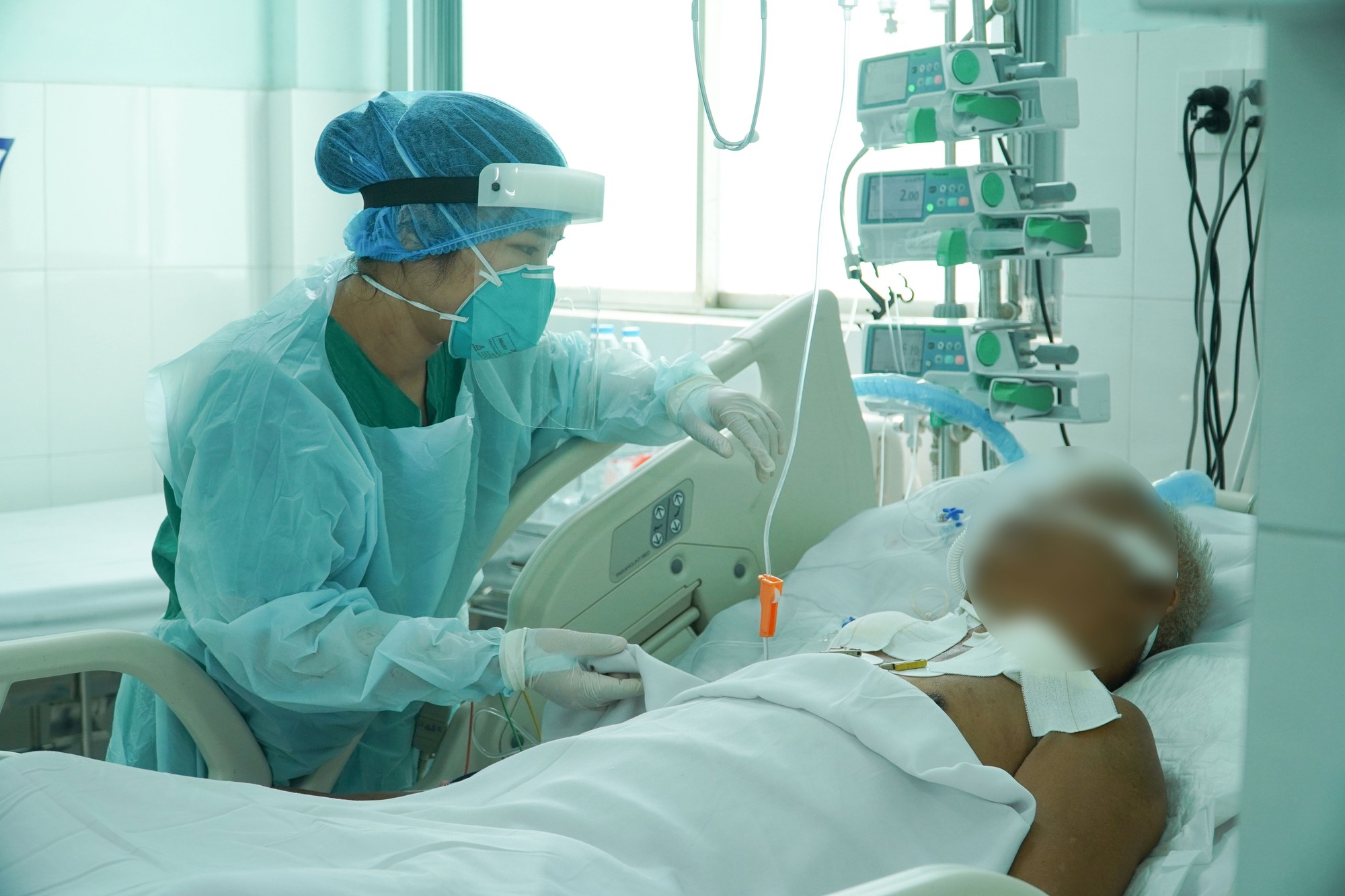
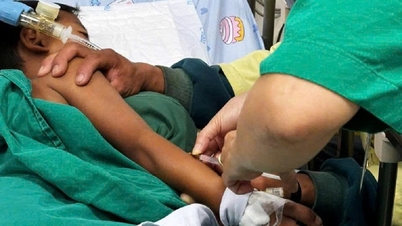
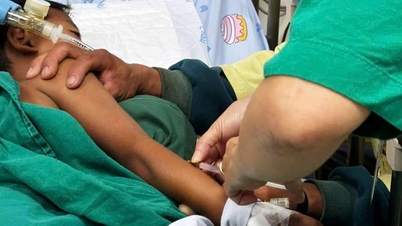
Patients with botulinum poisoning are being treated at Cho Ray Hospital.
Six bottles of rare medicine, enough for two years, are already gone.
On April 17, 2021, Cho Ray Hospital received 6 vials of Botulinum Antitoxin Heptavalent (BAT) for botulinum detoxification, including 1 vial donated (at that time, the Ministry of Health authorized the purchase of 30 vials). Each vial cost $8,000 USD. The shipping cost from Canada was $2,500 USD (currently increased to $6,500 USD). Subsequently, the hospital used one vial to save a patient in the botulinum poisoning case following the consumption of Minh Chay pate.
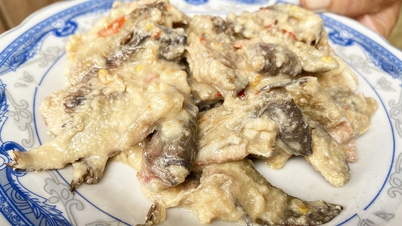
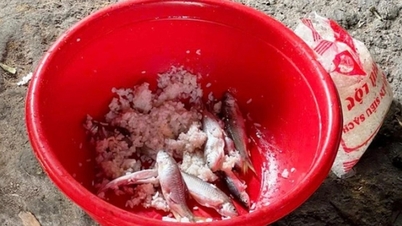
In mid-March 2023, when a botulinum poisoning incident occurred after about 10 patients ate fermented carp in Quang Nam , Cho Ray Hospital sent 3 vials of BAT to the Northern Quang Nam Regional General Hospital to treat the seriously ill patients, leaving 2 vials remaining.
Associate Professor Pham Van Quang, Head of the Intensive Care and Toxicology Department, Children's Hospital 1.
Over the past week, a cluster of botulinum poisoning cases occurred in Ho Chi Minh City, affecting six people in Thu Duc City, including three children. Cho Ray Hospital transferred the last two vials of BAT from Quang Nam to administer to the three child patients; two of them are still on ventilators. The remaining three adult patients (aged 18, 26, and 45) who suffered from the poisoning are now receiving supportive treatment, on ventilators, and experiencing muscle paralysis due to the depletion of the BAT medication.
On May 23, Cho Ray Hospital announced that it had requested permission from the Ministry of Health to purchase BAT medication to treat botulinum poisoning.
According to Dr. Le Quoc Hung, Head of the Department of Tropical Diseases at Cho Ray Hospital, the hospital has run out of BAT, the specific antidote for botulinum poisoning. This is a very unfortunate situation for patients and a difficult problem for treating doctors. If botulinum poisoning patients receive BAT antidote early, they can potentially avoid paralysis or the need for mechanical ventilation within 48-72 hours. If patients are put on mechanical ventilation 1-2 days after poisoning, they can recover within an average of 5-7 days and can be weaned off the ventilator and begin physical therapy to return to normal life. Without BAT, only supportive treatment is available, mainly nutrition and mechanical ventilation. Many complications can occur due to prolonged mechanical ventilation, posing numerous challenges for treating doctors.
Many other rare medicines are also in short supply.
In April 2021, a 14-year-old patient from Tien Giang province was bitten by a red-necked snake. The patient was transferred to Children's Hospital 1 in a fully conscious state, but with blood clotting disorders, uncontrollable bleeding from the wound, and multiple hemorrhages. Despite continuous blood transfusions, the patient suffered respiratory failure and died, much to the regret of the medical staff. At that time, many countries did not have antivenom for this snake; only Japan was researching it, and its use required a research cooperation agreement.
Associate Professor Pham Van Quang, Head of the Intensive Care and Toxicology Department at Children's Hospital 1, said that the hospital is currently lacking Methylene Blue, an antidote for patients with methemoglobin poisoning (found in beets, herbicides, dyes, etc.). This is a rare and valuable drug, sometimes available and sometimes not, and currently unavailable. "Because patients sometimes need it, sometimes not, the hospital cannot purchase large quantities, and if we try to buy small amounts, no one will sell it. Therefore, it is a national responsibility, specifically the Ministry of Health, to address this issue," Associate Professor Quang suggested.
Dr. Nguyen Minh Tien, Deputy Director of Ho Chi Minh City Children's Hospital, also stated that Methylene Blue is very cheap, only a few thousand dong per bottle, but no one imports it because the quantity purchased is too small due to the low number of patients. If they buy more than they use, they will be held responsible for inaccurate forecasting.
Regarding antivenom, Children's Hospital 1 and Ho Chi Minh City Children's Hospital have domestically produced antivenom for green pit vipers and cobras; and antivenom for Malayan pit vipers (purchased from Thailand), but lack polyvalent antivenom (used to treat toxic syndromes caused by venomous snakebites in situations where the type of snake is not definitively identified).
"For a patient bitten by a cobra, similar to botulinum poisoning, if there is an antidote, the patient will not need a ventilator, will be healthy, and will survive. Without the antidote, the patient will require a ventilator for many months and face the risk of death from sepsis and pneumonia," said Associate Professor Quang. According to him, in most cases of snakebite, if the patient reaches the hospital and receives the antidote promptly, the majority can be saved. He also shared that if rare, "imported" (correct, effective) antidotes are used to save lives in emergency situations, a professional council meeting and permission from the Department of Health must be obtained before use.
Not only is BAT medication out of stock, Cho Ray Hospital also reported a shortage of medication for treating heavy metal poisoning, due to a lack of supply sources and obstacles in the pricing process.
According to Dr. Le Quoc Hung, not only botulinum poisoning is dangerous, but all acute poisonings are dangerous, so rare and valuable drugs are needed. These drugs can be expensive and not readily available in many countries, including some developed countries, not just Vietnam. He believes that statistics, research, and the development of a national strategy and list of rare drugs are necessary for accumulation and coordination, as the demand for antidotes is increasing. Having readily available drugs helps save patients' lives and reduces complications.
"Like botulinum poisoning, without an antidote, patients have to be on ventilators for 3-6 months and suffer many complications. From an economic standpoint, the cost of 3-6 months of ventilation and the ongoing care to prevent complications is much higher than the price of a single vial of the antidote. Having a readily available supply of the antidote is what we desire to address patients' needs as quickly as possible," said Dr. Le Quoc Hung.
Proposal to establish a national rare medicine warehouse.
"Intensive care and toxicology departments have always lacked antidotes. The Vietnam Emergency and Toxicology Association has also proposed establishing centers for rare drugs in major hospitals in each region (North, Central, and South) to facilitate drug transfers when needed. Antidotes and rare drugs are scarce, and when they are scarce, no one sells them. Therefore, management at the national level is necessary," proposed Associate Professor Pham Van Quang.
According to National Assembly representative and Associate Professor Pham Khanh Phong Lan, for many years, besides common drugs that are used in large quantities and purchased through bidding, there is also a group of rare drugs with low consumption, which most companies rarely import. Meanwhile, hospitals often only act when the situation becomes critical, buying them only to have them expire and be discarded. She believes that the current practice of purchasing rare drugs is like "scavenging," scrambling to find them when needed. This is time-consuming, cumbersome, and fragmented across hospitals.
"There should be a national drug reserve mechanism located in all three regions, stockpiling rare drugs for many years. When needed, advance notice should be given and negotiations should be conducted with companies for production and import, thus ensuring appropriate prices. I propose that the Ministry of Health act as the central coordinating body, with hospitals compiling statistics on the rare drugs needed each year. I suggest that the Government establish a fund to purchase and maintain a national drug reserve. The most important thing is human life," Associate Professor Dr. Phong Lan proposed.
Emergency treatment medication for botulinum poisoning has arrived in Ho Chi Minh City.
According to the Ministry of Health, on the evening of May 24th, six vials of Botulinum Antitoxin Heptavalent (BAT), an emergency aid shipment from the World Health Organization (WHO) warehouse in Switzerland, arrived in Ho Chi Minh City, providing timely treatment for patients suffering from botulinum poisoning.
Previously, the Ministry of Health received a document from the Ho Chi Minh City Department of Health on May 21st regarding cases of botulinum poisoning being treated in Ho Chi Minh City and the need for treatment drugs. The Drug Administration of Vietnam promptly contacted and exchanged information with the WHO to receive support. Minister of Health Dao Hong Lan also held a direct meeting with the WHO office in Hanoi. Immediately afterwards, the WHO decided to provide emergency aid in the form of BAT (botulinum toxin) to the poisoned patients being treated at hospitals in Ho Chi Minh City.
According to the Ministry of Health, botulinum poisoning is caused by infection with the toxin of the bacterium Clostridium botulinum, primarily due to consuming contaminated, substandard food. Since 2020, the country has recorded a few scattered cases per year, with three recent cases in Ho Chi Minh City. Botulinum poisoning is rare in Vietnam and other countries, so the supply of the drug used to treat it (BAT) is very limited globally. This drug is difficult to obtain and its price is also very high.
Lien Chau
Source link
![[Photo] My Son at night: A thousand-year-old heritage site amidst the Milky Way](https://vphoto.vietnam.vn/thumb/1200x675/vietnam/resource/IMAGE/2026/04/15/1776261039184_ndo_br_chon6-jpg.webp)
![[Photo] Mrs. Ngo Phuong Ly meets and exchanges views with Mrs. Peng Li Yuan](https://vphoto.vietnam.vn/thumb/1200x675/vietnam/resource/IMAGE/2026/04/16/1776277858080_phu-nhan-1-jpg.webp)
![[Photo] National Assembly Chairman Tran Thanh Man attends the opening session of IPU-152](https://vphoto.vietnam.vn/thumb/1200x675/vietnam/resource/IMAGE/2026/04/16/1776277863731_ctqh5-jpg.webp)
![[Photo] The General Secretary, President and his wife meet with Vietnamese-Chinese friendship leaders.](https://vphoto.vietnam.vn/thumb/1200x675/vietnam/resource/IMAGE/2026/04/15/1776264829725_vna-potal-tong-bi-thu-chu-tich-nuoc-to-lam-gap-mat-nhan-sy-huu-nghi-viet-nam-trung-quoc-8703641-3130-jpg.webp)

































































Comment (0)