

The head and neck region contains many different types of tissue, and cancerous cells can appear at any time.
Head and neck cancer is a type of cancer that begins in the cells lining the mouth, throat (pharynx), and larynx.
Additionally, head and neck cancers can form in the sinuses or salivary glands, but this is less common. Head and neck cancers sometimes spread to the lymph nodes in the upper neck and metastasize to other parts of the body.
 |
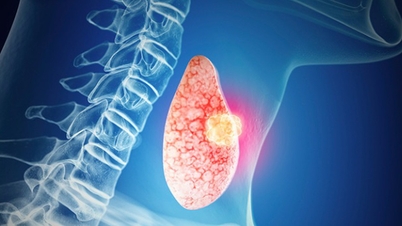
| Illustrative image. |
Men are three times more likely to develop head and neck cancer than women. Age also plays a significant role in increasing the risk of this type of cancer, particularly in those over 50.
Other risk factors include smoking; excessive alcohol consumption, HPV infection, EBV infection, weakened immune systems, frequent exposure to chemicals at work, high levels of radiation exposure, poor oral hygiene, and genetic predisposition.
Some common types of head and neck cancer include: Nasopharyngeal carcinoma; cancer cells are found in the tissue in the upper or middle part of the throat and behind the nose.
Laryngeal cancer
Cancer cells develop in the laryngeal tissue. Most of these cancer cells begin on the surface of the mucous membrane, a condition called squamous cell carcinoma. Symptoms of laryngeal cancer include changes in voice such as hoarseness, difficulty or pain when swallowing, loud or breathy breathing, persistent cough, and a persistent lump in the neck.
Hypopharyngeal cancer
Cancer cells are found in the tissue at the bottom of the throat or behind the larynx. Patients with hypopharyngeal cancer will feel like there is a lump in their neck, experience persistent sore throat, and have difficulty swallowing.
Oral cancer - Salivary gland cancer
Cancer cells are found in salivary glands, including those located just under the tongue, on both sides of the cheeks, in front of the ears, and under the jawbone. There are also salivary glands in various parts of the upper digestive tract. Normally, salivary glands help keep the mouth moist and aid in swallowing and digesting food.
There are three main pairs of salivary glands: the parotid glands, the sublingual glands, and the submandibular glands.
Salivary gland cancer most commonly affects the parotid gland. Patients with salivary gland cancer may develop a lump or swelling on or near the jaw, in the mouth, or in the neck. However, most lumps are not cancerous. Additionally, patients may experience numbness in part of the face and drooping on one side of the face.
Facial sinus cancer: Cancer that forms in the hollow areas inside the nose (nasal cavities) or the spaces in the bone surrounding the nose (paranasal sinuses). Symptoms of facial sinus cancer resemble viral or bacterial infections such as a cold or sinusitis.
Persistent nasal congestion, often affecting one side, nosebleeds, decreased sense of smell, mucus dripping from the nose down the throat, malignant tumors in the head and neck region.
This type of cancer originates from melanocytes, the cells that produce pigment or color for the skin. Malignant tumors of the head and neck are a type of cancer that arises from melanocytes, the cells that produce pigment or color for the skin.
Patients with oral cancer may experience symptoms such as mouth ulcers and persistent, unexplained, painful lumps.
Squamous cell carcinoma of the head and neck: This is a type of malignant disease, not a malignant tumor. Squamous cell carcinoma of the head and neck is the second most common type of skin cancer. The cancerous cells are more aggressive and may require extensive surgery depending on the location and nerve involvement.
Basal cell carcinoma of the head and neck: Basal cell carcinoma of the head and neck is also a type of malignant cancer that is not a malignant tumor, arising from abnormal basal cells in the skin.
Head and neck sarcoma: Cancer cells are found in the soft tissue of the body, including muscles, connective tissue (tendons), blood vessels, lymph nodes, joints, and fat.
Head and neck cancer of unknown primary origin often presents as a lump in the neck. This indicates that the cancer has spread to one or more lymph nodes in the neck.
Which type of head and neck cancer is the most dangerous?
Squamous cell carcinoma of the head and neck is the most dangerous type because it is a malignant disease, not a malignant tumor. It is the second most common type of skin cancer. Because it is aggressive, surgery requires the removal of a large area of the treated tissue. Furthermore, squamous cell carcinoma of the head and neck can also affect the nerves.
According to MSc. Doan Minh Trong, Head and Neck Unit, Tam Anh General Hospital, Ho Chi Minh City, some methods to help screen for head and neck cancer early include health check-ups.
Accordingly, the doctor will examine the patient's mouth and nose, neck, throat, and tongue. At the same time, the doctor will also feel the neck, lips, gums, and cheeks for lumps or abnormalities that may indicate head and neck cancer.
Endoscopy: Doctors use an endoscope—a thin tube with a light and camera—to look inside the nasal cavity, throat, larynx, or other areas where there are signs of suspected head and neck cancer.
Imaging tests: Several methods are used for early screening of head and neck cancer, such as X-rays, CT scans, MRI scans, and PET scans. These methods all produce images of the internal areas of the patient's head and neck. The doctor will decide which imaging tests are appropriate for diagnosing the patient's condition.
Tests: The doctor will take a blood sample for testing to check for viruses such as HPV or EBV. Additionally, the doctor may perform biomarker tests to check for proteins common in head and neck cancers. This testing will help the doctor choose the appropriate treatment for the patient's condition.
Biopsy: A doctor will take a tissue sample from the abnormal area and examine it under a microscope to look for cancer cells. A biopsy is the only way to diagnose cancer. Common biopsy methods used to diagnose head and neck cancer include fine-needle aspiration and core needle biopsy.
Early detection of head and neck cancers is key to successful treatment. Screening helps doctors detect most head and neck cancers. Diagnostic methods will be recommended by doctors based on the patient's health condition.
Some preventive measures for head and neck cancer include quitting smoking: Patients should stop using all forms of tobacco (cigarettes, cigars, pipes, etc.). Reducing alcohol consumption: Patients should reduce or stop drinking alcohol to lower their risk of developing this type of cancer.
HPV vaccination: This vaccine protects against several strains of the HPV virus, including those that cause throat cancer. Head and neck cancers are treatable through surgery and radiation therapy if detected and treated early.
Source: https://baodautu.vn/11-loai-ung-thu-dau-mat-co-can-benh-nao-nguy-hiem-nhat-d225048.html









































































































Comment (0)