

Police in Dak Lak province have dismantled a large-scale counterfeit coffee production facility in Binh Duong province, which used a formula of 70% soybeans and 20% coffee grounds. Everyone knows that coffee's main component is caffeine, but counterfeit coffee contains very little of this substance.
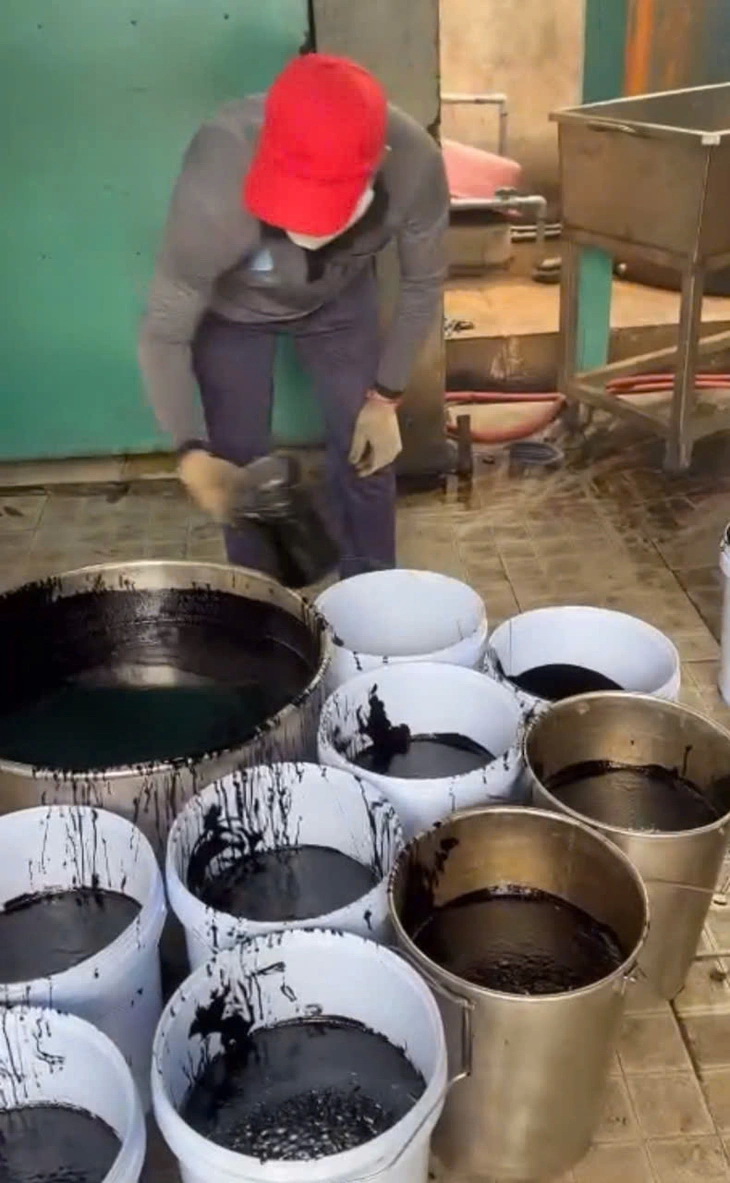
Chemicals and additives used to make fake coffee were seized in Buon Ho town, Dak Lak province - Photo: Sy Duc
Coffee husks (also known as parchment or fruit peel) contain 4-5 times less caffeine than coffee beans.
There are four main harmful effects of fake coffee:
1. Contains harmful chemicals: Fake coffee is often made from cornstarch, burnt roasted soybeans, or other non-coffee ingredients, then flavored with chemical additives to create an aroma. Some unscrupulous manufacturers even use industrial dyes and chemicals to create bitterness, which can cause liver and kidney poisoning because some industrial dyes contain heavy metals such as lead and mercury, which can accumulate in the liver and kidneys, causing impaired function of these organs.
2. Effects on the digestive system: Fake ingredients, especially burnt roasted soybeans, can cause bloating, indigestion, and digestive disorders. Industrial food coloring can irritate the intestines, causing diarrhea or gastrointestinal inflammation.
3. Negative impact on the nervous system: Real coffee contains natural caffeine that helps users stay alert and energetic, but fake coffee may use synthetic stimulants, causing palpitations, restlessness, and severe insomnia. Long-term abuse can lead to memory loss and neurological disorders.
4. Cancer Risk: When using artificial colorings and flavorings of unknown origin, the body may accumulate substances that cause liver and stomach cancer. In particular, burnt soybeans or cornstarch can produce acrylamide, a compound with a potential carcinogen when consumed in large quantities. Some industrial dyes can cause cell mutations, increasing the risk of cancer with long-term use.
Real coffee has a porous and loose texture, so when brewed using a filter, the water seeps through the coffee grounds and flows down slowly and steadily, drop by drop.
Fake coffee, if mixed with soybean powder, cornstarch, or other fillers, usually has a very fine texture, easily absorbs water and clumps together; when brewed, the water doesn't penetrate evenly, easily clogging the filter or flowing very slowly, requiring you to scrape the bottom of the filter with a spoon or add more boiling water for it to flow.
Fake coffee may have a thicker consistency than normal, especially if it's mixed with soybean powder or thickening chemicals.
Source: https://tuoitre.vn/ca-phe-gia-tac-hai-the-nao-voi-suc-khoe-20250304084015993.htm







































































Comment (0)