

The landscape of Ngang Pass (Kỳ Anh, Hà Tĩnh ) is like a silk painting by an ancient master. Nature has skillfully arranged the mountains and rivers into a true wonder...
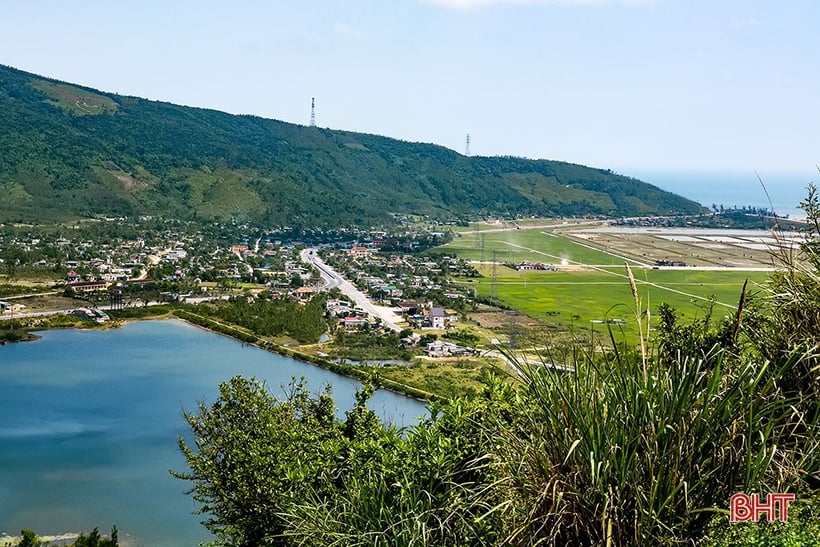
Ky Nam commune (Ky Anh town) viewed from Deo Ngang pass.
We pushed through the dense forest, cautiously making our way along a narrow, winding path through the steep, desolate mountain slopes. Vines tangled, jagged with the sharp thorns of various trees like the găng and vàng lồ, and the ginkgo berries. The rocks, covered in slippery green moss, seemed deliberately trying to hinder our progress. With my breath coming in ragged gasps, I encouraged my companion: “Keep going! So many people have traveled this path before, even kings and emperors, so why can’t we?” The treacherous path we were treading was the ancient North-South highway leading to Hoành Sơn Quan.
Since the new road was built, winding along the mountainside with its dreamlike curves, no one has used the old path for over a hundred years; wild trees have grown thick, completely obscuring the way. In the wilderness, looking up, we could see a patch of sky very close, but it took us a long time to reach the summit of the pass.
Having just passed through the dense, wild wilderness, we immediately came across a newly opened road, smooth as silk, stretching before us. This road plunged straight into the side of the mountain. A tunnel opened up, swallowing it up, disappearing into the heart of the mountain. The Ngang Pass road is like the spine of a book; when opened, one page reveals that if the previous one was mysterious and pristine, this one is pure and fresh.
From the windy mountain pass, gazing into the distance, one sees the tranquil countryside at its foot. Thin, thread-like paths connect gardens and small houses nestled together in peaceful, bustling activity. Further in the distance are fields of legendary green, shrouded in a milky white mist by the mountain air of this season. Even further beyond, beyond the pine forest, lies the sea, a deep, ink-blue color.
The landscape of Deo Ngang Pass is like a silk painting by an ancient master. Nature has skillfully arranged the mountains and rivers into a wonder. Beneath the moss-covered roof of Hoanh Son Quan, the landscape unfolds with countless wonders, revealing a tragic and heroic history filled with the upheavals that have taken place over more than a thousand years on this sacred land.
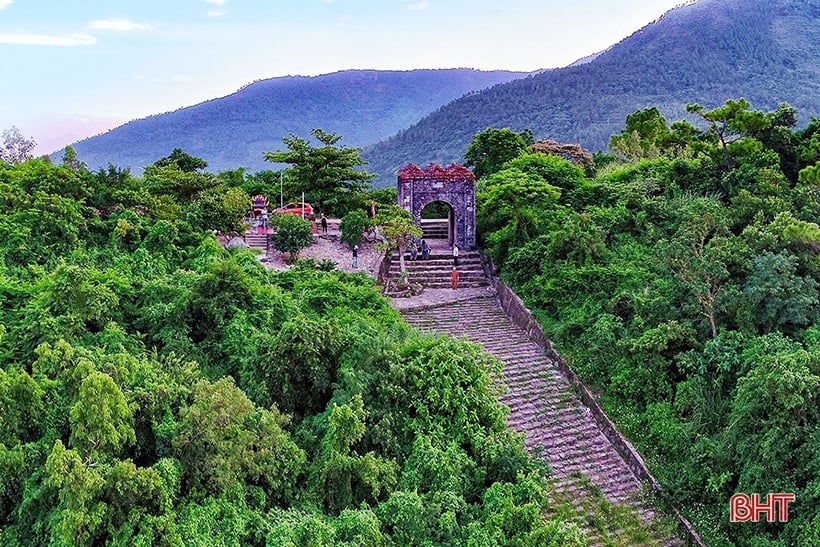
Hoành Sơn Pass was built by Emperor Minh Mạng in 1833 to control traffic through the Ngang Pass. Photo: Huy Tùng
At the summit of Ngang Pass stands the majestic Hoanh Son Quan, a multifaceted architectural masterpiece begun in 1833. That year, Emperor Minh Mang commissioned General Tran Van Tuan and over 300 laborers to construct it. Building Hoanh Son Quan was incredibly difficult, like trying to move mountains and mend the sky. Since then, Hoanh Son Quan has been a gateway marking the path of all who traveled the imperial highway, from emperors and nobles to commoners and those who had fallen on hard times. Therefore, even today, the thousands of stone steps still bear the weary footprints of countless generations who once traversed Ngang Pass.
At that time, maintaining border security and guarding against bandits was a top priority, so Emperor Minh Mạng ordered the construction of Hoành Sơn Pass, making the summit of the Ngang Pass a crucial strategic point on the only road. The Ngang Pass stretches for over 6 kilometers before disappearing into the sea, the visible part of the mountain naturally becoming an extremely formidable defensive wall. Adding to this, at the foot of the mountain, the winding Xích Mộ River creates a high wall and deep moat. With such a treacherous terrain, anyone who could seize the Ngang Pass as a base would have an extremely advantageous position for both attack and defense. The Ngang Pass is like the throat of the country, hidden in the sea, in the mountains, and amidst the grass and flowers, concealing the thousand-year-old heroic history of our ancestors who expanded the territory, resulting in the vastness of our land.
"The first three are the first to win the army."
"Behind every mountain is a single horse."
(Before each wave is a soldier)
Behind every mountain is a horse.
If the Ngang Pass is like a dragon rising from the sea and then turning to stone, blocking the North-South highway, then following the dragon's spine towards the sea gorge will lead you to Radar Station 530 Ngang Pass (now Radar Station 535 Ngang Pass), situated right on its highest point. Radar Unit 535 Ngang Pass was established in 1964, its equipment supplied by the Soviet Union. Immediately after its establishment, Radar Station 535 Ngang Pass achieved a heroic feat. On March 22, 1965, Radar Station 535 was the first radar unit to detect American warships violating North Vietnamese territorial waters. The USS Maddox and USS Turner Joy, ships of the American imperialists, were the aggressors, fabricating the so-called "Gulf of Tonkin Incident" to justify escalating their attacks on socialist North Vietnam.
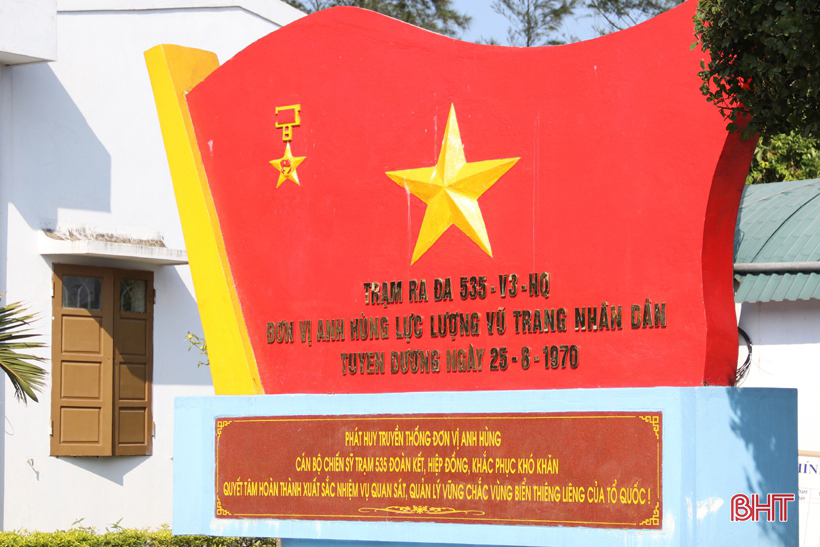
Right on the battlefield of yesteryear, the 535th Radar Unit at Deo Ngang Pass still silently guards the sea and sky day and night.
Immediately after suffering a retaliatory blow, the US discovered a "watchtower" of North Vietnam atop the ancient Ngang Pass and dropped thousands of tons of bombs and ammunition on the pass. On March 22, 1965, the US used its air force to bomb Radar Station 535. They destroyed the command building and the technical bunker. Four officers and soldiers working in the radar station were killed. Following this, on March 26, 31, 1965, and other days, American planes relentlessly bombed and devastated Ngang Pass. Amidst the bombing raids, the officers and soldiers bravely defended the station, maintaining radar transmissions to hunt down the enemy, while coordinating with the 24th Anti-Aircraft Artillery Company and air defense forces in the Ngang Pass area to retaliate. They shot down many aircraft and captured American pilots.
More than half a century has passed, but the scars of that brutal war still ache. Bombs and bullets have torn apart the rocky surface of Hoanh Son mountain. The technical bunker, originally built of reinforced concrete, had its entrance shattered by bombs. The bunker was tilted, its concrete roof cracked, revealing sharp steel reinforcement bars. The technical bunker (now the Inclined Bunker historical site) is not far from Hoanh Son Pass. Right on the battlefield of yesteryear, the 535th Radar Unit at Deo Ngang Pass still silently guards the sea and sky day and night. From afar, the 535th Radar Station at Deo Ngang Pass, with its low antenna towers faintly visible in the mist, its radar antennas like giant bats silently rotating, evokes the thought that if our ancestors expanded the country through a single, isolated route, today their descendants protect the country with radar waves embracing the vast expanse of land and sea.
It's a mountain pass, with the same sea, sky, clouds, mountains, flowers, rocks, grass, and trees as any other mountain pass, but it's not easy to explain why Ngang Pass is so captivating! Ngang Pass - the most poetic and romantic mountain pass in Vietnam.

Every Lunar New Year, the apricot blossom gardens in Ky Nam commune (Ky Anh town) add a vibrant golden hue to the area north of the Ngang Pass...
Love for one's country and people intertwines with affection for nature; the poignant feelings and melancholy of humanity before the majestic and vast landscape make Ngang Pass an endless source of inspiration for poetry. No other pass has left such a lasting and rich poetic mark. Since ancient times, emperors and poets have come to Ngang Pass to compose exquisite poems, including: King Le Thanh Tong, King Thieu Tri, King Khai Dinh, Mrs. Huyen Thanh Quan, Tung Thien Quan, Nguyen Thiep, Vu Tong Phan, Ngo Thi Nham, Nguyen Du, Nguyen Ne, Bui Huy Bich, Pham Quy Thich, Cao Ba Quat, Nguyen Van Sieu, Nguyen Ham Ninh, Nguyen Phuoc Mien Tham… During the resistance war against the US, the poet Pham Tien Duat made a new discovery about Ngang Pass – "the pass that runs lengthwise". Poet Le Anh Xuan, though not yet having visited Deo Ngang Pass, still sent his worries back to the pass: "Have the flowers, leaves, and trees been scorched by bombs? Will the houses at the foot of the mountain still be standing?"
The Ngang Pass has sparked its own stream of poetry, from the time of "Climbing the pass with two-sided feet like clouds" to the present day.
We descended the Ngang Pass as the "twilight" faded into twilight. The hairpin bends of the road down the pass beautifully divided the landscape in two: behind us lay the majestic, silent Hoanh Son mountain range, a deep, mysterious green; in front lay the peaceful, prosperous countryside and villages. Looking north and northeast, we saw a giant halo of light reflecting a magnificent radiance across the universe. In the depths of our hearts, we heard the echoes of earth, rocks, and the sea and sky trembling. In that direction, thousands of workers and modern machinery were racing against time with the fervent desire to quickly transform Ky Anh town into a major city on the coast.
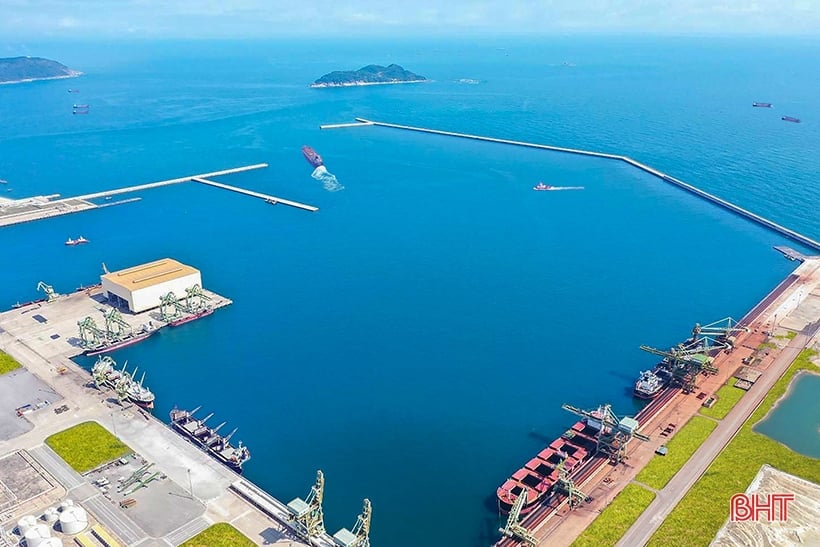
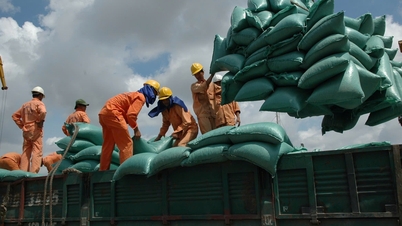
The southernmost region of Ha Tinh has become a "dream gem" for many domestic and foreign investors. In the photo: Son Duong deep-water port of Formosa Ha Tinh.
Recognizing Ky Anh town's numerous advantages for developing deep-water seaports, heavy industry, trade services, and logistics, and its potential not only at the regional level but also nationally and internationally, many large investors have come here to develop their businesses. The southernmost part of Ha Tinh province has become a "dream gem" for many domestic and foreign investors. Together, they are working diligently, ahead of schedule, to build Ky Anh into a major city of the future, a young, rapidly developing city full of potential and brimming with new vitality.
Under the crescent moon above the mountain peaks, gazing towards the sea ablaze with electric lights, I was momentarily struck with wonder: this place holds two legendary shores—the legend of our ancestors who pioneered this land, intertwined with the legend of today's descendants transforming this sacred land, a land so subtly and beautifully named by someone of the past: Kỳ Anh!
Nguyen Trung Tuyen
Source























































































Comment (0)