

The resettlement project has dragged on for 14 years without residents being able to move in.
The Khe Mừ resettlement area project in Thanh Thủy commune, Thanh Chương district ( Nghe An province) was approved by the Nghe An Provincial People's Committee in 2009. The project is managed by the Nghe An Rural Development Sub-Department with a capital of nearly 80 billion VND. The project aims to help more than 100 households of fishermen living on the Lam River stabilize their lives and alleviate poverty.
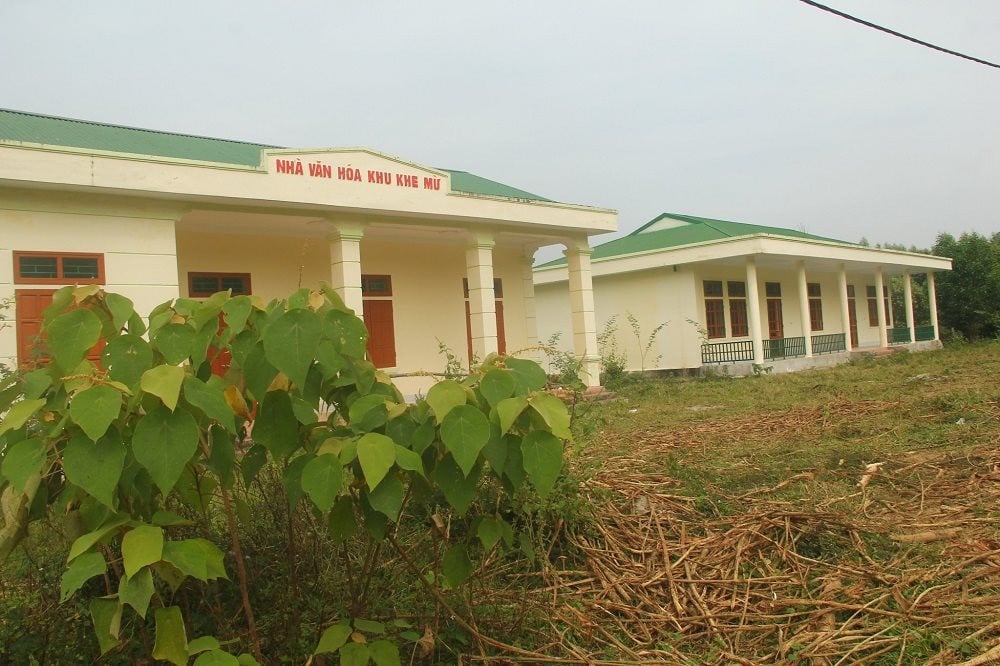
After years of being stalled due to a lack of funding, in 2020, the project received an additional 5 billion VND to complete the community center, roads, and electricity. The project's investor stated that the infrastructure was completed in 2022; however, to date, no residents have moved into the resettlement area. The two completed community centers have become grazing grounds for local livestock, surrounded by overgrown vegetation, creating a dilapidated scene.
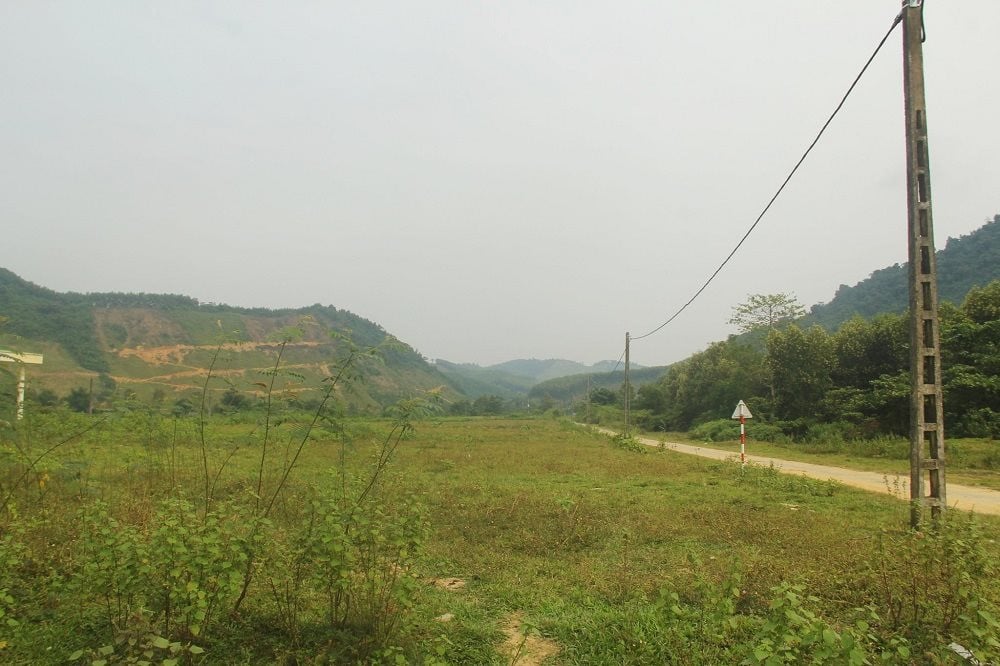
Mr. Nguyen Van Ha, a local resident, said: “The project has reclaimed hundreds of hectares of land from the people over the years, but the construction was left unfinished and abandoned. People saw the land as a waste, so some used it to plant acacia trees. The two community cultural centers in the two residential areas were completed many years ago, but they were left abandoned, allowing cattle to defecate there. Recently, the investor continued construction and completed it, then closed it down. Because the buildings are unused, they are showing signs of deterioration, which is a real shame.”
Recently, according to a report from the People's Committee of Thanh Thuy commune, a review revealed that eight households had re-encroached on land belonging to this resettlement project to plant acacia trees. The commune authorities have requested these households to stop the encroachment and return the land to the project.
Regarding this issue, Mr. Nguyen Dinh Thanh, Vice Chairman of the Thanh Chuong District People's Committee, said: The investor announced that the project has basically completed the infrastructure items. However, the agricultural land of the people, which was previously planned, has not yet been allocated to them, so the district is hesitant to accept the handover for fear of "abandoning the project halfway."
According to Mr. Thanh, allocating agricultural land to the people will take considerable time and expense for surveying, but the source of funding is still unknown. "The investor and the district will soon hold a meeting to find a solution," Mr. Thanh said.
Mr. Le Van Luong, Head of the Rural Development Sub-Department of Nghe An province, said: The project has completed the infrastructure items according to the approved design and has been approved for handover to the locality by relevant departments and agencies. Currently, the Sub-Department is coordinating with the People's Committee of Thanh Chuong district to complete the procedures for handover and commissioning. In 2020, the People's Committee of Thanh Chuong district reviewed and identified 105 households without land or legal housing who are eligible for resettlement in the Khe Mu resettlement area. However, to date, no households have moved in.
People are waiting impatiently.
For over 10 years, more than 100 fishing families in Vo Liet and Thanh Chi communes (Thanh Chuong district) have been eagerly awaiting resettlement on land. However, due to the prolonged construction of the resettlement area, many families have had to build temporary houses on land near the riverbank to live in. After decades of living on the water, Mr. Nguyen Viet Minh (born in 1951) and his wife could not live on their old boat forever, so they had to build a temporary house on the banks of the Lam River to live in. Their four children, who have all started their own families, could not live there and had to move elsewhere.
Mr. Nguyen Viet Minh said with frustration, "My wife and I are getting old and can't fish on the river anymore, so life is even more difficult. We've waited too long and are so tired of waiting for the resettlement area. We heard the project is finished, but for some reason, we still haven't been able to go there."
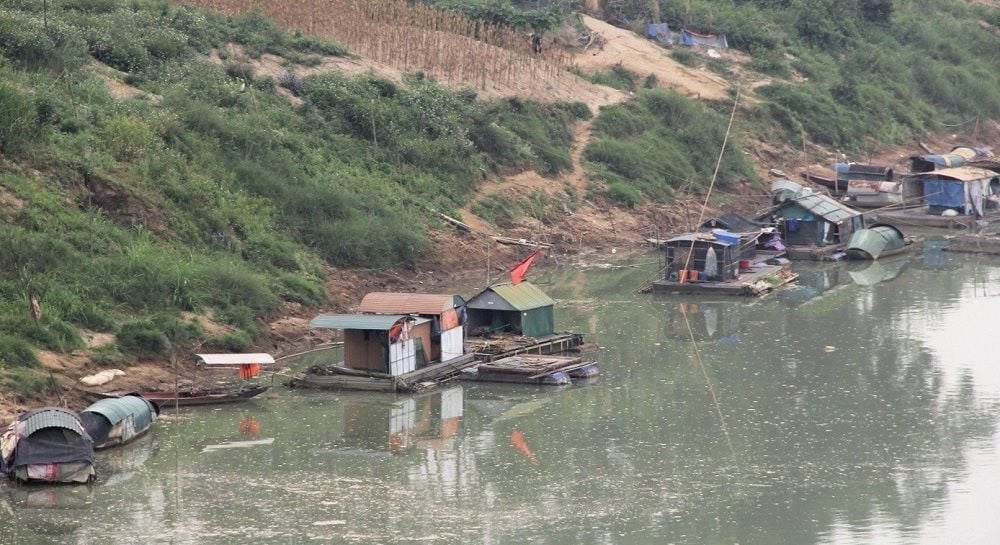
Ms. Nguyen Thi Ha (born in 1966) has three sons, two of whom are married. For many years, she and her children have lived in a makeshift house along the riverbank. Ms. Ha has registered to move to a resettlement area and has been approved by the authorities, but she still doesn't know when she will receive land to build a house.
Another resident also said that for over 10 years, the local government has organized visits for people to the Khe Mu resettlement area. People saw that the land was quite spacious, the roads were paved, and the infrastructure was quite good, so they had high hopes. However, year after year, their dream of "settling down" has yet to come true.
Meanwhile, the Trieu Duong resettlement area (a component of this resettlement project), completed in 2015, has not met the expectations of the fishing community. Local authorities also stated that by 2019, 43 households had received land in this resettlement area; however, after receiving the land, many families could not make a living on their own due to limited arable land and lack of employment, forcing them to seek work elsewhere. Currently, only about 20 households remain in the area. Due to the low population density, the community center and school have been abandoned.
Source

![[Photo] Prime Minister Pham Minh Chinh receives the Chinese Ambassador to Vietnam](https://vphoto.vietnam.vn/thumb/1200x675/vietnam/resource/IMAGE/2026/04/05/1775397481797_ndo_br_dsc-5512-jpg.webp)





























































Comment (0)