

The government has just issued Decree No. 97/ND-CP (Decree 97) amending and supplementing a number of articles of Decree No. 81/2021/ND-CP dated August 27, 2021 (Decree 81) regulating the mechanism for collecting and managing tuition fees for educational institutions belonging to the national education system and policies on tuition fee exemption and reduction, support for learning costs; and service prices in the field of education. In particular, tuition fees for public higher education will be adjusted compared to Decree 81.
Tuition fee increase schedule postponed.
Decree 97 adjusts the tuition fee schedule as follows: maintaining stable tuition fees for preschool and general education from the 2023-2024 school year at the same level as the 2021-2022 school year; postponing the tuition fee schedule for public higher education and vocational education by one year compared to the regulations in Decree 81 (meaning tuition fees for the 2023-2024 school year will increase compared to the 2022-2023 school year, but the increase will be lower than the schedule stipulated in Decree 81) to suit practical conditions and reduce difficulties for students; tuition fee exemption and reduction policies stipulated in Decree 81 will continue to be maintained to support policy beneficiaries and those in difficult circumstances.
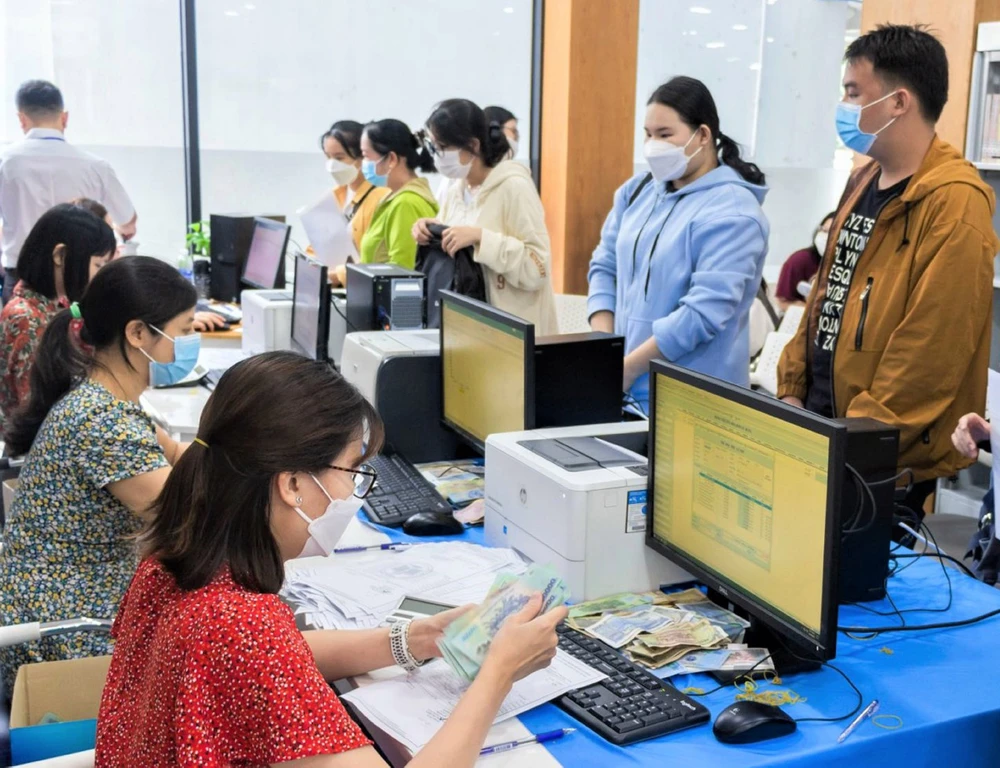
Therefore, tuition fees for mass programs at all public universities nationwide in the 2023-2024 academic year will have the following ceilings: Education and Teacher Training: 12.5 million VND/year (an increase of 2.7 million VND compared to the 2022-2023 academic year); Arts: 12 million VND/year (an increase of 300,000 VND); Business and Management, Law: 12.5 million VND/year (an increase of 2.7 million VND); Life Sciences, Natural Sciences: 13.5 million VND/year (an increase of 1.8 million VND); Mathematics and Statistics, Computer Science and Information Technology, Engineering Technology: 14.5 million VND/year (an increase of 2.8 million VND); Medicine and Pharmacy: 24.5 million VND/year (an increase of 10.2 million VND). Other health-related fields: 18.5 million VND/year (an increase of 4.2 million VND); Humanities, social and behavioral sciences, journalism and information, and social services: 12 million VND/year (an increase of 2.2 million VND). Thus, compared to the 2022-2023 academic year, tuition fees at non-autonomous higher education institutions in the 7 fields of study increased from 0.3 to 10.2 million VND/year, depending on the field. The largest increases were in the medical and pharmaceutical fields and other health-related fields, ranging from 4.2 to 10.2 million VND/year.
Meanwhile, for public universities that are self-sufficient in covering their operating expenses (autonomous), such as member universities of the Vietnam National University Ho Chi Minh City, Ho Chi Minh City University of Finance and Marketing, Ho Chi Minh City University of Technology and Education, Ho Chi Minh City University of Medicine and Pharmacy, etc., tuition fees are set at a maximum of twice the fees of non-autonomous public universities, corresponding to each field of study and each academic year. For fully autonomous public universities (self-sufficient in covering both operating and investment expenses) such as Ho Chi Minh City University of Economics , Hanoi University of Science and Technology, National Economics University, etc., tuition fees are set at a maximum of 2.5 times the tuition fees corresponding to each field of study. As for private universities, some will increase tuition fees by no more than 10% compared to 2023, while others have announced no increase.
Efforts to increase support policies
According to Dr. Phan Hong Hai, Chairman of the Board of Directors of Ho Chi Minh City University of Industry, although the university is financially autonomous, it is allowed to double tuition fees in the 2023-2024 academic year compared to the adjusted rate under Decree 97. However, the university decided to maintain the tuition fee at the same level as the 2022-2023 academic year to alleviate difficulties for students. In the current context, not increasing tuition fees would make it difficult to improve the quality of training and lecturer salaries; but if it continues to increase, it will be very difficult for students due to the current economic difficulties. Moreover, this is a general policy of the Government, and universities should support it to share the difficulties with students. Even without increasing tuition fees, the university will still maintain policies on tuition fee exemptions and reductions and seek scholarship sources for students. In the 2023-2024 academic year, the university will allocate 45 billion VND to award scholarships and support students in difficult circumstances.
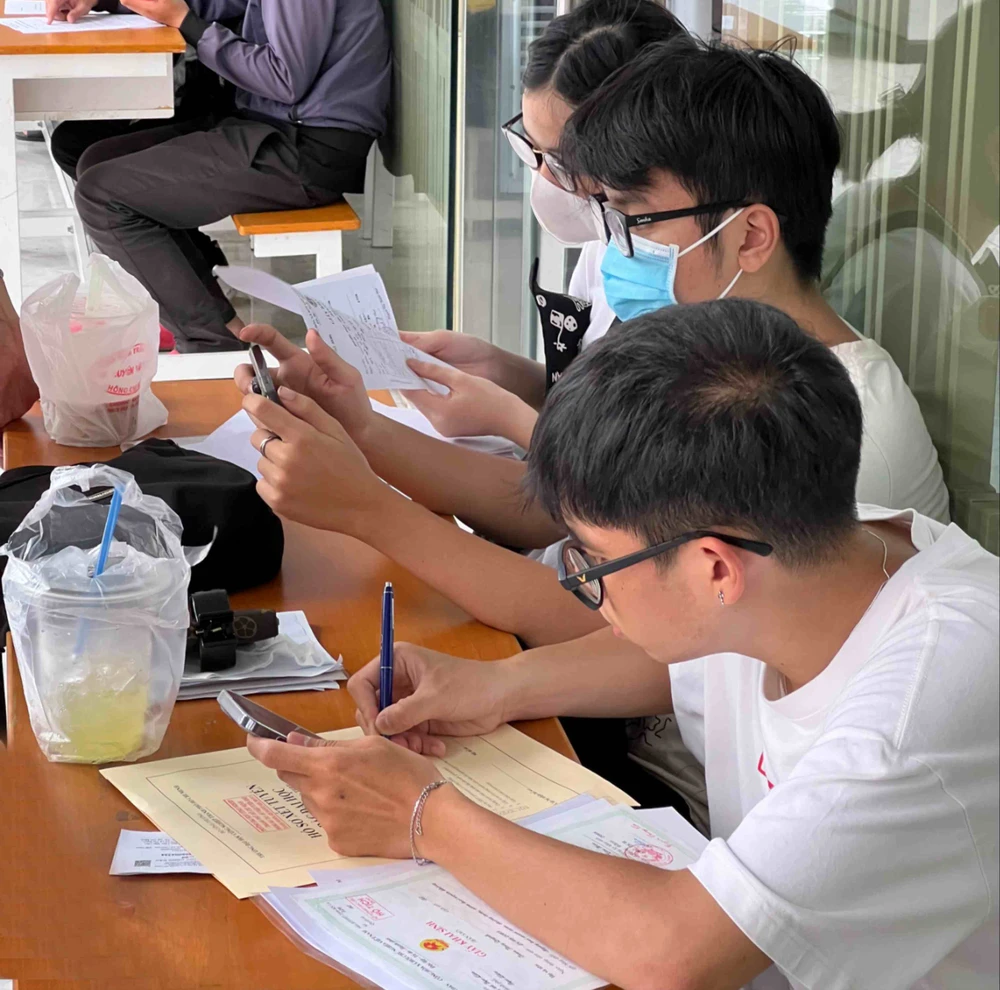
Dr. Vo Van Tuan, Vice Rector of Van Lang University, said that although it is a private university, this year the school has decided not to increase tuition fees for all courses to support students. In addition, the school maintains its financial support policy for 17 policy-eligible students (10 billion VND) and its scholarship policy (35 billion VND) awarded annually for students.
Similarly, Dr. Pham Thai Son, Director of the Communication and Admissions Center at Ho Chi Minh City University of Industry and Trade, believes that the trend of universities becoming more autonomous will increase, meaning tuition fees will be adjusted to closely reflect training costs. When adjustments are made, including tuition fee increases, it can create apprehension and even difficulties for students and society. However, along with tuition fee increases, when implementing autonomy, universities must commit to allocating at least 8% of tuition fee revenue to scholarship funds to support students. In addition to tuition fee increases, universities also have more policies (mobilizing resources from businesses and philanthropists) to support students from both within and outside the policy framework.
THANH HUNG
Source
















































































Comment (0)