

According to Minister of Health Dao Hong Lan, the selection of finished pharmaceutical products covered by the Health Insurance Fund is not limited by type, price, or whether they are domestically produced or imported.
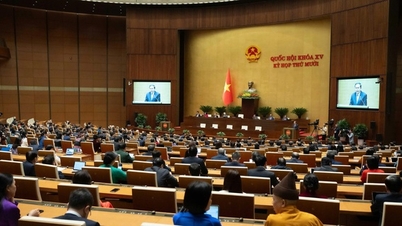
"The drugs selected for health insurance coverage are based on disease patterns, patient needs, and the fund's ability to pay," Ms. Lan said during her explanation at the socio-economic discussion session in the National Assembly on the morning of November 1st.
According to health sector leaders, from 2014 to the present, the Ministry has updated the list of drugs covered by health insurance five times; reviewed the current list to remove drugs with low effectiveness; and assessed the ability to balance the health insurance fund. Vietnam is considered one of the few countries with a relatively complete list of drugs, with more than 1,000 active ingredients, and not every newly invented drug is automatically included in the list of drugs covered by health insurance."
Ms. Lan acknowledged that the shortage of medicines and medical supplies is not new, occurring in many countries and becoming particularly serious after the Covid-19 pandemic. The medicines in short supply are mainly used for the nervous system, cardiovascular system, anti-infection, cancer, detoxification, digestive systems, vaccines, and drugs processed from human plasma and blood.
The main reasons are the scarcity of raw materials and active ingredients used in production, fluctuating prices, inflation, energy crises; supply chain disruptions due to military conflicts, and increased input costs. Companies lack the incentive to produce drugs because they yield low profits.
According to Minister Lan, drug procurement is currently carried out at all three levels: central, local, and healthcare facilities. The shortage of drugs and medical supplies is due to inadequate regulations, difficulties in organizing procurement and bidding, lack of timely coordination, and in some places, a reluctance to make mistakes.

Minister of Health Dao Hong Lan explains issues of concern to delegates on the morning of November 1st. Video: National Assembly Television .
The Ministry of Health has proposed that the Government submit to the National Assembly amendments to regulations in the Law on Bidding, the Law on Prices, the Law on Medical Examination and Treatment, and resolutions of the National Assembly, circulars of ministries and sectors, to create a legal framework. "The amended Law on Bidding, effective from January 1, 2024, will resolve many obstacles in ensuring the supply and procurement of medicines and medical equipment," Ms. Lan said.
Previously, delegate Nguyen Lan Hieu (Director of Hanoi Medical University Hospital) stated that the hospital's current difficulties include the inability to purchase high-quality supplies and develop new techniques. Many medical supply companies are willing to alter product information and offer low-priced bids to bypass the narrow window of opportunity and win tenders at hospitals. The purchase and sale of medical supplies is "very complicated" with too many legal regulations, making it difficult to make procurement decisions that meet the requirements of numerous ministries and agencies.
To prevent this situation, Dr. Lan Hieu proposed solutions such as strengthening warranty criteria, technology transfer, and categorization when bidding for medical supplies. Only high-quality brands would accept warranties and maintenance services up to 5 years, along with training and technology transfer. If these criteria are stipulated in specific documents, it would greatly benefit the healthcare industry.
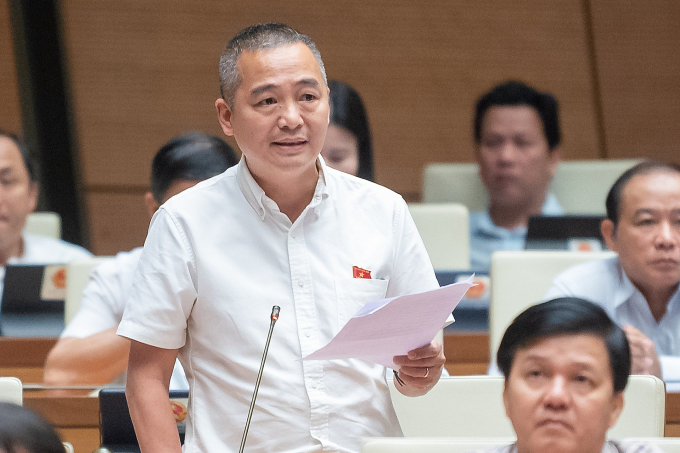
Director of Hanoi Medical University Hospital, Nguyen Lan Hieu, speaks on the morning of November 1st. Photo: National Assembly Media
The Director of Hanoi Medical University Hospital also pointed out the long-standing problem of licensing the import and use of new medical equipment in Vietnam, which has been at a standstill. "I myself have had to take patients abroad for treatment because there are no imported devices. Major companies are discouraged by the regulations regarding procedures and timeframes for obtaining licenses, and some have even withdrawn from Vietnam," Mr. Hieu said.
According to Mr. Hieu, procurement at provincial hospitals is even more difficult due to the numerous approval and inspection stages. Procurement depends on the Department of Health, the Department of Finance, and the Provincial People's Committee. Fear of responsibility leads to procrastination; documents are left unread, and when deadlines pass, minor errors are found to justify returning them to the facility. Therefore, he proposed assigning primary procurement responsibility to the users of the tendered products, granting hospitals the right and accountability before the law and patients.
The issue of drug and medical supply shortages was also raised by many delegates in questions to the leaders of the health sector during the discussion session on the afternoon of October 31st. Delegate Nguyen Thi Ngoc Xuan (Deputy Head of Binh Duong delegation) suggested that the Government establish a mechanism to reimburse people who have to buy drugs and medical supplies themselves, even if these items are included in the list of items covered by health insurance.
Representative Pham Khanh Phong Lan (Deputy Director of the Ho Chi Minh City Department of Health) stated that this issue had been raised by representatives in previous sessions, but the government's report was still superficial regarding the proposed solutions. The updating of the list of medicines for patients in Vietnam is also very slow compared to other countries. For example, Japan takes only about 3 months, France 15 months, and South Korea 18 months, but Vietnam takes an average of 2 to 4 years to introduce a new drug into the list of medicines covered by health insurance.
The female representative argued that this infringes upon the rights of people covered by health insurance and requested clarification of the agency's responsibility in reimbursing the money that people have to pay out of pocket for medication.
Source link

![[Photo] Closing Ceremony of the 10th Session of the 15th National Assembly](/_next/image?url=https%3A%2F%2Fvphoto.vietnam.vn%2Fthumb%2F1200x675%2Fvietnam%2Fresource%2FIMAGE%2F2025%2F12%2F11%2F1765448959967_image-1437-jpg.webp&w=3840&q=75)

















































![[OFFICIAL] MISA GROUP ANNOUNCES ITS PIONEERING BRAND POSITIONING IN BUILDING AGENTIC AI FOR BUSINESSES, HOUSEHOLDS, AND THE GOVERNMENT](https://vphoto.vietnam.vn/thumb/402x226/vietnam/resource/IMAGE/2025/12/11/1765444754256_agentic-ai_postfb-scaled.png)














































Comment (0)