

The Sixth Congress ushered in a new era, and based on fidelity to Marxism-Leninism, the Party flexibly applied it to carry out the reform process.
The breakthrough from dogmatism helped our country escape poverty, and the national economy has steadily improved. After nearly 40 years of reform, alongside the tremendous achievements, we are seeing a new wave of dogmatism emerging, significantly impacting the country's development.
Identifying new manifestations of dogmatism.
Dogmatism refers to principles, viewpoints, and rules that people blindly accept without proof, without criticism, and without considering the conditions for their application. Dogmatism also refers to the thought and action of absolutizing theory, disregarding or belittling practice, or applying theory without considering practice. It can be divided into two forms: Theoretical dogmatism: Applying theory without basing it on specific practical conditions, applying it without understanding its essence. Empirical dogmatism: Applying the experience of other industries, people, localities, or countries to practice mechanically, without considering specific practical conditions. The disease of dogmatism can be understood as a persistent state of dogmatic understanding and action, both theoretically and practically, among a segment of cadres and Party members, which needs to be recognized and addressed. The new disease of dogmatism among a segment of cadres and Party members has many manifestations, but can be summarized in the following issues:
Dogmatizing Resolutions: Each stage has different tasks, therefore, resolutions must have different policies and implementation solutions. However, currently, in leadership activities, especially in resolution-making, some Party committees and secretaries still have the mindset that the tasks of their agencies and units are "seasonal," repeating year after year without anything new. Therefore, in many Party organizations, especially at the grassroots level, leadership resolutions are drafted in a formulaic way, copied verbatim from before, only changing the date. Currently, in some Party organizations, especially at the branch level, the preparation and issuance of resolutions are merely 형식적인 (formalistic), even just to cope with inspection and supervision by higher-level Party organizations. This leads to a situation where resolutions for the following month, quarter, or year are the same as before, at most only adding a few contents to make them different. This new manifestation is not only a theoretical and practical dogma, but also reflects the irresponsibility of a segment of cadres and party members.
Foreignization of Policies: In recent times, many cadres and Party members in various ministries, sectors, and localities have organized numerous study tours and visits to learn from foreign experiences. The purpose of these trips is clearly defined as bringing back knowledge and experience in organization, management, and socio-economic development from other countries, especially advanced ones, to apply in Vietnam. However, many officials with high positions and significant influence who study abroad simply copy foreign models and place them in Vietnam, claiming it is learning, innovating, and absorbing new ideas. This imposition fails to consider the socio-economic conditions and infrastructure of Vietnam, which are not yet suitable or capable of fully absorbing those experiences. The consequence is significant loss and waste of social resources. The BRT (Bus Rapid Transit) project in Hanoi is a prime example of this new dogmatism, copying the experiences of advanced countries and applying them verbatim to Vietnam. Due to its incompatibility with Vietnam's transportation infrastructure, the project is at high risk of being halted, resulting in significant investment losses.

Illustrative image / tuyengiao.vn
Fear of making mistakes leads to rigid adherence to old formulas and procedures in new work, regardless of low efficiency: The fear of making mistakes, the reluctance to think, act, or take responsibility among some cadres and Party members, leads to a situation where they simply follow the same practices as their predecessors, months, years, processes, and terms, without daring to innovate in order to ensure their own safety. These cadres and Party members only care about keeping themselves safe within their "small cocoon," unwilling to innovate or learn, confined to a short-term mindset, avoiding conflict in order to ultimately "land safely." Therefore, in leadership and guidance, there is a repetition of "old formulas" and "old procedures" in new work. From being deaf to the wind, not daring to express their thoughts and concerns, they gradually become indifferent to social changes, indifferent to the tasks of their agency or unit, and indifferent to their own responsibilities and duties.
Indecisiveness: This manifests as the inability to express one's own opinions in Party committee and organization activities. This ailment exists in two forms: The first form involves cadres and Party members who, despite having ideas, are hesitant to confront issues or express them, agreeing to everything, leading to a "yes to everything" attitude and "high consensus." This is a passive approach in leadership. The consequence is that Party members retreat into their own "cocoon," seeing many problems, having innovative ideas and initiatives, but not daring to present or express them. The second form involves individuals who are lazy in thinking and considering leadership solely the responsibility of the Party committee and the collective Party organization, thus failing to proactively participate in discussions and the development of resolutions and other policies. Both forms lead to the same conclusion: the inability to mobilize collective intelligence and responsibility in leadership decisions.
Unforeseen consequences
The most significant consequence is that if this problem persists, it will create a hindrance that causes stagnation and hinders development. This is because the leadership resolution is not a concrete implementation of higher-level resolutions, nor is it a resolution for a new phase; it is merely a verbatim copy of a previous resolution. Such a resolution is ineffective, incapable of generating innovative, groundbreaking policies and solutions, and completely lacking vitality, detached from reality, and not aligned with the requirements of the task. Consequently, the activities of agencies, units, and localities become monotonous and uneventful, lacking breakthroughs, leading to stagnation, regression, and backwardness due to the ever-changing realities of socio-economic life.
The new dogmatism also hinders the implementation of resolutions. This is because, in the mindset of a segment of cadres and Party members, they have lost sight of their own leadership role. Therefore, in practical activities, they find it difficult to uphold their responsibility to put resolutions into practice; they will act habitually, haphazardly. Clearly, such a segment of cadres and Party members, even at the grassroots level, will be a hindrance, reducing the Party's leadership and governing capacity. Because what the Party, the State, the people, agencies, and organizations expect from them—dedication, effort, intellect, and creative ideas for the cause of reform and the building and development of their agencies, units, and localities—is lacking.
The mechanical and dogmatic application of both theory and practice, without considering socio-economic conditions, will lead to significant waste of national resources, as well as those of agencies, units, and localities. It will cause public resentment, diminish the Party's leadership prestige, and damage the reputation of cadres and Party members. Furthermore, this new dogmatism provides fertile ground for authoritarianism, despotism, subjectivism, and voluntarism to flourish. This also means that mistakes and negative aspects in leadership are not combated and eliminated, with one mistake following another. This will lead to unforeseen consequences: the collective loses its leadership role, the principles of Party organization and activities are disregarded, and the collective intelligence and responsibility are not mobilized in making leadership and management decisions.
A new remedy for the disease of dogmatism.
Based on a clear understanding of the manifestations of the new dogmatism, solutions are needed to enable each cadre, Party member, and Party organization to effectively overcome these manifestations. Accordingly, the following solutions should be implemented effectively:
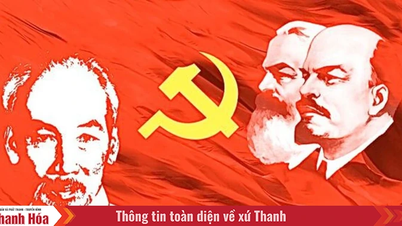
Firstly, we must continue to study and summarize practical experiences, supplementing and developing the theory of Marxism-Leninism and Ho Chi Minh Thought in the new conditions of the Vietnamese revolution. To date, the historical conditions, context, and strength of our country have changed and developed significantly. Therefore, based on Marxism-Leninism and Ho Chi Minh Thought as the ideological foundation and guiding principle for all actions, our Party needs to intensify the study and summarization of practical experiences to clarify, supplement, and develop the theory of Marxism-Leninism and Ho Chi Minh Thought in the new context. The results of this summarization and the lessons learned will serve as arguments to guide the Party's leadership policies and guidelines in line with the demands of reality. At the same time, they will serve as a basis for Party organizations and members at all levels to study, understand, and creatively apply them to the practical activities of their respective ministries, departments, provinces, cities, agencies, and units.
Secondly, we need to improve the mechanism for promoting the "seven dares" spirit among cadres and Party members. Promoting the "seven dares" spirit, especially the courage to act and take responsibility among leading cadres, requires a mechanism for managing, guiding, and protecting them. This mechanism must be institutionalized into law, creating a sufficiently open and broad framework for cadres and Party members to maximize the "seven dares" spirit, while remaining within the law to prevent cadres and Party members from encountering difficulties and committing violations.
Thirdly, we must continue to promote the study and emulation of Ho Chi Minh's thought on practicality among cadres and Party members. His practical style is most profoundly manifested in his avoidance of mechanical and dogmatic application, always standing on the ground of the Vietnamese revolutionary reality, Vietnamese culture, and Vietnamese people to study, protect, develop, and apply Marxism-Leninism. Each cadre and Party member needs to firmly grasp and deeply understand their responsibilities and duties, closely engage with practical realities, and cultivate a leadership and guidance style that is thorough, specific, and ensures scientific effectiveness.
Fourth, create breakthroughs in training and development linked to challenging and testing the skills of Party cadres at all levels. This is identified as a breakthrough because cadres, in addition to receiving basic training in knowledge and leadership skills, also need to undergo challenges and training in practice. The more extensive and profound their practical work experience, the more effective and realistic their leadership and guidance skills become, avoiding dogmatism, rigidity, and mechanical application.
Fifth, promote democracy in policy critique, especially for leaders at all levels. It is necessary to promote broad democracy in policy critique, and democracy must be implemented within Party organizations and within agencies and units. Local leaders must also effectively operate the social critique system to provide feedback on the practical implementation of decisions and policies by Party committees and local governments at all levels. This will help Party committees, secretaries, and leaders gain a comprehensive view of policy implementation effectiveness and promptly identify shortcomings for adjustment.
The new dogmatism among some cadres and Party members is a problem that needs to be identified and addressed. The focus should be on continuing to promote the study and emulation of President Ho Chi Minh's thought and practical style, while simultaneously perfecting mechanisms to foster the "seven dares" spirit among cadres and Party members, especially those in leadership positions. This is a practical way to protect, supplement, and develop Marxism-Leninism and Ho Chi Minh Thought in the new situation, ensuring the role and mission of the Party and each cadre and Party member in the practical leadership and guidance of building and defending the socialist Vietnamese Fatherland.
Ta Ngoc (According to qdnd.vn)
Source





















































































Comment (0)