


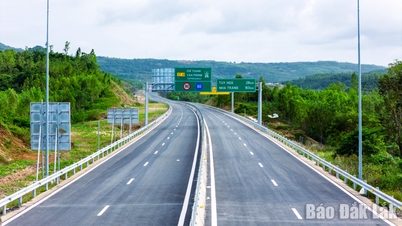
Several two-lane highways will be expanded.
Representative Nguyen Van Manh ( Vinh Phuc delegation) asked whether investing in some two-lane expressways without emergency stopping lanes meets expressway standards.
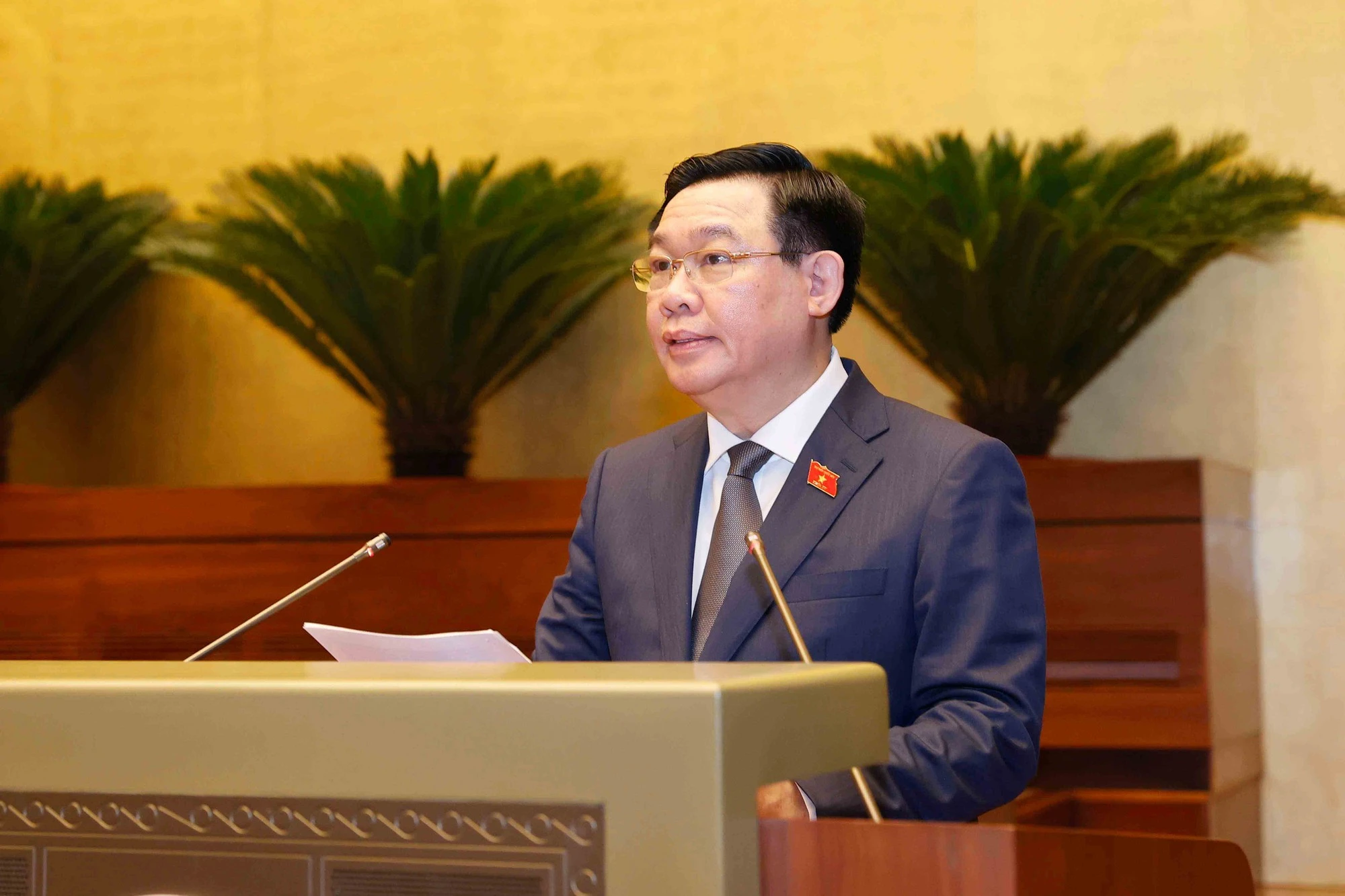
National Assembly Chairman Vuong Dinh Hue presided over the questioning session.
According to Minister of Transport Nguyen Van Thang, although the budget has allocated more than 375,000 billion VND for transport infrastructure investment, it only meets 70% of the demand. Investing in a complete expressway system in the context of limited resources is very difficult. He cited developed countries such as the US, Japan, South Korea, and Malaysia as examples of phased investment in expressways. The Ministry of Transport has learned from the experiences of these countries and implemented a phased approach based on the principle of ensuring expressways are built under limited resources while also creating a foundation for upgrading in later stages.
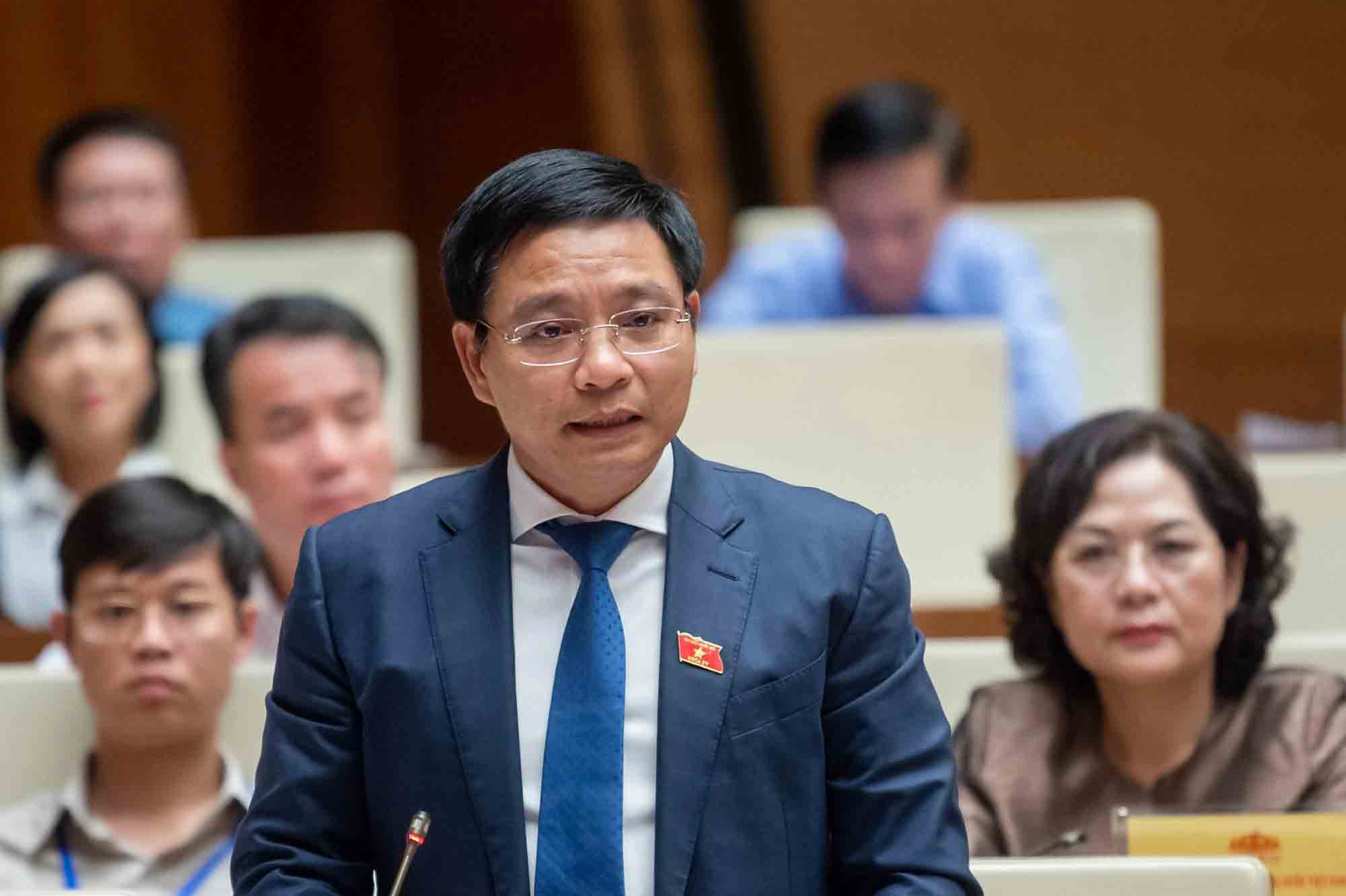
Minister of Transport Nguyen Van Thang answered questions in the National Assembly on the afternoon of November 6.
Accordingly, priority will be given to completing sections with high demand such as Hanoi - Hai Phong, Ben Luc - Long Thanh, and Phan Thiet - Dau Giay, while the remaining sections with lower demand will be phased in. Notably, all expressways recently approved by the National Assembly will have their land acquisition completed in a single phase. Initially, the Ministry of Transport will propose and report on the possibility of using increased budget revenue to expand the Cao Bo - Mai Son and La Son - Hoa Lien expressways, as well as complete the two-lane sections, ensuring a modern expressway system nationwide.
Disagreeing with Minister Thang's response, National Assembly Deputy Tran Van Tien, a member of the National Assembly's Economic Committee, questioned: "The Deputy asked whether a highway without an emergency lane meets the standards, but the Minister did not answer directly, only stating whether it meets the standards or not?" In response to this question, the Minister of Transport said: "Regarding the issue of highways with 2 lanes or 4 lanes, our current standards are appropriate. The regulations are still under development and will be reported to the Prime Minister, with completion expected in the first quarter of 2024."
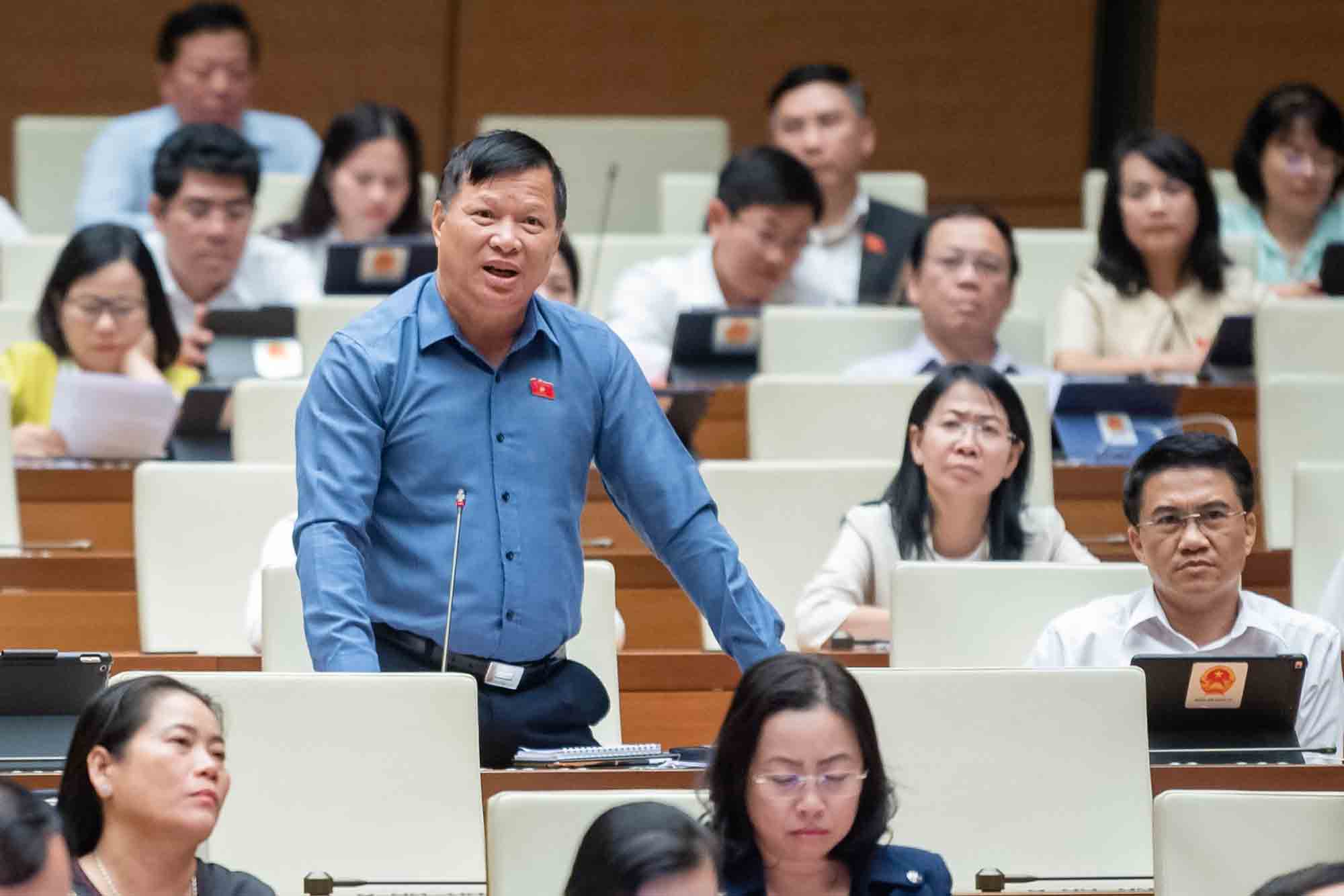
Representative Tran Van Tien (Vinh Phuc delegation) questioned on the afternoon of November 6th.
While acknowledging that the new head of the Ministry of Transport is "not primarily responsible," National Assembly Deputy Hoang Duc Thang (Quang Tri delegation) also pointed out that the Cam Lo - Tuy Loan route only has two lanes and has not yet been fully cleared of obstacles. He argued that expanding it in phase 2 would require very costly land clearance, wasting national resources. Furthermore, the supporting infrastructure, including bridges for local residents, were all built to a two-lane standard and would have to be demolished if the expansion were to proceed. He stated, "We don't know the exact cost, but it will certainly be substantial."
According to Minister Nguyen Van Thang, the Cam Lo - Tuy Loan expressway consists of two component projects: Cam Lo - La Son, a public investment project with sections of 4 lanes and sections of 2 lanes, for which land clearance has been completed. The La Son - Tuy Loan section, currently with 2 lanes, has also had its land cleared for expansion. "In the coming time, the Ministry of Transport will balance the budget and transport needs and traffic volume to advise the Government to report to the National Assembly on expanding these routes, especially the Cam Lo - La Son route which has high traffic volume," Mr. Thang stated.
In conclusion, according to National Assembly Chairman Vuong Dinh Hue, "we don't have much capital, so we have to phase the investment, but how to phase it to ensure traffic safety is something the Ministry of Transport must think carefully about." The Chairman also cited newly opened expressways such as Cao Bo - Mai Son and Thanh Hoa - Dien Chau, where the number of users is very low because the operating speed is only 80 km/hour and there are no emergency lanes, so even a single accident or flat tire can cause traffic congestion. "This issue needs to be carefully considered," the Chairman noted.
Still struggling to resolve 8 stalled BOT projects.
Representative Nguyen Huu Thong (Binh Thuan delegation) pointed out that currently, nearly 200 km of the expressway passes through Binh Thuan province but still lacks rest stops, leaving people "not knowing how to address their environmental sanitation needs."
In response to the National Assembly representative, Mr. Thang accepted responsibility as the Minister of Transport for the slow progress in deploying rest stops on expressways. He also explained that the implementation of expressway projects during this term followed a "wait and see" approach. Regulations regarding rest stops lacked a legal framework, resulting in almost no rest stops in phase 1 of the expressways. The Ministry of Transport has issued decisive and urgent directives to guide the selection of investors for socialized investment. Nine rest stops in phase 1 will be completed in 2023-2024, and the 15 rest stops in phase 2 will certainly be completed on schedule.
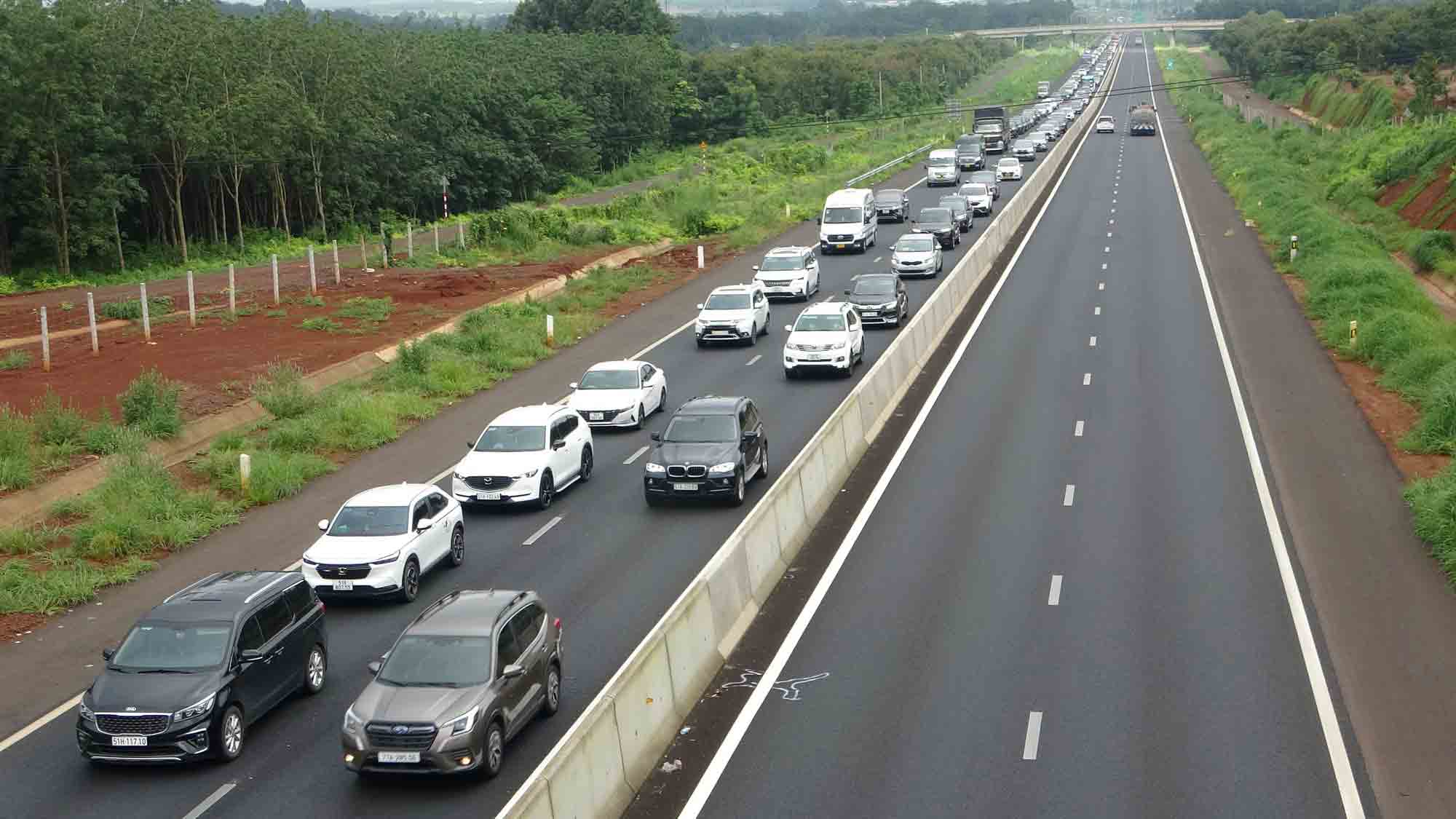
The highway runs through Binh Thuan province for nearly 200 km, but still lacks rest stops.
Regarding the handling of outstanding issues related to stalled BOT projects, National Assembly Deputy Trinh Xuan An (Dong Nai delegation) stated that Resolution No. 62 of the National Assembly assigned the task of resolving all obstacles and shortcomings concerning toll stations for BOT projects in 2022. However, over the past year, despite efforts to implement the task, the Ministry of Transport has not yet completed the assignment. Mr. An also requested the Minister of Transport to clearly state the solutions and completion timeline, and clarify the plan for mobilizing over 10,000 billion VND from the state budget.
Minister Nguyen Van Thang stated that the Ministry of Transport has coordinated with other ministries, sectors, and localities to resolve issues for eight problematic BOT projects, with a total estimated cost of over 10,000 billion VND. Mr. Thang acknowledged that the Ministry of Transport has been working on resolving these BOT projects for a long time, but many obstacles remain. In particular, the funding for these projects—whether from increased revenue or medium-term public investment—is a concern. These projects involve not only investors but also banks. During discussions, the Ministry of Transport has requested that investors sacrifice profits and banks sacrifice interest rates to ensure capital preservation and recovery. The Ministry of Transport will report to the Government before November 15th, with the aim of gradually submitting the proposal to the National Assembly in the near future.
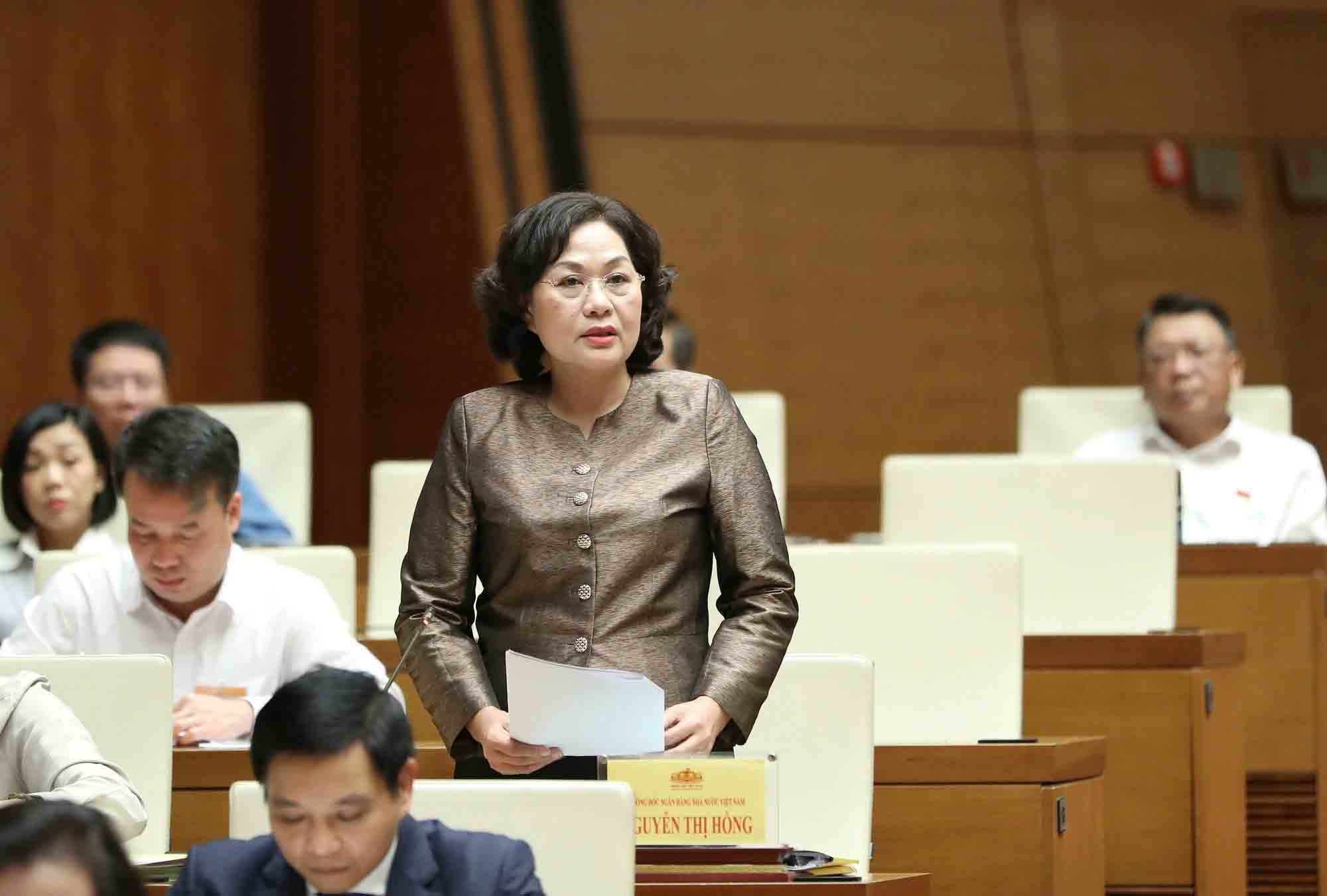
Governor of the State Bank of Vietnam, Nguyen Thi Hong, answers questions.
Regarding attracting PPP projects, Mr. Thang also acknowledged that since the PPP law was enacted, attracting projects has not been significant or effective. The reasons include uneven distribution of traffic, which puts investors at a disadvantage. Furthermore, the state only provides a maximum of 50% of the capital for land acquisition, meaning the actual capital support for businesses is insufficient. The Ministry of Transport will advise the Government to propose adjustments to policies and mechanisms to attract investors, such as increasing the percentage of state capital support.
Will similar incidents to the SCB bank case happen again?
During questioning of the Governor of the State Bank of Vietnam (SBV), Nguyen Thi Hong, many National Assembly deputies requested information on the roadmap for abolishing credit limit management (credit room). In response, Ms. Hong stated that, in accordance with the National Assembly's resolution, the SBV had held discussions and reached a consensus that credit room management could not be abolished at this time. She added that the SBV would continue to manage credit room until a more opportune time. "When other segments of the financial market, such as corporate bonds, can meet the medium- and long-term capital needs of businesses, then abolishing this credit limit will be more feasible," Ms. Hong emphasized.
Many delegates requested an explanation for the slow handling of weak banks and asked Ms. Hong whether similar cases to the recent SCB (Saigon Commercial Joint Stock Bank) could occur in the future to reassure depositors. In response, Ms. Hong stated that restructuring weak banks is indeed very difficult, as it is unprecedented, the involved officials lack experience, and finding investors to participate in the project is also challenging. Furthermore, regarding resources for implementation, Ms. Hong said it requires consultation with relevant agencies and consensus. "The restructuring of weak banks has been approved by the competent authorities and is currently being implemented according to this plan before finalizing the detailed project for submission to the competent authorities for approval," Ms. Hong emphasized.
500 public properties are currently lying idle.
Representative Doan Thi Thanh Mai (Hung Yen delegation) raised the issue of many public offices being left vacant after mergers, while many agencies elsewhere have to share cramped, dilapidated offices. Minister of Finance Ho Duc Phoc stated that, to date, approximately 90% of public assets have been sorted and processed, while 10% – equivalent to about 1,000 public assets – remain unprocessed, with about 500 of them currently vacant, creating a waste of resources.
Regarding the reasons, many agencies and units do not need to use the aforementioned public assets. Furthermore, finding a valuation agency is very difficult when wanting to appraise public assets for sale, and the sluggish market also makes selling public assets challenging. Not to mention, for public assets to be valued, the land use plan must be re-approved, the land use purpose must be changed, and a series of procedures must be followed, making the process difficult.
The Minister of Finance affirmed that the management of public assets is the responsibility of agencies at all levels. Specifically, public assets managed by central agencies, ministries, and sectors are the responsibility of the Government, with the Ministry of Finance acting as the direct advisor, and the ministries and sectors directly managing them. The majority of public assets, when reorganized at the district and commune levels, fall under the management of the Provincial People's Committees. The Ministry of Finance has issued guidance and urged relevant agencies to handle public assets. In the near future, the Ministry will work to provide further guidance, ensuring that public assets are put into use and their effectiveness maximized.
Source link































![[Photo] Prime Minister Pham Minh Chinh inspects the readiness of personnel to ensure order, safety, and security.](https://vphoto.vietnam.vn/thumb/1200x675/vietnam/resource/IMAGE/2026/02/16/1771254005385_ndo_br_dsc-3981-jpg.webp)

































































Comment (0)