



Shops and stalls in front of a school gate in Ho Chi Minh City.
Cheap, easy to buy, but not safe.
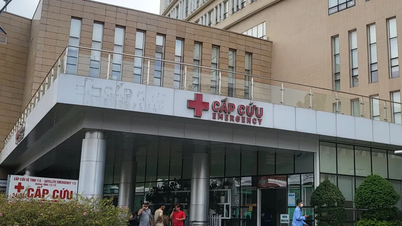
In front of large hospitals or schools, it's easy to spot mobile stalls selling all kinds of food and drinks. The bustling activity usually takes place during rush hour when people are going to work and children are going to school. On the afternoon of May 3rd, nearly a dozen stalls selling rice, noodles, bread, and soft drinks were operating busily along both sides of Dien Bien Phu Street, in front of Binh Dan Hospital. The tables for customers were set up right next to a drainage ditch, which also served as a place to dispose of garbage and wash food containers. Despite this, patients or their relatives still accepted a cheap meal for convenience, ignoring concerns about food safety and hygiene. Most of these street food carts were simply equipped, and the ingredients were not properly covered.
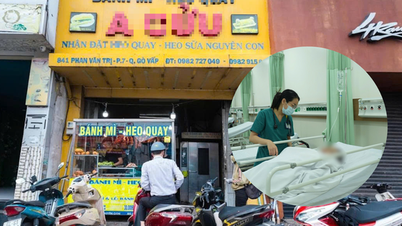
At a bread stall on Nguyen Gia Thieu Street (District 3), the woman selling the bread is constantly busy and doesn't wear gloves, but customers don't seem to mind. "I don't think it's that important. The bread here is delicious and cheap, and it's convenient on my way to work, so I often buy from them," said Ms. Le Thi Giang (Thu Duc City).
Food safety issues with street food are not new, but they remain a persistent concern. Authorities and local governments have implemented specific measures, and schools have advised parents and students; however, the problem of unsafe food consumption has yet to be completely resolved.
Ms. Tran Thi Ty (residing in Thu Duc City) said she stopped letting her 7-year-old son buy bread from vendors outside his school for breakfast after learning that 15 elementary school students were hospitalized due to suspected food poisoning. “There’s a row of breakfast food stalls in front of my son’s school, and they often give away free soft drinks or toys, so the kids love it. After 4 PM, they sell ice cream and cotton candy, and many children ask their parents to buy them. My son saw his friends eating them and asked me for money to buy some, but from now on, I will absolutely not let him eat snacks at the school gate anymore,” Ms. Ty confided.

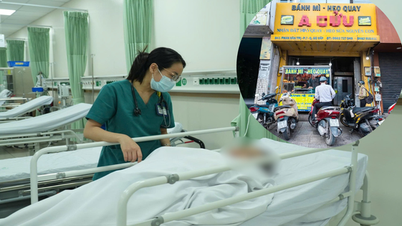
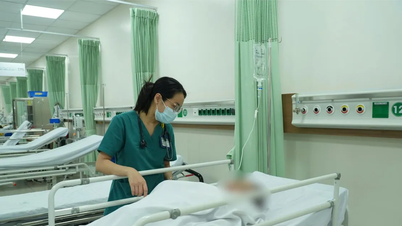
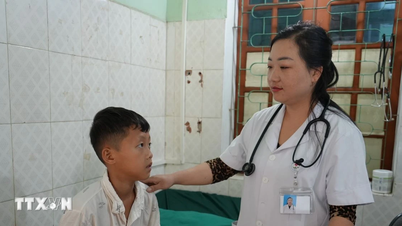
A child suspected of food poisoning from Dong Nai province is currently being treated at Children's Hospital 1 in Ho Chi Minh City.
Extreme heat, increased risk.
Dr. Ly Kha Nien, Head of the Nutrition Department at Le Van Thinh Hospital, said that the current intense heat creates favorable conditions for bacteria to thrive, and food easily spoils or becomes contaminated with germs and parasites if not properly preserved. This risk is even higher with street food, as most vendors do not comply with regulations regarding protective equipment, storage containers, or the origin of ingredients. “Some street stalls leave food out from morning until evening in the hot weather, making it very easy for food to spoil, especially raw or fermented foods. When consuming food contaminated with bacteria such as E. coli, Salmonella, etc., patients will experience digestive disorders and intestinal infections, the severity of which depends on each specific case,” Dr. Ly Kha Nien explained.
According to Ms. Pham Khanh Phong Lan, Director of the Ho Chi Minh City Department of Food Safety, controlling food outside of schools faces many difficulties, especially with street vendors. Ms. Pham Khanh Phong Lan advises parents to limit their children's consumption of snacks outside school gates and to restrict their children's pocket money, thereby helping to prevent the risk of food poisoning and digestive disorders. The Department will strengthen inspections and conduct surprise checks of collective kitchens and canteens in schools, as well as in companies, hospitals, businesses, and export processing zones... to ensure safety and quality. During this period, the department will focus more on the school sector.
“Although Ho Chi Minh City is controlling it well, mass food poisoning incidents among students can happen at any time if people and authorities are not vigilant. When people have information or witness unsafe food practices of production and business establishments, they need to report to the functional management agency via hotline (028) 39301714 for timely handling,” Ms. Pham Khanh Phong Lan advised.
Source

















![[Photo] National Assembly Chairman Tran Thanh Man receives the First Vice President of the Greek Parliament](https://vphoto.vietnam.vn/thumb/1200x675/vietnam/resource/IMAGE/2026/03/02/1772443148929_ndo_br_bnd-8745-jpg.webp)






















































Comment (0)