

The rich and unique cultural identity of the Khmer ethnic community in Vietnam in general, and Tra Vinh province in particular, is becoming a resource and material for creating distinctive tourism products.
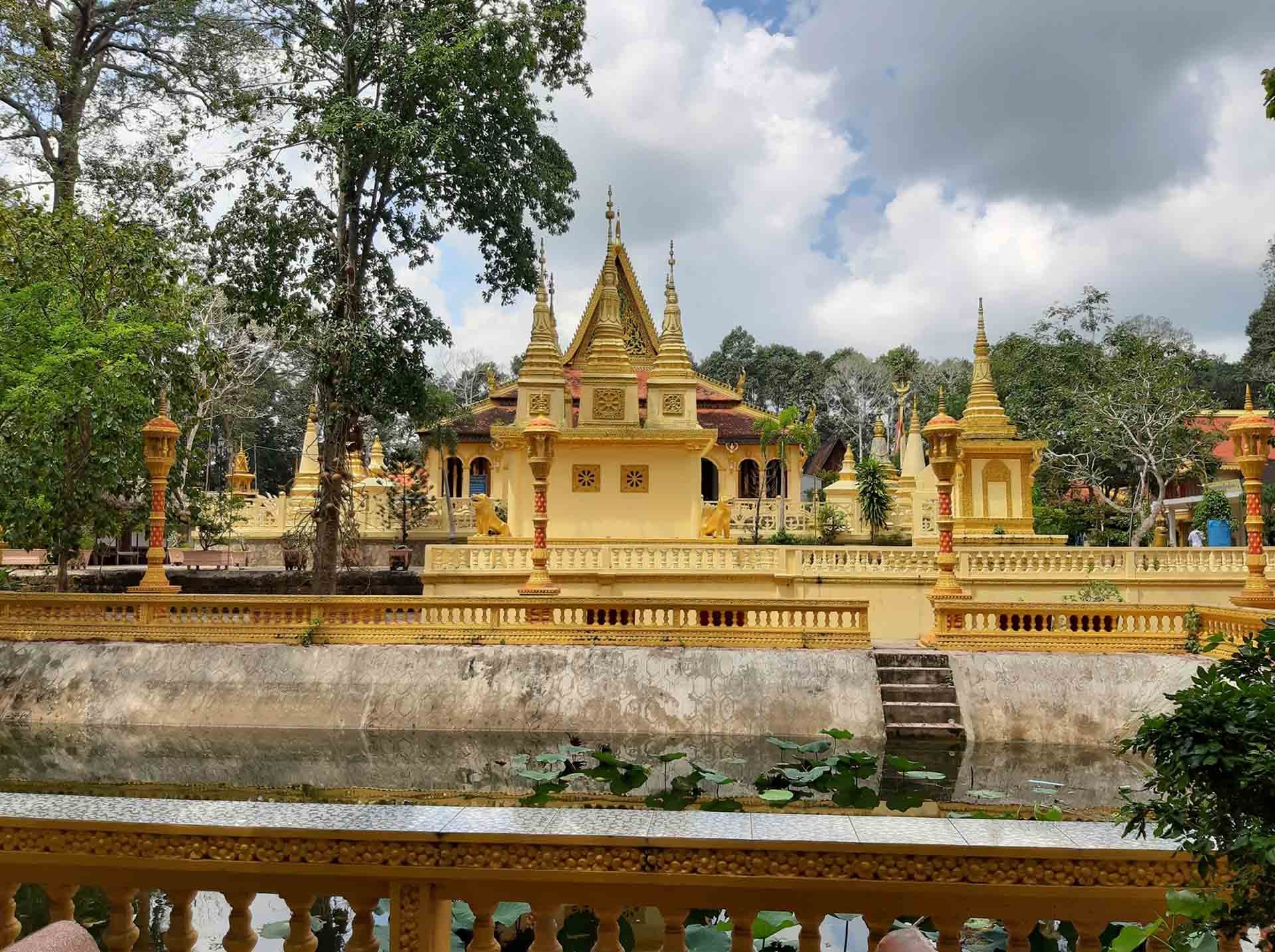 |
| Ang Korajaborey Pagoda (Ang Pagoda) is a unique architectural and sculptural work, deeply rooted in the spiritual and religious culture of the Khmer people in Southern Vietnam. (Photo: Phuong Nghi) |
Tra Vinh province has a large Khmer population (over 32%), with 142 Theravada Buddhist temples featuring unique architecture reflecting the distinct cultural identity of the Khmer people. It also hosts traditional Khmer festivals such as the Ok Om Bok Festival, Sene Dolta Festival, and Chol Chnam Thmay New Year; among them, the Ok Om Bok Festival has been recognized by the Ministry of Culture, Sports and Tourism as a national intangible cultural heritage. This provides favorable conditions for Tra Vinh province to develop cultural and spiritual tourism.
With the aim of preserving and developing the Khmer culture of Southern Vietnam, the Khmer Cultural and Tourism Village, built in Ward 8 (Tra Vinh City) and Luong Hoa Commune (Chau Thanh District), is comprehensively planned into seven main zones: Ao Ba Om, Ang Pagoda, Khmer Ethnic Culture Museum, Pali School, Khmer Ethnic Culture Village, Lo Gach Pagoda, Oc Eo relics, along with functional zones offering a variety of diverse activities and services: a commercial night market; a food court promoting unique dishes of Khmer culture; an art creation and exhibition area; a picnic area; an ancient house area, etc.
Tourism leverage
The goal is to develop the Khmer Cultural and Tourism Village into a national-level cultural and tourism destination; to fulfill the function of preserving and developing Khmer culture in Tra Vinh province in a sustainable manner, while simultaneously creating leverage for local tourism development.
Stepping into the village, visitors will be immersed in the unique beauty of the ancient Khmer culture, spread through community-based tourism. A highlight of the "Khmer Cultural and Tourism Village" is the mural street, painted by five Khmer artists and artisans on the walls of houses in Ba Se A hamlet (Luong Hoa commune, Chau Thanh district). It comprises 28 paintings depicting cultural images, daily life, and religious activities of the Khmer people.
Currently, the Khmer Cultural and Tourism Village welcomes hundreds of domestic and international groups each month to visit and experience a variety of activities: making flattened rice cakes, dancing, visiting the mural village, sightseeing, and learning about the culture, beliefs, and temples. Meanwhile, those working at the village are becoming increasingly professional thanks to systematic training.
Distinguished artisan Lam Phene from Ba Se hamlet, Luong Hoa commune (Chau Thanh district) happily stated that the Khmer Cultural and Tourism Village, associated with the beauty of traditional crafts, has created opportunities for tourists to experience and interact culturally with the Khmer ethnic community when visiting Tra Vinh.
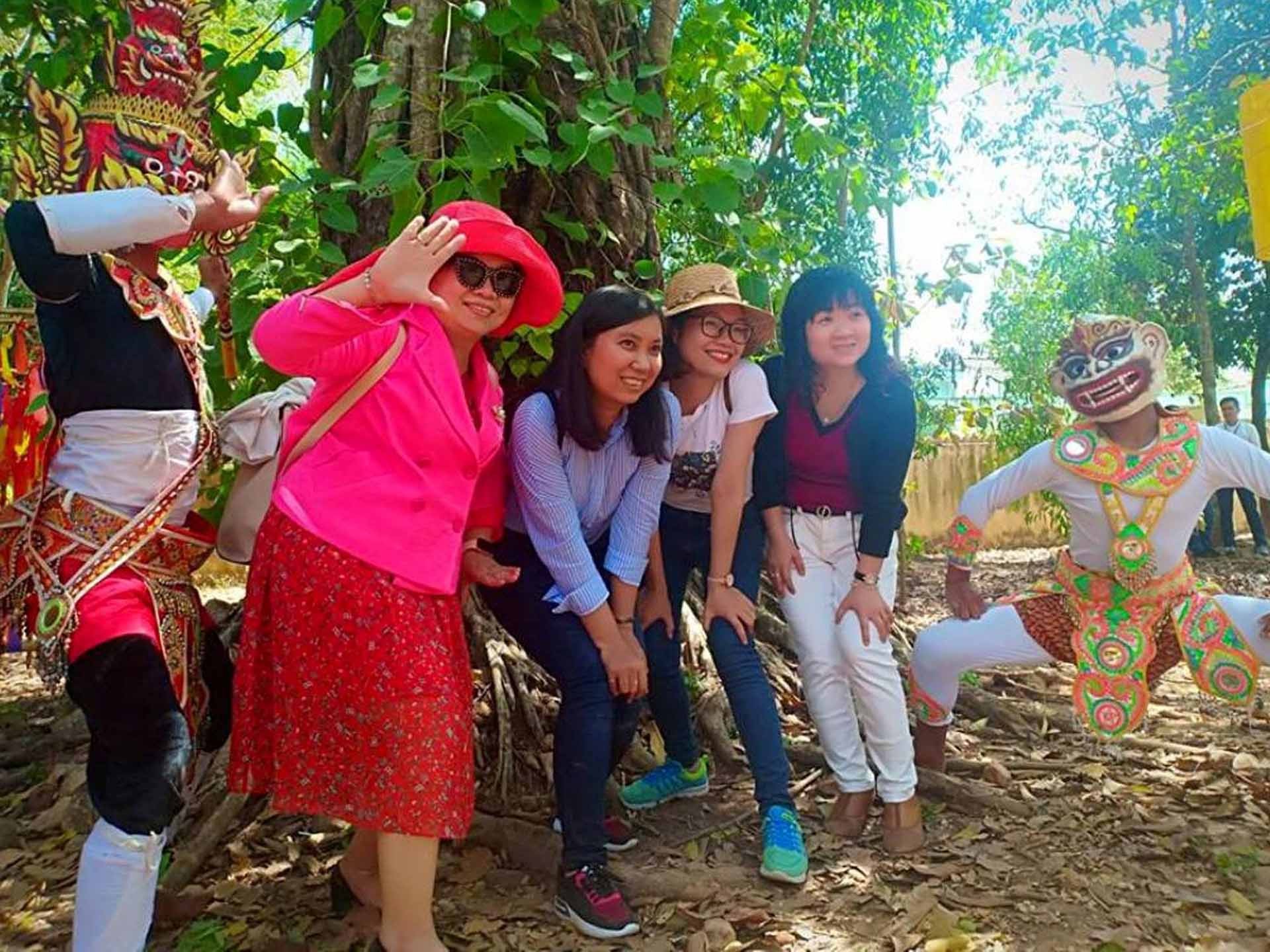 |
| Tourists participate in experiential activities at the Khmer Cultural and Tourism Village in Tra Vinh province. (Photo: Phuong Nghi) |
“Here, my family directly recreates traditional Khmer cultural performances for tourists to experience, such as the Robam dance, the Chan dance, and playing the Ta Khe instrument... with headdresses, masks, props, and traditional musical instruments that I have crafted. In addition, many families recreate scenes of pounding flattened rice, making tube cakes... traditional dishes of the Khmer people,” Mr. Lam Phene shared.
Mr. Thach Anh, a tour guide at the Khmer Cultural and Tourism Village, said: “Working as a tour guide at the Cultural Village allows me to promote the traditional culture of the Khmer ethnic group to everyone. By participating in this startup, we accumulate finances and preserve the cultural treasure of our people.”
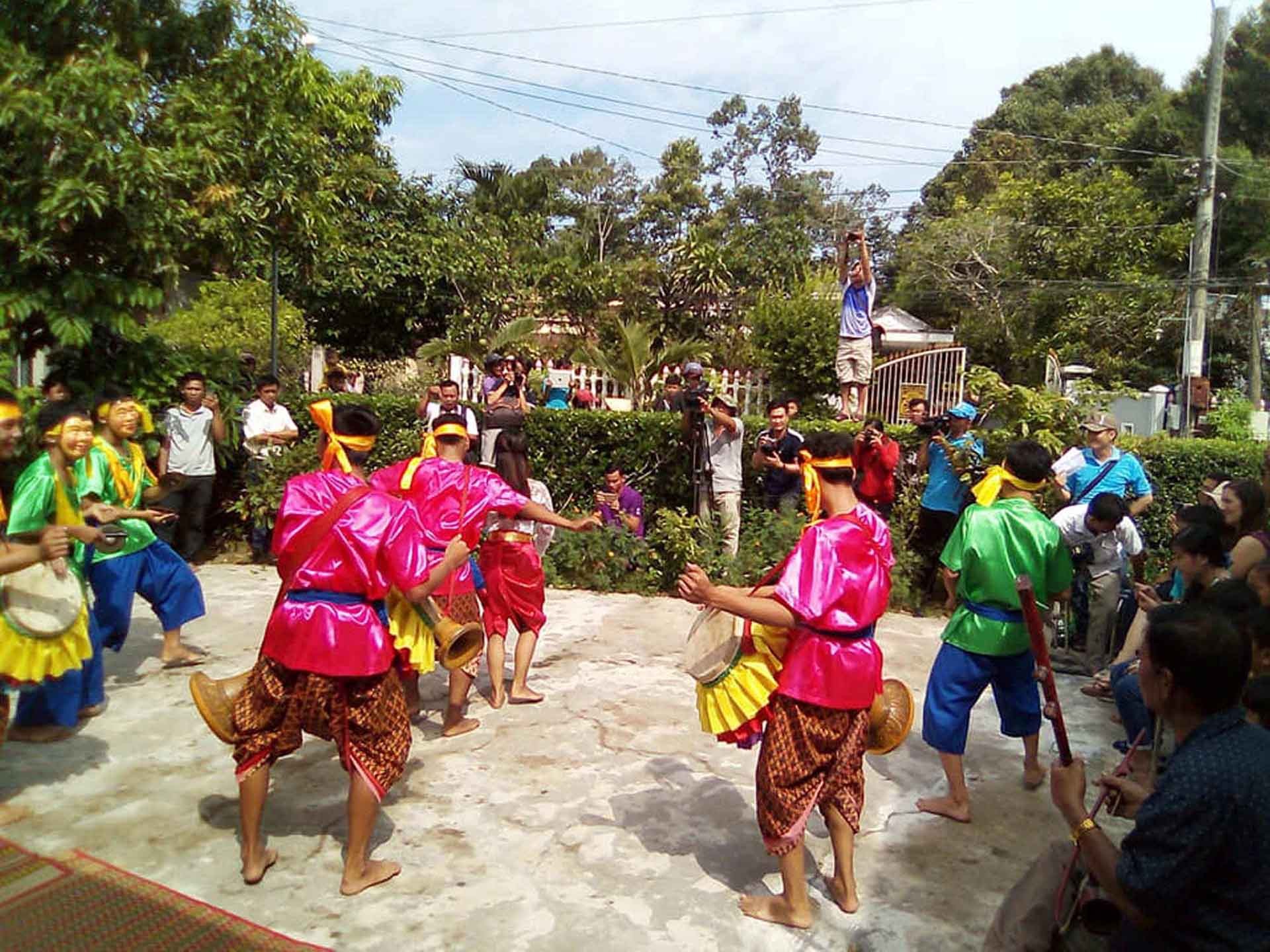 |
| Distinguished artist Lam Phene and his family directly recreate traditional Khmer cultural performances such as the Sa Dam drum dance for tourists. (Photo: Phuong Nghi) |
Since the Khmer Cultural and Tourism Village project in Tra Vinh province was implemented, the lives of a segment of the Khmer people have undergone positive changes. Ms. Thach Thi Roi (a Khmer woman) in Ward 8 (Tra Vinh city) shared: “Since we received training on tourism skills and guest reception, I have realized the importance of developing tourism in conjunction with preserving the cultural heritage of the Khmer people.”
Currently, on average three times a week, my family and I participate in demonstrations of making flattened rice cakes, a Khmer specialty, and performing the traditional Robam folk dance at the Tra Vinh Khmer Ethnic Culture Museum to entertain visitors. Thanks to this, my family has a stable source of income.”
New product development
Mr. Tran Manh Thang, a tourist from Da Nang, and his family recently explored the Khmer cultural and artistic identity at the Khmer Cultural and Tourism Village. At the Ba Roi Khmer flattened rice cake stall, he and many other tourists enthusiastically participated with the locals in pounding and mixing the flattened rice cakes. This is an indispensable traditional dish for the Khmer people during the moon festival, also known as the Ok Om Bok festival, on the 15th day of the 10th lunar month.
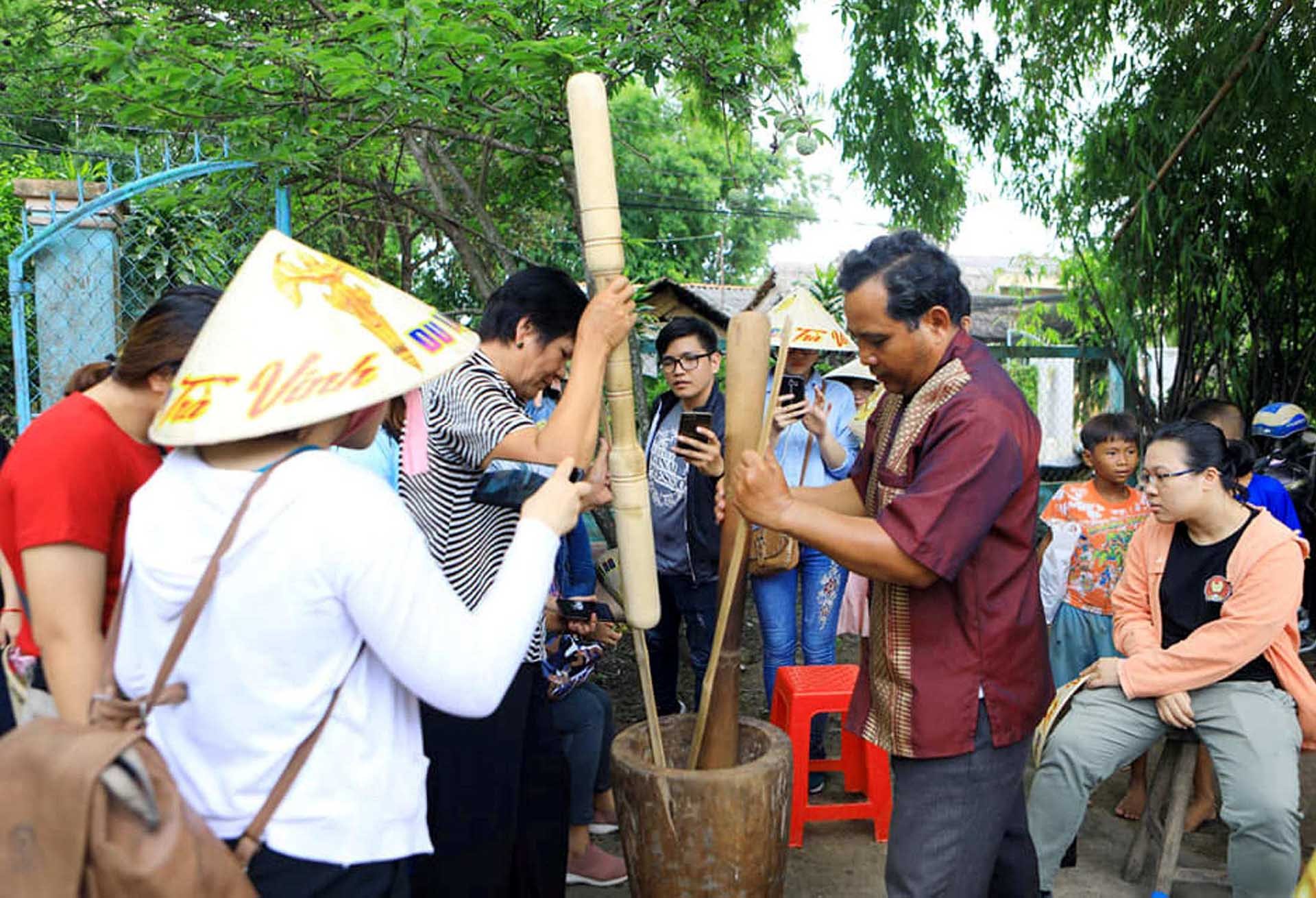 |
| Tourists enthusiastically join the locals in pounding flattened rice flakes. (Photo: Phuong Nghi) |
To implement the project, diversify products, and develop tourism in a sustainable direction, in the coming time, Tra Vinh will promote the development of community-based tourism products associated with the cultural and spiritual life of the Khmer ethnic people.
In particular, the province focuses on exploiting the value of cultural spaces and folk dance performances to serve tourists; developing tours to visit and experience traditional wood carving villages; tours to learn about local architecture and culture by bicycle, riding buffaloes and staying in ancient Khmer houses over 100 years old; experiencing mural-painted routes; Buddhist volunteer tourism; and charitable pilgrimage tourism...
Source: https://baoquocte.vn/bao-ton-van-hoa-khmer-o-tra-vinh-275670.html
![[Photo] A vibrant celebration of generations of Nhan Dan Newspaper staff](https://vphoto.vietnam.vn/thumb/1200x675/vietnam/resource/IMAGE/2026/03/11/1773228432744_cb-75-nam-7-7034-jpg.webp)


































































Comment (0)