

For decades, due to poor transportation, the Muong residential area in Giao Thien commune, Lang Chanh border district (Thanh Hoa province) has been almost completely isolated from the outside world and is known as an "oasis". Although it has been slated for relocation to a more favorable location for economic development and improved living conditions, the project has not been implemented due to objective reasons. Therefore, the lives of the households here remain extremely difficult. During a visit to K-Ai village, Dan Hoa commune, Minh Hoa district (Quang Binh province), I unexpectedly met midwife Dinh Thi Thanh Tam. My first impression of her was that of a kind, enthusiastic, and dedicated woman. Ms. Tam's nutritional advice and guidance for mothers on pregnancy care are very meticulous and easy to understand. On the morning of March 2nd, at the Government headquarters, the Ministry of Foreign Affairs, the Ministry of Education and Training , and Hanoi National University, in collaboration with Tsinghua University, China, held a ceremony to award the title of "Honorary Professor" of Tsinghua University to Prime Minister Pham Minh Chinh, for his significant contributions to the remarkable development of the Vietnamese economy and cooperation between Vietnam and China in recent years. The explosion of social media brings many opportunities for connection but also serious consequences. Offensive videos, content inciting violence, and scams are rampant, negatively impacting the awareness and behavior of young people. Not only do these harmful and toxic contents damage morality and psychology, but they also pose many risks to social security. Given this situation, what solutions does Vietnam need to protect a clean cyberspace? The village of Dak Wok Yop, Ho Moong commune, Sa Thay district, has today donned a new garment of prosperity and well-being. These changes are thanks to the attention of the local government in propagating and mobilizing the people to abandon the Ha Mon cult and promptly implementing the Party and State's policies for ethnic minority communities. In the heart of Ho Chi Minh City, the most modern and developed city in the country, members of the "Southern Melodies" Club remain wholeheartedly dedicated to their love of traditional music, showing that young people are not indifferent to traditional music in the context of the current dominance of modern music. In Kgiang village (Kong Long Khong commune, Kbang district, Gia Lai province), the family of the distinguished artisan Dinh Thi Hien has been wholeheartedly devoted to ethnic culture. Family members are the core of the women's gong ensemble and the village's brocade weaving and basketry club; they are the "torchbearers" helping the community preserve and develop the cultural values of the Ba Na people. After more than 7 years of construction, the Bot Da Parish Church in Da Son commune, Do Luong district, Nghe An province has been inaugurated. This is considered the largest wooden church in Nghe An today. A summary of news from the Ethnic and Development Newspaper. The morning news on March 1st includes the following noteworthy information: March "Youth with Traditional Culture" at the Common House. Tea plants on the peak of Ta Xua. A place preserving the essence of ethnic art. Along with other current news from ethnic minority and mountainous regions, the Ministry of Culture, Sports and Tourism recently organized a workshop, both in-person and online, with 63 provinces and cities to gather feedback on the draft feasibility study report for the National Target Program on Cultural Development for the period 2025-2035. The workshop was attended by representatives from various ministries and agencies, experts, scientists, and local leaders. Minister Nguyen Van Hung and Deputy Minister Trinh Thi Thuy presided over the event. On March 2nd, the Dak Lak Provincial Police, the Standing Agency of the Steering Committee for the Project to Eliminate Temporary and Dilapidated Houses in Dak Lak Province in 2025 (Project 214), coordinated with the Steering Committee for Eliminating Temporary and Dilapidated Houses in Buon Ho town to organize the groundbreaking ceremony for the first house under Project 214 in Kmien hamlet, Ea Drong commune. On March 2nd, in Long Hoa commune, Can Gio district (Ho Chi Minh City), the Vietnam Fatherland Front Committee of Ho Chi Minh City, in coordination with the Border Guard Command of Ho Chi Minh City and the People's Committee of Can Gio district, organized the 2025 National Border Guard Day. Mr. Nguyen Phuoc Loc - Deputy Secretary of the City Party Committee, Chairman of the Vietnam Fatherland Front Committee of Ho Chi Minh City... Ho Chi Minh attended and spoke at the event. Activities during the "National Border Guard Day" and "March Border Month" in the coastal border area of Soc Trang province created a warm atmosphere, demonstrating the Party and State's concern for the people; at the same time, mobilizing the combined strength of the entire population in participating in protecting national territorial sovereignty and border security in the new situation. Presiding over a roundtable discussion with major European corporations and businesses on the afternoon of March 2nd, Prime Minister Pham Minh Chinh committed that Vietnam is a safe and convenient investment destination and stated that Vietnam will build and develop into a major economic, trade, and investment center in Southeast Asia from now until 2030.
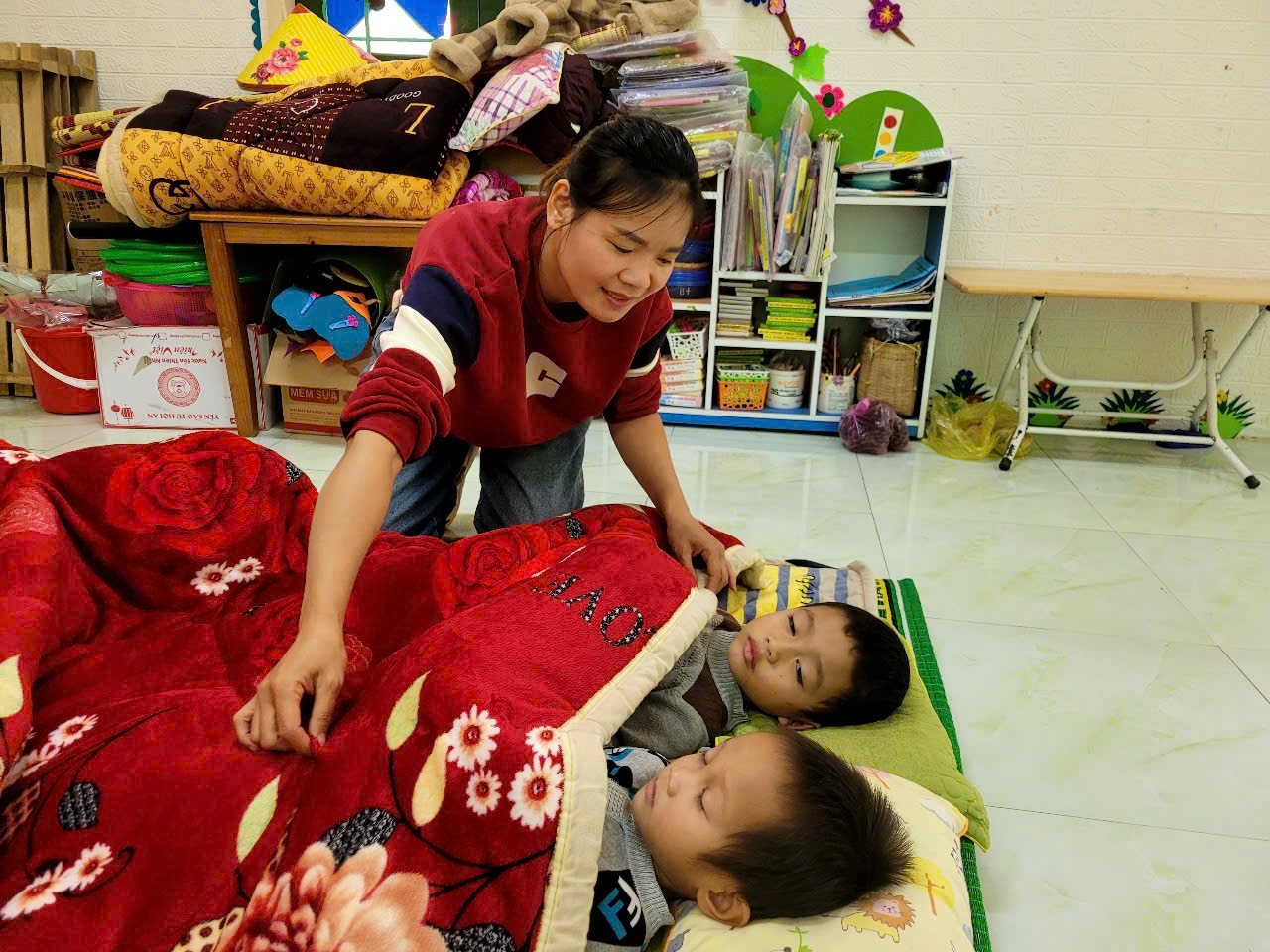
We arrived at Muong residential area on a chilly morning. The road leading there was winding and bumpy, with steep slopes and fast-flowing streams. It took us more than three hours of trekking through the forest and wading through streams to reach what is considered an isolated "oasis" amidst the mountains and forests of Chieng Lan, Giao Thien commune (Lang Chanh).
The first scene that unfolded was a cluster of old, dilapidated stilt houses nestled under the forest canopy. In the tranquil space, only the occasional sound of a babbling stream and children's playful calls could be heard. The lives of the 15 Thai ethnic minority households here remain trapped in a cycle of hardship and poverty. Without electricity, the families have to build small turbines themselves, placed beside the stream to generate light, but the power is unreliable, sometimes on, sometimes off. On stormy days, the entire village is plunged into darkness.
Mr. Lang Van Dung (born in 1974) sits beside his old wooden house, diligently stuffing cardboard into the cracks to protect against the cold wind. His family of four lives primarily by catching crabs and shrimp and gathering bamboo shoots in the forest. On days when they run out of rice, he carries rice on his back, walking nearly 5km to the village center to mill it, then carries it back home. Life continues in this vicious cycle.
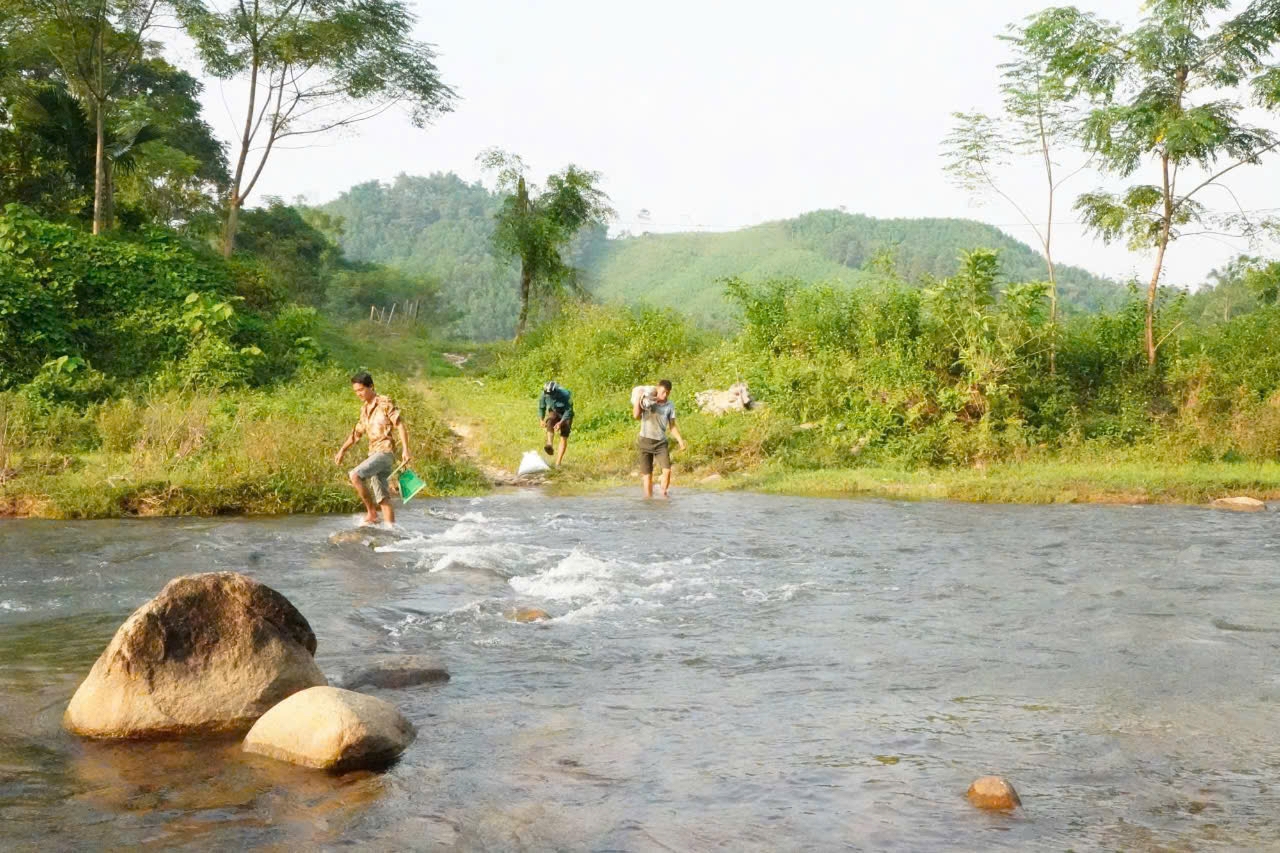
With difficulties piling up, the children in the Muong area are even more disadvantaged. Without a school near their homes, many have to cross streams and walk for hours to get to class. Ms. Le Thi Hue , a teacher at the Poong school, shared: "Due to the extremely difficult travel conditions, many children cannot attend school regularly. The school regularly appeals to philanthropists to donate clothes and warm blankets to help alleviate some of their hardships."
Regarding the difficulties in the Muong area, Ms. Dinh Thi Huong, Chairwoman of the Giao Thien Commune People's Committee, stated: "Initially, to help households overcome difficulties, we will prioritize supporting them with seedlings and livestock, assisting them in reclaiming barren land, and constructing irrigation pipelines to intensify rice cultivation and ensure a reliable food supply. In addition, we will introduce new economic models into production with the hope of reducing the poverty rate while awaiting relocation to new homes."

Regarding the resettlement project for ethnic minorities in the Muong area, Mr. Pham Hung Sam - Director of the Project Management Board of Lang Chanh district, informed: The Muong residential area project is funded by the State budget (funding from Project 2, National Target Program for socio-economic development in ethnic minority and mountainous areas), with a total capital of 4.8 billion VND.
However, the capital required for implementation after the project dossier was prepared amounted to over 6 billion VND. Meanwhile, the district's budget could not cover this. Recently, the Ethnic Affairs Committee of Thanh Hoa province established an inspection team to conduct a survey and reassess the project. After the review, the province agreed to convert the project to other, more suitable projects in the area. For the residents of Muong area, there is currently no specific support plan in place.
According to Mr. Sam, the Board is advising the District People's Committee to apply flexible mechanisms, integrating funding sources from the National Target Program, combined with funding from Directive 22 of the Standing Committee of the Thanh Hoa Provincial Party Committee on the campaign to support the construction of housing for poor households, policy beneficiary families, and households still facing housing difficulties in the province in 2024-2025, in order to allocate land and build houses for people in the Muong area.
"For households still facing difficulties with land, the local government will mobilize relatives and family members to donate land. For the remaining cases, the government will allocate land within the planning area to arrange and stabilize the lives of the people. Hopefully, everything will be alright for the people of Muong area in the near future," Mr. Sam expressed.
Source: https://baodantoc.vn/bao-gio-oc-dao-muong-het-kho-khan-1740727282216.htm

![[Photo] People in Ho Chi Minh City experience the green space at Ly Thai To Park No. 1.](https://vphoto.vietnam.vn/thumb/1200x675/vietnam/resource/IMAGE/2026/03/06/1772783731988_01-9003-png.webp)


![[Image] Me So Bridge - an important connecting point on the Ring Road 4](https://vphoto.vietnam.vn/thumb/1200x675/vietnam/resource/IMAGE/2026/03/06/1772781627165_ndo_br_dji-0917-jpg.webp)
![[Photo] Prime Minister Pham Minh Chinh meets with representatives of female leaders and managers of central agencies and presents the Kovalevskaia Award 2025.](https://vphoto.vietnam.vn/thumb/1200x675/vietnam/resource/IMAGE/2026/03/06/1772789429283_ndo_br_dsc-1149-jpg.webp)

































































Comment (0)