

A long-standing situation
Businesses and construction material storage areas scattered along sidewalks and roads have turned many streets into makeshift "warehouses," exacerbating environmental pollution, especially air pollution, in Hanoi . Dust, noise, and waste from these businesses are also a constant source of worry for residents, directly impacting their health and quality of life.
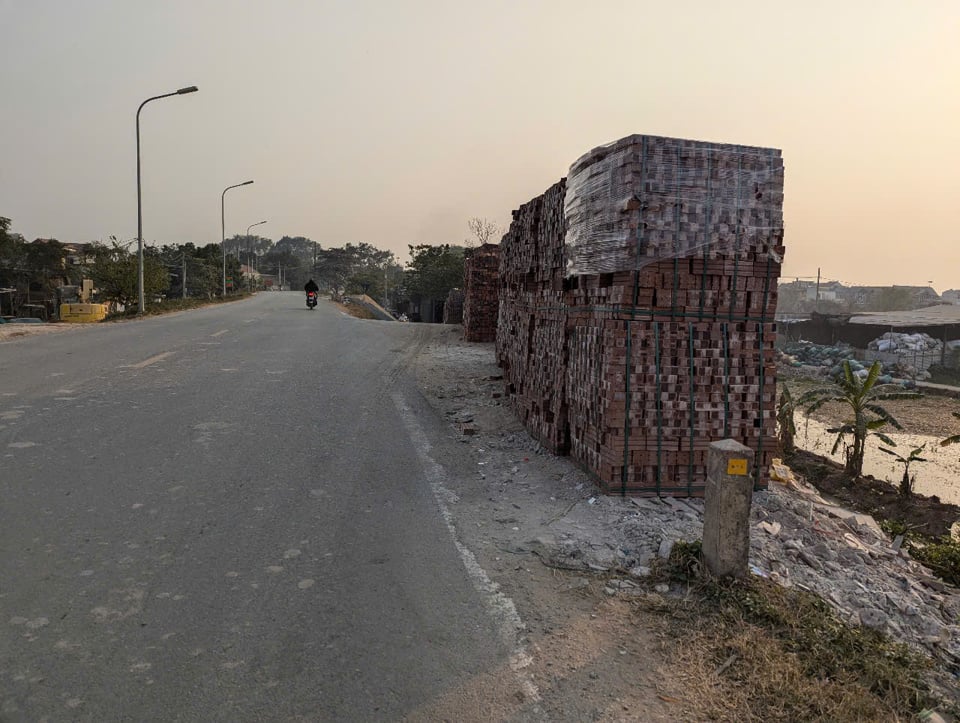
Observations on many roads in Hanoi show that the encroachment of construction materials on sidewalks and roads is widespread. For example, on the Thang Long Boulevard service road, the section passing through An Khanh commune, Hoai Duc district, has a fairly large construction material storage area located right next to the roadside. In addition to bricks, stones, sand, and other construction materials, this area also contains a large amount of waste and solid debris.
Speaking with reporters from Kinh tế & Đô thị (Economy & Urban Affairs), a representative of the An Khánh Commune People's Committee stated that this construction material yard is operating illegally on the vacant land of Thăng Long Boulevard. According to the representative, due to the high demand for construction materials in the area and the lack of a designated solid waste collection point, the owner of the yard has arbitrarily occupied the vacant land of Thăng Long Boulevard as a construction material and solid waste storage area. "We will conduct an inspection and take appropriate action," the An Khánh Commune People's Committee representative said.
Similarly, along the Huu Day dike (also known as the Phuong Cach dike), the section flowing through Phuong Son commune, Quoc Oai district, also has many construction material businesses operating right on the dike's embankment. For example, a business with the sign "Anh Thanh Investment and Trading Company Limited" stockpiles a large amount of sand, stone, and gravel directly on the dike. In particular, a large quantity of bricks is stacked in long rows on the dike, right next to the roadside, occupying road space and obstructing the view of passing vehicles.
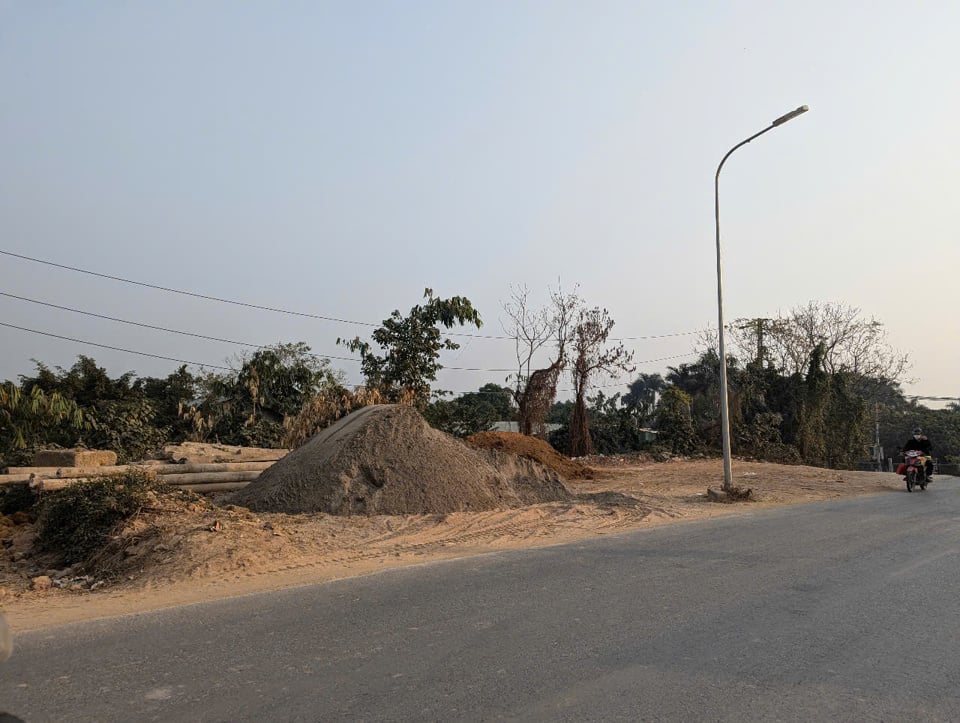
Not far from there, another construction material storage area completely occupies the road surface of the embankment. Besides construction materials, it also stores a large amount of solid waste. This storage site has been there for quite some time, but there seems to be no sign of intervention from the local authorities.
The above are just a few examples among many unauthorized construction material businesses and storage areas existing in various localities of the city. Besides encroaching on sidewalks and dike embankments, these unauthorized construction material businesses are also a serious source of environmental pollution. According to a survey by reporters from Kinh tế & Đô thị (Economy & Urban Affairs), most of them lack environmental permits, and many even operate without business licenses, simply operating spontaneously.
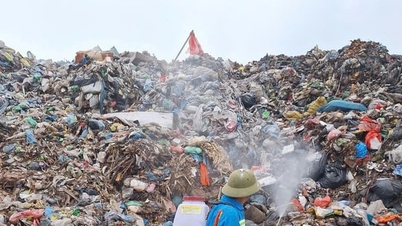
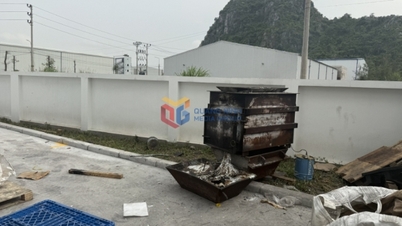
In particular, recently there has been a surge in construction material businesses carrying construction waste, causing even more serious environmental pollution. Dump trucks carrying waste come and go day and night, each time they dump waste, dust flies everywhere. The waste is not covered and spills onto the farmland of local residents. Furthermore, the burning of waste directly at the site creates a pungent smell and toxic fumes that directly affect the health of the people.
What is the solution?
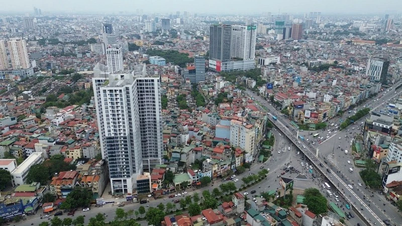
With its rapid urbanization, Hanoi is witnessing a surge in construction projects, from residential housing to large-scale infrastructure projects. The demand for construction materials has therefore increased dramatically, creating opportunities for the proliferation of informal businesses. Furthermore, the lack of coordinated planning and management is also a contributing factor to this persistent problem.
Many experts believe that local authorities and relevant agencies should focus on promoting and encouraging people to use and report issues through iHanoi, to help expedite and ensure transparency in handling violations. This is not only the responsibility of the government, but citizens also need to raise their awareness in reporting violations and monitoring businesses in their surroundings.
Currently, Hanoi lacks many designated areas for construction material businesses, forcing small-scale vendors to utilize sidewalks and roadsides for their sales. Meanwhile, many small-scale construction projects in the inner city require materials in small quantities, leading to the proliferation of small-scale vendors everywhere.
Another factor that cannot be overlooked is the inadequacy of supervision and law enforcement. In many places, even though local authorities have regulations prohibiting such actions, inspections and enforcement remain largely superficial. Many businesses also have connections with local authorities, leading to a situation where officials turn a blind eye or handle violations only perfunctorily.
According to experts, to thoroughly address this problem, Hanoi needs comprehensive measures, combining strict management, severe penalties, and a reorganization of the construction material business system. First, it is necessary to plan designated areas for the storage and sale of construction materials, preventing the proliferation of small, scattered trading points.
Associate Professor Tran Dinh Thien, an economic expert, suggests that instead of allowing building materials businesses to operate spontaneously, the city should have policies to encourage them to move to designated areas, ensuring both urban aesthetics and environmental pollution reduction.
In addition, it is necessary to strengthen penalties for violations. Instead of just imposing administrative fines, measures such as confiscating vehicles and suspending operations could be applied to establishments that repeatedly violate regulations; at the same time, regular inspections and monitoring should be intensified to prevent repeat offenses.
Furthermore, Hanoi needs solutions to minimize the environmental impact of construction material businesses. Some major cities around the world have adopted models for transporting construction materials using specialized vehicles with dust covers; requiring collection points to use dust reduction technology and regular water spraying to limit pollution. This is an approach Hanoi can learn from to improve air quality.
Source: https://kinhtedothi.vn/bao-gio-het-nhech-nhac-and-o-nhiem-moi-truong.html

![[Image] Hanoi's urban life under the challenge of a "scorching hot" environment](https://vphoto.vietnam.vn/thumb/1200x675/vietnam/resource/IMAGE/2026/05/25/1779706979265_nang-nong-t5-2026-minh-duy-7-4636-jpg.webp)

























































































Comment (0)