

Sir, how well does Vietnam's current workforce meet the quantitative and qualitative demands of the semiconductor industry?
- Currently, students are aware of the opportunities in the semiconductor industry. In recent years, the entrance scores for technology-related majors at major universities such as Vietnam National University and Hanoi University of Science and Technology have been very high. For example, information technology and computer science often rank at the top of the entrance score scale.
There used to be a saying, "Medicine comes first, pharmacy second," but now computer science has been leading the way for several consecutive years. Clearly, this shift is a positive trend in career choices, especially in the science and technology fields, among young Vietnamese people.
If Vietnam can leverage high-quality resources and capital flowing into the country from technology corporations, while also taking advantage of policies that encourage the development of science and technology, it will have a great opportunity to make a breakthrough.
In the high-tech sector, counting the number of personnel is very difficult because one highly skilled worker can be equivalent to many average workers. Therefore, it is difficult to say whether the current workforce meets the needs of the semiconductor industry. However, I believe that with high-quality input and internationally accredited training programs, Vietnamese human resources can fully meet the needs of businesses.

He suggested that the challenges facing Vietnamese universities in catching up with the opportunities presented by the semiconductor industry are...
- The semiconductor industry is a very challenging field. Students' learning and practical training are not as intuitive as in other technology fields. For example, in artificial intelligence, programming involves visual representations of images and sounds, resulting in very clear career opportunities.
But for the semiconductor industry, you're just a behind-the-scenes player. You'll design the integrated circuits. Once the design is complete, it takes a long time to manufacture the chip and deploy it externally. Therefore, the biggest challenge is how to get students passionate about and committed to this field.
Secondly, universities in Vietnam are severely lacking in leading lecturers and professors in semiconductor technology, especially integrated circuit design. This is because talented individuals often choose to work for large corporations outside the university to earn higher salaries.
Thirdly, the laboratory system lacks the necessary software and equipment. The investment costs are also very high.
Ultimately, collaboration between universities in Vietnam and businesses, or the "three-party" partnership, has not met expectations. How can businesses invest in R&D (research and development) at universities, or what policies should be implemented to encourage students and faculty to start businesses in the semiconductor field?
What solutions are needed to resolve these issues, sir?
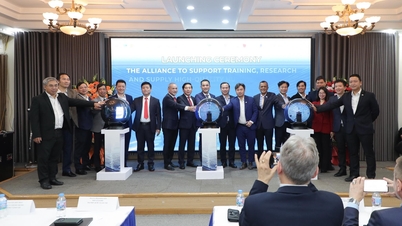
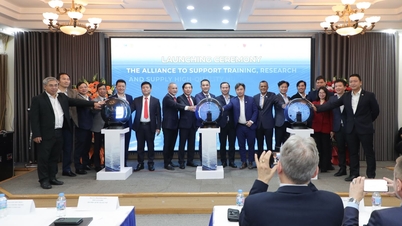
- Regulatory bodies need a strategy for developing the semiconductor industry. This includes strategies for human resource development and research and innovation activities. In addition, universities should cooperate with each other and with businesses to attract and train human resources in the semiconductor industry. Most recently, five major universities signed a cooperation agreement to jointly research and develop high-quality human resources in this industry.
Thank you, sir!
Source



























































































Comment (0)