

According to Reuters, the successful assistance to Israel in thwarting the Iranian missile and drone attack on April 13 shows that the US is well-prepared militarily as Iran and Israel shift from shadow warfare to direct confrontation.
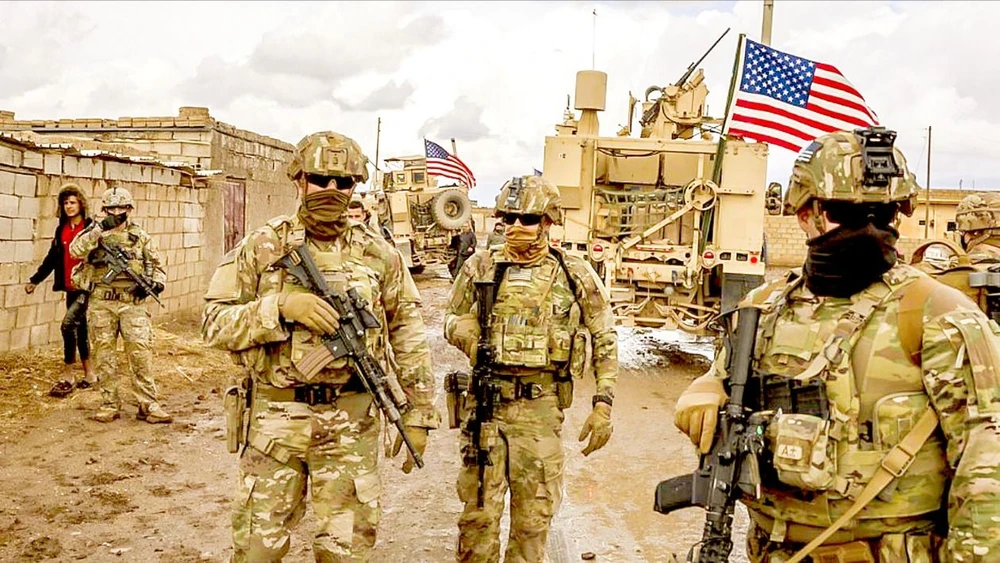
Not ready for a major conflict.
However, observers say U.S. forces are not ready for a large-scale, protracted conflict in the Middle East, and the U.S. Department of Defense may have to reconsider its assumptions about military needs in the region if the crisis deepens. Michael Mulroy, former deputy assistant secretary of defense for the Middle East under President Donald Trump's administration, argues that the U.S. does not have enough forces to support Israel if a direct war breaks out between it and Iran. Since the Hamas attack on Israel that led to the conflict in the Gaza Strip, the U.S. has deployed thousands of troops to a region that has seen a declining U.S. presence for many years.
The U.S. strategy of relying on increased force could be tested if Iran and Israel break their taboos and openly attack each other militarily. “This means the U.S. has to reconsider the idea of the necessary military capability that Washington must maintain in the region,” emphasized General Joseph Votel, who previously commanded U.S. forces in the Middle East.
Staff shortage
Many former US officials share the view that the US's successful prevention of the Iranian attack in Israel was due to the support of US intelligence, which helped the US Department of Defense predict the timing and targets of Tehran's attack.
General Michael “Erik” Kurilla, head of the U.S. Central Command, told U.S. lawmakers last month that he had requested the deployment of additional troops to the Middle East, something that President Joe Biden’s cabinet considers a lower priority than other challenges.
In a document submitted to the House Armed Forces Committee, General Kurilla stated that a shortage of intelligence personnel has created significant gaps in detecting and disrupting the plots of extremist organizations. General Kurilla's observations were partly demonstrated in the Gaza Strip conflict, where a lack of intelligence regarding Houthi weapons stockpiles in Yemen made it difficult to attack Houthi missile and drone depots.
However, deploying additional troops to the Middle East and bolstering intelligence bases in the long term would be difficult given the already concentrated deployment of U.S. troops across Europe and the ongoing focus on Asia. An unnamed U.S. official said it remains unclear whether Washington would be prepared to withdraw forces from Asia or Europe if tensions in the Middle East continue to escalate. The last time the U.S. deployed thousands of troops to the Middle East was under President Donald Trump.
Recent tit-for-tat attacks between Iran and Israel have raised concerns about a regional war that Washington is trying to prevent. According to US officials, Iran appears unwilling to engage in a full-scale war with Israel, with the latest move being to downplaying the significance of its attack in the central Iranian province of Isfahan on April 19.
MINH CHAU
Source










![[Photo] Tran Cam Tu, Standing Member of the Secretariat of the Central Committee, attends the Conference summarizing the work of the Central Committee's Policy and Strategy Department in 2025.](https://vphoto.vietnam.vn/thumb/402x226/vietnam/resource/IMAGE/2025/12/26/1766726590805_ndo_br_bnd-1862-jpg.webp)

























































































Comment (0)