


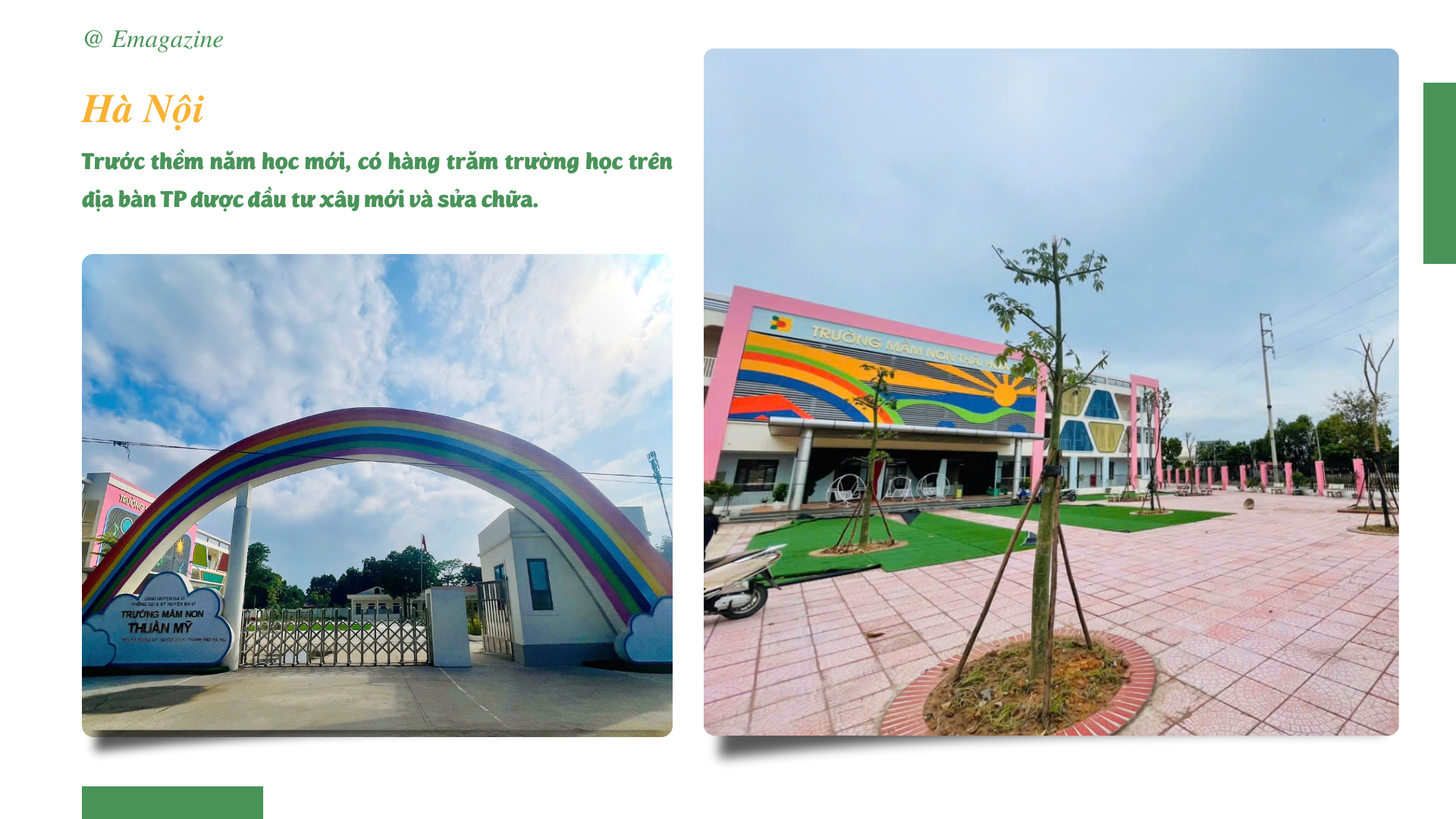
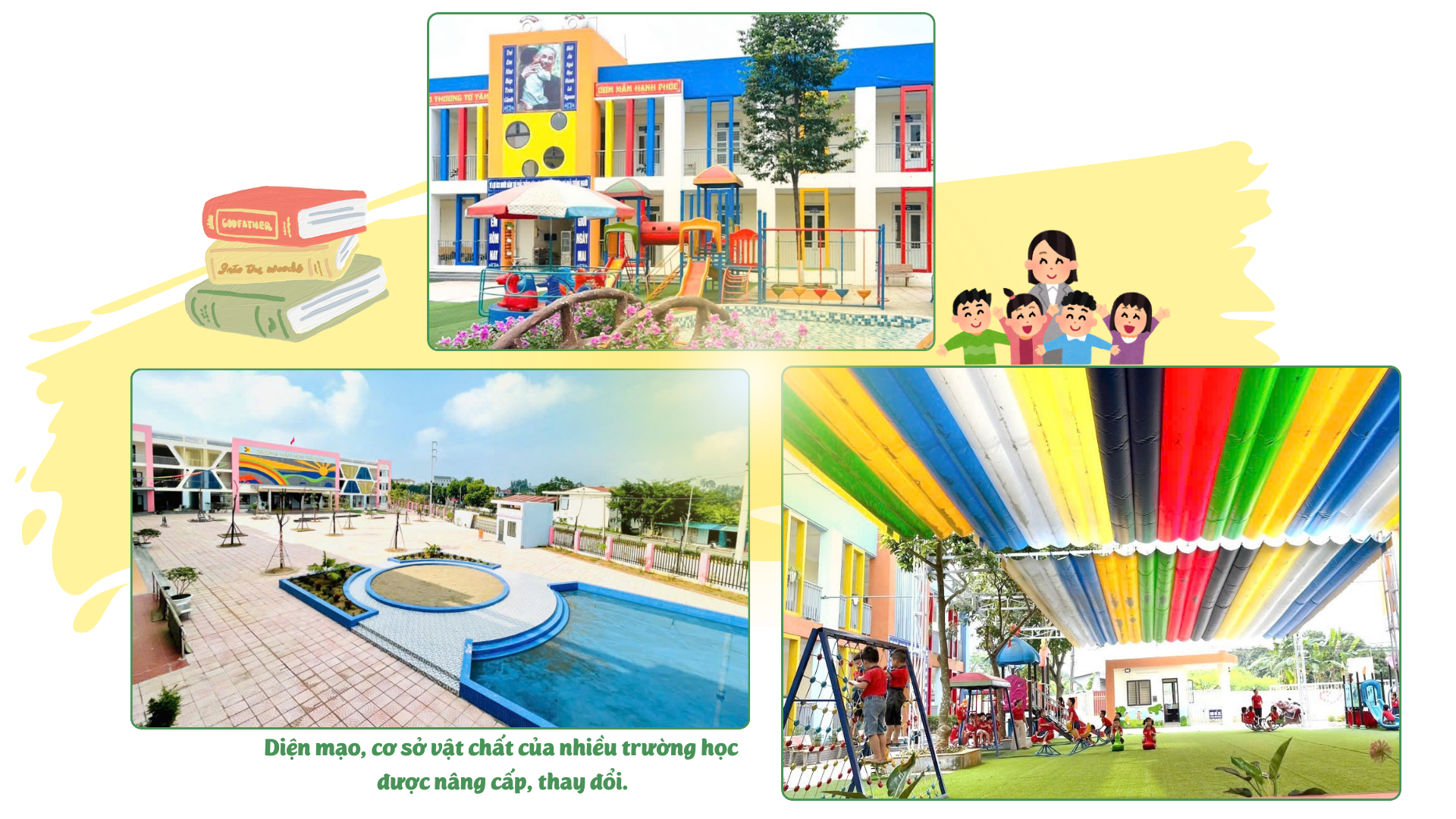
Although the shortage of classrooms still persists, the appearance of schools in Hanoi has undergone positive changes with the construction and renovation of many new schools. Thanks to the active involvement and investment of the Hanoi City Party Committee, People's Council, People's Committee, and districts, the network of schools in the capital has continued to develop recently, helping to alleviate the shortage of classrooms.

On August 27, 2024, Ba Dinh District held a ceremony to inaugurate the Thu Le Primary School as a district-level construction project. The project, built on the site of the former school on Dao Tan Street, Ngoc Khanh Ward, covers an area of 2,380 m² and comprises 7 floors and 38 classrooms, accommodating over 1,000 students. The school has fully equipped classrooms and modern, standardized functional rooms meeting the national standard for school facilities at level II. The total investment for the project is over 105.2 billion VND.
Another school that received the district-level project designation on August 15, 2024, is Vo Thi Sau Primary School (Vinh Tuy Ward, Hai Ba Trung District). The school was approved by the Hai Ba Trung District People's Committee with a total investment of nearly 88 billion VND on an area of nearly 4,000 m² . Construction began in early January 2023 and was completed on July 10, 2024. The Vo Thi Sau Primary School project was completed in time to meet the requirements for the new school year and coincided with the 70th anniversary of the Liberation of Hanoi. The school has 20 classrooms, 6 functional rooms, and a physical education floor; it is fully equipped with modern facilities and teaching equipment meeting prescribed standards; contributing to meeting the practical needs of the people of Vinh Tuy Ward, improving the quality of life, and creating a change in the appearance of the district.
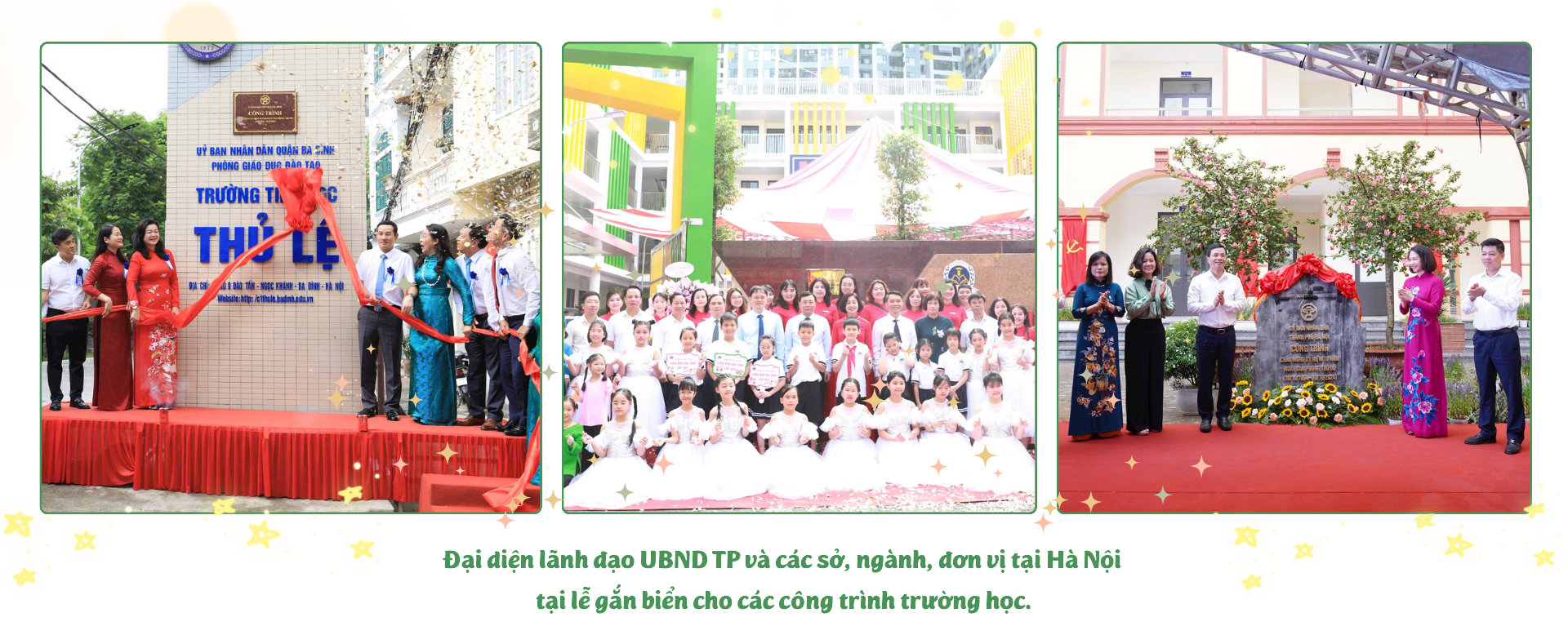
In mid-May 2024, the People's Committee of Ba Dinh District decided to establish Giang Vo 2 Secondary School by separating it from Giang Vo Secondary School. According to Ba Dinh District's plan, for the 2024-2025 school year, Giang Vo 2 Secondary School will enroll 7 classes of 6th graders with 315 students. The separation of Giang Vo Secondary School will both preserve the reputation and quality of Giang Vo Secondary School and create a breakthrough in advanced education in Ba Dinh District.
In addition to Giang Vo 2, the spacious and modern Nguyen Trai Secondary School in Ba Dinh will also be put into operation in the 2024-2025 school year. Teacher Mai Thi Phu, the school's Vice Principal, shared: “Parents and students are very excited that the new school will be operational from this school year. The spacious school, with its modern equipment and complete functional rooms and physical education facilities, will certainly create favorable conditions for teaching and learning, and increase students' motivation in their studies.”
Excited that her child has been transferred to Ha Dong Secondary School – a newly inaugurated public school – Ms. Dinh Thu Ha, a resident of the Huyndai building in Ha Dong, said: “Previously, knowing that public schools in the area often have large class sizes of over 50 students per class, I sent my child to a private school, accepting the high cost. But this year, with Ha Dong Secondary School being both clean, beautiful, and meeting standards, I immediately transferred my child to the school near home. Bringing my child to class, my child and I are extremely satisfied with everything here. Hanoi's public schools are as beautiful as international schools.”

Previously, in October 2023, Trau Quy Secondary School in Gia Lam District was officially completed and handed over. With a total investment of nearly 130 billion VND, the school features a modern design with 5 large-scale buildings including: 36 classrooms, an administrative area, functional areas, a gymnasium, a canteen, and other supporting facilities (gate, fence, parking area, guardhouse, pumping station, assembly area, sports field, trees, lawn, etc.). Each classroom and functional area is equipped with modern, standardized equipment.
The aforementioned schools are among many schools and classrooms that have been newly built or renovated in recent years. Regarding the encouraging results in the development of Hanoi's school network, especially ahead of the 2024-2025 school year, the Director of the Hanoi Department of Education and Training, Tran The Cuong, shared: “Never before has expanding the network and building new schools been as favorable as it is now. Immediately after the end of the 2023-2024 school year, districts, towns, and schools throughout the city have urgently implemented many projects to renovate, repair, upgrade, and build additional classroom units, especially in schools in densely populated areas, in preparation for the 2024-2025 school year.”
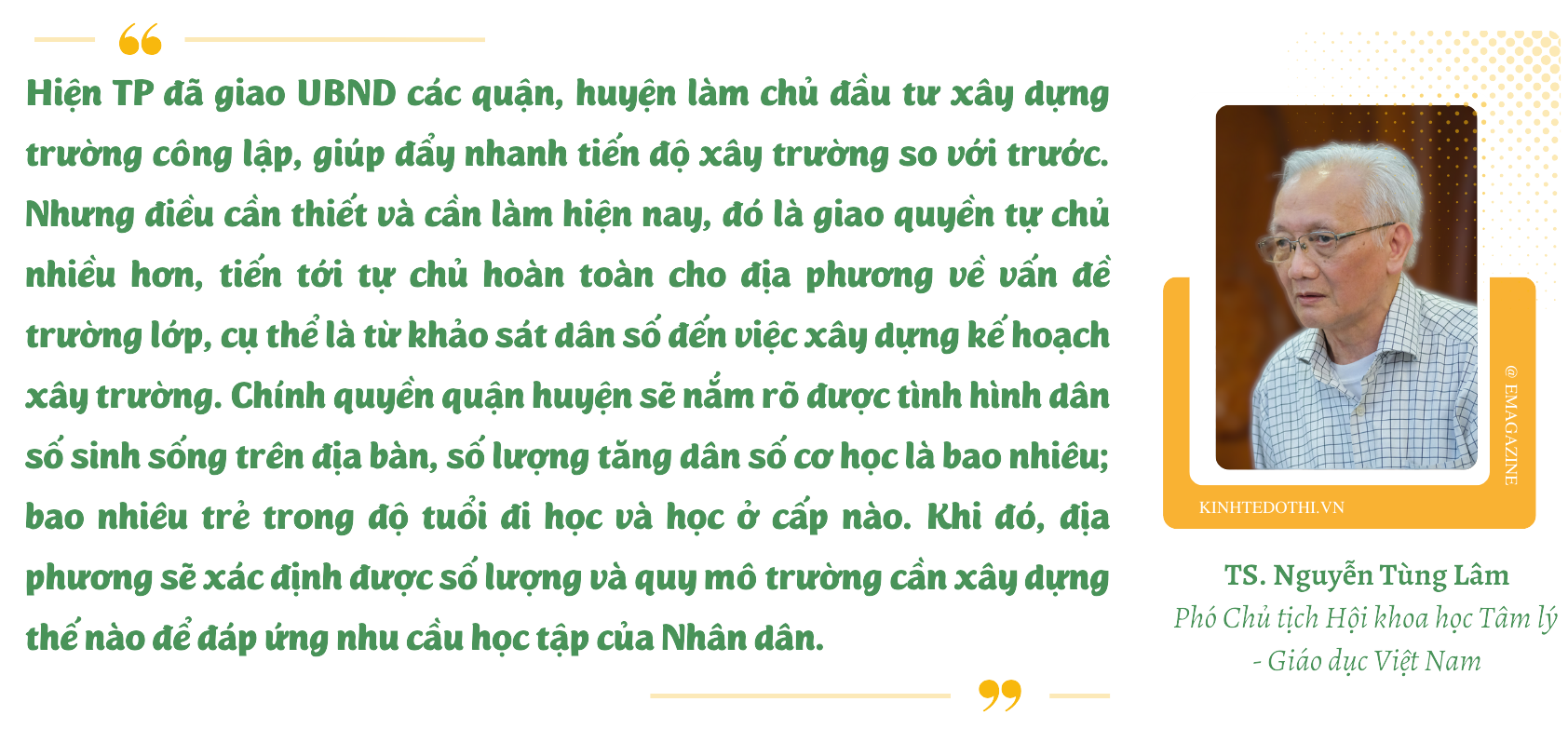
Dr. Nguyen Tung Lam, Vice President of the Vietnam Association of Psychological and Educational Sciences, commented: Recently, the Hanoi City Party Committee, People's Council, and People's Committee have adopted a sound policy by allocating a large budget to education, significantly increasing compared to previous periods. As a result, the system of public schools in Hanoi has increased in both quantity and quality, ensuring modern and aesthetically pleasing facilities. The city has directed the People's Committees of districts, counties, and towns to utilize available land to build new schools and expand existing ones.
The scale of schools in Hanoi is constantly expanding. According to the latest statistics from the Hanoi Department of Education and Training, in the 2024-2025 school year, Hanoi will have a total of 2,913 schools (an increase of 39 preschool and primary/secondary schools compared to the same period last year) with nearly 2.3 million students, more than 70,000 classes (an increase of approximately 48,000 students compared to the same period last year) and 130,000 teachers; there are also 29 vocational education and continuing education centers, and 1 school for training and developing management staff.
Sharing the efforts to develop the school system, Vice Chairman of Tay Ho District People's Committee Bui Thi Lan Phuong said: “Always identifying education as a priority, in recent years, Tay Ho district has allocated investment capital to renovate, upgrade, expand, and build new schools according to the plan for developing the school network in the period 2016-2020, with a vision to 2030, and supplement teaching equipment in the period 2021-2025, with a total investment of nearly 2,200 billion VND for 45 projects. The district has allocated land for the construction of 8 new schools in densely populated wards, aiming to reduce class size/school, reduce the number of students per class, and meet the requirements for new construction and maintaining schools that meet national standards. In addition, the district is preparing to build a new high school in Nhat Tan ward with a total investment of over 300 billion VND and two high schools are currently undergoing renovation and upgrading (Chu Van An High School and Tay Ho High School). With the adjusted plan, by 2020 "By 2045, the district will continue to add and build eight more schools."

Regarding the decentralization of school construction, according to Resolution 02/NQ-HĐND on supplementing the 5-year medium-term public investment plan 2021-2025 for projects in 3 areas (education, health, and historical sites), the People's Committees of districts, counties, and towns are the investors in the construction of public schools at all levels. Based on this, the Department of Education and Training requests that the People's Committees of districts, counties, and towns prioritize investing resources in the construction of public schools that meet national standards; and maintain and improve the criteria of schools already recognized as meeting national standards.

At a briefing session in mid-October 2023 on the construction of public schools meeting national standards and the investment, renovation, and construction of new kindergartens and primary schools in Hanoi, discussing solutions to the shortage of schools, including those meeting national standards, the Chairman of the People's Committee of Hoang Mai District, Nguyen Minh Tam, stated that the solution is to have sufficient land and capital. Regarding increasing the number of public schools, Hoang Mai District has urgently reviewed and implemented the planned land plots for school construction. At the same time, it has proactively reported to the City to delegate authority to the district to adjust planning targets; and reclaimed slow-moving projects to prioritize school construction. The district has allocated over 50% of its capital investment for school construction.
The Chairman of the People's Committee of Hoang Mai District proposed that the City pay attention to and support the implementation of school construction investment; when the City approves urban planning, it should stipulate the percentage of public schools in urban areas. In addition, the City should integrate and adjust the planning of the Capital City Law this time to arrange for an increased density of the school network to match the current population growth rate.
Facing this challenge, Associate Professor Bui Thi An stated: The key here is to do a good job of planning. The Capital Region Planning and the Capital Law 2024 have been approved. A well-planned system requires discipline in its implementation, ensuring it is done correctly and not fragmented; apartment buildings should not be allowed to proliferate excessively, as this will lead to inadequate social infrastructure. What needs to be done is to review all infrastructure, including educational infrastructure; to assess population density in districts and counties; to review the number of school-aged children; and to forecast population growth rates to proactively manage the situation.
In addition, solutions are needed to improve the quality of education in suburban schools through investment in facilities and teaching staff; attracting talented teachers to suburban areas so that parents can confidently send their children there; and avoiding overcrowding in inner-city schools. Furthermore, there needs to be a mechanism to encourage the socialization of education in inner-city areas and areas lacking schools, provided that these schools are included in the planning and have tuition fees that are affordable for the local population.
Dr. Nguyen Tung Lam, Vice President of the Vietnam Association of Psychological and Educational Sciences, believes that one of the reasons for this problem is that the city is still building schools according to a plan set out a long time ago, which is not aligned with the actual population changes. To overcome this, the city should give local authorities the power to supervise the construction of apartment complexes; only allow apartment buildings to operate and be sold when they have complete infrastructure including schools and hospitals, meeting the needs of the residents; and resolutely prevent the situation where houses are sold before school and healthcare infrastructure is built. If the local budget is insufficient to build public schools, instead of waiting for the city, the locality should have the right to allocate its land to investors for school construction. This would significantly lower tuition fees for private schools, reducing the difference between private and public schools and making it more accessible for students.
From a construction perspective, the reality shows that accelerating school construction requires decisive leadership; a prime example is Hoang Mai district. In July 2023, the Chairman of the Hanoi People's Committee, Tran Sy Thanh, chaired an inspection of the progress of constructing national standard public schools and the slow-progressing socialized school investment projects in the district. During the inspection, the Chairman and the delegation visited the land plots handed over from the Housing and Urban Development Investment Corporation (HUD) for the construction of public schools in Hoang Liet ward; inspected the progress of the Tan Mai Primary and Secondary School construction project (Tan Mai ward); and reviewed the socialized construction project on the kindergarten land plot (NT) and the primary school land plot (TH) with a total area of 13,643.7 m² in the Ao Sao urban functional area (Thinh Liet ward).
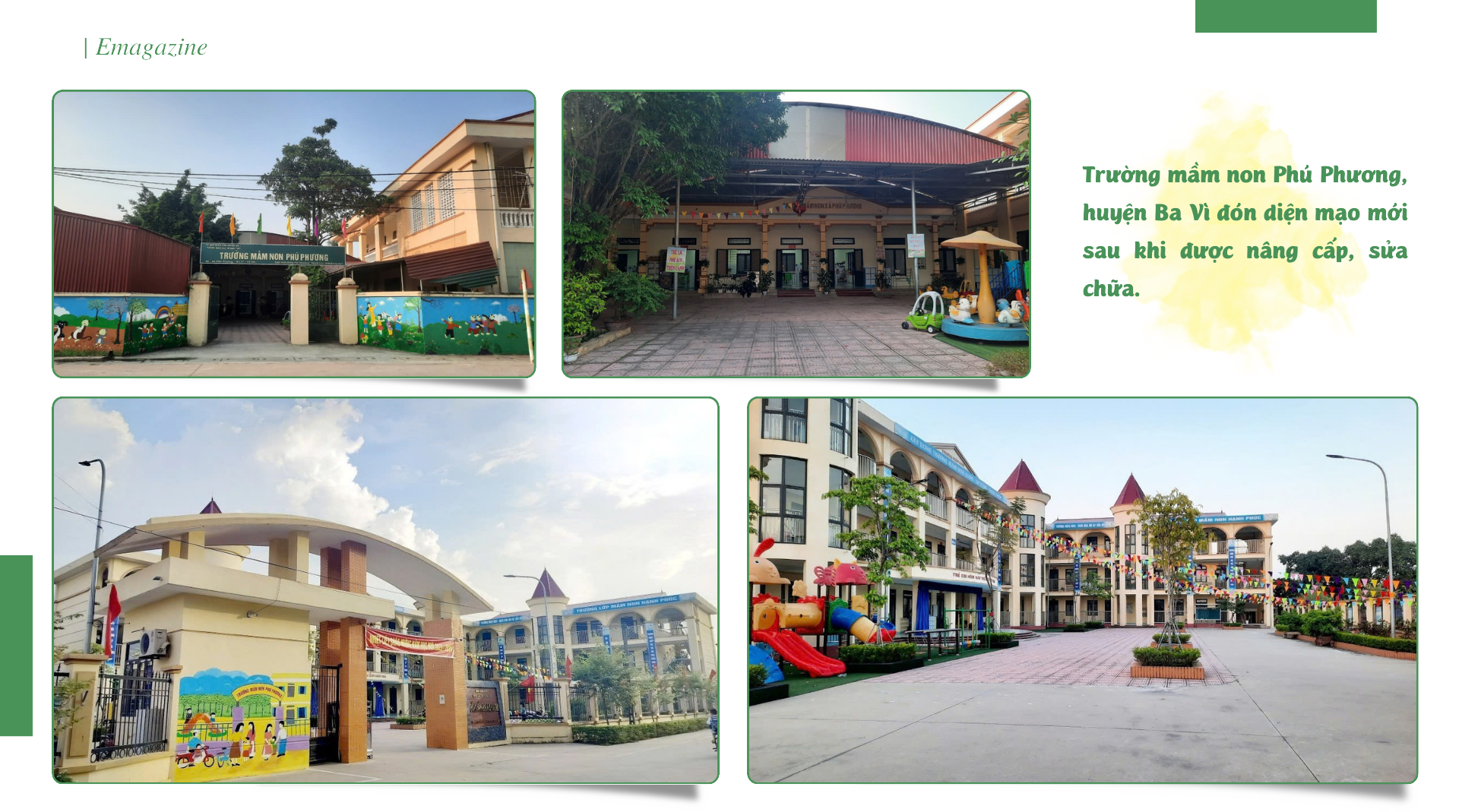
Affirming the city's stance of prioritizing and allocating resources to address the challenges facing Hoang Mai district and promote its rapid development in education, the Chairman of the Hanoi People's Committee requested that the district continue to conduct a comprehensive review of urban land plots. Any vacant land or land with slow development should be considered for reclamation to prioritize school construction, aiming for completion in 2023. It is encouraging that in the past two years, Hoang Mai district has commenced construction on 17 new schools; and in 2024, four public schools were inaugurated, contributing to reducing pressure on school enrollment and addressing the need for sufficient classroom space for local children.
Furthermore, thanks to the increased application of information technology in primary school enrollment and the decisive leadership of the Ministry of Education and Training, the Hanoi People's Committee, and the Department of Education and Training, 100% of schools in the city conducted online enrollment and admissions for the 2024-2025 school year, completely eliminating the queuing, crowding, and pushing during enrollment. In this context, the zoning of enrollment areas and the communication of this information to the public also played a crucial role in stabilizing primary school enrollment annually.

Concluding the explanatory session on the construction of national standard public schools and the investment, renovation, and construction of new kindergartens and primary schools in Hanoi, Chairman of the Hanoi People's Council Nguyen Ngoc Tuan pointed out several necessary actions, such as focusing on a comprehensive review and developing a detailed plan, clearly assigning responsibilities, tasks, timelines, and implementation solutions; and requesting the Hanoi People's Committee to direct relevant departments, districts, and towns to review, update, and effectively implement the planning and allocation of land for school construction, especially for national standard public schools; and to review and accelerate the progress of public school construction investment projects according to Resolution No. 02 of the Hanoi People's Council, especially new construction projects, to promptly address the shortage of schools and classrooms. The city also needs to promptly direct the removal of obstacles and difficulties; prioritize the allocation and supplementation of capital to support districts and counties that still face many difficulties and have a low percentage of schools meeting national standards compared to the city's average.
The Chairman of the City People's Council requested that investors promptly and seriously accelerate the progress of school projects in the city. For investors who deliberately delay or have poor capabilities, the city will resolutely revoke their licenses and transfer the land to the People's Committees of districts, counties, and towns to develop public school construction projects. In addition, the city will review and expedite the relocation of production facilities that are incompatible with the planning and cause environmental pollution out of the inner city, freeing up land for the construction of social infrastructure, with priority given to school construction.
(to be continued)

13:28 31/08/2024
Source: https://kinhtedothi.vn/bai-3-tang-toc-xay-truong.html

![[Photo] Enchanted by the deciduous forest during the leaf-changing season.](/_next/image?url=https%3A%2F%2Fvphoto.vietnam.vn%2Fthumb%2F1200x675%2Fvietnam%2Fresource%2FIMAGE%2F2026%2F02%2F04%2F1770196861704_2066642_8ffd5f25c3c9433be0e644abe71613ae.jpeg&w=3840&q=75)


![[Photo] Prime Minister Pham Minh Chinh presides over the regular Government meeting in January 2026.](/_next/image?url=https%3A%2F%2Fvphoto.vietnam.vn%2Fthumb%2F402x226%2Fvietnam%2Fresource%2FIMAGE%2F2026%2F02%2F04%2F1770209446450_hopcp-jpg.webp&w=3840&q=75)





Comment (0)