


Pico laser, mesotherapy injections, and chemical peels are methods for quickly removing melasma.
Melasma is a pigmentation disorder caused by excessive melanin production, resulting in the formation of brown or black patches or spots on the skin. Melasma can occur at any age and in both sexes. People who are frequently exposed to sunlight are more prone to developing melasma.
According to Dr. Vu Thi Thuy Trang, a specialist in Dermatology and Cosmetic Dermatology at Tam Anh General Hospital in Ho Chi Minh City, 90% of melasma cases occur in women, usually after the age of 30, during pregnancy, and after childbirth.
To effectively treat melasma, it's necessary to identify the underlying cause. Not all cases require treatment, according to Dr. Trang. For example, melasma can be caused by hormonal changes, pregnancy, birth control pills; excessive exposure to sunlight, LED screens, or cosmetic irritation. If the skin is properly protected and sun-protected, these cases of melasma may fade on their own after childbirth or after discontinuing use or exposure to the causative agent.
Deep or mixed melasma requires a longer treatment time. Depending on individual skin type and pigmentation, the doctor will choose the most suitable method for each patient, such as topical medications, laser treatment, mesotherapy (micro-injection), microneedling, chemical peels, and electrophoresis. Fast and effective melasma treatments include laser therapy, mesotherapy, and chemical peels.
Pico laser is a preferred treatment for melasma due to its selective pigment destruction mechanism. Pico lasers deliver extremely short laser energy pulses (measured in picoseconds, or one trillionth of a second) to target melanin, the pigment that causes dark spots in melasma. These short pulses break down melanin particles into smaller fragments, more effectively than traditional lasers, making it easier for the body to eliminate the pigment.
Traditional lasers used for melasma treatment often operate at longer pulse durations, which can generate excess heat in the skin, leading to a risk of skin damage and prolonged recovery time. Pico lasers generate less heat, reducing the risk of side effects such as post-treatment inflammatory skin pigmentation (PIH), a common problem in melasma treatment.
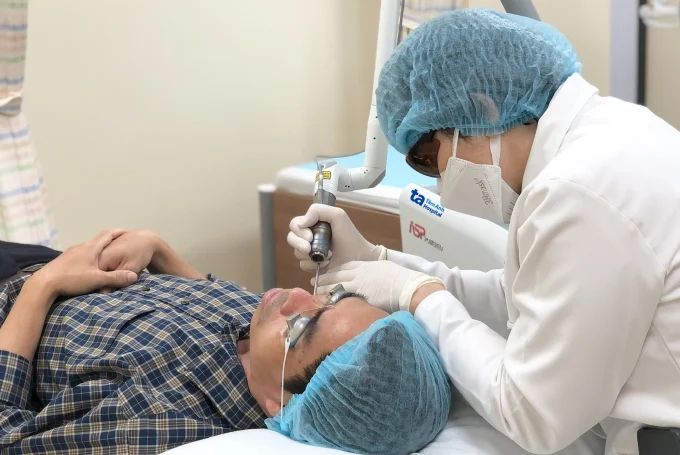
Treatment of melasma using pico laser technology at the Dermatology and Cosmetic Dermatology Department, Tam Anh General Hospital, Ho Chi Minh City: Photo: Nguyen Van
Mesotherapy uses a syringe with an ultra-fine needle, as thin as a hair, to deliver active ingredients that inhibit pigment production into the skin layers. The skin has three layers: the epidermis, dermis, and hypodermis. Depending on the severity of melasma, the purpose, and the type of active ingredient or medication, the doctor will prescribe the appropriate injection layer.
The advantages of this procedure are that it is non-invasive and requires no downtime. The medication is not hindered by the stratum corneum, resulting in a higher and faster effectiveness compared to topical creams or electrophoresis. Treatment results vary depending on skin condition and the specific serum used. Mesotherapy typically shows results within a few days of injection, and noticeable fading of melasma can be seen after a few weeks. A mesotherapy treatment course for melasma usually consists of 2-5 injections, spaced 2-4 weeks apart. In addition to treating melasma, mesotherapy also improves minor and shallow wrinkles and tightens the skin.
However, if the injection is not performed correctly, the patient may experience pain, bruising, skin infection, and even permanent granulomatous complications. Therefore, this method should be performed by a dermatologist or cosmetic skin specialist.
According to Dr. Trang, chemical peels also provide a quick and effective treatment for melasma. The doctor uses active ingredients such as glycolic acid, alpha hydroxy acid, salicylic acid, or trichloroacetic acid to remove the old, dark skin layer and stimulate the regeneration of new skin cells. The melasma spots also fade after each peel. Approximately 3-5 skin regeneration treatments are needed, and noticeable results in melasma treatment can be seen within 2-3 months.
Dr. Trang noted that in addition to consistently following the melasma treatment regimen, patients need to take care of their skin, protect it carefully, and use sunscreen daily to prevent the melasma from recurring and becoming more severe. They should avoid self-medicating with topical creams, traditional remedies, or cosmetics of unknown origin, or following advice from unqualified individuals.
The Dermatology and Cosmetic Dermatology Department at Tam Anh General Hospital in Ho Chi Minh City receives many cases of complications such as facial swelling, allergies, and skin burns due to self-treatment of melasma. In these cases, the treatment process is very difficult to restore the skin to its original state.
Anh Thu
Source link











































































































Comment (0)