

Don't wait for businesses to ask or demand.
Mr. Do Ha Nam, Chairman of the Board of Directors and General Director of Intimex Group Joint Stock Company, said that the company was previously a branch of a state-owned enterprise that was privatized.
In 2024, Intimex achieved revenue of $1.5 billion and this year it is projected to reach approximately $2 billion, ranking 28th among the largest private enterprises in Vietnam. Intimex's key development lesson is that building factories is crucial for securing loans, and they currently have over 30 factories.
However, for many private businesses, a lack of initial capital makes it difficult to build factories, and if they can't build them, where will they get the factories to secure loans? They get stuck in a vicious cycle. Later, even if the business starts production and operations, tax policies also create many obstacles.
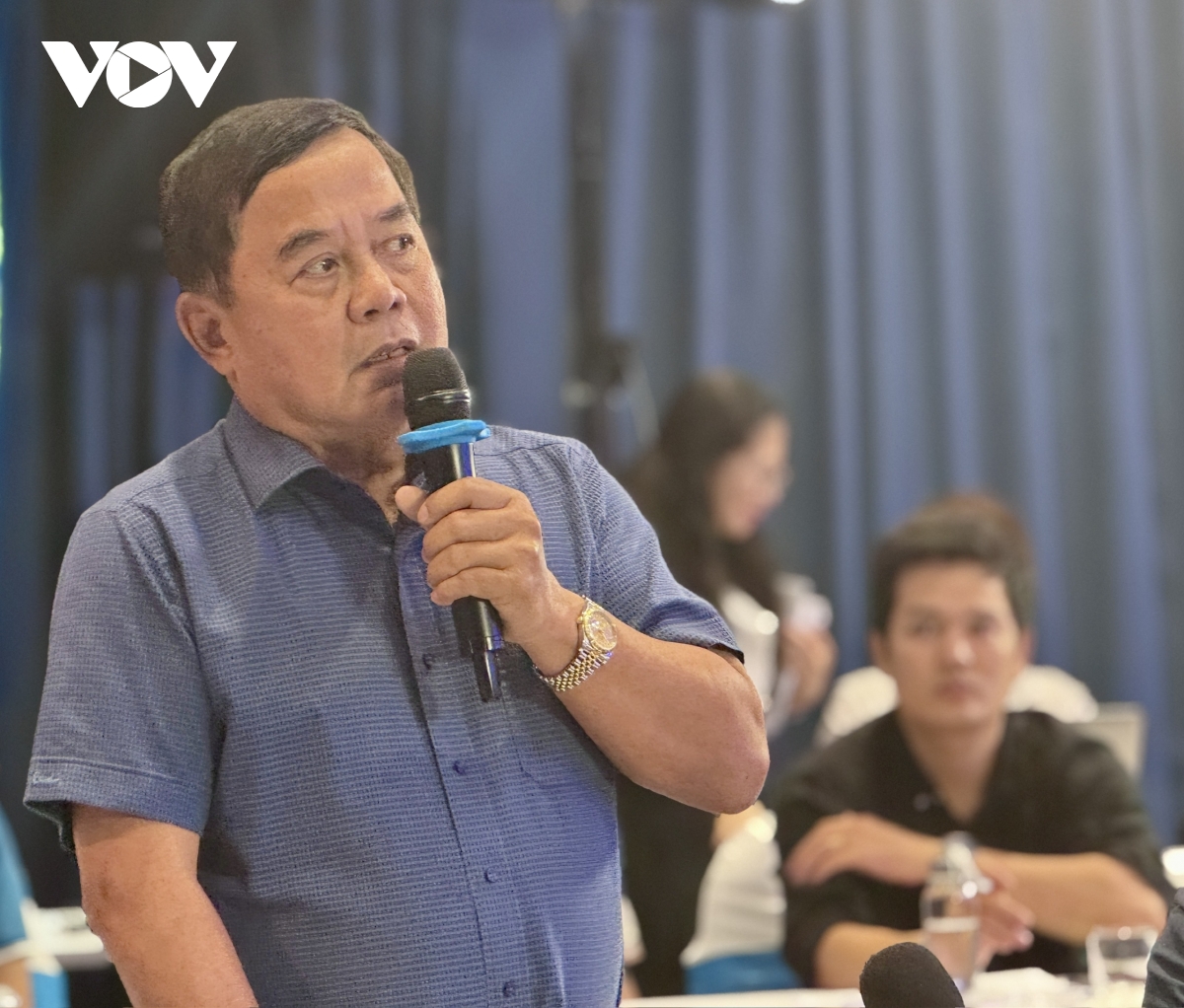
Mr. Nam hopes that the government will proactively implement policies to support and meet the development needs of private enterprises.
"In my opinion, each industry must build a leading enterprise. In fact, state-owned corporations are very strong, but in a market economy , they cannot thrive due to high costs. Therefore, private enterprises must build leading enterprises and have appropriate policies. And once a leading enterprise is established, the state's policies and mechanisms must follow those enterprises because behind them are millions of workers and millions of farmers, " Mr. Nam stated.
Sharing that view, Mr. Phan Dinh Tue, Vice Chairman of the Ho Chi Minh City Business Association (HUBA) and Chairman of the Board of Directors of Bamboo Airways, suggested that the relationship between the state and private enterprises should be seen as the relationship between businesses and customers. For businesses to sell their products, they must think in terms of what customers need and like, and find ways to meet those needs.
Therefore, the state proactively understands what businesses need and prepares accordingly through policies, mechanisms, and regulations to support their development. Waiting until problems arise before addressing them would be very difficult and costly.
"For example, in our field, the aviation business is very challenging, and to be efficient and sustainable, it needs a complete ecosystem of accompanying services. However, private airlines cannot access these conditions as easily as state-owned airlines. Now, how can we be treated equally and fairly with state-owned enterprise investors, and have access to policies in a equitable and equitable manner?" - Mr. Tue shared.
From control to creation
Dr. Can Van Luc believes that referencing strategies and policies for private sector economic development from international sources is necessary, and it is important to select appropriate experiences.
According to him, the Chinese model is a practical lesson, demonstrating a shift from a state-controlled economy to one that "creates" and promotes the development of the private economy.
Currently, China's private sector (including household businesses) contributes approximately 60% of GDP and 50% of the state budget. In contrast, Vietnam's private sector contributes only about 50% of GDP and 30% of the state budget, indicating significant untapped potential for growth.
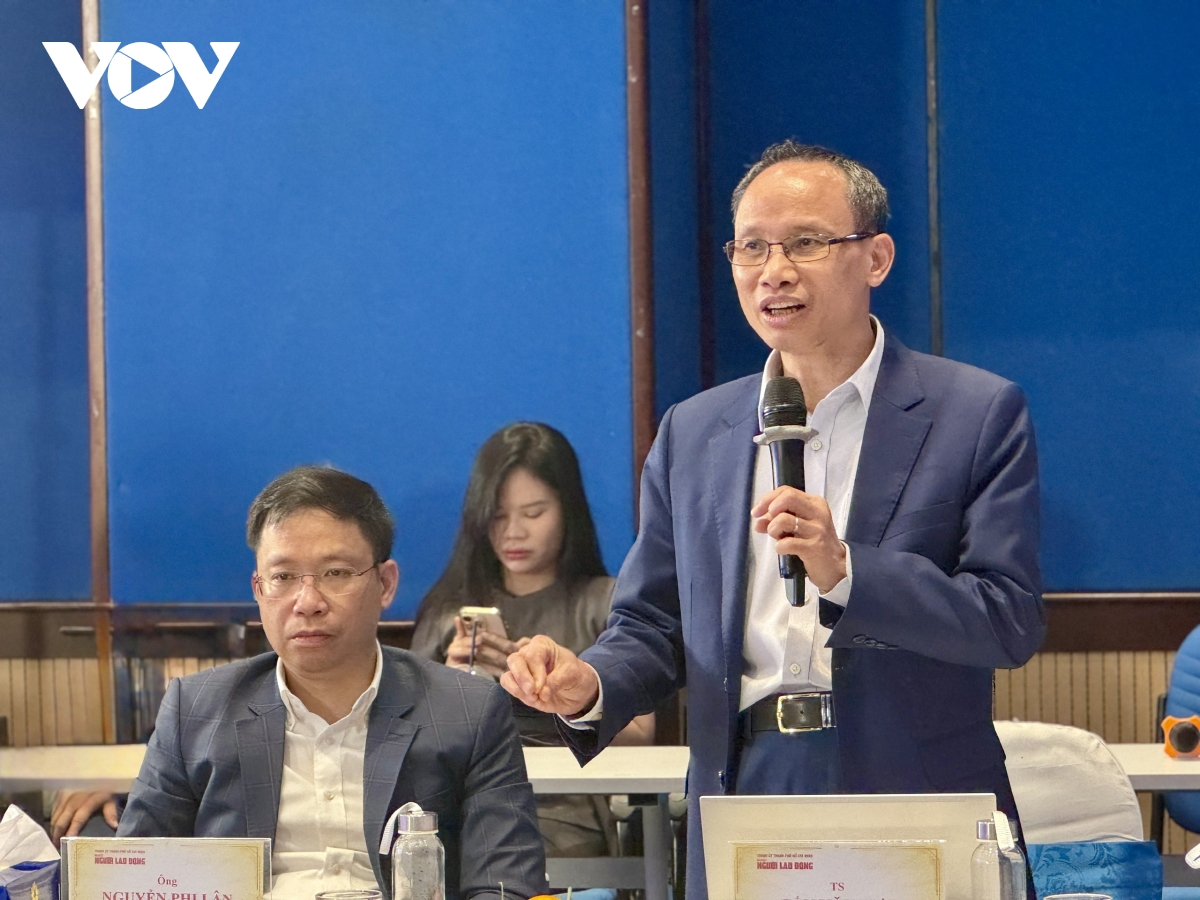
Dr. Can Van Luc proposed several solutions, including improving institutions and creating breakthroughs in improving the investment and business environment. At the same time, Vietnam needs to amend the Law on Supporting Small and Medium-Sized Enterprises, reduce taxes for small and micro-enterprises, and cut administrative procedures by 30%...
"It is necessary to categorize businesses for appropriate management based on size and nature of operations, with different management approaches for large, small, and medium-sized enterprises. The legal framework should be finalized soon, and a strategy for the development of the private economy should be issued. I also propose a different approach: instead of supporting businesses indiscriminately based on size, support should be based on the actual contribution of businesses to the country, specifically their contribution to the national budget." - Dr. Can Van Luc proposed.
According to Associate Professor Tran Dinh Thien, former Director of the Vietnam Institute of Economics, in order for the private sector to unleash its full potential, the state needs to remove constraints and obstacles through policy. First and foremost, it is necessary to create an equal business environment for private enterprises, on par with state-owned enterprises and FDI enterprises.
The key is to change policies regarding the private sector in terms of capital, taxes, and other aspects, rather than simply amending existing policies. A new system of institutions and policies is needed to positively impact the private sector.
The General Secretary and the Prime Minister have posed the challenge of developing the private economy with immense pressure, demanding that it be addressed and acted upon without delay.
Mr. Thien emphasized: "Private enterprises, Vietnamese businesses, must be designed to become a business force, a powerful bloc, with interconnected structures, organized in a chain, with large enterprises pulling smaller ones along. To develop, private enterprises, especially pioneering ones, must create pressure to change policies, rather than simply requesting and receiving policies."
Identifying the private sector as the most important driver of economic growth shows that it is being placed in its rightful position and role. This will lead to policy changes to ensure this sector truly promotes economic growth. In this context, the role of the state needs to be one of paving the way, providing guidance, and most importantly, building a favorable business environment for private enterprises to thrive.

![[Image] Pleasant weather helps students enter the 10th grade entrance exam with confidence.](https://vphoto.vietnam.vn/thumb/1200x675/vietnam/resource/IMAGE/2026/05/29/1780034401612_ngay-1-thi-lop-10-minh-duy-8-5009-jpg.webp)
![[Photo] Ba Lang An Lighthouse - the "eye of the sea" amidst the "rock museum" of Quang Ngai province.](https://vphoto.vietnam.vn/thumb/1200x675/vietnam/resource/IMAGE/2026/05/29/1780038698840_anh-man-hinh-2026-05-29-luc-14-10-42.png)




























































Comment (0)