

The benefits of processing certain fruits and vegetables.
Responding to a reporter from Thanh Nien newspaper, Associate Professor Dr. Nguyen Thi Lam, former Director of the National Institute of Nutrition, stated: "We do not encourage eating raw food because, except for herbs and spices which can be eaten fresh without any processing, many types of vegetables and fruits are tough if eaten raw, and some contain anti-nutrients that are only lost through processing."
Dr. Lam further clarified: Eating raw food may affect some people with health problems, because raw or uncooked food is hard and difficult to digest. With such food, people with gastritis or colitis are more likely to experience increased inflammation.
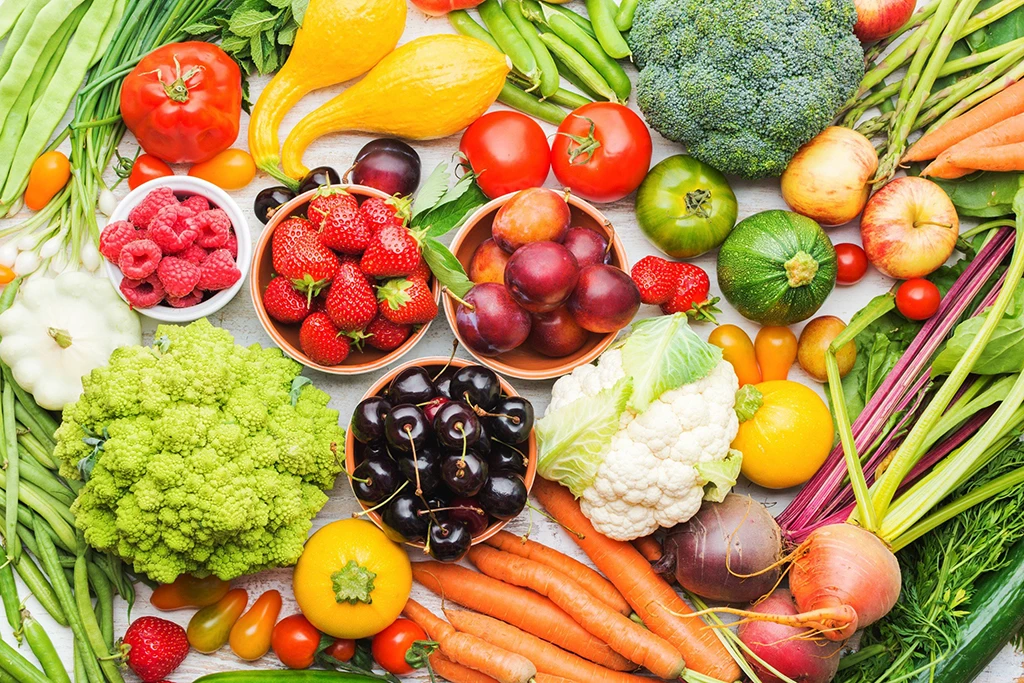
Experts note that everyone needs to ensure their body receives enough essential nutrients to protect their health.
"During the cooking process, some nutrients in food are lost, including B vitamins and vitamin C. That's something to accept, but you can eat more ripe fruits to compensate for the vitamins lost during processing," said Dr. Lam.
Experts also discussed the benefits of processing certain fruits and vegetables. For example, lycopene in tomatoes is better absorbed and metabolized when cooked compared to raw consumption. Similarly, yellow and dark green vegetables rich in beta-carotene are better absorbed and metabolized when cooked in a diet containing fat, whereas they are not absorbed or metabolized when eaten raw.
Why is it important to eat a complete and balanced diet?
According to the Institute of Applied Medicine (Vietnam Medical Association), debates about a healthy human diet are becoming increasingly heated in modern society, especially regarding the topic of "Should we eat meat or not?". Some arguments suggest that humans should not eat meat based on evolutionary, biological, or ethical considerations, but many other viewpoints also exist.
According to an expert from the Institute of Applied Medicine: Biologically, humans can eat seeds, fruits, vegetables, roots, and many other parts of plants, but cannot completely digest these components. Scientifically , the outermost layer of each plant cell is the cell wall, made up of fiber-like compounds such as cellulose, hemicellulose, and lignin. The human body cannot digest these fibrous compounds because we inherently lack the enzyme cellulase needed to break them down. This is different from herbivorous animals like cows, goats, and buffaloes, which also cannot produce cellulase themselves, but they have gut bacteria that produce it, while humans do not. That is why these animals can eat and digest a wider variety of plants than humans.
Conversely, the human body can produce all the enzymes, such as protease and lipase, necessary for the breakdown and absorption of meat. This is why humans can eat meat, while herbivores cannot.
Another practical factor to prove this is the structure of human teeth. Human teeth are designed for omnivorous eating, meaning they can consume both animal and plant foods. Therefore, humans evolved to adapt to eating a diverse range of foods.
The expert added: Modern nutritional science has shown that animal-derived foods provide certain essential nutrients that plant-derived foods either lack, contain in very low amounts, or are difficult to absorb during digestion. This is why people should eat a complete and balanced diet, including both animal and plant-based foods.
BENEFITS AND RISKS
A raw diet is a diet that consists solely of raw, unprocessed, plant-based foods.
According to studies compiled on Medical News Today, because it includes plenty of fresh fruits, vegetables, beans, and nuts, and fewer processed foods that can be high in sugar, salt, and saturated fat, a raw diet can offer certain health benefits to some groups. For example, it can reduce the risk of heart disease by 17% and high blood pressure by 75% due to the body receiving more fruits and vegetables. Being overweight or obese can increase the risk of type 2 diabetes and heart disease. Adopting a raw diet can help a person lose weight and reduce the risk of these health conditions. One study showed that in nearly four years of following a raw diet, participants lost 9.9-12 kg. However, it is noteworthy that about 14-25% of the study participants were underweight.
On the other hand, according to Medical News Today , health problems that a raw food diet can cause include:
Vitamin and mineral deficiencies: A raw diet lacks food diversity, leading to the risk that a person may not be getting all the vitamins and minerals they need. Research also notes that cooking helps break down fiber and cell walls in food, which can improve the nutritional value of food in some cases. A 2005 study found that 38% of people who ate raw foods were deficient in vitamin B12. Vitamin B12 deficiency can cause: jaundice, sore tongue or glossitis, mouth ulcers, vision problems, irritability, depression, mood and behavioral changes, and memory loss.
Weak bones: A study on a raw plant-based diet found that people following this diet had lower bone density, which in turn put them at a higher risk of fractures and osteoporosis.
Tooth decay: One study showed that 97% of participants in a raw food diet developed tooth decay.
Irregular menstruation: Approximately 30% of people under 45 who eat raw foods have irregular menstrual cycles or their periods have stopped altogether.
Food poisoning: When eating any raw vegetables or fruits, it is important to prevent any cross-contamination of bacteria by washing your hands and storing food in a hygienic environment. Doctors recommend thorough cooking to reduce the likelihood of food poisoning.
Given the benefits and risks mentioned above, experts note that each person needs to ensure their body receives enough calories or nutrients to protect their health. Scientists do not consider a raw food diet to be a safe long-term diet.
Phuong An
Source link
![[Photo] General Secretary and President To Lam and the President of the Philippines hold talks.](https://vphoto.vietnam.vn/thumb/1200x675/vietnam/resource/IMAGE/2026/06/01/1780286997787_anh-man-hinh-2026-06-01-luc-11-09-43.png)



![[Photo] Reception to welcome General Secretary and President To Lam and his wife on their State visit to the Philippines](https://vphoto.vietnam.vn/thumb/1200x675/vietnam/resource/IMAGE/2026/06/01/1780295488620_vna-potal-chieu-dai-chao-mung-tong-bi-thu-chu-tich-nuoc-to-lam-va-phu-nhan-tham-cap-nha-nuoc-toi-philippines-8798060-7855-jpg.webp)






















































































Comment (0)