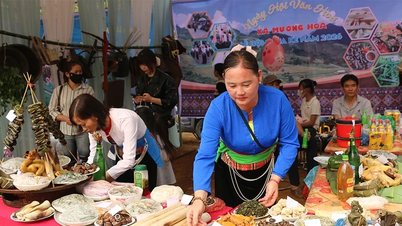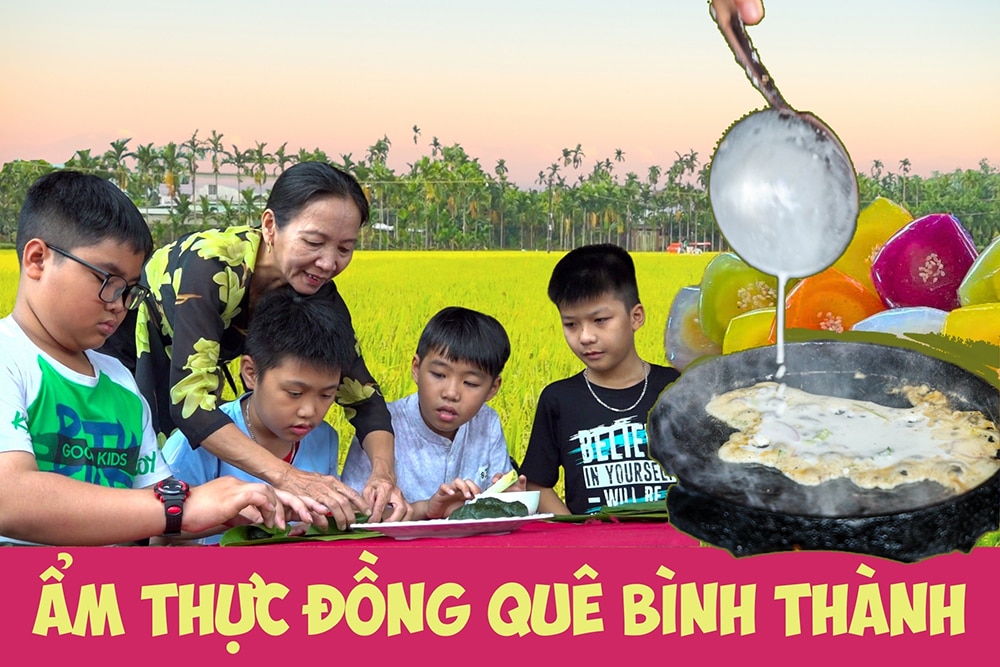
The people of Binh Thanh village, Hanh Nhan commune (Nghia Hanh district) are actively participating in community tourism and promoting local cuisine . Many tourists and students have had enjoyable experiences making and tasting traditional local dishes.
Rural cuisine is one of the highlights that attracts tourists to Binh Thanh village. In late March, many groups of students from schools throughout the province came to this peaceful countryside to learn about traditional cuisine.
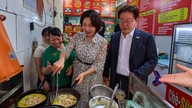
Over 100 students from Song Ve Town Primary School (Tu Nghia District) were delighted to watch and make various types of cakes with ingredients mainly from rice and glutinous rice, which are closely associated with the lives of the local people. Ms. Tran Thi Nhon happily showed the children how to make banh xeo (Vietnamese savory pancake).
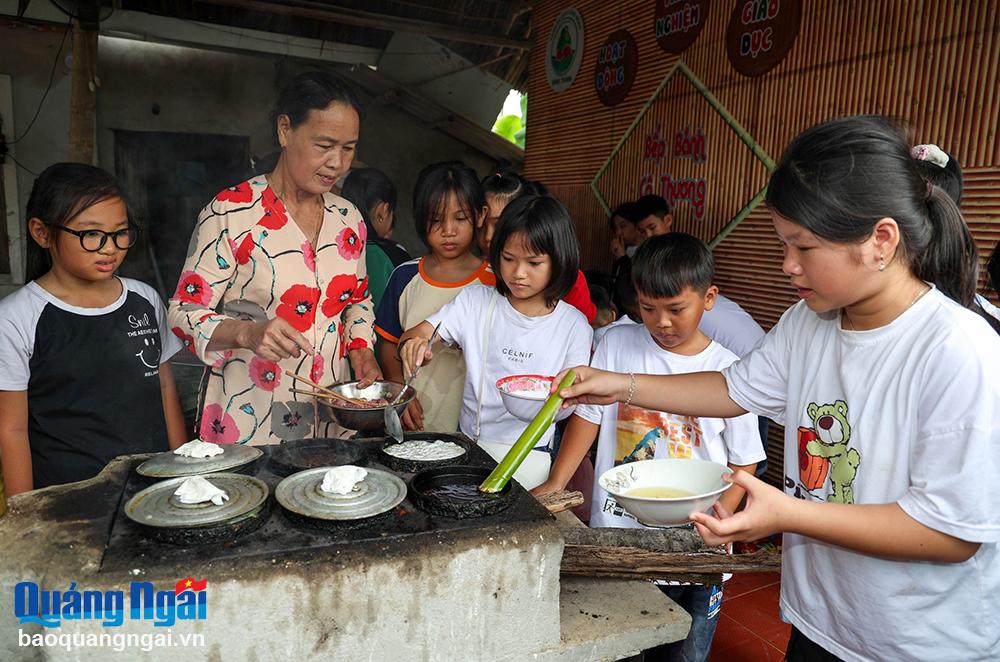
“The pancakes are made from rice, meat, etc., and are cooked in cast iron molds over a wood fire. This dish is familiar to the people of Quang Ngai , but the children haven't had the experience of making them themselves, so they were all excited to try making them,” Mrs. Nhon said.
The freshly cooked pancakes, placed on green banana leaves, filled the students with excitement, eagerly anticipating the opportunity to enjoy the pancakes they had made themselves. Pham Nguyen Hoang Long, a 4th-grade student from Song Ve Town Primary School, shared, "I really enjoyed the feeling of making and eating these pancakes myself. I've eaten pancakes many times before, but I've never had such a fun experience."
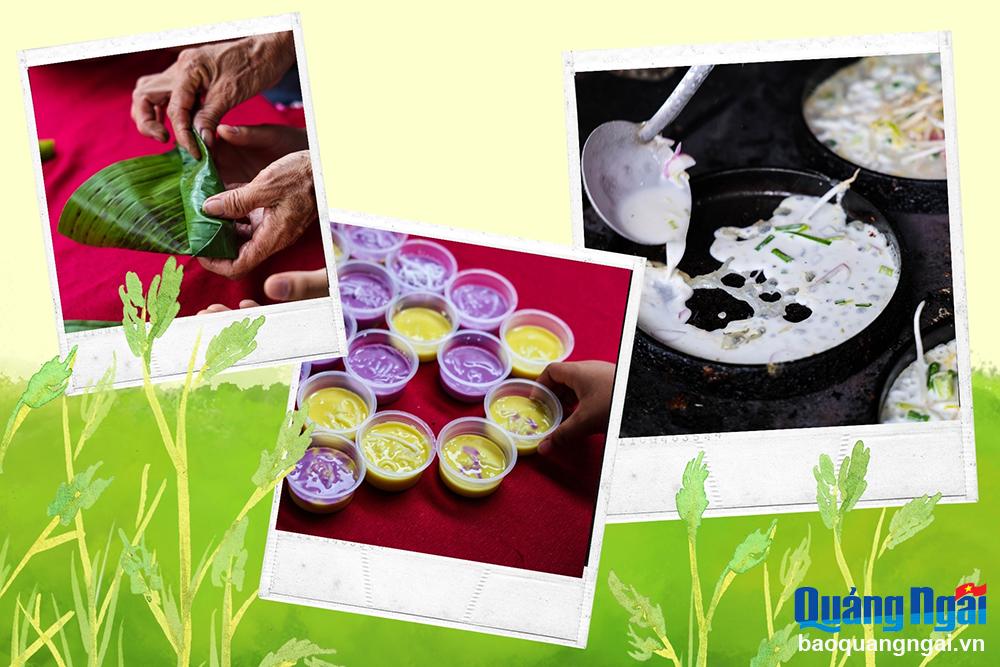
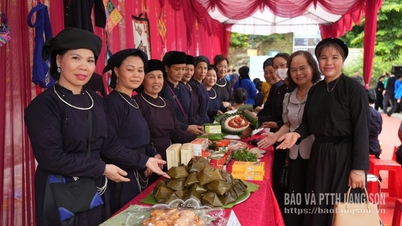
Besides experiencing making banh xeo (Vietnamese savory pancake), tourists and students visiting Binh Thanh village are also guided in making traditional cakes such as: banh it la gai (sticky rice cake wrapped in thorny leaves), banh uot (steamed rice rolls), banh xu xue (sweet potato cake)...
You may also like
Discover the rustic beauty of coastal fishing villages.If coastal tourism in Lam Dong only focused on modern resorts and well-planned beaches, it would be difficult to create depth and a unique identity. Behind the luxurious beauty of these resorts lie tranquil fishing villages, preserving the rhythm of life, culture, and memories of the sea. It is these everyday living spaces that contribute to the attractiveness of experiential and cultural coastal tourism in this region. "This is my first time participating in a bánh ít (Vietnamese sticky rice cake) making experience," said Ho Cam Vien, a 4th-grade student from Song Ve Town Primary School. She excitedly shared, "It's so much fun to be able to make my own pretty bánh ít from thorny leaves, bean filling, sesame seeds, and banana leaves. Making bánh ít is simple, but it requires a high level of concentration. We listened carefully to the teacher's instructions and paid attention to the small details to create a beautiful cake."
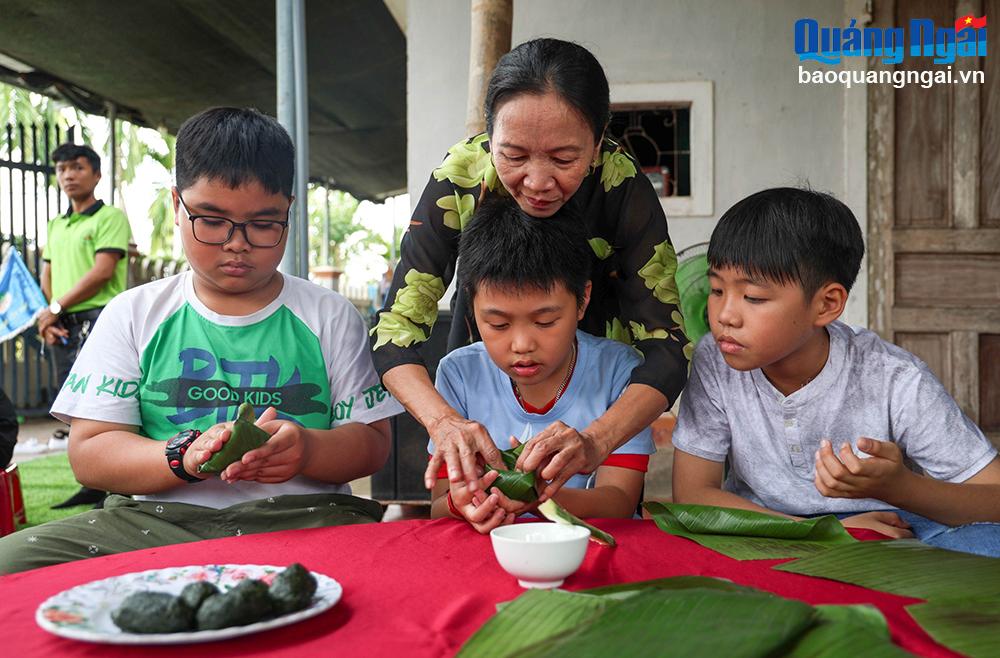
While guiding the students in making bánh ít (a type of Vietnamese rice cake), Ms. Hồ Thị Thiếp shared that bánh ít lá gai is wrapped in banana leaves and has a long, conical shape. When opened, the cake releases a gentle aroma of mung beans and sesame seeds combined with the scent of the thorny leaves. With its deep black color, the cake looks smooth and has a sticky, chewy texture.
The thorn leaf-wrapped rice cake, though simple, embodies the hard work and perseverance of its maker. It is one of the traditional cakes that adds diversity and richness to Vietnamese cuisine. It is also a beautiful aspect of our national culinary culture that needs to be preserved and promoted.
“To make a delicious glutinous rice cake wrapped in thorny leaves, the process of making the dough is crucial. Fresh glutinous rice is selected, wet-milled, and pounded together with thorny leaves. Mung beans are steamed until cooked and then mashed, and mature coconuts are chosen, combined with ginger and sugar to create a unique and delicious flavor. After completion, the filling is left to cool and rolled into small, round balls,” Mrs. Thiep explained.
The ingredients for traditional cakes are quite simple. However, the way of wrapping and cooking the cakes requires skillful hands, aesthetic sense, and expertise in coloring and kneading dough… Although all are made from familiar agricultural products, each type of cake has its own unique flavor and holds its own story.
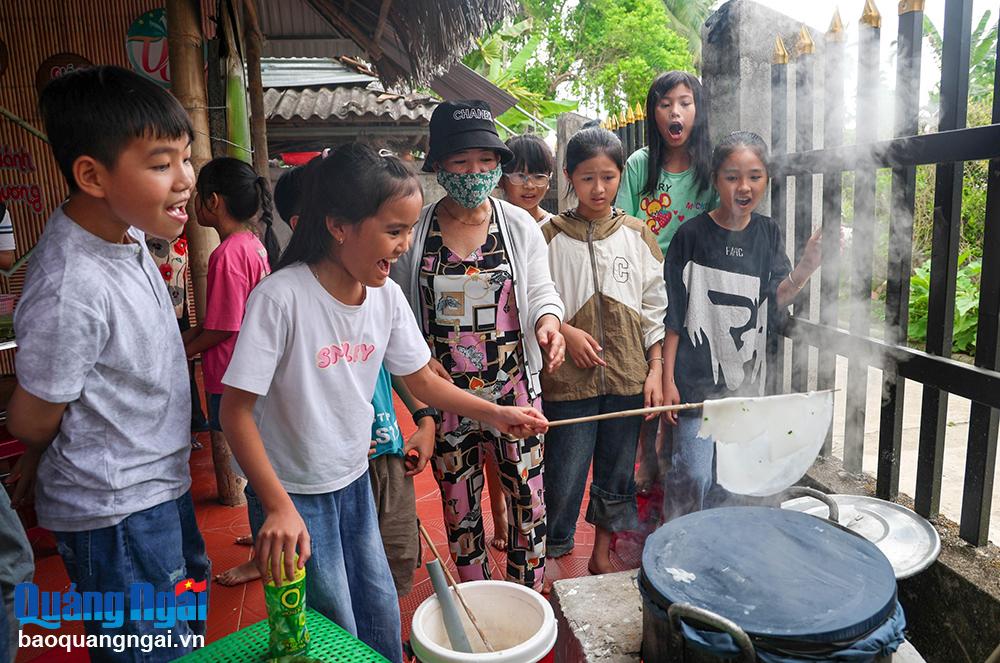
While baking, the students listened to local people tell stories about rural life in Binh Thanh village. Their faces were covered in sweat, but they were filled with joy upon completing a cake. This activity was novel and engaging, attracting many students to participate attentively.
Ms. Do Thi Thuong, owner of Co Thuong bakery in Binh Thanh community tourism village, shared that this experiential activity has contributed to promoting and widely introducing to students the diversity of traditional cakes. These are all products closely associated with the childhood of rural children.
Strengthening the friendship between Vietnam and the United States.On July 3rd, as part of the Pacific Partnership - Friends of the Pacific 2026 program, the U.S. Army Pacific delegation, led by Lieutenant General Joel Vowell, Deputy Commander of the U.S. Army Pacific, paid a courtesy visit to the Quang Tri Provincial Military Command. 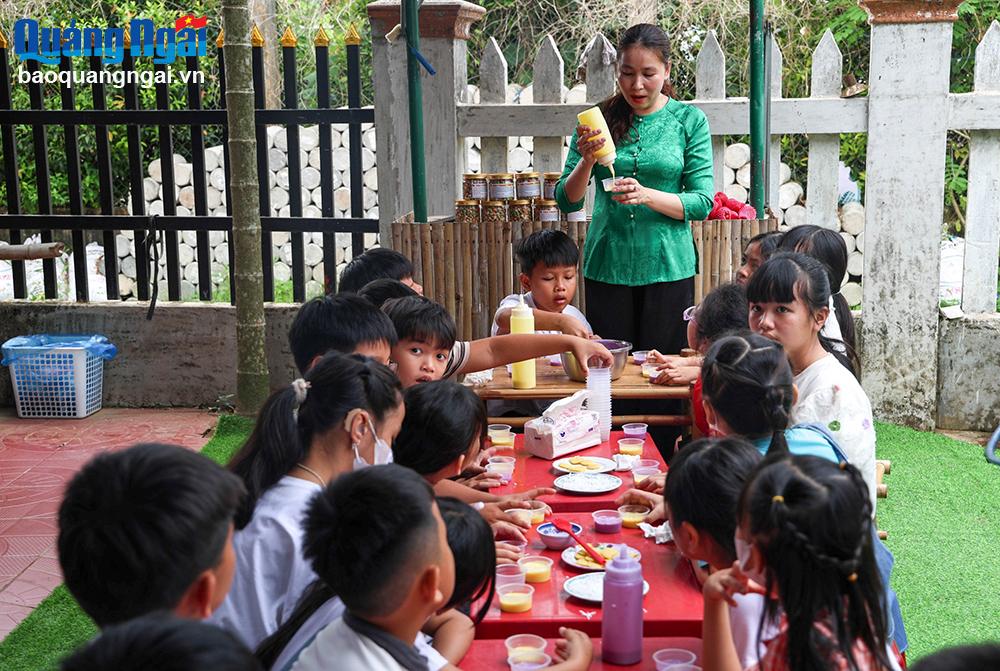
Ms. Thuong guided the children in making xu xue cakes.
"We attract tourists with traditional cuisine. The baking experience will help students unleash their creativity and gain knowledge about the traditional cuisine of Quang Ngai," Ms. Thuong expressed.
T. PHUONG – T. NHAN
Source