

There are too many regulations, but too few funds and personnel.
In the draft Road Law currently under review, the Ministry of Transport proposes adding five methods for exploiting highway infrastructure assets, including: Direct operation (the state directly manages, collects tolls, and maintains); transferring the right to collect tolls on the highway; leasing the right to exploit highway infrastructure assets; transferring the right to exploit highway infrastructure assets for a limited period; and granting the right to operate and manage under the law on investment using the public-private partnership (O&M) method.
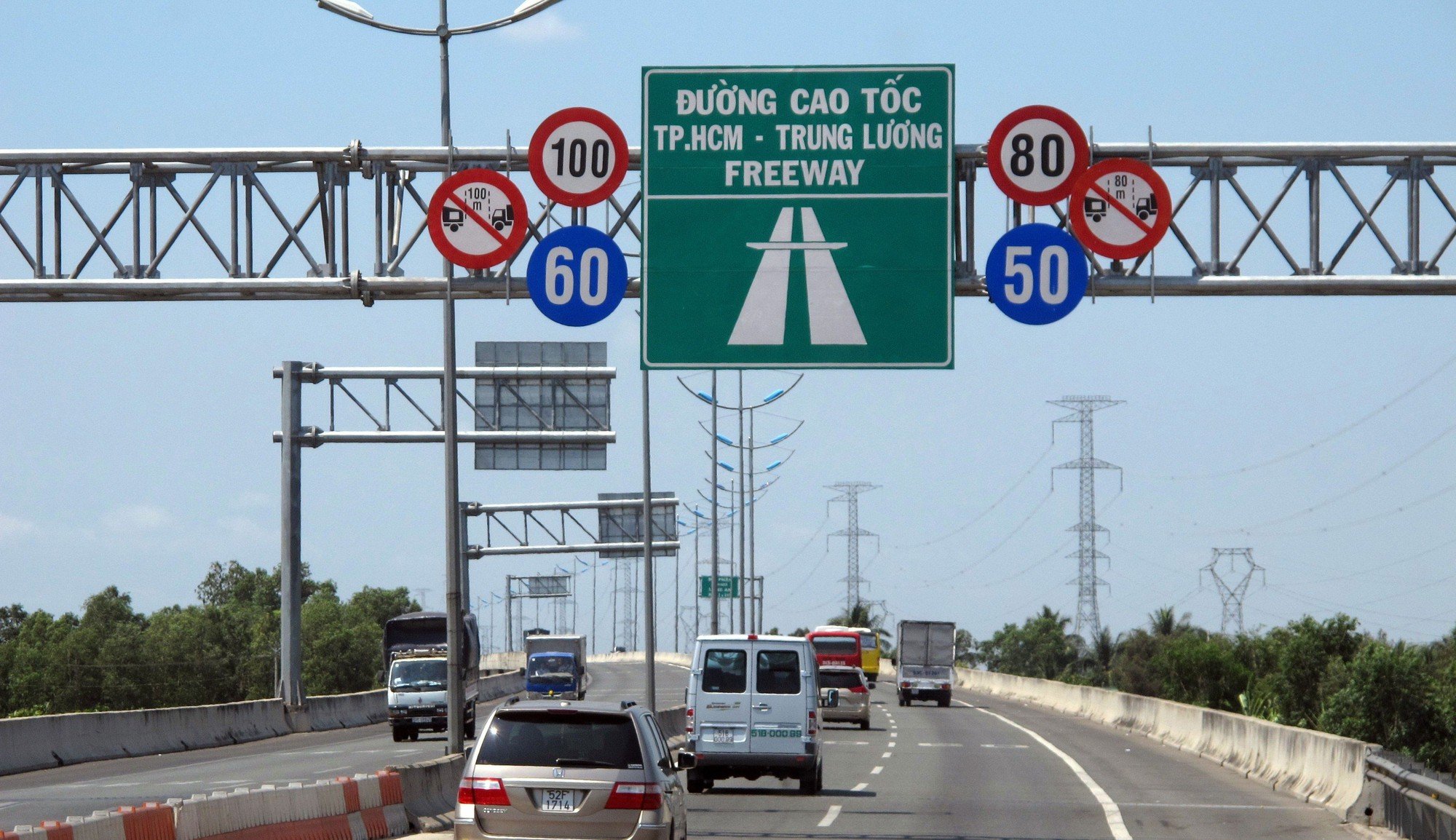
The Ho Chi Minh City - Trung Luong Expressway is the first expressway to adopt a concession model for private management.
The Ministry of Transport's proposal stems from the reality that over the next 10 years, the budget needed for new highway investments will reach nearly 240,000 billion VND, while maintenance funds only meet about 45% of that need. Meanwhile, attracting investors to highway projects is difficult due to the lack of a clear and attractive legal framework. Furthermore, finding qualified personnel to manage and operate highways remains a significant challenge.
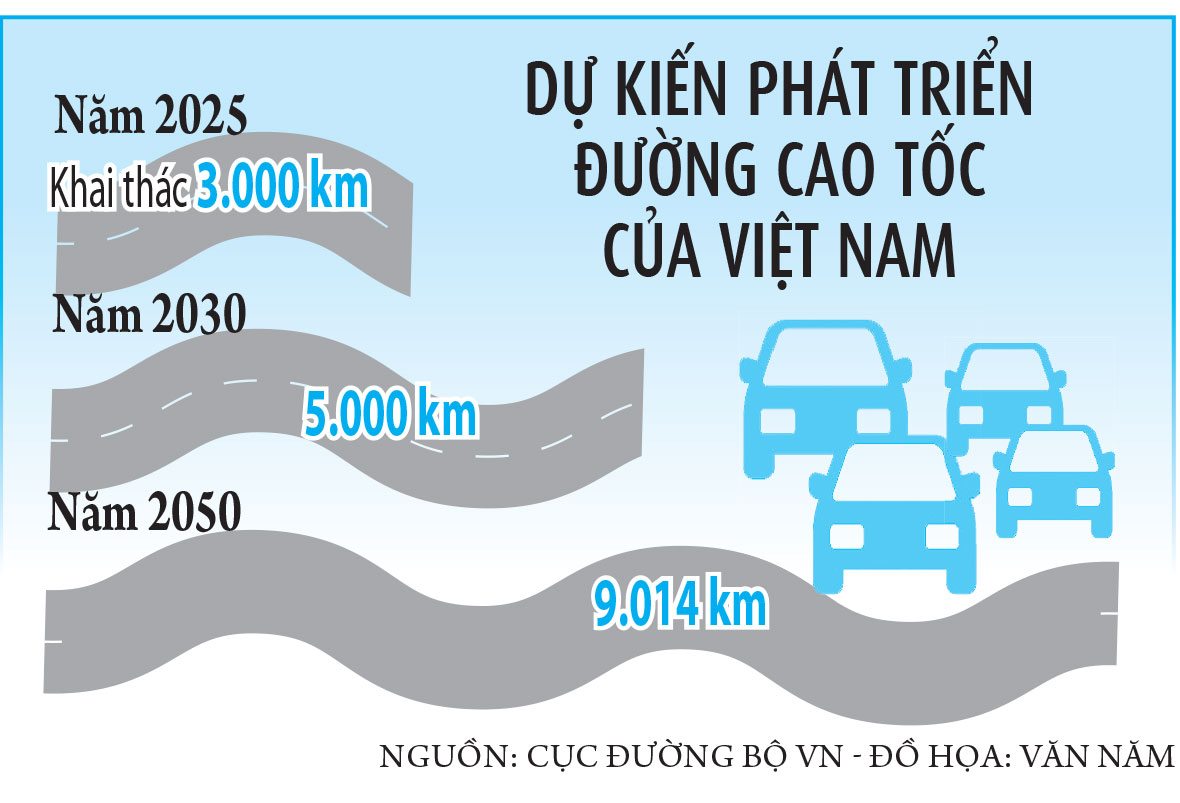
Specifically, to meet the requirements for managing and operating expressways, an average of about 2 technical workers per kilometer of road is needed. Therefore, by 2025, approximately 6,000 expressway management and operation workers will be needed, and by 2030, 10,000 workers will be required. This places a heavy burden on the Vietnam Road Administration in the coming years, as it will be responsible for managing, operating, exploiting, and maintaining a large volume of expressways and over 25,000 km of national highways.
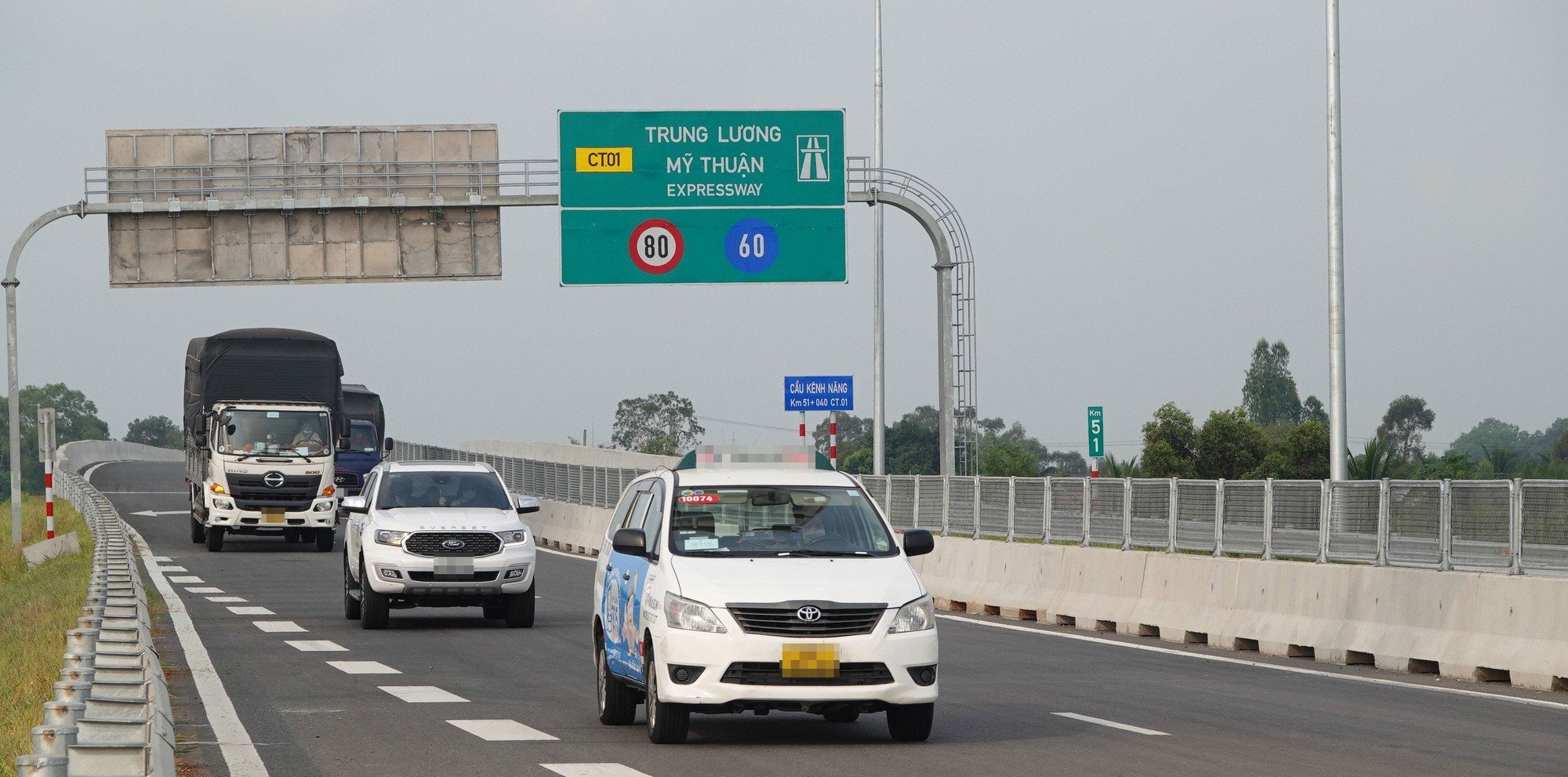
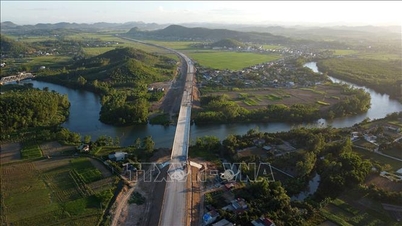
Trung Luong - My Thuan Expressway
Speaking to Thanh Nien newspaper, an official from the Vietnam Road Administration said that according to regulations, after the investment and construction are completed, the expressway will be handed over to the owner or manager for management, operation, and exploitation. Although the entity responsible for managing and using the expressway depends on the investment capital and the investment and construction mechanism, they must all comply with the general regulations: the expressway must be managed and exploited according to its intended purpose and function; it must be maintained, repaired, and other maintenance activities must be carried out to ensure safe and smooth traffic, and to prevent acts of damage to the infrastructure. In addition to general road regulations, because expressways have special requirements in operation and exploitation, the Government has issued Decree No. 32/2014 regulating the management, exploitation, and maintenance of expressway projects. The Ministry of Transport also issued Circular No. 90/2014 guiding some aspects of the management, operation, and maintenance of expressways, which was subsequently amended and supplemented by Circular No. 45/2018 and Circular No. 08/2015 regulating rescue work and estimated cost norms for rescue work on expressways. In addition, the Ministry of Health also issued Circular No. 49 regulating the organization and operation of emergency response for traffic accidents on expressways.
At the same time, the Ministry of Transport also mandates that each highway construction investment project must have its own management, operation, and maintenance procedures suitable to the scale of the project, operational characteristics, traffic organization of each route, and specific maintenance requirements; responsibilities for maintenance and repair, funding sources, and methods for developing maintenance procedures and plans, and organizing their implementation…
Operating a highway involves more than just collecting tolls.
Based on the above facts, Associate Professor Dr. Tran Chung, Chairman of the Vietnam Association of Road Transport Infrastructure Investors (VARSI), affirmed that a complete legal framework and a set of specialized technical standards for the management and operation of expressways is a major gap that needs to be addressed as soon as possible.
Mr. Chung analyzed: Similar to other countries, Vietnam's expressway system is classified as a special-grade transportation project. Therefore, management and operation differ from that of regular roads. This is an activity with a massive and complex workload. For example, even in toll collection management, there are many aspects such as how to manage toll collection equipment, what the rates are, toll collection service personnel, and the storage of data for quality control of toll collection… In addition, traffic management is a key task, including: drafting traffic organization rules on the route, and ensuring traffic order. Currently, we do not have comprehensive traffic regulation along the entire route, so traffic congestion frequently occurs on the expressway. Furthermore, it is necessary to quickly and promptly address any damage or obstacles on the road to ensure safety and convenience. Any object that falls onto the road must be immediately detected and dealt with. Organizationally, this work requires a comprehensive monitoring system, road obstacle removal systems, regular inspections of traffic equipment to ensure they are always in good working condition, a system for preventing violations of road traffic laws, and emergency and rescue stations on duty 24/7…
Secondly, maintenance is crucial but often receives little attention. Many highways in Vietnam deteriorate rapidly partly due to poor maintenance. Highway operators must regularly inspect and assess safety conditions, road surface quality, control oversized and overloaded vehicles, and implement maintenance and repair solutions. This is a large-scale project with complex technical requirements, necessitating a high level of professionalism and specialization. It requires not only visual inspection but also advanced, professional equipment. Finally, there's the management of assets along the highway, protecting the land designated for the highway... For example, in the case of roadside stalls on the Hanoi -Lao Cai highway, the managing and operating unit is directly responsible.
"Operating and managing a 5-star hotel is very different from operating and managing a 3-star hotel. Operating a luxury apartment building is different from operating a regular commercial apartment building. Similarly, the management, operation, and exploitation of highways are also very special; they involve enormous workloads. According to the plan, by 2030-2035, Vietnam will have approximately 5,000 km of highways with a total investment of nearly 40 billion USD. This is a huge real estate asset that needs to be managed and exploited well to yield investment returns; otherwise, it will cause enormous losses to the economy and to the investors themselves," Mr. Tran Chung stated.
Urgent need to expand the Ho Chi Minh City - Trung Luong - My Thuan expressway.
The Government Office has issued a document conveying the opinion of Deputy Prime Minister Tran Hong Ha regarding the study of investment options for expanding the Ho Chi Minh City - Trung Luong - My Thuan expressway. Accordingly, the Deputy Prime Minister assigned the Ministry of Transport to lead the research and propose investment in expanding the Ho Chi Minh City - Trung Luong expressway section to 8 lanes and the Trung Luong - My Thuan expressway section to 6 lanes using the Public-Private Partnership (PPP) investment method for the entire route. Simultaneously, the Ministry should coordinate with the Ministry of Planning and Investment and the localities through which the expressway passes to agree on a suitable contract type. If necessary, they should report to the National Assembly on the application of the PPP contract type and the assignment of the competent authority to ensure the expansion investment is implemented as smoothly as possible.
Franchising to private management
In the newly proposed models, the Ministry of Transport assessed that the O&M concession method would bring more benefits than the self-management option by the state, because the state would receive a transfer fee and would not have to allocate annual capital for operation and maintenance. At the same time, it brings intangible values, such as implementing the policy of socialization, mobilizing non-state resources to participate in the operation and maintenance of transport infrastructure, promoting business development, and streamlining the organizational structure…
In fact, the model of the state building roads and then selling the right to collect tolls, applying the O&M contract model, has been effectively implemented for a long time in many leading countries in the development of highway networks around the world, such as the United States, Japan, and China.
In Japan, existing public infrastructure that collects tolls remains under government ownership, but the right to operate and maintain it is granted to a private entity. The franchisees enter into contracts for approximately 30 years, paying a portion to the government and the remainder in installments. These companies use the proceeds to offset the initial highway construction costs. The franchisee can increase profits through rest stop operations, organize events to attract traffic, and reduce management and maintenance costs.
In Vietnam, the Ho Chi Minh City - Trung Luong Expressway, nearly 40 km long, passing through Ho Chi Minh City, Long An, and Tien Giang provinces, was the first expressway to apply this concession management model. However, due to implementation in the context of a lack of legal framework for investment under the PPP model, especially regulations on O&M contracts, the project experienced violations of legal regulations. After the toll collection concession contract expired, the Ho Chi Minh City - Trung Luong Expressway had to stop collecting tolls, leading to many problems and shortcomings such as difficulties in allocating funds for management and maintenance; increased traffic volume and reduced operating speed (averaging only 60-70 km/hour, whereas before the toll collection stopped, the average speed was 100 km/hour); increased traffic accidents; and frequent traffic congestion during peak hours and holidays.
According to Dr. Le Dinh Vinh, Vietnam has a unique geographical location that is favorable for highway development, and the demand for infrastructure development, especially highways, is very high in the coming years. While there are existing PPP contract models, including O&M contracts, they have not been widely implemented because this model is not yet truly attractive to investors, and there are many obstacles in construction, negotiation, signing, and implementation. Specifically, the current legal system has many overlapping regulations regarding investment, construction, and operation of highways. The PPP law allows for the management of highway projects under the O&M model, but the law on public asset management also allows for management under the toll collection concession model. This leads to confusion in applying the law to select investors for management and operation. In practice, the lack of clear ownership of highways in some cases creates difficulties for stakeholders when incidents occur during management and operation, as it is unclear who will be responsible for resolving these incidents. Essentially, a highway is a comprehensive infrastructure system, raising the question of whether investors can implement it synchronously from construction to operation and exploitation, or whether it must be divided into separate components for multiple investors to carry out.
"The public-invested, private-managed model has been effectively applied in many countries and it is essential to develop a legal framework for it. If the Road Law is enacted, a review is needed to provide detailed guidance on the key clauses in O&M contracts so that the state and private investors have a basis for building and organizing the operation of cooperative highway management projects," lawyer Le Dinh Vinh emphasized.
There is already a legal basis for enforcing O&M contracts in practice.
The government recently issued Decree No. 25/2023 supplementing regulations on enterprises managing and operating expressways and expressway operators. Accordingly, enterprises managing and operating expressways include: project enterprises established under the Law on Investment in the form of public-private partnerships to participate in signing and implementing investment, construction, business, and operation contracts for expressways in the form of public-private partnerships; enterprises leasing or receiving the transfer of the right to exploit expressway infrastructure assets for a limited period in accordance with the law on the management, use, and exploitation of road transport infrastructure assets; and enterprises assigned by the State to invest in, build, manage, and operate expressways. Expressway operators are agencies and organizations assigned by the State to manage and operate public expressway infrastructure assets; and expressway management and operation enterprises. This provides the legal basis for the practical implementation of O&M contracts.
Associate Professor Tran Chung , Chairman of the Vietnam Association of Road Transport Infrastructure Investors
The law is comprehensive, but its enforcement is inadequate.
The basic legal regulations are comprehensive, but in the implementation process, some organizations and individuals assigned the responsibility of managing and using the highway have not fully complied with the regulations. In some cases, the highway has deteriorated, its structure has been deformed, and the signage system is damaged, but the managing unit has been slow to maintain and repair it, or sometimes fails to clearly define the responsibilities of each unit in the operation and management of the highway.
An official from the Vietnam Road Administration.
Source link

![[Image] Me So Bridge - an important connecting point on the Ring Road 4](https://vphoto.vietnam.vn/thumb/1200x675/vietnam/resource/IMAGE/2026/03/06/1772781627165_ndo_br_dji-0917-jpg.webp)


![[Photo] People in Ho Chi Minh City experience the green space at Ly Thai To Park No. 1.](https://vphoto.vietnam.vn/thumb/1200x675/vietnam/resource/IMAGE/2026/03/06/1772783731988_01-9003-png.webp)
![[Photo] Prime Minister Pham Minh Chinh meets with representatives of female leaders and managers of central agencies and presents the Kovalevskaia Award 2025.](https://vphoto.vietnam.vn/thumb/1200x675/vietnam/resource/IMAGE/2026/03/06/1772789429283_ndo_br_dsc-1149-jpg.webp)











































































Comment (0)