


The amount of sleep needed varies from person to person, but most studies suggest that adults should aim for 7-9 hours of sleep per night for quality sleep. If you consistently sleep only 6 hours or less, you may be sleep-deprived.
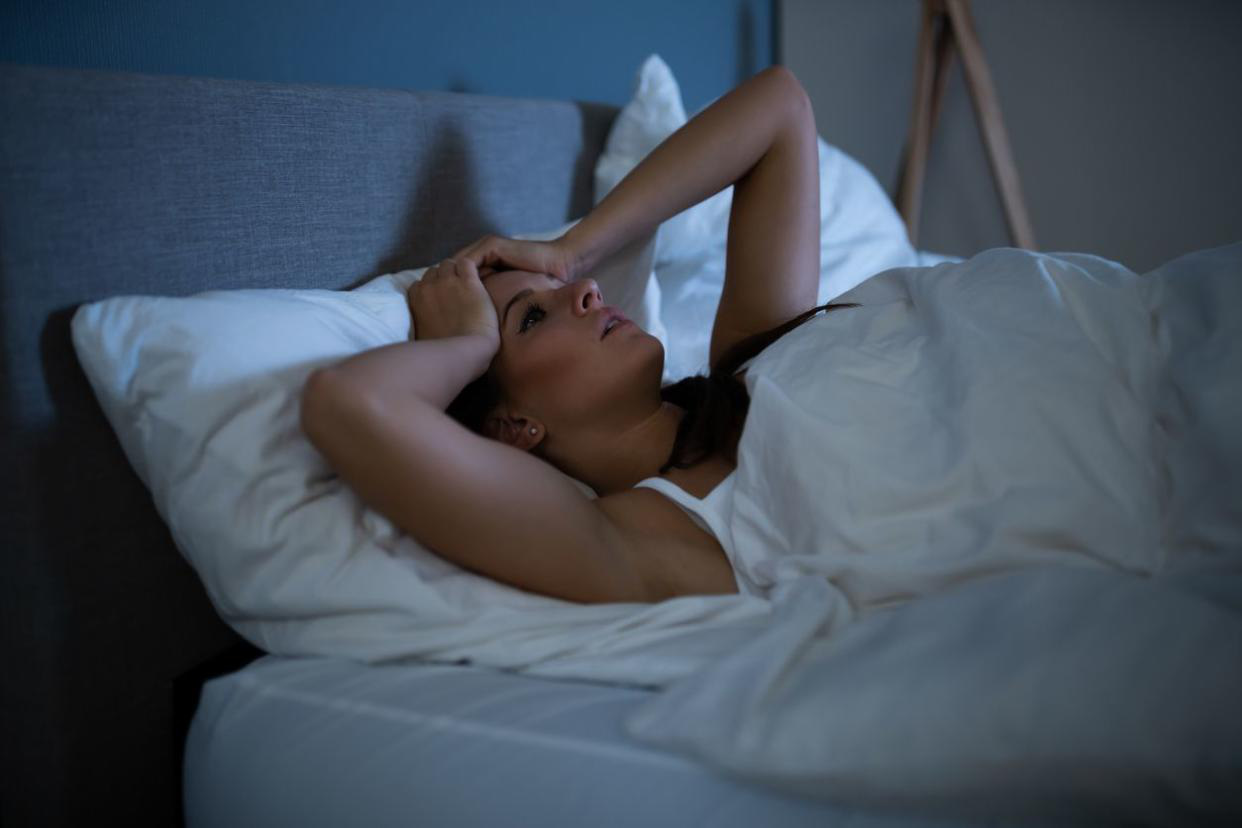
Lack of sleep makes people more prone to weight gain, heart disease, and depression - Photo: Istockphoto
When you don't get enough sleep as your body needs, over time, sleep deprivation can accumulate. While occasional sleep deprivation may be tolerable, chronic sleep deprivation can have serious consequences. Sleep deprivation makes people more prone to weight gain, heart disease, and depression.
Women are more likely to experience sleep problems than men.
Sleep deprivation occurs when you consistently don't get enough sleep or only get poor quality sleep. For example, you might only sleep 5 hours a night. Or perhaps you lie in bed from 10 pm to 6 am but wake up multiple times during the night and don't get the deep, restorative sleep necessary to function properly.
Research shows that women are more likely to experience sleep problems such as sleep deprivation and insomnia than men. According to the Centers for Disease Control and Prevention (CDC), nearly 21% of American women have difficulty staying asleep and 17% have difficulty falling asleep. For men, these figures are 15% and 12%, respectively.
Lack of sleep can contribute to weight gain. Several studies have found a link between sleep problems and a higher body mass index (BMI). This relationship is particularly more pronounced in obese women compared to obese men.
A sleep study found that women who slept through the night without interruption tended to have less body fat and more lean muscle mass.
Sometimes lack of sleep just makes you feel uncomfortable, but it can also have long-term health consequences that accumulate and affect daily life.
Some of the most common problems caused by lack of sleep.
Tired
Studies show that daytime sleepiness is the most obvious and common sign of sleep deprivation. If you feel sluggish even after being awake for a while or suddenly fall asleep, it could be a sign of sleep deprivation.
Excessive fatigue is also linked to poorer cognitive function. In other words, you may not be as alert if you don't get enough sleep.
Functional decline
Sleep deprivation is linked to increased error rates, slower reaction times, and a higher risk of accidents. Specifically, people who regularly sleep only 6 hours a night are 33% more likely to be involved in traffic accidents than those who sleep 7 or 8 hours a night.
Increased anxiety, depression, and stress.
Lack of sleep can harm mental health, increasing the risk of mood disorders such as anxiety and depression.
Increased risk of various other health problems.
A study showed that lack of sleep is linked to an increased risk of cardiovascular disease. In addition, getting enough sleep helps maintain the immune system. People who sleep less than 7 hours a night are almost three times more likely to catch a cold than those who get enough sleep.
Because sleep problems are more common in women, there may be specific risk factors in this group. Menstrual cycles, pregnancy, and menopause can all affect sleep quality in women.
How to deal with sleep deprivation
A short nap in the middle of the day can help make up for short-term sleep deprivation and leave you feeling more alert. If you don't like napping, try meditation for better sleep. Alternatively, you can catch up on sleep on weekends.
Everyone has different sleep needs. You should explore and experiment to see what helps improve your sleep quality. Using a sleep diary regularly can help you become more aware of your sleep habits. Sometimes, good sleep simply requires a consistent routine, such as going to bed at the same time every night.
In the evening, avoid looking at your phone screen before bed, practice relaxation or mindfulness to help you calm down, and try not to eat too late, especially sweets. During the day, you can exercise and limit caffeine in the late afternoon.
Additionally, don't forget that indoor environmental factors such as noise, temperature, light, and air quality can all affect sleep quality.
You can install blackout curtains, add rugs and drapes because soft materials absorb sound, helping to reduce echoes in the space. Some studies show that the shape, size, and quality of pillows can affect sleep.
Consider changing your bedding and investing in a better pillow that suits your body type or preferred sleeping position.
Source: https://tuoitre.vn/6-dau-hieu-ban-dang-thieu-ngu-20241030134745039.htm
![[Photo] National Assembly Chairman Tran Thanh Man working with the Hai Phong City Election Committee](https://vphoto.vietnam.vn/thumb/1200x675/vietnam/resource/IMAGE/2026/02/26/1772103806795_ndo_br_bnd-8224-jpg.webp)
![[Photo] Thousands of tourists visit the Quang Trung Emperor Temple in Nghe An during the early spring season.](https://vphoto.vietnam.vn/thumb/1200x675/vietnam/resource/IMAGE/2026/02/26/1772095410680_img-9305-3882-jpg.webp)


![[Photo] National Assembly Chairman Tran Thanh Man inspects election preparations in Hai Phong city.](https://vphoto.vietnam.vn/thumb/1200x675/vietnam/resource/IMAGE/2026/02/26/1772095420401_ndo_br_bnd-8016-jpg.webp)


































































































Comment (0)