

Climate change has caused temperatures in some regions of Russia, such as Krasnodar, to reach over 40 degrees Celsius in the summer, making it unsuitable for a segment of the elderly population.
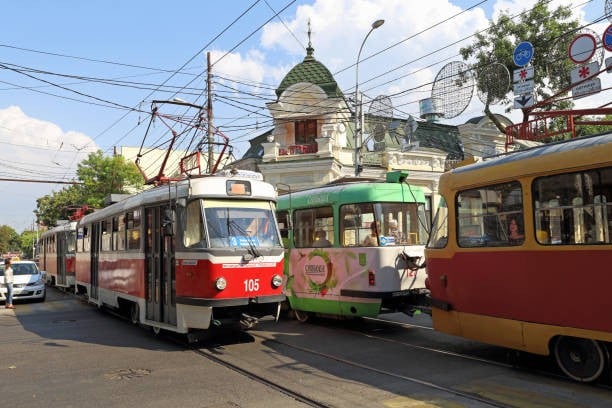 |
| Rising summer temperatures in Krasnodar due to climate change may make it unsuitable for some elderly people in Russia - Illustration. (Source: iStock) |
On July 2nd, Russian climatologist Alexei Kokorin stated that in the worst-case scenario, climate change could affect nearly 3 billion people – equivalent to about 30% of the world's population – by the end of this century. In the best-case scenario, he estimated that number would be around 10%.
Expert Kokorin argues that efforts by countries to achieve carbon neutrality will help avoid a negative scenario. However, even if things go smoothly, a portion of the world's population will be forced to migrate due to a lack of clean water.
Kokorin also suggested that retired Russians are beginning to consider climate change when choosing where to live. He pointed out that people from Chukotka used to try to move to the Krasnodar region when they retired. However, in recent years, they have moved to the Omsk and Novosibirsk provinces because Krasnodar is now too hot for them. This shows that people have adjusted their place of residence due to the climate.
According to Mr. Kokorin, summer temperatures in Krasnodar can rise above 40°C, a level harmful to elderly people who have lived in the north for many years.
Carbon neutrality is one of the conditions for implementing the Paris Agreement on climate change (COP). Currently, the United States and members of the European Union (EU) aim to achieve carbon neutrality by 2050. For Russia and China, this timeframe is 2060, while for India it is 2070.
Last June, the United Nations World Meteorological Organization predicted that global temperatures could reach record levels within five years. This is due to greenhouse gas emissions and a phase shift in ocean currents from La Nina to El Niño.
Source




























![[Video] The craft of making Dong Ho folk paintings has been inscribed by UNESCO on the List of Crafts in Need of Urgent Safeguarding.](https://vphoto.vietnam.vn/thumb/402x226/vietnam/resource/IMAGE/2025/12/10/1765350246533_tranh-dong-ho-734-jpg.webp)


























































Comment (0)